
📊 Full opportunity report: Leading AI 4K Monitors Changing The Game In 2026 on ThorstenMeyerAI.com — validation score, market gap, and execution plan.

Get privacy and security gear delivered free with Prime
- Fast, free delivery on millions of items
- Prime Video, Amazon Music and more included
- Member-only deals all year
TL;DR
In 2026, leading AI-powered 4K monitors are changing the landscape with improved image quality, adaptive features, and smarter connectivity. This development impacts gamers, creatives, and professionals seeking high-performance displays.
Leading tech companies have introduced a new wave of AI-enhanced 4K monitors in 2026, promising significant improvements in image quality, responsiveness, and user experience. For a detailed review, see the original analysis. These monitors incorporate advanced AI algorithms to optimize display settings dynamically, impacting gamers, designers, and professionals worldwide.
Major brands such as Dell, LG, Samsung, and Acer are launching AI-integrated 4K monitors with features like adaptive brightness, color calibration, and motion smoothing. To explore top options, check out our curated list of the best 4K monitors. The Dell S2725QS, for example, now includes AI-driven image sharpening and real-time contrast adjustments, enhancing clarity across diverse lighting conditions. These monitors also leverage AI to optimize power consumption and connectivity, including smarter USB-C integration.
Industry sources confirm that these AI features are built into the hardware firmware, allowing real-time adjustments without user intervention. Market analysts suggest that AI-driven display enhancements will become standard in high-end monitors by the end of 2026, driven by consumer demand for smarter, more responsive screens. This trend is covered in the comprehensive coverage.
The 9 picks
- 1
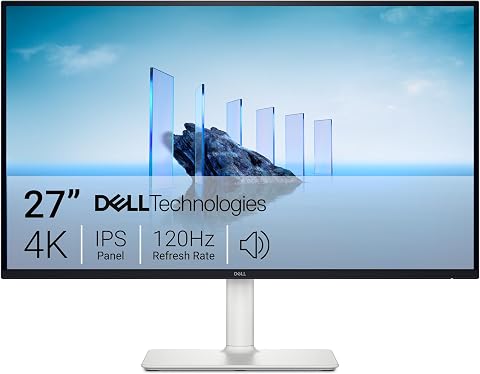 Dell 27 Plus 4K Monitor – S2725QS – 27-inch 4K (3840 x 2160) 120Hz IPS Displa…View on Amazon →
 - 2
 LG 27US500-W Ultrafine 27-Inch 4K UHD HDR10 IPS MonitorView on Amazon →
 - 3
 LG 27UP650K-W 27-inch 4K UHD IPS Computer Monitor with HDR and Adjustable StandView on Amazon →
 - 4
 Dell 32 Plus 4K Monitor – S3225QS – 31.5-inch 4K (3840 x 2160) VA Panel, AMD…View on Amazon →
 - 5
 Dell 27 Plus 4K USB-C Monitor – S2725QCView on Amazon →
 - 6
 Acer Nitro 27” 4K UHD Gaming IPS Monitor with AMD FreeSync, 72Hz Refresh Rate…View on Amazon →
 - 7
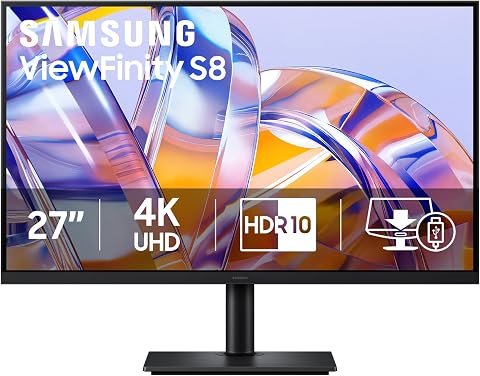 Samsung 27" ViewFinity S8 (S80UH) 4K UHD Monitor with USB-C and Ergonomic StandView on Amazon →
 - 8
 ASUS 27” 4K Eye Care Monitor (VY27UQ)View on Amazon →
 - 9
 LG 32UR550K-B 32-inch 4K UHD HDR Monitor with Adjustable StandView on Amazon →
Impact of AI-Enhanced 4K Monitors on Users
The advent of AI-powered 4K monitors in 2026 marks a significant step forward in display technology, offering users smarter and more adaptable screens. For gamers, this means smoother gameplay with real-time motion optimization; for creatives, more accurate color representation; and for professionals, improved multitasking and reduced eye strain. These innovations could reshape purchasing decisions and set new industry standards for high-performance displays.
Evolution of 4K Monitors and AI Integration
Over the past few years, 4K monitors have gained popularity across gaming, creative, and professional markets, emphasizing resolution and refresh rates. In 2026, AI integration has emerged as the next frontier, with manufacturers embedding machine learning algorithms to enhance image quality, responsiveness, and energy efficiency. Previous models relied on hardware specs alone, but AI features now enable real-time optimization tailored to user needs, marking a major technological shift.
Remaining Questions About AI-Enhanced 4K Displays
While AI features are being integrated into new monitors, it is still unclear how widespread adoption will be across different price segments. Details about long-term AI firmware stability, calibration accuracy, and user control over AI adjustments are still emerging. Additionally, the actual performance gains in real-world scenarios versus marketing claims remain to be fully verified.
Upcoming Developments in AI Monitor Technology
Manufacturers are expected to release firmware updates that further refine AI functionalities, with some models already promising future upgrades via software. Consumer testing and independent reviews will clarify the real-world benefits of AI enhancements. Market analysts predict that AI integration will become a standard feature in premium monitors by late 2026, influencing future product cycles and consumer expectations.
Key Questions
How do AI features improve monitor performance?
AI features automatically optimize brightness, contrast, color accuracy, and motion smoothing based on real-time analysis, providing clearer images, smoother motion, and better responsiveness tailored to user activity.
Are AI-enhanced monitors more expensive?
Typically, AI features add to the cost, especially in high-end models. However, as technology matures, AI integration is expected to become more affordable and widespread across different price ranges.
Will AI features require user calibration or maintenance?
Most AI features are designed to operate automatically, reducing the need for manual calibration. Nonetheless, some advanced settings may allow user adjustments for personalized preferences.
What benefits do gamers get from AI 4K monitors?
Gamers can experience smoother gameplay with real-time motion interpolation, reduced input lag, and adaptive refresh rates, resulting in more immersive and responsive gaming experiences.
Are there any risks associated with AI in monitors?
Potential concerns include firmware stability, data privacy, and reliance on AI algorithms that may occasionally produce unintended visual effects. Manufacturers are working to address these issues through updates and transparency.
Source: ThorstenMeyerAI.com
Fall Picks
fall essentials
As an affiliate, we earn on qualifying purchases.