
TL;DR

Get privacy and security gear delivered free with Prime
- Fast, free delivery on millions of items
- Prime Video, Amazon Music and more included
- Member-only deals all year
The UK government will start using facial age estimation to verify asylum seekers’ ages, despite evidence of inaccuracies and bias in the technology. The move raises concerns about its effectiveness and fairness.
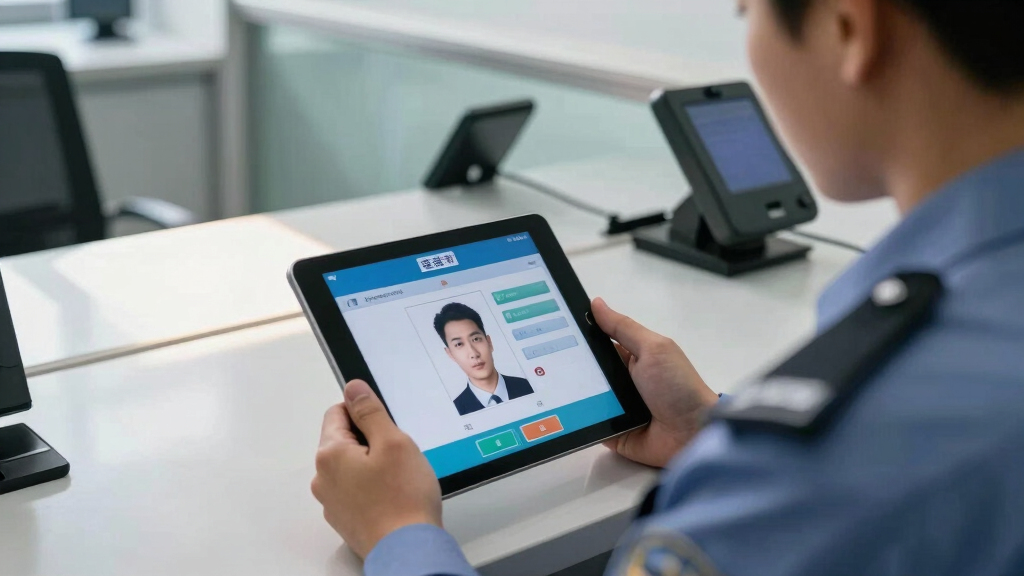
The UK government announced it will begin using facial age estimation technology at border crossings to determine the ages of asylum seekers, despite internal reports revealing significant inaccuracies and racial biases in the system.
According to an investigation by WIRED and Lighthouse Reports, the UK Home Office tested seven facial age estimation algorithms last year. The internal report shows these systems often misjudge the ages of migrants, especially those from Sub-Saharan Africa, with errors averaging 4.6 years for women from that region. The technology is also less accurate for children, risking the wrongful detention of minors as adults.
The Home Office has delayed the full rollout until 2027, citing the need to incorporate advanced AI tools to prevent adults from claiming to be minors. Despite claims that face scans will serve only as an additional aid for border officers, critics warn that the technology’s biases and inaccuracies could lead to wrongful deportations and violations of migrants’ rights. The disbanding of a scientific advisory committee during the testing phase further fuels concerns about oversight and reliability.
Implications of Using Flawed Age-Verification Tech
The decision to deploy facial age estimation in high-stakes immigration contexts raises serious ethical and legal questions. Given the documented inaccuracies and racial biases, vulnerable populations—particularly children and migrants from specific regions—are at risk of wrongful treatment, including detention or deportation. This move exemplifies broader issues around reliance on AI in border enforcement and the potential for technology to reinforce systemic biases.
As an affiliate, we earn on qualifying purchases.
UK Government’s Previous Use and Testing of AI Age Checks
The UK has been exploring AI-based age verification for several years, initially announced in July 2025, amid increasing migration via small boats across the English Channel. The government’s internal testing revealed that facial age estimation algorithms perform poorly with non-European populations and under suboptimal conditions, such as low-quality images. The disbandment of the scientific committee overseeing age estimation research occurred during this period, raising questions about oversight and transparency.
Internationally, similar systems have faced criticism for racial bias and inaccuracy, with prior tests by the US National Institute of Standards and Technology confirming these issues. The UK’s plan to incorporate this technology into border control is part of a broader trend of governments adopting surveillance tools to manage migration, often amid controversy.
“The face scans are ‘hideously inaccurate,’ and the biases are deeply concerning.”
— Tim Cole, emeritus professor of medical statistics at UCL
As an affiliate, we earn on qualifying purchases.
Uncertainties About Implementation and Oversight
It is still unclear how the UK government will address the known biases and inaccuracies in practice, particularly in real-world border environments. Questions remain about the safeguards in place for minors wrongly classified as adults and how disputes or errors will be handled. Additionally, the disbandment of the scientific committee raises concerns about independent oversight and accountability for the technology’s deployment.
border security facial recognition system
As an affiliate, we earn on qualifying purchases.
As an affiliate, we earn on qualifying purchases.
Next Steps in AI Age Verification at UK Borders
The UK government plans to continue testing and refining facial age estimation systems ahead of the 2027 rollout. Human border officers will still play a role in final assessments, but the extent of reliance on AI remains uncertain. Advocacy groups and experts are calling for more transparency, independent evaluation, and safeguards to prevent wrongful detention and discrimination.
biometric age verification technology
As an affiliate, we earn on qualifying purchases.
As an affiliate, we earn on qualifying purchases.
Key Questions
How accurate are facial age estimation systems?
In controlled tests, the best algorithms can predict age within about 2.5 years, but accuracy varies significantly depending on factors like race, image quality, and demographic group. Errors tend to be higher for non-European populations, especially from Sub-Saharan Africa.
Will facial age checks replace human judgment at borders?
The UK government states that face scans are an ‘additional’ tool and will not replace human decision-making. However, the degree of reliance on AI in practice remains uncertain.
What are the risks of using biased AI in immigration?
Biased AI systems can lead to wrongful detention, deportation, or denial of protections for minors, especially those from marginalized groups. Such errors raise ethical and legal concerns about fairness and accountability.
Has the UK government acknowledged the biases in the technology?
While the Home Office recognizes the technology’s limitations, critics argue that the disbandment of oversight committees and internal reports suggest insufficient measures to address these issues before deployment.
When will the facial age estimation technology be fully operational in the UK?
The UK plans to implement the system in 2027, following further testing and refinement. The delay aims to improve accuracy and address concerns about bias.
Source: Ars Technica
Halloween Picks
halloween
As an affiliate, we earn on qualifying purchases.