
TL;DR

Get privacy and security gear delivered free — and shop member deals
- Fast, free delivery on millions of items
- Access to Prime Big Deal Days deals on October 6–7
- Prime Video, Amazon Music and more included
Raven Prism are smart glasses designed with a strong emphasis on user privacy, featuring local AI processing and physical camera covers. The product aims to differentiate itself in the AR market by addressing privacy concerns.
Raven Resonance has unveiled Raven Prism, a new pair of smart glasses that prioritize privacy and data security. The company emphasizes that the glasses do not share user data externally and incorporate hardware features like a physical camera cover to enhance user control over privacy. This development marks a notable shift in the AR market, where privacy concerns are increasingly prominent.
The Raven Prism glasses run on a custom Linux-based operating system called RavenOS, which is designed to enable local AI processing and reduce dependence on cloud services. The device is powered by an undisclosed 64-bit ARM chip capable of handling AI models locally, including some from the Gemma 3 family, according to the company. The glasses feature a dual hot-swappable battery system with an additional small battery that allows battery changes without powering down, supporting extended use.
Design-wise, Raven Prism sports a monocular display with a 30° field of view, which the company claims is comparable to a MacBook Air at arm’s length. The display technology is LCoS with Diffractive Waveguide, offering color visuals, though the narrow field of view and monocular format have drawn some criticism. Interaction methods include eye tracking and voice commands, with further details expected in upcoming updates. A key privacy feature is the physical magnetic cover for the camera, allowing users to physically block recording, alongside a privacy LED indicator. The company states these features are part of its broader stance against “surveillance capitalism,” aiming to give users more control over their data.
Raven Prism Are The Glasses That Care The Most About Privacy
TL;DR: Raven Prism combines local AI processing, a custom Linux-based operating system and a physical magnetic camera cover in an attempt to make user control—not cloud data collection—the default for smart glasses.
Three layers of user control
Raven Resonance is positioning Prism against the cloud-dependent model common in wearable computing. Its privacy argument spans software, hardware and data governance.
AI runs locally
RavenOS is designed to process AI workloads on the glasses, including selected models from the Gemma 3 family, reducing routine dependence on external cloud services.
The camera can be blocked
A physical magnetic camera cover lets the wearer obstruct the lens directly. A privacy LED provides an additional visible recording indicator.
Sharing requires permission
The company says user data is not shared with external services unless explicitly authorized, supporting its stated opposition to surveillance capitalism.
How the privacy proposition differs
This comparison reflects Raven Resonance’s announced design direction. It is not a completed independent security audit, and several implementation details remain undisclosed.
| Privacy characteristic | Raven Prism | Typical cloud-first glasses | Why it matters |
|---|---|---|---|
| Local AI processing | ✓Core strategy | ~Often limited | Less sensitive context needs to leave the device. |
| Physical camera obstruction | ✓Magnetic cover | ✗Usually absent | A visible mechanical barrier is easier to verify. |
| Visible privacy indicator | ✓Privacy LED | ~Varies | Bystanders receive a recording-state signal. |
| Custom Linux-based OS | ✓RavenOS | ✗Proprietary stack | Could support transparency, inspection and control. |
| Independent real-world validation | ~Still needed | ~Product-specific | Claims must be tested against shipped hardware. |
From perception to private response
The intended architecture keeps more of the sensing, interpretation and application experience on-device. External sharing is presented as an explicit choice.
Sense
Camera, microphone and eye-tracking inputs capture user context.
Process
The 64-bit ARM platform handles supported AI models locally.
Present
RavenOS sends color information to the monocular waveguide display.
Authorize
External services receive data only when the user permits access.
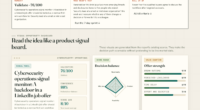
Privacy-control maturity
Hardware snapshot
A compelling thesis, still awaiting validation
Raven Prism’s direction is notable because it addresses privacy through tangible product decisions. The remaining question is whether the final device delivers those protections without compromising utility.
What looks meaningful
Mechanical certainty: A camera cover offers a form of control that does not depend solely on software settings.
Reduced cloud exposure: Local inference can minimize the amount of environmental and personal data transmitted elsewhere.
Continuous use: The dual-battery design includes a small reserve battery, allowing the main battery to be changed without shutting down.
Market signal: Privacy is being treated as a primary product feature rather than a secondary policy statement.
Start with guides kept up to date
Practical buying guides for reducing visual exposure when working on a laptop in offices, transit hubs, cafés and other shared environments.
15 Best Discreet Laptop Privacy Screens in 2026
See the top picks →11 Best Discreet Laptop Privacy Shields in 2026
See the top picks →14 Best Privacy Screen Protectors for Laptops in 2026
See the top picks →What prospective users need to know
The product remains in active development following its announcement at AWE. These answers reflect the company’s disclosed plans rather than a review of final retail hardware.
How does Prism protect user data?
Most processing is intended to happen locally through RavenOS, with encryption and a physical camera cover. External sharing is described as permission-based.
What sets it apart?
The combination of local AI, a custom Linux OS, a visible privacy indicator and direct physical camera control forms its central market distinction.
Will it support AR apps?
Yes. Dedicated applications, eye tracking and voice commands are planned, although the complete interaction model has not yet been detailed.
Could the cover be lost?
The removable magnetic design creates that risk. A future integrated sliding mechanism could offer stronger durability and everyday convenience.
Privacy-First Approach in AR Wearables
The focus on privacy and local data processing in Raven Prism represents a significant departure from many existing smart glasses, which often rely on cloud-based AI and data sharing. This approach could influence industry standards, especially as consumer awareness of data privacy increases. If successful, Raven Prism may set a new benchmark for privacy-centric AR devices, appealing to users wary of surveillance and data misuse.
As an affiliate, we earn on qualifying purchases.
Rising Privacy Concerns in Augmented Reality Devices
In recent years, privacy issues have become a major concern in the development and adoption of AR and wearable technology. Major companies like Meta and Apple have faced scrutiny over data collection practices, especially regarding camera and microphone access. Raven Resonance’s emphasis on local AI and physical camera covers responds directly to these concerns, positioning itself as a privacy advocate in a market often criticized for data misuse.
The company’s decision to use a custom Linux OS and hardware features like camera covers aligns with broader industry trends towards transparency and user control, but it remains to be seen how these features perform in real-world use and whether they will influence competitors.
AR glasses with physical camera cover
As an affiliate, we earn on qualifying purchases.
As an affiliate, we earn on qualifying purchases.
Unconfirmed Aspects of Privacy and Functionality
It is not yet clear how effective the physical camera cover will be in practice, or how the local AI processing impacts device performance and battery life. Details about user interaction, especially regarding eye tracking, remain undisclosed. The actual market response and user adoption are still unknown, as the product is in the early stages of release and testing.
As an affiliate, we earn on qualifying purchases.
Upcoming Release and Industry Impact
Raven Resonance plans to release Raven Prism commercially in the coming months, with further details on software updates, interaction capabilities, and privacy features. Monitoring user feedback and adoption will be key to assessing whether this privacy-first approach influences broader industry standards and consumer preferences.
As an affiliate, we earn on qualifying purchases.
Key Questions
How does Raven Prism protect user privacy?
It processes most data locally using a custom Linux OS with encryption, and features a physical camera cover to prevent recording. Data is not shared with external services unless explicitly authorized.
What makes Raven Prism different from other smart glasses?
The emphasis on privacy, local AI processing, a custom Linux OS, and hardware privacy features like the camera cover set it apart from typical AR devices relying on cloud-based AI and data sharing.
When will Raven Prism be available?
The company has announced an upcoming release in the next few months, but specific dates have not yet been confirmed.
Will the glasses support augmented reality applications?
Yes, Raven Prism is designed to run dedicated applications, with features like eye tracking and voice commands, though full interaction capabilities are still being developed and announced.
Could the physical camera cover be easily lost or damaged?
The magnetic design allows for easy attachment and removal, but its small size raises concerns about potential loss or damage. Future designs may incorporate sliding covers for better durability.
Source: The Ghost Howls
Evergreen bestsellers Picks
bestsellers
As an affiliate, we earn on qualifying purchases.