
TL;DR

Get privacy and security gear delivered free — and shop member deals
- Fast, free delivery on millions of items
- Access to Prime Big Deal Days deals on October 6–7
- Prime Video, Amazon Music and more included
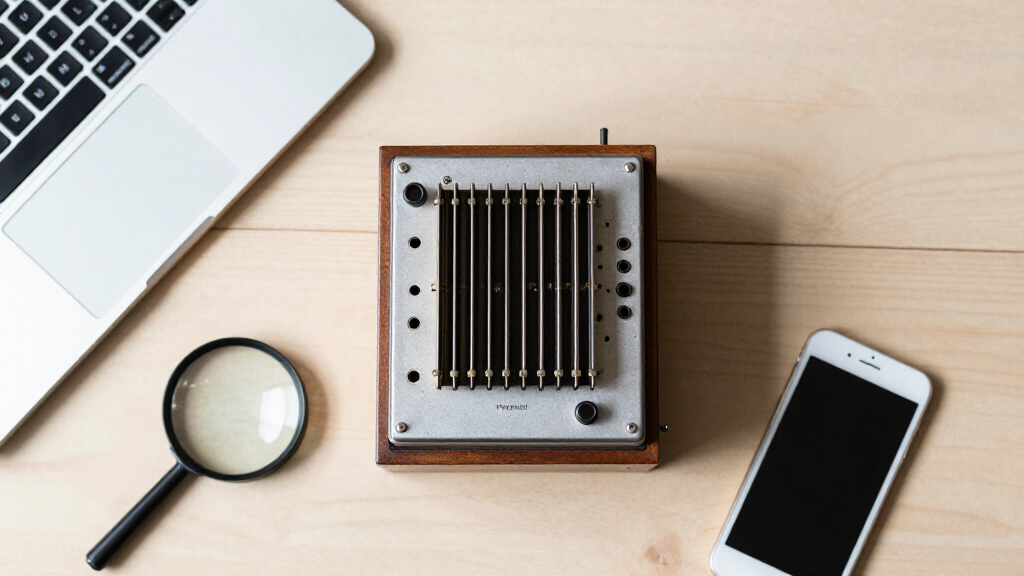
Researchers have uncovered a 1950s Japanese computer called Parametron that uniquely used a technology neither based on transistors nor vacuum tubes. This discovery sheds light on alternative early computing methods and Japan’s technological experimentation during that era.
A 1950s Japanese computer known as Parametron has been identified as utilizing a unique technology that neither employed transistors nor vacuum tubes. This discovery offers new insights into early computing innovations in Japan, a country often overshadowed by Western developments during that period.
The computer, built in Japan during the 1950s, was based on a technology called Parametron, which was developed by Dr. Eiichi Goto at the University of Tokyo. Unlike conventional early computers that relied on vacuum tubes or transistors, Parametron used a magnetic logic device that manipulated magnetic fields to perform computational operations.
Recent research and examination of surviving hardware and documentation confirm that the Parametron technology was a pioneering approach, representing an alternative path in the evolution of digital computing. This technology was considered promising at the time because it offered a potential solution to the reliability and size issues associated with vacuum tubes, and it predated widespread transistor adoption.
Experts note that the discovery of this technology challenges the common narrative that transistors were the sole foundation of modern digital computers in the 1950s. It also highlights Japan’s independent efforts to develop computing technology during this period, which have largely been overlooked in Western-centric histories of computing.
Implications of Parametron for Early Computing History
This finding is significant because it reveals an alternative technological pathway in the development of digital computers, emphasizing Japan’s innovative efforts in the 1950s. It underscores that the history of computing is more diverse than often portrayed, with multiple approaches competing and coexisting during the formative years.
Understanding Parametron’s role could influence how historians interpret technological progress and innovation, especially in non-Western countries. It also provides a broader perspective on the technological experimentation that laid the groundwork for modern computing, which was not solely reliant on transistors and vacuum tubes.
As an affiliate, we earn on qualifying purchases.
Japan’s 1950s Computing Experiments
During the 1950s, Japan was actively exploring different avenues for advancing computing technology, motivated by post-war reconstruction and industrial growth. While Western countries rapidly adopted vacuum tubes and later transistors, Japan pursued alternative methods, including the development of the Parametron device.
Originally developed by Dr. Eiichi Goto, Parametron was tested in various experimental machines, with some prototypes reportedly used for research and educational purposes. Despite its promising features, it was eventually overshadowed by transistor-based computers, which became the global standard.
Historical records and recent discoveries suggest that Japan’s early computing efforts included several innovative approaches, with Parametron being a notable example of independent technological experimentation.
“Parametron technology represented a promising alternative to vacuum tubes and transistors, utilizing magnetic fields to perform logic operations.”
— Dr. Eiichi Goto (researcher and inventor of Parametron)
As an affiliate, we earn on qualifying purchases.
Unresolved Questions About Parametron’s Usage
While the existence of the Parametron technology is confirmed, details about the extent of its deployment, the number of machines built, and their operational success remain unclear. No comprehensive records have been publicly disclosed, and surviving hardware is scarce.
It is also uncertain whether this technology was ever commercialized or remained purely experimental. Researchers are still investigating the full scope of its application and influence during the 1950s in Japan.
As an affiliate, we earn on qualifying purchases.
Future Research and Historical Reassessment
Ongoing research aims to locate additional hardware, documents, and testimonies related to Parametron. Historians and engineers hope to better understand its technical details and historical significance.
Further discoveries could lead to a reassessment of Japan’s role in early computing development. Additionally, this could inspire renewed interest in magnetic logic devices and alternative computing paradigms from the mid-20th century.
As an affiliate, we earn on qualifying purchases.
Key Questions
What exactly is Parametron technology?
Parametron is a magnetic logic device that uses magnetic fields to perform digital logic operations, serving as an alternative to vacuum tubes and transistors in early computers.
Was Parametron ever used in commercial computers?
There is no confirmed evidence that Parametron was used in commercial machines; it appears to have been primarily experimental or for research purposes during the 1950s.
How does Parametron compare to transistors?
Unlike transistors, which rely on semiconductor properties, Parametron uses magnetic fields to switch logic states, potentially offering different advantages in reliability and size, though it was not widely adopted.
Why was Parametron abandoned in favor of transistors?
Transistors proved to be more scalable, reliable, and easier to mass-produce, leading to their dominance in the 1950s and 1960s, overshadowing magnetic logic devices like Parametron.
Source: hn
Evergreen bestsellers Picks
bestsellers
As an affiliate, we earn on qualifying purchases.