📊 Full opportunity report: Digital MSK Assessments: Improving Remote Work Health Strategies on IdeaNavigator AI — validation score, market gap, and execution plan.
Get ready for Prime Big Deal Days — try Prime free
Exclusive member deals on October 6–7, plus fast free delivery. Cancel anytime.
Start your free trialAs an affiliate, we earn on qualifying purchases.
TL;DR
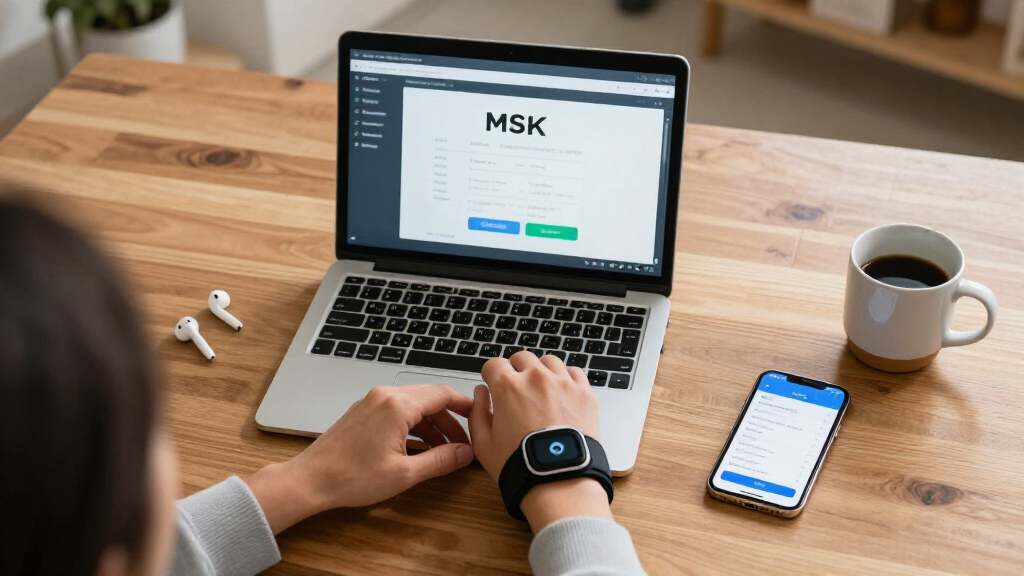
A new digital MSK assessment tool using smartphone cameras is being developed to help remote workers identify early musculoskeletal risks. Employers and benefits providers see this as a way to reduce costs and improve employee health, with pilot programs underway.
Digital musculoskeletal (MSK) assessments using smartphone cameras are emerging as a promising tool to identify early signs of MSK decline among remote workers. This innovation aims to help HR, benefits, and wellness leaders at mid-to-large employers proactively address MSK health, which has become a growing concern due to the shift to remote and hybrid work arrangements.
Remote work has led to increased sedentary behavior, resulting in a surge in neck, back, and posture-related MSK problems. Employers report rising medical claims and workday disruptions but lack practical tools to detect early MSK decline in distributed employees. Existing programs are predominantly reactive, focusing on treatment after pain manifests.
Recently, advances in smartphone camera-based motion capture and pose estimation technology have matured sufficiently to enable self-guided assessments. These assessments can be completed at home within approximately 10 minutes, guiding employees through strength, mobility, and posture tests such as sit-to-stand repetitions, shoulder and hip range-of-motion, plank or wall-sit holds, and seated posture photos.
The goal is to produce a personalized MSK risk score, suggest corrective routines, and track progress over time. Employers could access aggregated, privacy-safe dashboards to monitor team-level MSK risk trends and engagement, with options to refer employees to clinical MSK or physical therapy providers if needed. Pilot programs with one or two employers are planned to validate scoring accuracy, engagement rates, and user retention, with success defined by meaningful participation and positive correlation with clinical assessments.
Implications for Employee Health and Employer Costs
This innovation could significantly shift how companies approach MSK health by enabling early detection and preventive interventions for remote workers. Reducing MSK-related claims and absenteeism can lower overall healthcare costs and improve employee well-being. As remote work remains a permanent fixture for many, scalable digital screening tools offer a proactive solution to a growing occupational health challenge.
smartphone musculoskeletal assessment tool
As an affiliate, we earn on qualifying purchases.
As an affiliate, we earn on qualifying purchases.
Remote Work and Rising MSK Challenges
The shift to remote and hybrid work models has minimized incidental movement, commutes, and ergonomic office setups, leading to increased sedentary behavior. MSK issues, already a top driver of employer medical costs, are escalating among knowledge workers. Traditional MSK programs are reactive, often addressing pain after it occurs, which can be costly and disruptive. The advent of camera-based motion analysis offers a new pathway for early detection, aligning with broader trends toward digital health and personalized wellness solutions.
As an affiliate, we earn on qualifying purchases.
Validation and Adoption Challenges for Digital MSK Tools
It remains unclear how accurately camera-based assessments will correlate with clinical evaluations, such as those performed by physical therapists. The success of pilot programs will depend on user engagement, privacy considerations, and regulatory compliance. The timeline for widespread adoption and integration into existing benefits platforms is still uncertain, as is the long-term impact on MSK health outcomes.
remote worker ergonomic assessment kit
As an affiliate, we earn on qualifying purchases.
As an affiliate, we earn on qualifying purchases.
Next Steps for Pilot Deployment and Validation
Within the next 60 to 90 days, pilot programs are expected to launch with select employers to test assessment usability, engagement rates, and scoring validity. Data collected will inform refinements to the assessment protocols and scoring algorithms. Successful pilots could lead to broader rollout and integration into corporate wellness offerings, with ongoing monitoring of health outcomes and cost savings.
portable musculoskeletal health monitor
As an affiliate, we earn on qualifying purchases.
As an affiliate, we earn on qualifying purchases.
Key Questions
How does the digital MSK assessment work?
The assessment guides employees through a series of strength, mobility, and posture tests using their smartphone camera, capturing movement and pose data to generate a personalized MSK risk score.
Will this replace in-person physical therapy?
No, the tool is designed for early screening and risk detection. It can identify employees who may benefit from professional assessment or intervention but does not replace clinical care.
What privacy protections are in place?
The assessments are designed to be privacy-safe, with data anonymized and aggregated for employer dashboards. Individual data is only shared with authorized clinical partners if a referral is made.
When will these assessments be available for widespread use?
Pilot programs are expected to begin within the next 60 to 90 days, with broader availability depending on pilot outcomes and validation results.
How will employers measure the success of these tools?
Success will be gauged by high completion and retention rates, positive correlation with clinical assessments, and the number of employees referred for further care or intervention.
Source: IdeaNavigator AI
Fall Picks
fall essentials
As an affiliate, we earn on qualifying purchases.