
TL;DR

Get privacy and security gear delivered free — and shop member deals
- Fast, free delivery on millions of items
- Access to Prime Big Deal Days deals on October 6–7
- Prime Video, Amazon Music and more included
APIs are defined ways for software systems to request information or actions from one another, and they increasingly connect customers, partners, employees, and vendors to business services. Because an API can expose data or trigger actions, businesses need to know what APIs exist, who owns them, what each caller may do, and how the interfaces behave when traffic, errors, or changes occur.
A customer taps “Place order”, the screen spins for two seconds, and then the payment goes through. Behind that small moment, several software systems may have exchanged requests: one checked inventory, another asked a payment service to authorize a card, and a third arranged delivery. The customer never saw those connections. They still felt every second of delay.
An application programming interface (API) is a defined way for one software system to ask another for information or an action. APIs let software systems exchange information and request work; they are often described as technical plumbing. But when a partner checks a shipment or an app retrieves an account balance, the API is a hidden front door into a business capability.
This guide explains why APIs shape customer experience, how their access creates security and privacy responsibilities, and what practical steps help a business manage them. You will also see why simply knowing an endpoint exists is not enough: teams need clear ownership, sensible permissions, monitoring, and a plan for change.
Treat an API as a business access channel because it can expose information or trigger actions even when customers never see it.
Check identity, permissions, and access to the specific resource on every request.
Inventory APIs with their owners, callers, data or actions, monitoring, and lifecycle plans.
Prioritize interfaces tied to sensitive records, financial actions, and services customers depend on.
Use clear documentation, change notices, error handling, and retirement plans to protect partner and customer experiences.
Business systems · Access · Trust
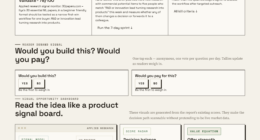
How APIs Become the Hidden Front Door of a Business
An API is a defined way for software systems to request information or actions from one another. That unseen connection can shape a customer’s experience, open a partner channel, and expose a business capability—so every doorway needs an owner, clear permissions, and dependable care.
Customers, partners, and teams
Reveal data or trigger an action
Identity, permission, resource
Owners, users, risks, lifecycle
The doorway is invisible. Its impact is not.
01 / Why APIs matterSpeed, uptime, and useful error handling decide whether a checkout completes or a customer gets stuck.
Partners can bring pricing, inventory, payments, or delivery status into services a company does not operate itself.
Each interface can expose sensitive information or authorize consequential work. Access must match the caller and the resource.
What happens behind “Place order”
A request chainCheck inventory
Is the selected item available right now?
Authorize payment
Can the payment service approve the card?
Arrange delivery
Can the order reach the customer?
Show the result
Clear responses turn system work into a smooth experience.
The customer sees one button. The business owns the joined-up experience, including delays, failures, and recovery.
Every API has a different job—and a different consequence.
02 / Choose controls by capabilityOpening hours
A public fact may need simple access rules, availability monitoring, and a clear source of truth.
Account or delivery record
Confirm who is calling and whether they may see this specific customer’s information.
Refund or address change
Use narrow permissions, stronger safeguards, audit trails, and careful limits on repeated requests.
Security is a decision on every request
03 / Check the caller and the targetA successful login does not grant access to every record. For each request, verify the identity, the action allowed, and permission for the specific resource. Network boundaries help, but they cannot make that decision alone.
Who is calling?
Authenticate customers, employees, partner systems, or automated services reliably.
What may they do?
Grant only the actions and data access needed for that caller’s role.
Which record or action?
Check access to the particular account, parcel, payment, or operation requested.
Build an API inventory teams can actually use
04 / Find it · Own it · Operate itStart with every interface: private, partner-shared, and public. Public availability does not mean unrestricted use; credentials, limits, and permitted uses still matter.
Record what each API reaches, who depends on it, and how the team detects trouble. Include older or undocumented interfaces: an abandoned endpoint can still be a route into a business service.
Good operations make integrations dependable
05 / The service around the interfaceDocumentation & roles
Explain permitted requests, credentials, expected responses, and where developers can get support.
Latency & failures
Monitor response times and errors across systems so teams can find the source of a stalled customer task.
Versions & retirement
Give partners notice, handle temporary errors clearly, and plan a safe path for updates and shutdowns.
Trace the doorway from owner to outcome
A usable governance loopOpenAPI descriptions, gateways, developer portals, and observability tools can support this work. They help teams describe and operate APIs; they do not replace correct business permissions or clear ownership.
What makes an API a hidden front door?
An API becomes a hidden front door when software uses it to reach a business service without going through the company’s visible website or app. It defines what a connected system can ask for and how the business responds. The “door” is a metaphor: an API is usually a software interface, but it can still provide a route to information or actions.
For example, a travel site can ask an airline’s system for available seats and current prices. The traveler sees a search results page, while the two businesses’ systems talk through APIs. If the airline’s interface returns stale inventory, the traveler may choose a flight that is no longer available. The digital doorway has shaped the experience before anyone boards a plane.
APIs can be internal, shared with selected partners, or made available to outside developers. Publicly available does not mean open to everyone without controls, free, or unrestricted. A public API may require credentials, set usage limits, and spell out permitted uses—much like a building’s public entrance still has opening hours and rules.
That access can support reach as well as service. A delivery company might let a retailer display parcel status inside its own app, giving customers a useful update without visiting a separate tracking page. The delivery company gains a partner channel, and the retailer gains a smoother service. The arrangement works because each system has a defined role and a defined set of permitted requests.
For a business, the practical question is not just, “Do we have an API?” It is, “Which capabilities can a system reach through it, and who can make those requests?” An interface that checks public opening hours carries different consequences from one that changes a shipping address or initiates a refund. That distinction helps teams decide what protection, support, and oversight each doorway needs.
As an affiliate, we earn on qualifying purchases.
How APIs turn into part of the customer experience
APIs affect customer experience whenever an app or service depends on them to complete a task. Their speed, availability, and error handling determine whether a feature feels quick and dependable or stalls like a checkout line with one cashier. Customers may never know which system caused a problem, but they experience the result as part of the business’s service.
Consider a small retailer during a busy holiday sale. A shopper adds the last blue coat in size medium to a cart, but the inventory API is slow to update. If the checkout page shows the item as available after another customer bought it, the retailer may need to apologize and issue a refund. A quick, accurate response can prevent that disappointment; clear handling of temporary errors can keep a brief service hiccup from becoming a failed order.
A functioning API needs more than an address where requests arrive. It needs authentication to establish who is calling, authorization to decide what that caller can do, useful documentation, predictable error responses, traffic limits, monitoring, support, and a policy for changes. Imagine a partner integration receiving only “request failed.” Its developers cannot tell whether they should retry, check their credentials, or contact support. A better error response provides useful direction without exposing private system details.
There is a tradeoff between a seamless experience and responsible limits. A company may want an app to refresh delivery status frequently, but excessive requests can strain a system or drive up a vendor bill. A measured refresh interval, paired with clear updates like “Last checked at 10:42,” can keep the service useful without asking for new data every few seconds.
When a feature fails, teams should trace the customer journey across the systems involved. A slow payment provider, a change to an API response, and an error in the company’s own app can look alike from the checkout screen. Monitoring request failures and response times helps teams find the cause, tell customers what is happening, and restore the task they came to complete.
As an affiliate, we earn on qualifying purchases.
What API security must check on every request
API security means checking that each request comes from an accepted identity, carries only the permissions needed, and applies to the particular data or action requested. A strong network boundary helps, but it cannot answer every question about a request from a partner or an employee’s app. The system also needs to check the caller and the specific resource involved.
Imagine a customer support tool that lets staff look up delivery records. A login may prove that a staff member is signed in, but it does not automatically mean that person should see every customer’s history. The API should check whether the staff member has a work reason and permission to access the particular record. If it only checks that the caller has logged in, private information can cross the wrong boundary.
OWASP’s API Security Top 10 highlights risks such as broken object-level authorization, broken authentication, and unrestricted resource consumption. These labels describe everyday control problems: an interface may fail to check access to a specific account, accept weak or mishandled identity proof, or allow requests that use too much time or capacity. OWASP guidance helps teams organize their review, though a checklist alone cannot show whether a particular business rule is correct.
Good controls start with a narrow scope. A delivery partner that needs to report parcel progress may not need customers’ payment details or the power to edit an order. If a partner account is exposed, limiting it to shipment updates can reduce the possible impact. Clear permission boundaries also make it easier to review whether the integration still needs the access it received months ago.
Companies should also track credentials and sensitive data across integrations. A forgotten test key in an old integration can keep a route open after its original purpose has ended. Teams can reduce that risk by assigning an owner, limiting what each credential can do, replacing credentials when needed, and watching for unexpected use. These measures give security staff a better chance of noticing when a request no longer matches the integration’s normal job.
As an affiliate, we earn on qualifying purchases.
How to build an API inventory your teams can use
To build a useful API inventory, list each interface, its owner, its users, the data or actions it exposes, and the way the team monitors and changes it. An inventory is the starting point for deciding which controls apply. Without it, a business may protect its best-known interfaces while missing an older integration that still handles sensitive requests.
- Find what exists. Ask product, engineering, operations, and security teams, then review cloud services and vendor connections. For instance, a finance team may rely on a payment integration the app team does not manage.
- Name an accountable owner. Record who handles access questions, failures, documentation, and planned changes. “The platform team” is less useful than a named team with a support route.
- Describe each API’s job. Note which callers use it and whether it reads data, changes records, or triggers actions. A status lookup and a refund request deserve different scrutiny.
- Record protection and lifecycle details. Capture authentication, permissions, limits, monitoring, version, and retirement plans. Add a review date so an unused connection does not disappear from view.
For example, a growing clinic might find one appointment API used by its website, a reminder service, and a patient app. The inventory could reveal that the reminder vendor needs appointment times and contact details but has no reason to see billing records. The team can confirm that its access matches its purpose and identify who to contact if reminders stop arriving.
As of 2024, API discovery and inventory were growing priorities as cloud services, older systems, and separate teams left organizations with interfaces they did not always recognize. An interface that lacks clear ownership or documentation is sometimes called a shadow API. The phrase does not mean every forgotten endpoint is actively unsafe; it means the business has less visibility into how that route is used, maintained, and protected.
Documentation can help teams keep an inventory usable. An OpenAPI specification, for example, can describe an interface’s available requests and expected responses in a format tools can read. That description can support development and review, but it cannot decide whether a caller should access a specific customer record. Ownership and authorization rules still need people to define and maintain them.
As an affiliate, we earn on qualifying purchases.
Which API concerns should a business tackle first?
Start with the APIs that expose sensitive information, allow consequential actions, or support a service customers rely on. This order helps a team spend attention where mistakes could affect people or operations most. A business does not have to treat every interface as equally sensitive to manage it responsibly.
| API role | Everyday example | First question to ask |
|---|---|---|
| Read information | A partner checks delivery status | Does the caller see only the shipment it is allowed to check? |
| Change a record | A customer updates a shipping address | Can the system confirm the caller may change this order? |
| Trigger a financial action | A service requests a refund | Are identity, approval, and limits appropriate to the amount? |
| Support a core service | A checkout asks a payment provider to authorize a card | What does the customer see if the provider is delayed? |
A small retailer could use this table during a routine review. Its store-locator API might return public addresses, while its order API can reveal personal details or change a delivery. The store locator still needs sensible operational care, but a mistaken response carries a different level of consequence from an order sent to the wrong address.
Dependence matters too. Businesses use APIs from cloud platforms, payment services, identity providers, and partners. If an identity service has an outage, employees may be unable to sign in; if a payment service changes its response format, checkout can falter. Teams can record these dependencies, set expectations for support and change notices, and decide what customers should see if a connection is temporarily unavailable.
Some interfaces also create commercial value beyond a single transaction. A company might publish an API with documentation, usage policies, support, and commercial terms so partners can build services around its products. The return may be direct revenue, or it may come from wider distribution and a smoother partner relationship. Either way, the API behaves like a supported business offering and needs a plan for upkeep.
As of 2024, businesses were also connecting applications to AI services through APIs. That can add questions about data handling, reliability, cost, and control over automated actions. For example, a customer service system might send a user’s question to an external AI provider; the business should understand what information the integration passes, what actions the result can trigger, and how staff review errors.
What good API governance looks like in everyday work
API governance is the set of working rules that keeps interfaces owned, described, protected, monitored, and changed with care. It connects a technical interface to a business decision: who may use it, what it should do, who maintains it, and how callers learn when it changes. Governance is useful when it helps teams answer those questions during ordinary work, not just during an annual review.
Suppose a bank adds a new account feature to its mobile app. The API team plans to rename a field that a budgeting partner also reads. Without a version and communication policy, the partner may suddenly stop importing transactions, and customers may assume the bank lost their data. A planned change, clear notice, and a transition period give both teams time to adapt.
Governance also covers what happens when an interface retires. A former event registration API might still receive requests from an old marketing tool after the campaign ends. If nobody owns it, the business may not know whether those requests are legitimate, whether they contain personal data, or whether the interface can be safely shut down. A retirement plan records callers, sets a date, communicates the change, and confirms the old route no longer serves a business need.
Different teams can share responsibility while keeping roles clear. Product owners can explain the business purpose; engineers can maintain behavior and documentation; security teams can review access and sensitive data; operations staff can watch reliability. A monthly review of a few high-impact APIs may reveal a broken integration or expired partner account before customers report a problem.
Tools such as API gateways, developer portals, and monitoring dashboards can help describe, route, and observe interfaces. As with a building’s front desk, a gateway can direct traffic and enforce some rules. It cannot replace the check that decides whether this particular caller may access this particular account. Clear business rules and accountable owners remain essential.
Frequently Asked Questions
What is an API in simple terms?
An API is a defined way for one program to ask another program for information or an action. A checkout can ask a payment service to authorize a transaction, much like a cashier asks a card network to approve a purchase.
Why call an API a hidden front door?
Customers and partners can reach a company’s services through software connections instead of its visible website or app. A delivery partner checking parcel status is using a business doorway that may be invisible to the customer watching the retailer’s app.
Are all APIs public?
No. Many APIs are internal or limited to approved partners. Even an API that outside developers can use may require credentials, impose limits, and set terms for how it can be used.
Does using an API mean a company is selling data?
No. An API may return data, trigger an action, or let two systems coordinate a task. What it shares depends on its design, permissions, and the terms governing the connection; a payment authorization request, for example, is not the same as selling a customer database.
What should a business do first to manage API risk?
Start with an accurate API inventory that identifies owners, callers, sensitive data, and available actions. Then review whether each caller has only the access it needs and whether the team can spot failures or unexpected use.
What happens when an API changes or goes down?
Connected features may slow down, fail, or show outdated information. Versioning, advance notice, monitoring, clear error handling, and a plan for temporary outages can reduce the disruption—for example, a shop might explain that payment is temporarily unavailable instead of leaving checkout spinning indefinitely.
Conclusion
Remember this: every API has a job, an owner, and a boundary. Know what each interface lets a system do, check that the caller has permission for that specific work, and plan for failure and change before they disrupt a customer’s day.
When you tap “Place order,” the hidden doors behind the screen should open only for the right systems, carry only the right requests, and close cleanly when their work is done.
Fall Picks
fall essentials
As an affiliate, we earn on qualifying purchases.