

📊 Full opportunity report: IdeaClyst: The Validation Council on ThorstenMeyerAI.com — validation score, market gap, and execution plan.
TL;DR
IdeaClyst has introduced a new AI-driven validation council that uses two models, Claude and Codex, to critically evaluate ideas through structured disagreement. This process aims to improve decision quality and reduce costly failures.
IdeaClyst has launched its ‘Validation Council,’ an AI-driven process designed to rigorously evaluate ideas before they are prioritized for development. This new system employs two different models, Claude and Codex, to debate each idea from opposing perspectives, aiming to reduce the risk of costly, plausible-sounding but weak ideas passing through unchecked. The council’s approach emphasizes structured disagreement and transparency, setting a new standard for idea vetting in AI and tech development.
The IdeaClyst Validation Council is a structured, multi-step process that begins with a research pre-step gathering relevant context, prior art, and evidence about an idea. Following this, two models—Claude and Codex—are assigned to argue for and against the idea, respectively. The debate proceeds through five deliberate steps: framing the idea, steel-manning it, red-teaming it, evidence-checking, and synthesizing a verdict. The process produces an auditable recommendation, detailing the strengths, weaknesses, and assumptions involved. It is open source under MIT license and runs locally on owned compute, making it cost-effective and repeatable.
By requiring models to contest each other’s claims, the council reduces the tendency of AI to agree with itself, thereby surfacing objections that might otherwise be overlooked. This method aims to improve decision quality by making the vetting process more transparent and less prone to confirmation bias, ultimately helping operators avoid investing in weak ideas that appear plausible but lack robustness.
IdeaClyst — the validation council
Most ideas don’t die from being bad — they die from being plausible and untested. A research pre-step, then two models cross-examining the idea before it earns a roadmap slot.
Independent commentary, produced with AI assistance under human editorial oversight. The views are the author’s own and may change. IdeaClyst is open source under MIT, provided “as is” without warranty; see the repository LICENSE. The council’s research, deliberation and verdicts are produced by automated models and may contain errors or shared blind spots — a verdict is auditable reasoning, not validated demand; verify independently before committing. Product and company names are trademarks of their respective owners; mention does not imply endorsement.
Why Structured Disagreement Elevates Idea Validation
The introduction of the Validation Council represents a significant step in AI-assisted decision-making. By formalizing a process where opposing models debate ideas, it reduces the risk of false confidence and confirmation bias that often plague single-model assessments. This approach enables organizations to make more informed, transparent, and reliable decisions about which ideas to pursue, potentially saving time and resources by killing weak concepts early. It also promotes a vendor-agnostic framework, as the system is designed to work with multiple models, avoiding vendor lock-in and encouraging broader adoption of open-source AI tools.
Ultimately, this innovation could reshape how companies evaluate internal ideas, shifting from informal, intuition-based judgments to rigorous, evidence-backed debates that are fully auditable and repeatable. As a result, it offers a scalable method to improve the quality of strategic decisions across AI and tech development pipelines.

ChatGPT for Business 101: AI-Driven Strategies to Cut Costs, Skyrocket Productivity and Boost Your Bottom Line
As an affiliate, we earn on qualifying purchases.
As an affiliate, we earn on qualifying purchases.
Background on Idea Validation and AI Decision Tools
Prior to the launch of the Validation Council, idea vetting in tech companies often relied on informal reviews, expert judgment, or single-model AI assessments that could be overly optimistic or biased. The concept of structured disagreement is rooted in the recognition that AI models tend to share blind spots and default assumptions, which can lead to overconfidence in their outputs.
Previous efforts to improve decision quality have included multi-model ensembles and human-in-the-loop processes, but these often lacked transparency or were costly. IdeaClyst’s approach builds on recent advances in open-source AI, emphasizing vendor-agnosticism and local compute, to provide a scalable, repeatable, and transparent alternative. The company announced the system in early 2024, positioning it as a key component of a broader decision-layer infrastructure that helps operators decide what to do—and what not to do—more effectively.
“The core value of the Validation Council is in its ability to surface objections and weaknesses early, before costly development cycles begin.”
— Thorsten Meyer, IdeaClyst founder
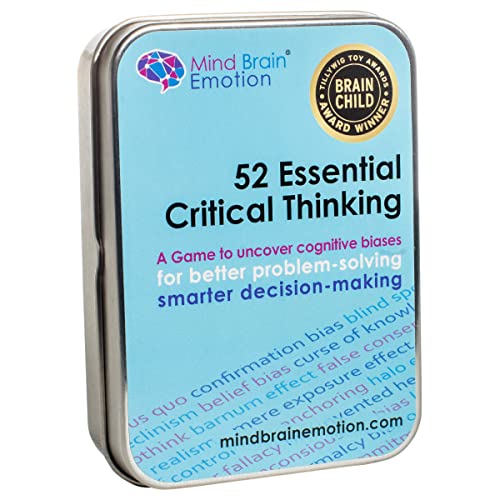
52 Essential Critical Thinking: Smart Flash Cards to Uncover Implicit Biases, Detect Cognitive Biases in Social Media, AI, Writing, Speech, Debate, for Teens & Adults – by Harvard Educator
Developed by Harvard Educator: Help uncover cognitive biases with 52 flash cards that align with Bloom's Taxonomy.
As an affiliate, we earn on qualifying purchases.
As an affiliate, we earn on qualifying purchases.
Limitations and Risks of Model-Based Idea Validation
While the Validation Council introduces a novel approach, it remains limited by the inherent flaws of AI models. Both Claude and Codex can share similar blind spots, and their disagreement does not guarantee truth. The process cannot distinguish between internally consistent but externally false ideas or market realities. Additionally, the structured debate might lend an illusion of rigor, potentially making weak ideas seem more credible if not carefully scrutinized. The system’s effectiveness depends heavily on the quality of the research pre-step and the framing of the debate.
Further, it is not yet clear how well the council performs across different domains or complex strategic decisions, and whether it can reliably replace or supplement human judgment in high-stakes contexts.

Starting a Business Roadmap: The Beginner Entrepreneur's Guide to Be Your Own Boss, Leverage AI, and Achieve Financial Independence
As an affiliate, we earn on qualifying purchases.
As an affiliate, we earn on qualifying purchases.
Next Steps for Adoption and Validation of the System
Following the initial launch, IdeaClyst plans to release detailed case studies demonstrating the council’s effectiveness in real-world applications. They will also gather user feedback to refine the process and evaluate its impact on decision quality. Broader adoption in industries beyond AI development, such as product management and strategic planning, is anticipated as the open-source framework matures.
Further research will focus on integrating additional models, improving the research pre-step, and developing metrics to quantify the council’s influence on project success and failure rates.

Analytics, Data Science, & Artificial Intelligence: Systems for Decision Support
As an affiliate, we earn on qualifying purchases.
As an affiliate, we earn on qualifying purchases.
Key Questions
How does the IdeaClyst Validation Council differ from traditional idea review processes?
The council uses opposing AI models to debate each idea through a structured, multi-step process, providing an auditable and transparent recommendation, unlike traditional informal reviews or single-model assessments.
Can the system guarantee that an idea is good or market-ready?
No, the council can only assess internal robustness and evidence-based validity. It cannot determine external market viability or ultimate success.
Is the system open source and vendor-agnostic?
Yes, the system is open source under the MIT license and designed to work with multiple models, avoiding vendor lock-in and encouraging broad adoption.
What are the main limitations of the Validation Council?
Its effectiveness depends on the quality of the research pre-step and the models used. It cannot guarantee truth, and models may share blind spots, potentially leading to false confidence.
Source: ThorstenMeyerAI.com