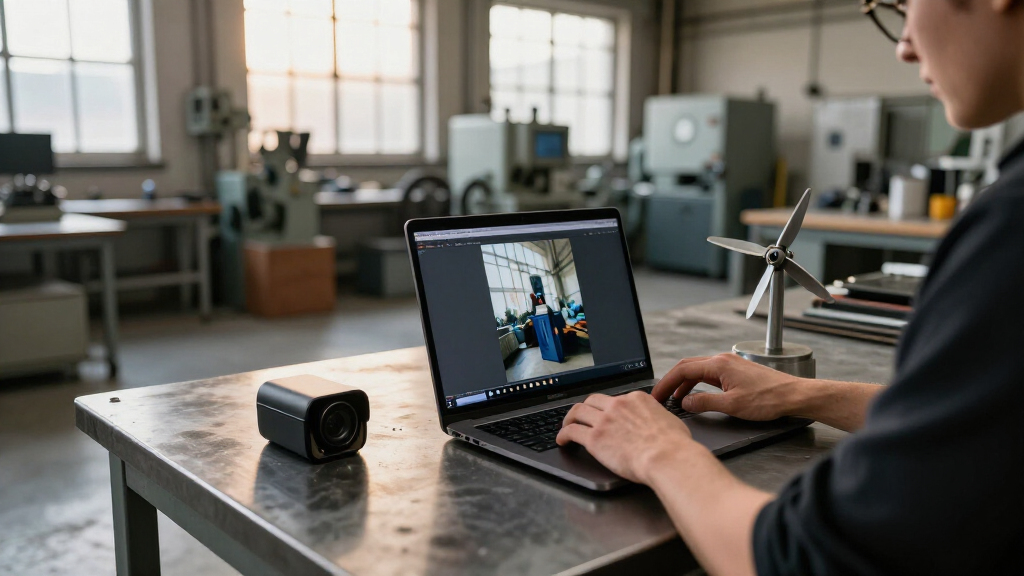

🔍 Read the full analysis: Exploring The Creative AI Context Of “TURBINE — WERK 9” on ThorstenMeyerAI.com

Get privacy and security gear delivered free — and shop member deals
- Fast, free delivery on millions of items
- Access to Prime Big Deal Days deals on October 6–7
- Prime Video, Amazon Music and more included
TL;DR
TURBINE — WERK 9 is presented as a live, interactive web project that uses scrolling to animate an SVG rotor and frame the page as a field guide. The available description does not identify the team or provide technical specifications, performance data or a release date.
TURBINE — WERK 9 is presented as a live interactive web experience in which scrolling moves an SVG rotor, turning navigation through the page into part of an industrial-themed field guide. The project matters as a design example of how a familiar browser input can shape an experience beyond standard page navigation, as explored in the original analysis, though details about its creators and technical implementation have not been provided.
The project description says the page is designed to behave less like a brochure and more like a machine that visitors can explore. A scroll-driven vector graphic connects movement through the page with the motion of a rotor, giving the act of scrolling a visible role in the experience. The description characterizes the result as responsive while retaining the clarity of a deliberately designed object.
Field-guide framing gives the interaction an organizing idea: visitors are invited to explore, but the exploration is presented as having a purpose. The description also points to an industrial atmosphere and a visual system built around the rotor. It says a fuller design teardown discusses how the motion was shaped, how the visual system was organized and how a physical-feeling space was translated into a browser experience.
The experience is described as live, with a link to visit it and a separate link to read the case study. No specific launch date, implementation details, accessibility information, device requirements or user testing results are supplied in the description. Those limits make it possible to report the stated design concept, but not to independently assess how it performs in use.
Creative Web Field Notes · Project Profile
Exploring the Creative AI Context of “TURBINE — WERK 9”
A live, interactive web experience turns scrolling into part of an industrial field guide. Its central idea is clear: move through the page, and an SVG rotor moves with you. The available description leaves the creators, technology and results unspecified.
“What if a web page behaved less like a brochure and more like a machine you could walk around?”
Project description · ThorstenMeyerAI.com
01 / The development
Scroll becomes part of the machine
The project description presents TURBINE — WERK 9 as a web experience designed to feel less like a brochure and more like a place to explore. Scrolling is described as an input tied to the movement of a central SVG rotor, making navigation part of the visual story.
Movement with meaning
Page movement is connected to rotor motion, giving a familiar browser action a visible role in the experience.
A field guide online
The field-guide framing gives exploration an organizing idea, inviting visitors to move through the page with purpose.
An industrial atmosphere
The description points to a visual system built around the rotor and a physical-feeling environment translated for the browser.
02 / How the idea connects
From input to atmosphere
The stated concept links a visitor’s action to a graphic response, then uses that response to support the project’s exploratory framing.
03 / Reading the AI context
Design example, technology unknown
The project is relevant to audiences interested in creative coding, AI-assisted design and web automation as an interaction-design example. That audience interest does not establish that AI generated or powered the experience.
What the description says
A live web experience pairs scrolling with an animated SVG rotor and presents the result as an industrial field guide. A separate design teardown is said to cover motion, visual organization and translating a physical-feeling space into a browser.
What it does not establish
No named creator or team, technical stack, AI role, launch date, accessibility provisions, user testing or performance measurements are supplied in the available description.
04 / What is known
Known concept. Open questions.
The project description makes its interaction concept legible, while leaving much of its production and evaluation context open.
The bars distinguish what the description states from areas where it supplies no information; they do not measure quality or performance.
05 / Questions to carry forward
The case study holds more detail
The next steps described are to visit the live experience and read the linked design teardown. Further reporting could clarify authorship, implementation, accessibility and how visitors use the page.
What is TURBINE — WERK 9?
A live interactive web experience framed as an industrial field guide, with a scroll-driven SVG rotor at its center.
How does the rotor work?
Scrolling is said to drive its motion. The code, animation mechanics and browser requirements are not specified.
Was AI used to make it?
That is not established. Interest from an AI and automation audience is not evidence of AI use.
Who made it, and what remains unknown?
No creator or team is named. The description also omits a launch date, technical stack, accessibility details, testing, performance data and the physical subject behind the field-guide concept.
Scroll Becomes Part of the Machine
The project offers a concrete example of interaction as visual storytelling: scrolling is not described merely as a way to move between blocks of text, but as an input tied to the motion of a central graphic. That approach can help make a digital environment feel connected to its subject, here an industrial space, while giving visitors a recognizable way to explore it.
For people interested in creative coding, AI-assisted design and web automation, the stated combination of browser interaction and constructed vector paths is relevant as a design pattern. The description does not claim that artificial intelligence generated the experience or powered its interaction. Its connection to AI tools and automation is presented as an audience interest, not as evidence of an AI-built product.
The distinction matters: the project can be discussed as an interactive web-design example without overstating its technology. Whether the approach improves comprehension, accessibility or engagement would require evidence not included in the available description.
As an affiliate, we earn on qualifying purchases.
A Field Guide in the Browser
TURBINE — WERK 9 is framed around a question about web design: what might change if a page behaved less like a brochure and more like a place to move through? Its answer, as described, is to connect scroll input to an animated SVG rotor and use that motion to support an exploratory field-guide format.
The description also points readers to a design teardown covering the rotor’s movement, the visual system and the translation of a physical-feeling space into a browser experience. That case study may provide further detail, but the description itself does not state who made the project, identify the physical site it refers to or set out the specific design decisions in full. There is no basis here to assign authorship to a named designer or to describe the work as a commercial product.
“What if a web page behaved less like a brochure and more like a machine you could walk around?”
— Project description on ThorstenMeyerAI.com
As an affiliate, we earn on qualifying purchases.
Technical and Launch Details Missing
The project is described as live, but the available information does not provide a publication or launch date, a named team, or details about the tools and code used to build the interaction. It also does not specify the rotor’s behavior across different screen sizes, whether the motion has reduced-motion alternatives, or how the experience works for visitors who do not scroll in the usual way.
No audience figures, performance measurements, usability testing or accessibility evaluation are reported. The description’s characterization of the page as responsive and clear should therefore be understood as a description of the design intent, not as independently verified results. It is also unclear what role, if any, AI played in producing the project; the stated appeal to AI and automation fans does not establish that AI was used.
industrial-themed web design elements
As an affiliate, we earn on qualifying purchases.
As an affiliate, we earn on qualifying purchases.
The Case Study Holds More Detail
The next available step for readers is to visit the live experience and consult the linked design teardown. The teardown is described as covering the rotor’s motion, the visual system and how the project translates a physical-feeling environment into an online interface.
Further reporting would need those details to establish the implementation, authorship and accessibility provisions, as well as any evidence about how visitors use the page. Until that information is available, the confirmed development is limited to the project’s stated format and its scroll-controlled SVG interaction.
Source: ThorstenMeyerAI.com
As an affiliate, we earn on qualifying purchases.
Key Questions
What is TURBINE — WERK 9?
It is described as a live interactive web experience framed as an industrial field guide, with a scroll-driven SVG rotor as a central interface element.
How does the rotor interaction work?
The description says that scrolling drives the rotor’s motion. It does not provide implementation details such as the code, animation mechanics or browser requirements.
Was the project made with artificial intelligence?
That is not established. The project is described as appealing to people interested in AI tools and automation, but no AI role in its design or construction is specified.
Who created TURBINE — WERK 9?
The available description does not name a creator or team. A fuller case study is referenced, but its authorship is not stated in the information provided.
What details are still unknown?
The description does not give the launch date, technical stack, accessibility provisions, user testing results or performance data. It also does not identify the physical location or subject behind the field-guide concept.
Source: ThorstenMeyerAI.com
Fall Picks
fall essentials
As an affiliate, we earn on qualifying purchases.