
🔍 Read the full analysis: From Film Credits To Living Exhibition: “After Action” And AI on ThorstenMeyerAI.com

Get privacy and security gear delivered free — and shop member deals
- Fast, free delivery on millions of items
- Access to Prime Big Deal Days deals on October 6–7
- Prime Video, Amazon Music and more included
TL;DR
After Action is an AI-built web exhibition that frames 24 fictional Wing V website projects as film productions in a navigable end-credit sequence. The source describes its design and accessibility features, but does not establish how the project was built, tested or received beyond that account.
After Action — Wing V Debrief Theater presents a fictional collection of 24 web experiences as the closing credits of an imagined film, turning a browser-based exhibition into a navigable, animated screening room. The AI-built work is described by ThorstenMeyerAI.com as a design piece, not a real company or a record of actual military activity.
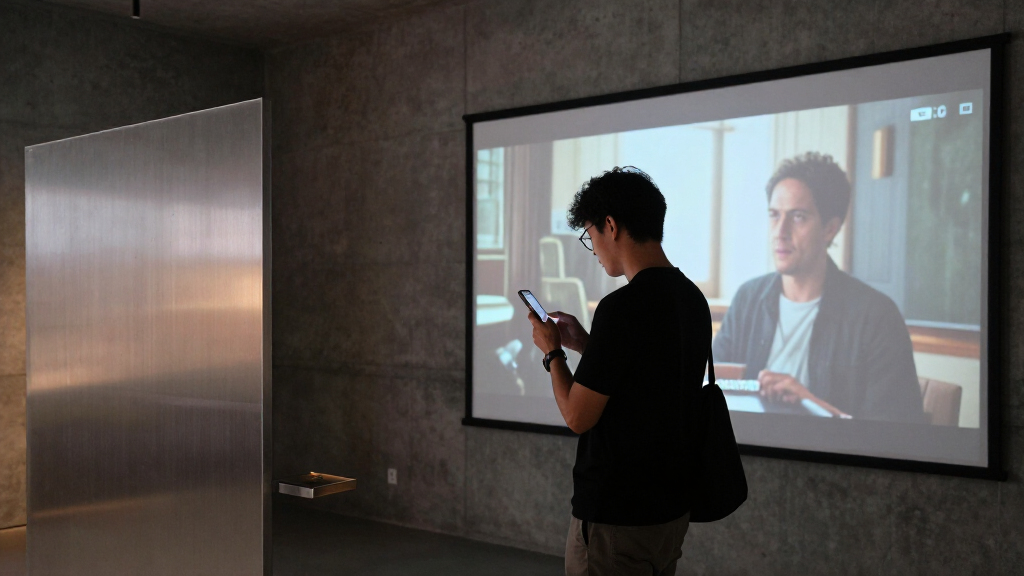
Rather than arranging the projects in a conventional gallery grid, the exhibition sets a continuous credit roll against a nearly empty cinema. The credits name the 24 Wing V rooms as productions and are interrupted at intervals by small, code-built sand-table scenes. The miniatures evoke a shield formation, a catapult’s arc and two keys moving toward a shared lock; the source says they emphasize interaction design rather than depicting harm.
The roll is controlled by JavaScript, which tracks elapsed time and moves one continuous track. Chapter stops coordinate the time display, locator line, section label and jump controls. Visitors can pause or move between sections. A separate stationary linked register offers another way to browse the projects, while the moving names are removed from keyboard focus.
The stated design uses cinema black, beam white, sand amber and credit gold, with compressed display lettering and monospace explanatory text. Letterbox bars, registration marks, grain and a projected beam reinforce the theater framing. The exhibition’s atmosphere also uses layered visual effects, including dust and flare. The source says a planned ambient video was unavailable in the described build, so a locally stored still image is used instead.
Wing V / Digital Exhibition / Room 125 of 175
From Film Credits to Living Exhibition: “After Action” and AI
After Action — Wing V Debrief Theater turns 24 fictional web projects into the closing credits of an imagined film. A continuous roll, chapter stops and miniature scenes make the browser feel like a navigable screening room.
“War, staged. Craft, real.”
Title card / WING V / FABLE 125A gallery that plays like a film
Rather than placing projects in a static grid, After Action gives them a shared fictional frame and makes browsing part of the exhibition.
One paced sequence
JavaScript tracks elapsed time and moves one continuous track. Chapter stops coordinate the time display, locator line, section label and jump controls.
Code-built miniatures
Sand-table scenes evoke a shield formation, a catapult’s arc and two keys moving toward a shared lock. The source frames them as interaction design, not depictions of harm.
A stationary register
A linked project list offers direct browsing alongside the moving credits. The moving names are removed from keyboard focus.
Atmosphere with navigation built in
The visual language draws on cinema while the described controls provide ways to browse at a visitor’s own pace.
The visual frame
The art direction pairs cinema black, beam white, sand amber and credit gold with compressed display lettering and monospace explanatory text.
- Letterbox bars, registration marks and projected-beam effects
- Grain, layered dust and flare for a screening-room atmosphere
- CSS perspective and terrain layers for sand-table scenes
The described build
The source presents a single-page HTML, CSS and JavaScript experience, with no frameworks, build step, CDNs or external requests.
- Responsive layout and visible keyboard focus are specified
- Reduced-motion support and manual scrolling are described
- Animation pauses when the browser tab is hidden
What the source does not verify
The supplied account describes the interface and intended behavior. It does not provide a publication date, visitor figures, an independent accessibility audit or measured performance results.
It is not clear whether every brief requirement was implemented or tested at the stated screen widths. The source also offers no build log independently documenting which parts were generated by AI and which were written or revised by people.
A planned ambient video was unavailable in the described build, so a locally stored still image was used. The reason and any later change are not stated. These limits make the project an example of a described design approach, not proof of real military activity or verified outcomes.
What visitors can take from it
The confirmed account is a description of the build as presented by its source. The live version may have changed since that description.
What is After Action?
An AI-built browser exhibition presenting 24 fictional web projects as film credits, with interactive miniature scenes between sections.
Does it document real military activity?
No. The source explicitly describes Wing V as fictional and says the project is not an account of real military activity.
How does the credit roll work?
JavaScript moves a continuous track and coordinates chapter stops with navigation controls. A stationary linked register provides another route.
What are the miniature scenes made from?
The source describes CSS effects including perspective, layered terrain and markers, rather than a separate image for each scene.
What remains unknown?
No launch date, audience data, independent test results or confirmation that every brief item was completed are supplied.
Where is the live room?
Open After Action — Wing V Debrief Theater. No later release schedule is identified in the supplied material.
A Different Way to Browse Web Work
After Action makes the presentation format part of the exhibit: visitors encounter projects in a paced sequence rather than scanning a static menu. That design choice gives the 24 linked rooms a shared fictional frame and makes navigation itself a central feature of the work.
The implementation also shows how a richly animated web presentation can include alternatives to continuous motion. The source describes reduced-motion support, a manual-scroll option, a stationary project register and pausing animation when the page is hidden. Those details matter because a cinematic effect can otherwise make a portfolio harder to use, especially for people who rely on keyboard navigation or prefer less motion.
The project is not evidence that the fictional productions represent real military operations, nor does the supplied material independently verify performance or user testing. Its relevance is as an example of an AI-built creative website using a strong visual conceit and interactive code to organize a collection of digital work.
interactive web exhibition display
As an affiliate, we earn on qualifying purchases.
As an affiliate, we earn on qualifying purchases.
Inside the Wing V Theater
The source identifies After Action as room 125 of 175 and calls it the finale of the Wing V sequence. Its underlying brief describes the room as “aftermath,” with the theater serving as a final reel for the other 24 experiences. The listed project names include Ghost Division, Flight Deck, Vipers, Silent Running and Titanworks.
The construction is described as a single-page HTML, CSS and JavaScript experience, with no frameworks, build step, CDNs or external requests. The sand-table scenes are generated with CSS perspective and layered terrain effects rather than separate scene images. The source distinguishes those code-generated elements from the local still image used in the hero area.
The brief also calls for responsive layouts, visible keyboard focus, contrast standards, reduced-motion handling and animation that pauses when the browser tab is hidden. These are specifications in the supplied material; it does not include independent test results or documentation of the requested iterative review process.
“War, staged. Craft, real. — WING V / FABLE 125”
— The exhibition’s title card, as specified in the supplied art-direction brief
As an affiliate, we earn on qualifying purchases.
What the Source Does Not Verify
The supplied account describes the interface and intended behavior, but gives no publication or launch date, visitor figures, independent accessibility audit or measured performance results. It is not clear whether every requirement in the art-direction brief was implemented or tested at the stated screen widths.
The brief names an AI coding agent and a production pipeline, but the source does not provide a build log or independently documented account of which parts were generated by AI and which were written or revised by people. It also says the intended ambient video was unavailable in the described build; the reason for that absence and whether a video has since been added are not stated.
browser-based digital art installation
As an affiliate, we earn on qualifying purchases.
As an affiliate, we earn on qualifying purchases.
The Live Room and Its Next Steps
The exhibition is available at https://fable-25-830.netlify.app/sites/aftermath/, according to the supplied source. Visitors can use the moving credits or the stationary linked register to reach the other Wing V rooms. No later release, update schedule or additional development milestone is identified in the material.
Any assessment of changes to the live version, the unavailable video or the site’s performance would require checking the current exhibition and obtaining information from its creators. Until then, the confirmed account is a description of the build as presented in the source, not a guarantee that every feature remains unchanged.
As an affiliate, we earn on qualifying purchases.
Key Questions
What is After Action?
After Action — Wing V Debrief Theater is an AI-built browser exhibition that presents 24 fictional web projects as film credits, with interactive miniature scenes between sections.
Does it document real military activity?
No. The source explicitly describes Wing V as fictional and says the project is not an account of real military activity.
How does the credit roll work?
JavaScript moves a continuous credit track and coordinates chapter stops with navigation controls. The exhibition also provides a stationary linked register as an alternative route through the projects.
What are the miniature scenes made from?
The source says the sand-table scenes are built with CSS effects, including perspective, layered terrain and markers, rather than requiring a separate image for each scene.
What is still unknown about the project?
The supplied material does not give a launch date, audience data, independent testing results or confirmation that every item in the original brief was completed. It also does not say whether the planned ambient video is now available.
Source: ThorstenMeyerAI.com
Halloween Picks
halloween
As an affiliate, we earn on qualifying purchases.