
TL;DR

Get privacy and security gear delivered free with Prime
- Fast, free delivery on millions of items
- Prime Video, Amazon Music and more included
- Member-only deals all year
Siemens is investing heavily in industrial AI, emphasizing physical factory data over chat-based AI. Its partnership with NVIDIA aims to create an AI-driven manufacturing platform expected to launch in 2026, marking a shift toward AI on the factory floor.
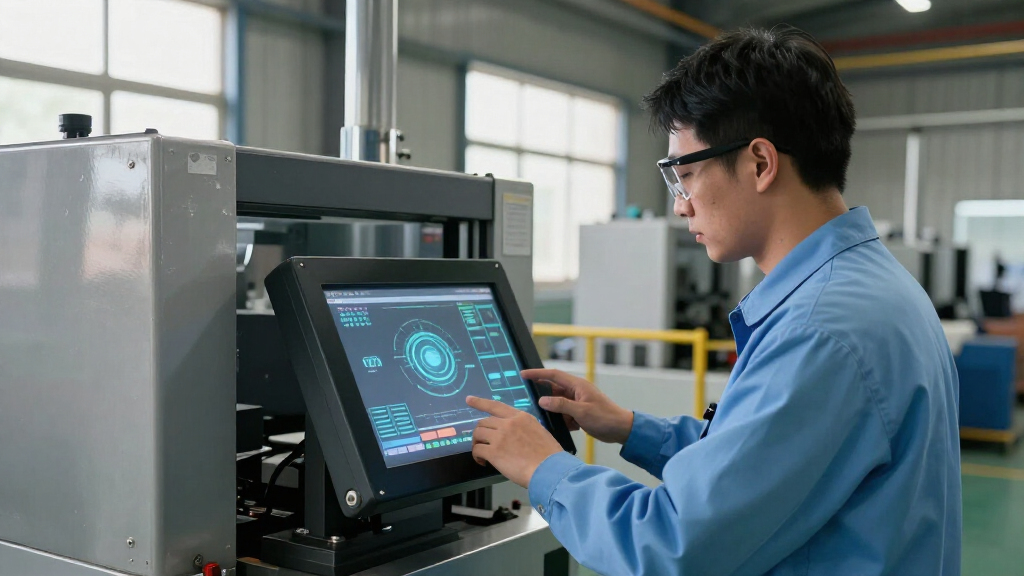
Siemens has revealed a strategic shift toward industrial AI, emphasizing the application of AI on the factory floor rather than in chatbots or language models. The company is partnering with NVIDIA to develop an ‘Industrial AI Operating System’ aimed at transforming manufacturing processes, with the first fully AI-driven factory scheduled to open in 2026 at Siemens’ Erlangen site. This move underscores Siemens’ confidence that physical-world AI, built on proprietary data and domain expertise, will be more valuable than general-purpose language models in industrial settings.
During CES 2026, Siemens CEO Roland Busch highlighted that ‘Industrial AI is no longer a feature; it’s a force that will reshape the next century.’ The core of Siemens’ approach is the Industrial Foundation Model (IFM), designed to process 3D models, engineering drawings, sensor telemetry, and automation logic—data unique to industrial environments. Siemens’ partnership with NVIDIA aims to embed AI across the entire manufacturing lifecycle, from design and engineering to operations and supply chain management.
The partnership will enable GPU-accelerated simulations, faster and more accurate digital twins, and generative models that actively optimize physical systems in real time. Siemens plans to launch its first AI-enabled factory in Erlangen in 2026, serving as a blueprint for global deployment. Early applications include the Digital Twin Composer and industrial copilots supporting supply chains and factory upgrades, with PepsiCo cited as an early user.
Implications of Siemens’ Factory Floor AI Strategy
This development marks a significant shift in the industrial AI landscape, emphasizing the value of proprietary, domain-specific data and expertise. Siemens’ focus on physical AI aims to create durable, scalable value in manufacturing, potentially reshaping how factories operate and compete. The partnership with NVIDIA accelerates this vision but also raises questions about dependency on American hardware and software, especially for European customers concerned about sovereignty.
industrial AI software for manufacturing
As an affiliate, we earn on qualifying purchases.
As an affiliate, we earn on qualifying purchases.
Background of Siemens’ Industrial AI Initiatives
Siemens has long been a leader in industrial automation and digitalization, leveraging decades of operational telemetry, engineering models, and automation logic. The company announced its Industrial Foundation Model (IFM) at Hannover Messe 2025, aiming to process and contextualize industrial data for optimization. Its partnership with NVIDIA, formalized in early 2026, extends this effort into GPU-accelerated simulation, generative modeling, and digital twin technology, positioning Siemens at the forefront of physical AI applications in manufacturing.
While other tech firms are exploring AI in chatbots and document processing, Siemens’ bet is on the factory floor, where proprietary data and domain expertise are seen as critical barriers to entry for competitors.
“Industrial AI is no longer a feature; it’s a force that will reshape the next century.”
— Roland Busch, Siemens CEO
As an affiliate, we earn on qualifying purchases.
Unconfirmed Performance Metrics and Deployment Timelines
While Siemens has announced ambitious plans for 2026, specific hardware configurations, performance benchmarks, and deployment timelines remain undisclosed. The first AI-driven factory in Erlangen is a target, but detailed validation results or performance metrics are not yet available, leaving questions about the readiness and scalability of the platform.
GPU-accelerated industrial simulation
As an affiliate, we earn on qualifying purchases.
As an affiliate, we earn on qualifying purchases.
Next Steps for Siemens’ Industrial AI Vision
Siemens will likely focus on pilot projects, including the Erlangen factory, and expand its digital twin and AI copilots across different sectors. Monitoring the development and validation of performance metrics, as well as the broader adoption by industrial clients, will be essential. The company may also address concerns about dependency on NVIDIA hardware and explore ways to ensure sovereignty for European customers.
As an affiliate, we earn on qualifying purchases.
Key Questions
What is Siemens’ main goal with industrial AI?
Siemens aims to embed AI deeply into manufacturing processes, leveraging proprietary data and domain expertise to create more efficient, autonomous factories that operate with minimal human intervention.
How does Siemens’ partnership with NVIDIA support its strategy?
The partnership provides GPU-accelerated simulation, generative modeling, and digital twin technology, enabling Siemens to develop an AI platform tailored for industrial applications and accelerate deployment in manufacturing environments.
When will the fully AI-driven factory open?
Siemens has targeted 2026 for the launch of its first fully AI-driven factory at the Erlangen site, with broader deployment plans to follow.
What are the potential risks of Siemens’ approach?
The reliance on NVIDIA’s hardware and software infrastructure introduces dependency concerns, especially for European clients wary of foreign technology control and data sovereignty issues.
How does Siemens’ focus differ from other AI developments?
Unlike many companies focusing on chatbots or document AI, Siemens emphasizes physical-world AI, using proprietary industrial data to optimize and automate manufacturing directly.
Source: ThorstenMeyerAI.com
Halloween Picks
halloween
As an affiliate, we earn on qualifying purchases.