

🔍 Read the full analysis: Small Business Tech: 15 AI Automation Tools To Use In 2026 on ThorstenMeyerAI.com

Get privacy and security gear delivered free — and shop member deals
- Fast, free delivery on millions of items
- Access to Prime Big Deal Days deals on October 6–7
- Prime Video, Amazon Music and more included
TL;DR
This article highlights 15 AI automation tools tailored for small businesses in 2026, focusing on their features, benefits, and suitability. It provides a comprehensive guide to help owners choose the right solutions for increased efficiency and growth.
Small business owners seeking to boost efficiency and cut costs are turning to AI automation tools, with 15 leading options identified for 2026. These tools aim to streamline tasks such as marketing, customer service, and operations, enabling owners to focus on growth. The list is based on recent evaluations of features, ease of use, integration, and value, making it a valuable resource for small business decision-makers.
The 15 AI automation tools highlighted include a range of solutions from comprehensive platforms to specialized applications. Market leaders like AI Tools for Small Business Owners and ChatGPT for Small Business are featured for their versatility in automating marketing, customer engagement, and operational workflows. The evaluation considered ease of use, integration capabilities, feature scope, cost, and customer support, ensuring the list covers options suitable for different budgets and technical skills.
Most tools offer scalable plans, allowing small businesses to expand their automation capabilities as they grow. Many provide drag-and-drop interfaces, pre-built integrations with popular platforms like CRM and accounting software, and robust support resources. While some solutions focus solely on marketing automation, others provide end-to-end functionalities covering sales, customer service, and operations, helping businesses tailor automation to their specific needs.
Cost-effectiveness varies widely; some tools deliver significant ROI at lower prices, while premium options offer advanced features for larger-scale operations. Security and data privacy are emphasized, with providers complying with GDPR and CCPA standards, encrypting data, and offering role-based access controls. Overall, these tools aim to balance automation power with user-friendliness, making them accessible for small business owners without extensive technical backgrounds.
The 15 picks
- 1
 AI for Small Business Mastery: Automating Marketing and Finance with ChatGPT…View on Amazon →
 - 2
 Agentic AI for Small Business: The No-Code Weekend Playbook to Automate Your…View on Amazon →
 - 3
 The AI Advantage: How Small Businesses Use Speed and AI to Beat Bigger Compet…View on Amazon →
 - 4
 Agentic AI for Solopreneurs: Build Smart No Code Systems with AI Agents to Sa…View on Amazon →
 - 5
 The No-BS Guide to AI Agents & Automation: Build AI Workflows, Automate Your…View on Amazon →
 - 6
 AI & Automation for Freelancers: The Proven System to Reclaim 10+ Hours a Wee…View on Amazon →
 - 7
 ChatGPT for Small Business Owners: 50 Practical AI Workflows to Save Time, Ge…View on Amazon →
 - 8
 AI Tools for Small Business Owners: A 30-Day Starter Guide to Save Time, Crea…View on Amazon →
 - 9
 AI Tools for Small Businesses: How to Save Time, Reduce Costs, and Grow Faste…View on Amazon →
 - 10
 Automating Small Businesses Using AI Tools: Use AI automation to save time, r…View on Amazon →
 - 11
 AI Automation for Small Business: Cut Costs, Increase Profit, and Scale FasterView on Amazon →
 - 12
 AI for Small Business Owners: Practical Guide to AI for Marketing, Sales, Con…View on Amazon →
 - 13
 AI in Finance and Controlling for Small Business Owners: Affordable AI Tools…View on Amazon →
 - 14
 AI for Small Business: From Marketing and Sales to HR and Operations, How to…View on Amazon →
 - 15
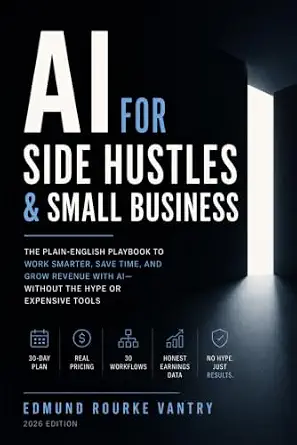 AI for Side Hustles & Small Business: The Complete Playbook to Start, Automat…View on Amazon →
Why AI Automation Tools Are Essential in 2026
In 2026, AI automation tools are becoming vital for small businesses aiming to remain competitive in a rapidly evolving market. These tools help reduce manual workloads, lower operational costs, and improve customer experience, directly impacting profitability and growth. As automation becomes more accessible and affordable, small businesses that leverage these technologies can scale more efficiently and adapt faster to changing market demands.
Moreover, the ability to integrate multiple functions—such as marketing, sales, and customer support—within a single platform simplifies management and enhances data-driven decision-making. This shift toward automation is expected to accelerate, making familiarity with these tools a strategic advantage for small business owners.
Small Business Adoption of AI Automation in Recent Years
Over the past few years, small businesses have increasingly adopted AI solutions to automate routine tasks, driven by the need to compete with larger firms and manage limited resources effectively. Early tools focused on email marketing and basic customer support, but recent advances have expanded capabilities to include end-to-end automation covering sales funnels, inventory management, and financial operations.
In 2025, market research indicated a 35% increase in small business adoption of AI tools compared to previous years, with many citing improved efficiency and ROI as primary benefits. The availability of user-friendly interfaces and scalable pricing plans has lowered barriers to entry, making automation accessible to even very small enterprises.
Leading vendors now offer tailored solutions for specific industries, such as retail, hospitality, and professional services, further fueling adoption. As AI technology continues to evolve, the landscape of tools available to small businesses is expected to expand, with more integrated and intelligent options emerging in 2026.
“Small businesses that adopt AI automation early can significantly reduce manual workloads and improve customer engagement, gaining a competitive edge.”
— Thorsten Meyer, AI Solutions Expert
Outstanding Questions About AI Tool Effectiveness in 2026
While the list of top 15 tools is based on current evaluations, uncertainties remain regarding their long-term scalability, actual ROI for diverse industries, and security robustness. Some tools may require technical expertise for advanced features, which could limit adoption among less tech-savvy owners. Additionally, the rapid evolution of AI technology means new solutions could emerge, potentially surpassing current options.
Further research and real-world case studies are needed to confirm the effectiveness of these tools across different small business sectors and to assess their compliance with evolving data privacy regulations.
Next Steps for Small Businesses Considering AI Automation
Small business owners should start by assessing their specific needs and budget, then explore trial versions of selected tools to evaluate usability and integration. As AI technology continues to mature, vendors are likely to release updates and new features, so staying informed through industry reports and vendor communications is advisable.
Planning for scalability from the outset will help ensure the chosen tools can grow with the business. Consulting with technology advisors or participating in industry webinars can also provide insights into best practices and emerging solutions in AI automation for small businesses.
Key Questions
Do I need technical skills to implement these AI tools?
Most of the recommended tools are designed to be user-friendly, featuring drag-and-drop interfaces and guided onboarding. While some advanced features might require basic scripting or API knowledge, many solutions are accessible to non-technical users, especially with vendor support and tutorials.
Can these AI tools scale as my business grows?
Yes, most tools listed offer tiered pricing plans and modular features that can expand with your business. It is important to verify that higher-tier plans include the features you need and that the platform can handle increased data volume and user load over time.
How do I evaluate the ROI of an AI automation tool?
Estimating ROI involves comparing the time and cost savings against the tool’s price. Starting with free trials or basic plans allows you to measure real-world benefits, such as reduced manual effort and faster customer response times. Reviewing case studies relevant to your industry can also help inform your decision.
Are there security concerns with AI automation tools?
Security is a key consideration; choose tools that comply with regulations like GDPR and CCPA, encrypt data, and offer role-based access controls. Confirm the vendor’s privacy policies and data management practices to protect sensitive customer information.
Source: ThorstenMeyerAI.com
Fall Picks
fall essentials
As an affiliate, we earn on qualifying purchases.