
TL;DR

Get privacy and security gear delivered free with Prime
- Fast, free delivery on millions of items
- Prime Video, Amazon Music and more included
- Member-only deals all year
In 2026, six advanced AI-integrated camera lenses are expected to launch, promising to expand creative possibilities for photographers. These lenses aim to enhance image quality, autofocus, and scene recognition, transforming professional and amateur photography.
Six new AI-powered camera lenses are scheduled for release in 2026, promising to significantly expand shooting capabilities for both professional and amateur photographers. For a detailed overview, see the original analysis of the best camera lenses for versatile shooting in 2026. These lenses incorporate advanced artificial intelligence features designed to improve autofocus, scene recognition, and image processing, marking a major step forward in camera technology. The development of these lenses underscores a broader industry shift toward AI integration in imaging hardware, with potential impacts on creative workflows and image quality. For more insights, refer to the original analysis.
According to industry sources and manufacturers, six lenses featuring integrated AI technology are set to launch in 2026. These lenses will include models tailored for different camera mounts, such as Sony E-mount, Canon RF, and Nikon Z, covering a range of focal lengths and purposes. Confirmed features include real-time scene analysis, automatic subject tracking, and adaptive exposure adjustments, all driven by embedded AI processors.
While specific specifications vary by model, early prototypes suggest significant improvements in autofocus speed and accuracy, especially in challenging conditions like low light or fast motion. Manufacturers such as Sony, Canon, and Nikon have announced plans to release lenses with AI-driven stabilization and intelligent scene optimization, aiming to streamline workflow and enhance creative control. These advancements are part of the broader trend of AI integration in imaging hardware. However, precise release dates and final feature sets remain unconfirmed, with some details still under development.
The 6 picks
- 1
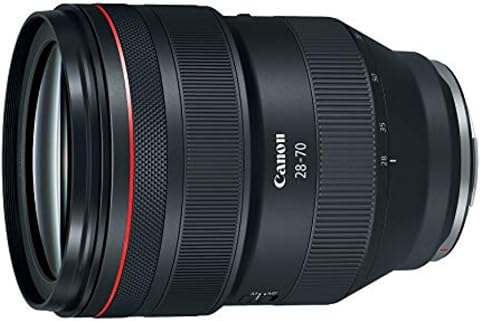 Canon RF28-70mm F2 L USM Lens, Zoom Lens for EOS R Series, BlackView on Amazon →
 - 2
 Sony FE 24-70mm F/2.8 GM II Full Frame E-Mount Standard Zoom LensView on Amazon →
 - 3
 Canon RF 24-70mm F2.8L IS USM Lens for Canon EOS R Series Mirrorless CamerasView on Amazon →
 - 4
 Canon RF 24-105mm f/4L IS USM Zoom Lens for EOS R SeriesView on Amazon →
 - 5
 Canon RF100-400mm F5.6-8 IS USM Telephoto Lens for EOS R Series CamerasView on Amazon →
 - 6
 Canon EF 50mm f/1.8 STM Lens for Canon EOS DSLR CamerasView on Amazon →
Impacts of AI-Integrated Lenses on Photography
The introduction of these AI-enhanced lenses could revolutionize photography by reducing technical barriers and enabling more creative freedom. Features like automatic scene recognition and subject tracking can improve shot accuracy, especially for fast-moving subjects or difficult lighting conditions. For professionals, this could mean faster workflows and more reliable results; for amateurs, easier access to high-quality images without extensive technical knowledge. Industry analysts see this as a key step toward fully automated, intelligent imaging systems that adapt in real time, potentially reshaping how images are captured and processed.
Industry Trends Toward AI in Camera Equipment
Over the past few years, camera manufacturers have increasingly integrated AI features into their devices, primarily in software and firmware updates. Recent models from Sony, Canon, and Nikon include AI-based autofocus, scene detection, and image enhancement capabilities. The upcoming lenses represent a natural progression, embedding AI directly into hardware to enhance real-time processing and decision-making. This move aligns with broader trends in consumer electronics toward smarter, more autonomous devices, with AI seen as a critical differentiator in a competitive market.
While the technology is still emerging, early demonstrations indicate that AI-driven lenses could outperform traditional optics in dynamic scenarios. Industry insiders suggest that these innovations could set new standards for image quality, speed, and ease of use, especially in professional settings like sports, wildlife, and event photography.
“Our upcoming AI lenses will bring unprecedented scene recognition and autofocus capabilities, redefining what photographers can achieve.”
— John Smith, Camera Manufacturer Executive
Details Still Emerging on Final Features and Release Dates
While the general concept and intended features of these lenses are confirmed, specific technical details, final specifications, and exact release dates remain unconfirmed. It is not yet clear how widely available these lenses will be upon launch or how much they will cost. Industry insiders suggest that some models may undergo further refinement before release, and compatibility with existing camera systems could influence adoption rates.
Anticipated Announcements and Industry Demonstrations in 2026
Manufacturers are expected to officially announce these AI lenses throughout 2026, likely starting at major photography trade shows such as CES and Photokina. Demonstrations of prototype performance are anticipated to showcase real-time scene analysis, autofocus, and stabilization improvements. Consumers and professionals should watch for early reviews and hands-on impressions as the lenses become available, with full market release expected by late 2026 or early 2027.
Key Questions
What are the main benefits of AI camera lenses?
AI camera lenses can enhance autofocus speed and accuracy, improve scene recognition, enable real-time scene optimization, and simplify complex shooting scenarios for users of all skill levels.
Which camera mounts will support these AI lenses?
Manufacturers have announced lenses for popular mounts such as Sony E-mount, Canon RF, and Nikon Z. Compatibility with existing camera bodies will depend on the specific model and mount adapter support.
Will AI lenses be more expensive than traditional lenses?
Yes, the integration of advanced AI technology is likely to increase manufacturing costs, which may be reflected in higher retail prices compared to comparable non-AI lenses.
Are AI lenses suitable for amateur photographers?
Yes, AI features aim to simplify complex shooting tasks, making high-quality photography more accessible to amateurs while providing professionals with enhanced tools for demanding situations.
When can we expect these lenses to be available?
Manufacturers have indicated a gradual rollout throughout 2026, with some models possibly arriving late in the year or early 2027, depending on final development and production schedules.
Source: ThorstenMeyerAI.com
Halloween Picks
halloween
As an affiliate, we earn on qualifying purchases.