
TL;DR

Get privacy and security gear delivered free — and shop member deals
- Fast, free delivery on millions of items
- Access to Prime Big Deal Days deals on October 6–7
- Prime Video, Amazon Music and more included
A tabletop exercise is a guided discussion in which a team works through a realistic disruption and talks through its response. Small teams can use one to clarify who makes decisions, check contacts and dependencies, and leave with specific improvements, each with an owner and a due date. It builds readiness, but it does not replace technical practice or guarantee a successful response.
At 9:12 on a Tuesday morning, your team’s payment service stops responding. Customers are waiting, your usual messaging channel is unreliable, and the person who knows the supplier relationship is on a train with no signal. You don’t need a movie-sized cyber crisis to discover that your response plan has a missing phone number.
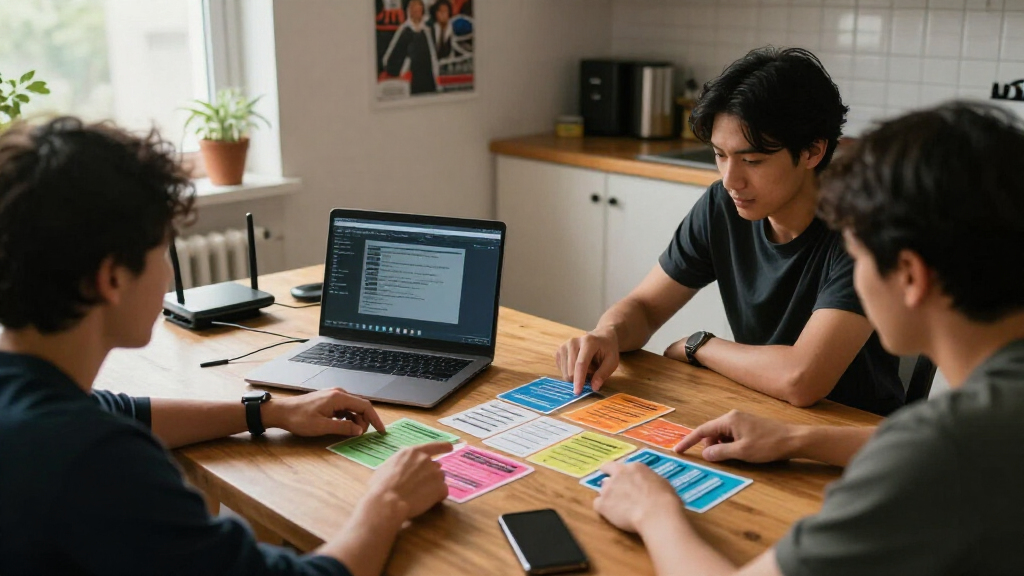
A tabletop exercise gives your team a chance to talk through a realistic disruption before one happens. It is a guided discussion in which people use their existing plans and roles to decide what they would do as new details emerge. You do not shut down real systems or stage a live attack.
This guide explains why tabletop exercises work even for small teams, what they can reveal, and how to run a useful session without a large budget or a dedicated platform. You’ll see how to pick a manageable scenario, keep the conversation constructive, and turn uncertainty into specific follow-up actions.
A tabletop exercise is a guided discussion, not a live technical test.
Small teams can use one to clarify decision rights, contact paths, and backup coverage.
Choose a plausible disruption tied to a service, supplier, or customer commitment your team relies on.
Capture observations as specific actions with an owner and due date, then confirm completion.
Repeat focused sessions when roles, systems, suppliers, or important risks change.
Preparedness · Small-team field guide
Why Tabletop Exercises Work Even for Small Teams
A guided conversation can reveal unclear roles, missing contacts, and fragile dependencies before a real disruption puts them to the test. Start with one plausible scenario and leave with improvements someone will own.
01 / Why it works
Make the invisible handoffs visible
When a few people carry many responsibilities, one missing contact or unclear decision can slow the whole response. A discussion gives the team space to spot those weak links early.
01 · Find gaps
Expose friction early
Check decision rights, contact paths, procedures, and dependencies while there is time to update them.
02 · Connect roles
Build shared understanding
Participants see how responsibilities fit together—and where a handoff between people may stall.
03 · Improve response
Practice choices under pressure
New details prompt the team to prioritize, communicate, and adapt instead of simply reciting a plan.
02 / A scenario in motion
Follow the decisions, not the drama
A facilitator adds information in stages. The team talks through what it knows, what it would do next, and who needs to be involved.
Payments stop responding.
Customers are waiting. Your usual messaging channel is unreliable. The person who manages the supplier relationship is on a train with no signal.
The outage has lasted an hour. The payment provider has not shared a restoration time.
A customer asks whether their payment details or order information are safe.
Who contacts the provider? Who approves a customer message? Who can pause orders if the lead is unavailable?
Set the scene
Share the disruption and the session goal.
Make a choice
Ask what the team would do next.
Add an update
Introduce a new fact or complication.
Capture gaps
Record missing information and decisions.
Assign fixes
Name an owner and due date for each action.
03 / Pick a useful scenario
Anchor practice in real work
Choose a service, supplier, customer commitment, or way of working your team depends on. Keep the details plausible and the decisions clear.
Service outage
Unavailable shared files
A design firm discusses client updates, provider checks, and a backup process before a deadline.
Supplier dependency
Payment processor disruption
An online retailer checks its escalation contact and who can authorize a temporary order pause.
Identity compromise
Uncertain account access
A software team considers what a compromised work account could reach and how to coordinate next steps.
04 / Keep the exercise useful
Rehearse decisions; verify systems separately
A tabletop is approachable because it is discussion-based. Its limits matter: talking through a response does not prove that a technical procedure will work.
Make it constructive
Use one scenario, a few objectives, a facilitator, and a simple way to capture observations. Invite questions and make it safe to raise uncertainty.
Turn discussion into follow-through
Track specific improvements with owners and due dates, then confirm completion. Practice technical steps separately where relevant.
The exercise succeeds when the team leaves knowing what to improve, who will do it, and when it will be done.
A tabletop exercise turns a plan into decisions you can discuss
A tabletop exercise is a guided discussion in which a team works through a realistic disruption using its existing plans and roles. A facilitator describes what is happening, then participants talk through what they know, what they would do next, and who needs to be involved. The team rehearses its decisions in conversation; it does not conduct a live technical test.
That difference makes the exercise approachable. Imagine a small design firm whose shared file service is unavailable before a client deadline. The team can discuss who checks the provider’s status, who tells the client there may be a delay, and who decides whether staff should use a backup process. Nobody needs to make the real service fail to examine how the response might unfold.
The facilitator can add details as the conversation progresses: the outage has lasted an hour, the provider has not given a restoration time, or the client has asked whether its files are safe. These scenario updates encourage participants to adapt instead of reciting a plan from memory. The team can pause when it reaches a difficult decision and write down what information or authority is missing.
A tabletop exercise rehearses decisions and handoffs through discussion. It does not prove that a technical fix or live response will work.
Keeping that distinction clear prevents false confidence. A team may discuss how it would restore a backup, for example, but still need separate technical practice to confirm that the backup is current and usable. The discussion shows which questions to ask next. That’s useful on its own, especially when your written plan has been sitting untouched since the last big project.
As an affiliate, we earn on qualifying purchases.
Small teams can uncover the gaps that matter most
Why tabletop exercises work for small teams is straightforward: one unclear role or missing contact can affect a large share of your response when only a few people share the work. Talking through a disruption reveals those weak connections while there is still time to fix them. You can learn whether people know who can make a decision, who must be notified, and what happens if a key person is unavailable.
Take a six-person online retailer that depends on one payment processor. During a short outage scenario, the team might discover that everyone expects the operations lead to contact the processor, but nobody knows the current escalation number. The same discussion may reveal that only the founder can pause orders, even when the founder is offline. Those are concrete gaps: update the contact list and name a backup decision-maker.
Small teams also tend to depend on individual knowledge. One employee may know which cloud account holds an important record, while another remembers the steps for contacting a supplier. The exercise helps people make those connections visible, so useful knowledge can be documented or shared before someone takes leave or changes roles.
This does not mean you have to imitate a large organization’s formal exercise program. Choose one service your team relies on, gather the people who make or carry out the relevant decisions, and focus the conversation on a few objectives. For a five-person team, even 60 minutes may expose a handoff problem that would otherwise surface during a stressful workday. The small scale is an advantage: the people who need to fix the issue are often in the room already.
As an affiliate, we earn on qualifying purchases.
The right scenario makes practice feel like your real work
A tabletop exercise works best when the scenario reflects a disruption your team could actually face and the decisions you want to examine. Pick a risk tied to a service, customer commitment, supplier, or way of working that matters to you. A realistic starting point gives participants something familiar to reason about without burying them in dramatic details.
For a remote accounting practice, that might be an unavailable document service during a busy filing period. For a neighborhood clinic, it could be an appointment system outage that raises questions about staff coordination and patient communication. For a small software company, the first scenario might involve a compromised work account and uncertainty about which records the account could access. Each case tests different handoffs, so there is no universal best scenario.
Scenarios can also reflect current practice themes such as third-party outages, hybrid coordination, privacy questions, or identity compromise. If the team depends on a payment processor, ask how it would respond if the provider reported a disruption. If people work across locations, discuss what happens when your usual messaging channel is unavailable. Keep any notification or reporting discussion grounded in your organization’s circumstances and applicable requirements; the exercise itself does not decide legal obligations.
Generative AI can help draft scenario variations, but its suggestions need a human check against your real services, roles, and risks. It cannot validate your plan or know which supplier contact is current. Begin with a scenario that feels plausible enough to prompt useful choices, then stop adding detail when it distracts from those choices. The aim is a clear conversation, not a thriller script.
team decision making workshop tools
As an affiliate, we earn on qualifying purchases.
As an affiliate, we earn on qualifying purchases.
One focused hour can produce a useful practice session
A tabletop exercise can fit into a regular meeting when you set a narrow goal and give the conversation a clear shape. Decide what you want to learn, choose a plausible scenario, and capture decisions and uncertainties as they arise. For example, your goal might be to find out whether the team can reach its incident contacts or identify who can authorize a service pause.
- Set one or two objectives. Write down the question you want the session to answer, such as who approves a customer update.
- Choose one manageable scenario. Use an outage, unavailable supplier, or compromised account connected to your actual work.
- Assign session roles. Have a facilitator introduce events and keep the group on track; ask a note-taker to record decisions, unknowns, and follow-up items.
- Walk through the response. Ask what participants know, what they would do next, who owns each decision, and whom they would contact.
- Debrief and assign actions. Give every useful fix an owner and a due date, then check that it was completed.
A video call works just as well as a meeting room. A tiny team can combine facilitator and note-taker duties if needed, though writing down key decisions can be hard when you are also guiding the conversation. A shared document or a sheet of paper is enough for capturing actions; a dedicated exercise platform is not required.
Keep the atmosphere curious rather than evaluative. If someone says, “I’m not sure who can approve that,” treat the uncertainty as useful information, not a mistake. A short session that produces one corrected contact list and one clarified backup decision-maker may do more for your readiness than a polished discussion that ends without an owner for anything.
business continuity planning templates
As an affiliate, we earn on qualifying purchases.
As an affiliate, we earn on qualifying purchases.
The follow-up list is where the exercise earns its time
A tabletop exercise pays off when the conversation leads to completed improvements. During the discussion, separate observations from actions: “Nobody knew the provider escalation contact” is an observation; “Mira will verify and update the provider contact sheet by Friday” is an action. Assigning an owner and a due date makes the next step visible and gives the team a way to check its progress.
Suppose a small marketing agency discovers that its emergency contact list points to a former contractor. The fix might be simple: update the list, store it somewhere the team can access if its normal messaging tool fails, and ask another person to check the update. Another finding might be more involved, such as confirming how the agency can regain access to a customer-facing service if its administrator is unavailable.
After the session, review each action until it is done. Some fixes belong in the incident plan; others may require a contact update, clearer authority, staff guidance, or technical practice. If the conversation reveals that a backup restore procedure has never been tested, schedule suitable technical work rather than treating the discussion as proof that restoration will succeed.
One practical comparison helps keep the result honest:
| What the discussion showed | What it does not prove |
|---|---|
| Who participants think should make a decision | That the person is available or formally authorized |
| Whether the team can find a contact in the session | That every contact detail is current next month |
| How the team would discuss a restore | That a backup has been tested and can be restored |
| Which communication handoffs seem unclear | That the team has met every legal or regulatory duty |
The comparison sets a useful boundary. The session gives you evidence about decisions and questions to follow up; the actions and any separate technical checks build on it.
Repeat small sessions when your team or its dependencies change
There is no universal schedule for tabletop exercises; repeat them when important responsibilities, systems, suppliers, or risks change, and revisit key plans periodically. A focused discussion is easier to sustain than a large annual event that takes weeks to prepare. You can also use a short scenario update to check one specific question, such as whether a new supplier contact path is clear.
Picture your five-person consultancy adding a new cloud payroll provider. A brief session can ask what happens if the provider is unavailable on payday, who communicates with staff, and where the team gets reliable status information. Later, if the consultancy moves to a hybrid schedule, another focused discussion can look at how staff coordinate if their usual chat service is down. Each exercise follows the changes in the work rather than a generic calendar.
Keep track of whether the session met its stated objective and whether promised actions were completed. You do not measure success by how quickly participants produce every answer or whether the imagined incident ends neatly. If nobody knew who could approve an external message, success may mean that the team clarified the role and updated its guidance afterward.
Exercises can make it easier for people to raise concerns, especially when leaders treat “we don’t know” as a prompt for improvement. They do not guarantee a successful response, prove compliance, or replace training and appropriate technical practice. If your work has specific regulatory or contractual requirements, check those against the rules that apply to your organization. A tabletop can support preparedness; it cannot stand in for every other responsibility.
Frequently Asked Questions
How long does a tabletop exercise take?
A focused session may fit into an hour or two, with additional time for preparation and follow-up. The right length depends on your objectives and who needs to take part. A small team testing one contact path may need less time than a group discussing several departments and customer communications.
How many people need to take part?
There is no fixed minimum. Invite the people who make or carry out the decisions in the scenario; a handful of team members can be enough to start. If the discussion raises a question for a role that is not present, record it and bring that person into the next step.
What scenario should our team use first?
Start with a disruption that could affect your work and that you have not discussed recently. A system outage, unavailable key supplier, compromised work account, or missing decision-maker can each prompt practical questions. For example, a small shop could discuss how it would handle online orders if its payment processor went down.
Is a tabletop exercise the same as a live test?
No. A tabletop is discussion-based: participants talk through what they would do. A simulation may involve more active role-play, while a live test exercises actual processes or technology and can carry different risks. These methods can complement one another, but a conversation about backups does not confirm that a backup can be restored.
How can we tell whether the exercise worked?
Check whether it met its stated objective and produced useful improvements that the team completed. Track each action’s owner and due date, then confirm that plans, contacts, or guidance changed where needed. If your team clarified who can approve a service pause and updated its contact list, the session produced a concrete result even if participants did not know every answer in advance.
Does running one prove that our team is compliant or resilient?
No. A tabletop can support preparedness and help your team improve its response, but it does not guarantee resilience or establish that you meet every legal, contractual, or sector requirement. Those requirements depend on your organization and the rules that apply to it. Use the exercise to find useful questions and follow up on them.
Conclusion
Give your team one hour to talk through a disruption it could really face. Choose a service or supplier you depend on, ask who decides and who needs to know, and write down the gaps you uncover. Then assign each fix an owner and a due date.
A tabletop exercise will not make every incident easy. It can make the first useful question easier to ask, before an outage fills the room with unanswered messages and blinking notifications.
Fall Picks
fall essentials
As an affiliate, we earn on qualifying purchases.