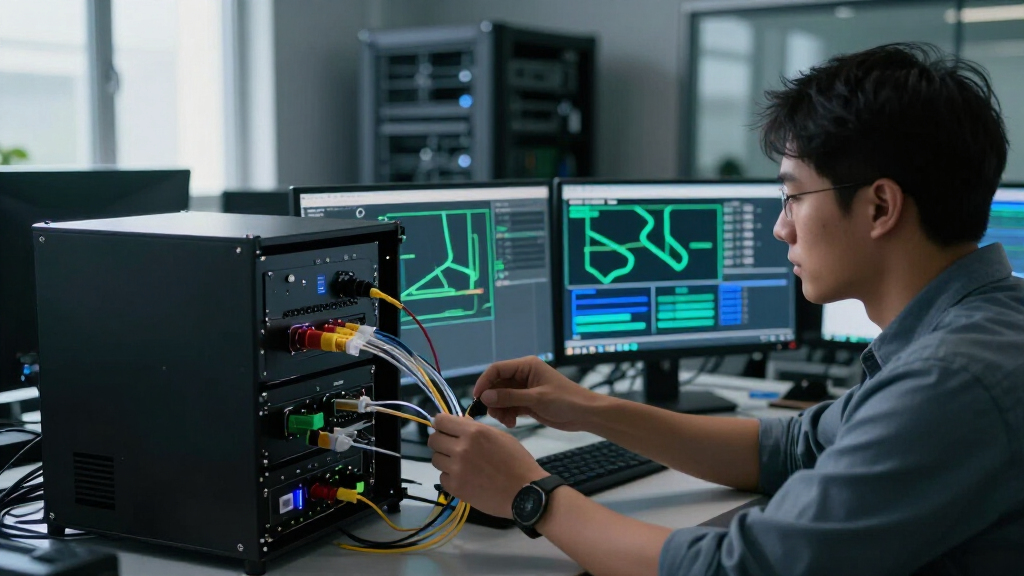

The best quantum key distribution systems resources cover a wide spectrum, from beginner-friendly physics primers to graduate-level engineering texts, and picking the wrong depth level is the single most common mistake buyers make. My top pick, Quantum Key Distribution Using FPGA, stands out because it pairs theory with an actual working prototype, which almost nothing else in this category attempts. For readers who want breadth instead, Physical-Layer Security, Quantum Key Distribution, and Post-Quantum Cryptography situates QKD within the larger quantum-safe migration debate, while Quantum Key Distribution Explained remains the gentlest entry point for newcomers. The core tradeoff across this roundup is mathematical rigor versus accessibility, with hands-on engineering detail occupying a narrow middle ground. Read on for the full ranked breakdown of what each option does well and who should skip it.

Get privacy and security gear delivered free — and shop member deals
- Fast, free delivery on millions of items
- Access to Prime Big Deal Days deals on October 6–7
- Prime Video, Amazon Music and more included
Key Takeaways
- Only one entry in this roundup — the FPGA prototype book — walks through a real, buildable QKD implementation, which is why it claims the top spot despite a narrower scope than the survey-style texts.
- Books that combine QKD with post-quantum cryptography context consistently offer better decision-making value for enterprise readers than pure-physics treatments, because they explain when QKD is worth deploying at all.
- Network-level titles (Quality of Service and network trust perspectives) matter far more for telecom and infrastructure engineers than for cryptographers, since QKD deployment problems are increasingly routing and integration problems.
- Beginner guides that skip linear algebra entirely create a false ceiling — readers hit a wall the moment they reach error-correction and privacy amplification chapters in any advanced text.
- Photonic engineering titles overlap heavily with each other; the differentiator is whether entanglement-based protocols get equal treatment with prepare-and-measure schemes or are covered as an afterthought.
| Quantum Key Distribution Networks: A Quality of Service Perspective |  | Best for Network Engineers | Format: Book | Primary Topic: Quantum Key Distribution Networks | Focus Area: Quality of Service | VIEW LATEST PRICE | See Our Full Breakdown |
| Introduction to Quantum Cryptography |  | Best Academic Foundation | Format: Book | Genre: Academic textbook | Primary Topic: Quantum cryptography principles | VIEW LATEST PRICE | See Our Full Breakdown |
| Next-Gen Network Trust: Basics of Quantum Key Distribution and Quantum-Safe Infrastructure Design |  | Best for Infrastructure Planners | Format: Book | Primary Topics: Quantum Key Distribution; Quantum-Safe Infrastructure; Secure Communication | Focus: Infrastructure design and network scaling | VIEW LATEST PRICE | See Our Full Breakdown |
| Quantum Networking in Action |  | Best Broad Survey | Format: Book | Primary Topics: Quantum internet architecture; entanglement distribution; QKD; next-gen protocols | Focus: Secure quantum communication network design | VIEW LATEST PRICE | See Our Full Breakdown |
| Quantum Key Distribution Explained: A Beginner’s Guide to the Physics of Unbreakable Keys (QKD) |  | Best for Beginners | Format: Book | Primary Topic: Quantum Key Distribution (QKD) | Focus: Physics of unbreakable cryptographic keys | VIEW LATEST PRICE | See Our Full Breakdown |
| Quantum Key Distribution Using FPGA: A Real Time Prototype, Design, and Analysis |  | Best for Hardware Engineers | Format: Book | Primary Topic: FPGA-based QKD prototype | Coverage: Design, real-time implementation, analysis | VIEW LATEST PRICE | See Our Full Breakdown |
| Quantum Communication and Cryptography Engineering: Photon Entanglement Key Distribution and Secure Network Architecture |  | Best for Network Architecture Focus | Primary Topic: Quantum communication and cryptography engineering | Key Focus: Photon entanglement key distribution | Secondary Focus: Secure network architecture | VIEW LATEST PRICE | See Our Full Breakdown |
| Quantum Key Distribution (QKD): The New Frontier of Cryptography |  | Best for Working Cryptography Professionals | Format: Book | Audience: Professional | Primary Topic: Quantum Key Distribution | VIEW LATEST PRICE | See Our Full Breakdown |
| Physical-Layer Security, Quantum Key Distribution, and Post-Quantum Cryptography |  | Best Broad-Spectrum Security Reference | Primary Topics: Physical-layer security, QKD, post-quantum cryptography | Focus: Securing communication against quantum threats | Audience: Researchers, engineers, students | VIEW LATEST PRICE | See Our Full Breakdown |
| Physical-Layer Security and Quantum Key Distribution |  | Best Academic Depth | Series: Physics and Astronomy | Primary Topics: Physical-layer security, quantum key distribution | Content Type: Scholarly research and technical concepts | VIEW LATEST PRICE | See Our Full Breakdown |
| quantum key distribution system | Format | Primary Topic | Audience | Technical Level |
|---|---|---|---|---|
| Quantum Key Distribution Netwo | Book | Quantum Key Distribution Networks | — | — |
| Introduction to Quantum Crypto | Book | Quantum cryptography principles | — | — |
| Next-Gen Network Trust: Basics | Book | — | — | — |
| Quantum Networking in Action | Book | — | — | — |
| Quantum Key Distribution Expla | Book | Quantum Key Distribution (QKD) | — | — |
| Quantum Key Distribution Using | Book | FPGA-based QKD prototype | Researchers and engineers | Advanced / specialist |
| Quantum Communication and Cryp | — | Quantum communication and cryptography engineering | Security and network professionals | Intermediate to advanced |
| Quantum Key Distribution | Book | Quantum Key Distribution | Professional | Advanced professional |
| Physical-Layer Security | — | — | Researchers, engineers, students | Advanced academic |
| Physical-Layer Security and Qu | — | — | Academic researchers and advanced students | Research / graduate |
More Details on Our Top Picks
Quantum Key Distribution Networks: A Quality of Service Perspective
Most QKD books stop at the physics of key exchange; this one keeps going into the operational question of service quality across a deployed network. That framing makes it stand out in this lineup — where Quantum Key Distribution Explained stops at foundational physics, this volume treats QKD as running infrastructure with throughput, reliability, and provisioning concerns. Compared with Quantum Networking in Action, which surveys architecture broadly, this pick goes deeper on the performance and management layer that telecom and data-center teams actually live with. The tradeoff is accessibility: readers without a networking background will find the service-oriented material dense, and the publisher listing is thin on supporting detail, so buyers are trusting the title’s scope at face value.
Pros:- Rare focus on quality of service in quantum networks rather than single-link theory
- Bridges QKD physics and real network operations
- Directly relevant to scaling multi-node secure infrastructure
- Suited to professionals evaluating deployment readiness
Cons:- Narrow specialist audience with a steep assumed background
- Minimal publisher detail makes depth and rigor hard to verify before buying
Best for: Network architects and telecom engineers planning multi-node QKD deployments who need to reason about service quality, not just key theory
Not ideal for: Curious general readers — the QoS framing assumes networking fluency that beginners won’t have
- Format:Book
- Primary Topic:Quantum Key Distribution Networks
- Focus Area:Quality of Service
- Subject Domain:Secure quantum communication networks
- Coverage Level:Advanced / specialized
- Intended Audience:Network engineers and researchers
Our verdict“Buy this if you already understand QKD basics and need the missing operational layer; skip it if you’re still learning the physics.”
Introduction to Quantum Cryptography
Where the rest of this roundup leans applied or introductory, this textbook anchors the formal mathematical foundations of quantum cryptography — security proofs, protocol analysis, and the quantum mechanics underneath them. It is the pick I’d point students toward before touching deployment-oriented titles like Next-Gen Network Trust, because it builds the theory those guides assume you already know. The rigor is its strength and its cost: compared with Quantum Key Distribution Explained, this demands real mathematical maturity and moves far slower toward practical takeaways. It is also cryptography-wide rather than QKD-specific, so readers wanting fiber, satellite, or infrastructure detail will need a second book afterward.
Pros:- Authoritative, textbook-grade treatment of core principles
- Builds lasting conceptual foundations rather than tool-specific skills
- Covers quantum mechanics and cryptography together in one arc
- Suited to coursework and self-study at an academic level
Cons:- Demands strong math and quantum mechanics background
- Broader than QKD alone — light on deployment and network design specifics
Best for: Graduate students, researchers, and security engineers who want rigorous, proof-based grounding in quantum cryptography
Not ideal for: Practitioners who need deployment guidance fast — the theoretical pace will frustrate anyone seeking infrastructure how-tos
- Format:Book
- Genre:Academic textbook
- Primary Topic:Quantum cryptography principles
- Coverage:Quantum mechanics applied to secure communication
- Level:Advanced undergraduate / graduate
- Best Use:Systematic study and reference
Our verdict“This is the theory-first cornerstone of the roundup; choose it for depth, not speed.”
Next-Gen Network Trust: Basics of Quantum Key Distribution and Quantum-Safe Infrastructure Design
This guide sits in the practical middle of the lineup: it opens with QKD fundamentals but spends its energy on quantum-safe infrastructure design and scaling secure links beyond traditional fiber. That balance distinguishes it from Quantum Key Distribution Networks: A Quality of Service Perspective, which assumes you already run a network, and from Introduction to Quantum Cryptography, which never leaves theory. For an IT security lead drafting a post-quantum roadmap, this is the most directly actionable title here. The compromise is depth — ‘basics’ in the title is honest, so engineers wanting protocol-level or FPGA-adjacent detail will find it thin, and the sparse listing means editing quality is unverified.
Pros:- Combines QKD fundamentals with applied infrastructure design
- Addresses scaling beyond fiber-based systems
- Written for working security professionals, not academics
- Covers interference-proof link construction practically
Cons:- Fundamentals-first structure limits advanced technical depth
- Sparse publisher information makes rigor hard to vet
Best for: CISOs and network security professionals building a quantum-safe migration plan for organizational infrastructure
Not ideal for: Researchers and hardware engineers who need protocol internals rather than design-level guidance
- Format:Book
- Primary Topics:Quantum Key Distribution; Quantum-Safe Infrastructure; Secure Communication
- Focus:Infrastructure design and network scaling
- Coverage:Fundamentals through applied design
- Intended Audience:Network security professionals
- Special Emphasis:Beyond traditional fiber-based systems
Our verdict“The right choice when your job is planning quantum-safe networks, not proving theorems about them.”
Quantum Networking in Action
If the other titles each own one lane, this book claims the whole highway: quantum internet architecture, entanglement distribution, QKD, and next-generation protocols in a single arc. That breadth is its value — a reader gets the end-to-end picture of where key distribution fits inside a future quantum internet, context that narrower picks like Next-Gen Network Trust or Introduction to Quantum Cryptography deliberately exclude. The price of breadth is shallowness on any one topic, and the listing offers no author or edition details, which makes sourcing and reliability harder to judge than the academically anchored titles in this roundup. Treat it as a map, not a manual.
Pros:- Wide coverage across architecture, entanglement, and QKD in one volume
- Positions key distribution within the larger quantum internet vision
- Includes next-generation protocol discussion
- Good orientation point before deeper specialized reading
Cons:- Breadth comes at the cost of depth on each topic
- No author, format, or edition details disclosed in the listing
Best for: Technology strategists and students who want the full quantum-networking landscape before choosing where to specialize
Not ideal for: Buyers seeking deep QKD-specific implementation detail — the multi-topic scope dilutes it
- Format:Book
- Primary Topics:Quantum internet architecture; entanglement distribution; QKD; next-gen protocols
- Focus:Secure quantum communication network design
- Scope:Broad survey, multiple domains
- Intended Audience:General technical readers and strategists
- Listing Detail:Author and edition information not provided
Our verdict“Pick this to see the whole quantum networking terrain; pair it with a specialist title for anything you need to actually build.”
Quantum Key Distribution Explained: A Beginner’s Guide to the Physics of Unbreakable Keys (QKD)
This is the entry ramp of the roundup — the only title here that assumes zero prior quantum background and walks from foundational physics to why QKD keys resist eavesdropping. Compared with Introduction to Quantum Cryptography, which demands mathematical maturity, or Quantum Key Distribution Networks, which assumes networking chops, this one targets the curious newcomer, and its physics-first approach means concepts stick even without equations. The tradeoff is shelf life: readers will outgrow it quickly, and it offers essentially nothing on deployment, hardware, or infrastructure — the territory Next-Gen Network Trust covers. Thin listing details also leave its depth and accuracy unverified, so it works best as a first step rather than a sole reference.
Pros:- Genuinely accessible to readers with no quantum background
- Explains the physics behind ‘unbreakable’ keys rather than just asserting it
- Builds intuition that eases the jump to harder texts
- Focused tightly on QKD, unlike broader survey titles
Cons:- Quickly outgrown by anyone advancing past fundamentals
- No coverage of practical deployment or infrastructure topics
Best for: Students, managers, and curious technologists who want a plain-language entry point into QKD physics
Not ideal for: Engineers and researchers — the introductory level skips the math and implementation detail they need
- Format:Book
- Primary Topic:Quantum Key Distribution (QKD)
- Focus:Physics of unbreakable cryptographic keys
- Level:Beginner
- Prerequisites:None assumed
- Intended Audience:General readers and newcomers
Our verdict“Start here if the physics is the barrier; move on quickly once the basics click.”
Quantum Key Distribution Using FPGA: A Real Time Prototype, Design, and Analysis
Among the titles in this roundup, this is the only one that gets down to actual implementation — designing and building a working QKD prototype on FPGA hardware. Where Quantum Key Distribution (QKD): The New Frontier of Cryptography stays at the conceptual level, this book walks through real-time system design and analysis, which is exactly what an embedded engineer needs before committing to silicon. Compared with Physical-Layer Security and Quantum Key Distribution, it trades theoretical breadth for hands-on specificity, and that tradeoff works in its favor for anyone building rather than studying. The catch: it assumes you already understand both quantum communication fundamentals and FPGA development, so it functions poorly as a first book. For lab teams and graduate researchers, this pick makes the most sense as the practical companion to a theory-heavy text.
Pros:- Rare hands-on coverage of an actual real-time QKD prototype
- Bridges quantum theory and practical FPGA implementation
- Includes design and analysis rather than just principles
- Directly useful for lab and research engineering work
Cons:- Highly technical with a narrow audience
- Assumes prior knowledge of both FPGAs and quantum communication
- Less useful as a general reference on QKD concepts
Best for: Embedded systems engineers and graduate researchers who need to build a working QKD prototype rather than just study the theory
Not ideal for: Readers new to quantum communication — it assumes FPGA design experience and quantum fundamentals from the outset
- Format:Book
- Primary Topic:FPGA-based QKD prototype
- Coverage:Design, real-time implementation, analysis
- Audience:Researchers and engineers
- Technical Level:Advanced / specialist
- Approach:Practical engineering
Our verdict“If you’re moving from QKD theory to a physical build, this is the most implementation-focused book in the lineup.”
Quantum Communication and Cryptography Engineering: Photon Entanglement Key Distribution and Secure Network Architecture
This title stands out for connecting photon entanglement-based key distribution to the practical question of secure network architecture — a link most QKD books gloss over. Where Quantum Key Distribution Using FPGA zooms into a single hardware prototype, this book zooms out to how entanglement-based keys fit into an entire communication infrastructure, making it a better fit for architects and systems planners than tinkerers. Compared with Physical-Layer Security, Quantum Key Distribution, and Post-Quantum Cryptography, it leans more toward engineering application than academic theory. The real drawback is transparency: with little published detail on format, length, or depth, you’re buying on topic alone. If your job is designing quantum-safe networks rather than decrypting physics papers, this pick makes sense — but verify the depth matches your level before committing.
Pros:- Connects QKD physics to practical network architecture
- Focused coverage of photon entanglement key distribution
- Broader systems view than single-prototype or single-topic books
- Suitable for engineering-planning rather than purely academic use
Cons:- Minimal published details on format and length
- No specification data available to verify depth or level
- May overlap heavily with broader quantum networking titles
Best for: Network architects and security engineers who need to understand how entanglement-based QKD plugs into real network infrastructure
Not ideal for: Buyers who want clearly documented scope and depth — sparse product details make it hard to gauge level before purchase
- Primary Topic:Quantum communication and cryptography engineering
- Key Focus:Photon entanglement key distribution
- Secondary Focus:Secure network architecture
- Orientation:Engineering / applied
- Audience:Security and network professionals
- Technical Level:Intermediate to advanced
Our verdict“A reasonable choice for infrastructure-minded readers, though the thin product information makes it a bit of a leap of faith.”
Quantum Key Distribution (QKD): The New Frontier of Cryptography
Of the professional-level options here, this is the one pitched most directly at practicing cryptographers and security professionals who need to understand where QKD fits in the modern security landscape. It covers both principles and applications, which puts it a step above pure-theory texts like Physical-Layer Security and Quantum Key Distribution for readers whose end goal is deploying or evaluating cryptographic systems rather than doing physics research. Compared with Quantum Communication and Cryptography Engineering, its scope is tighter — QKD itself rather than whole network architectures — which is a strength if cryptography is your core concern. The tradeoff is that it’s not an entry point: general readers will find the material dense, and there’s limited independent feedback available to gauge its quality. Still, for professionals tracking quantum-era security, this pick makes sense as a focused working reference.
Pros:- Written specifically for a professional audience
- Balances underlying principles with real applications
- Focused squarely on QKD rather than diluting across many topics
- Relevant to evaluating quantum-era cryptographic strategies
Cons:- Too technical for casual or general readers
- Limited independent information available to assess quality
- Doesn’t cover the broader network or hardware side of deployment
Best for: Cryptographers and security professionals who need a focused, application-aware treatment of QKD as part of their security practice
Not ideal for: General readers or hobbyists — the professional-level treatment assumes existing cryptography knowledge
- Format:Book
- Audience:Professional
- Primary Topic:Quantum Key Distribution
- Coverage:Principles and applications
- Field:Cryptography / secure communication
- Technical Level:Advanced professional
Our verdict“The most career-relevant pick in the lineup for working security professionals who need QKD literacy, not a physics degree.”
Physical-Layer Security, Quantum Key Distribution, and Post-Quantum Cryptography
This is the widest-ranging technical title in the batch, covering physical-layer security, QKD, and post-quantum cryptography in one place. That combination is its defining value: most alternatives pick one lane — Quantum Key Distribution Using FPGA goes deep on hardware, Quantum Key Distribution (QKD): The New Frontier of Cryptography stays within crypto proper — while this book shows how the approaches relate and where each fits against emerging quantum threats. For cybersecurity researchers, engineers, and graduate students trying to map the whole defensive landscape, that breadth beats a specialist text. The cost is depth: none of the three topics gets the exhaustive treatment a dedicated book provides, so readers who already specialize in one area may find those sections thin. It suits readers building a research or curriculum foundation better than practitioners needing deployment guidance tomorrow.
Pros:- Uniquely combines three complementary security domains in one text
- Frames QKD alongside post-quantum cryptography threat context
- Well suited for academic study and research grounding
- Useful for building a broad conceptual map before specializing
Cons:- Highly technical content unsuited to general readers
- Broad scope means less depth per topic than dedicated books
- Sparse descriptive and review data to verify presentation quality
Best for: Cybersecurity researchers, engineers, and graduate students who want one reference spanning physical-layer security, QKD, and post-quantum cryptography
Not ideal for: Practitioners who need deep, actionable depth on a single topic — the three-subject scope spreads coverage thin
- Primary Topics:Physical-layer security, QKD, post-quantum cryptography
- Focus:Securing communication against quantum threats
- Audience:Researchers, engineers, students
- Discipline:Cybersecurity and communications
- Technical Level:Advanced academic
- Scope:Multi-topic survey and analysis
Our verdict“The best pick for readers who want the full quantum-security landscape in one volume rather than mastery of a single branch.”
Physical-Layer Security and Quantum Key Distribution
Coming from an established Physics and Astronomy scholarly series, this is the most rigorously academic entry in the batch, presenting research-level treatment of physical-layer security and QKD. Compared with Physical-Layer Security, Quantum Key Distribution, and Post-Quantum Cryptography, it drops the post-quantum cryptography thread and digs into the physics proper — a better fit for readers whose interest is the science of secure communication at the physical layer rather than the broader cybersecurity picture. It also sits at the opposite end of the spectrum from Quantum Key Distribution Using FPGA: where that book protypes hardware, this one establishes the theoretical ground such systems rest on. The narrow, highly specialized focus is both its strength and its limitation — professionals wanting deployment guidance or newcomers wanting an accessible entry should look elsewhere in this roundup instead.
Pros:- Research-grade depth on physical-layer security and QKD
- Published within an established academic series
- Strong theoretical grounding for further study
- Well matched to graduate-level coursework and research
Cons:- Highly specialized topic with a limited audience
- Theoretical orientation with little applied engineering content
- Overlaps partially with broader multi-topic security texts
Best for: Physics and engineering researchers who want a rigorous, research-level treatment of physical-layer security and QKD theory
Not ideal for: Practitioners and general readers — it’s scholarly, specialized, and offers no practical deployment guidance
- Series:Physics and Astronomy
- Primary Topics:Physical-layer security, quantum key distribution
- Content Type:Scholarly research and technical concepts
- Audience:Academic researchers and advanced students
- Technical Level:Research / graduate
- Orientation:Theoretical physics
Our verdict“The most scholarly pick here — ideal for researchers who want theory done properly and wrong for anyone seeking a practical guide.”
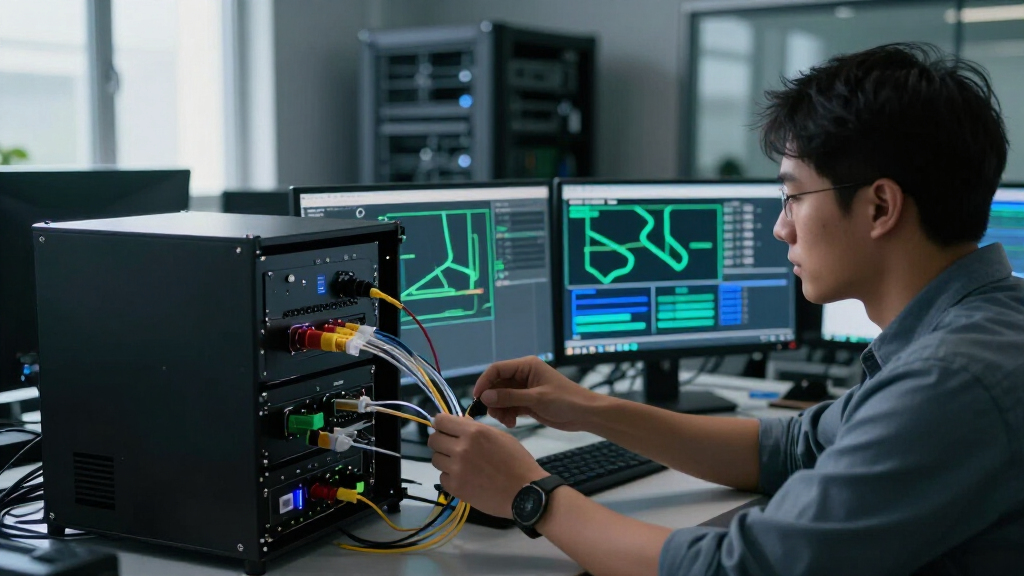
How We Picked
Because every entry here is a book or technical reference rather than a piece of hardware, I judged them on how well they move a reader from question to working knowledge. The criteria: depth and accuracy of protocol coverage (BB84, E91, decoy-state, CV-QKD), whether mathematical prerequisites are stated honestly, the presence of real implementation or network material rather than pure theory, quality of exercises or worked examples, and how current the coverage is relative to deployed systems in 2026. Practical deployment content — key management, trusted-node architecture, integration with existing fiber — counted for more than elegant derivations, because that is where most readers actually get stuck.
The ranking order reflects a simple philosophy: resources that connect theory to buildable outcomes rank highest, followed by those offering strategic breadth, with pure introductory treatments ranked by how well they prepare readers for the harder material rather than how easy they are to skim. Where two entries cover similar ground, the one with clearer structure and fewer unstated prerequisites placed higher.
| quantum key distribution system | Primary Topic | Audience | Technical Level |
|---|---|---|---|
| Quantum Key Distribution Netwo | Quantum Key Distribution Networks | — | — |
| Introduction to Quantum Crypto | Quantum cryptography principles | — | — |
| Next-Gen Network Trust: Basics | — | — | — |
| Quantum Networking in Action | — | — | — |
| Quantum Key Distribution Expla | Quantum Key Distribution (QKD) | — | — |
| Quantum Key Distribution Using | FPGA-based QKD prototype | Researchers and engineers | Advanced / specialist |
| Quantum Communication and Cryp | Quantum communication and cryptography engineering | Security and network professionals | Intermediate to advanced |
| Quantum Key Distribution | Quantum Key Distribution | Professional | Advanced professional |
| Physical-Layer Security | — | Researchers, engineers, students | Advanced academic |
| Physical-Layer Security and Qu | — | Academic researchers and advanced students | Research / graduate |
Factors to Consider When Choosing Best Quantum Key Distribution Systems
Choosing among QKD references is less about finding the “best book” and more about matching the material to your starting point and your end goal. Before buying anything in this category, work through the factors below — they explain most of the disappointment I see from mismatched purchases.
Match the Math Level Before Anything Else
The most expensive mistake in this category is buying a graduate text when you need a primer, or the reverse. Rigorous QKD treatments assume comfort with linear algebra, probability theory, and quantum mechanics notation, and most do not tell you this on the cover. A common pattern: readers buy an advanced title because it sounds authoritative, then abandon it at the security-proof chapter and never return to the field. Check the preface and a sample chapter for notation density before committing. If a book uses Dirac notation within the first two chapters without explanation, treat it as graduate-level regardless of how it is marketed.
Decide Whether You Need Physics or Deployment Knowledge
These are genuinely different skill paths, and most books serve only one. Physics-focused titles explain why QKD is secure and how protocols work at the photon level; deployment-focused titles explain how keys get routed across a network with trusted nodes, what key rates are realistic over standard fiber, and how QKD interfaces with existing encryption hardware. If your job involves procurement or network architecture, the deployment material is what you will actually use daily. Buyers who skip this distinction often end up with a beautiful treatment of entanglement theory and no idea what a QKD link costs to operate.
Prefer Coverage That Includes Post-Quantum Cryptography Context
QKD does not exist in a vacuum — it competes with, and complements, NIST-standardized post-quantum algorithms. References that address this tension honestly are worth more than those treating QKD as the only answer, because real security budgets force a choice between the two approaches. A good current text will explain where QKD has genuine advantages (point-to-point links with physical control) and where PQC wins (internet-scale deployment, software-only updates). Material published without this framing risks steering readers toward expensive hardware in scenarios where a cryptographic migration would serve better.
Hands-On Content Is Rare — Value It When You Find It
Very few entries in this space include simulations, FPGA code, or worked protocol implementations. When one does, that content tends to age faster than theory chapters, so check what platform the examples target and whether the code is still maintained. That said, a single book with a runnable prototype teaches more about real-world constraints — detector noise, sifting overhead, finite-key effects — than three purely theoretical volumes. If you learn by building, prioritize implementation content even if the surrounding theory chapters are thinner. You can always fill theoretical gaps later; you cannot easily self-discover practical pitfalls.
Watch for Aging Protocol Coverage
The field has moved. Older or slower-updating texts may center on idealized BB84 while giving thin treatment to decoy-state protocols, continuous-variable QKD, and twin-field schemes — the variants that actually matter for modern distance records and commercial systems. Check the publication or revision date and look for whether measurement-device-independent QKD appears at all. A book can be beautifully written and still describe a version of the field that no longer reflects what vendors ship. Coverage of satellite-based QKD and free-space links is another quick freshness indicator.
Consider Whether a Survey Text or a Deep Single-Topic Text Serves You Better
Survey-style books covering QKD alongside broader physical-layer security give you a map of the territory and enough vocabulary to read papers and vendor documentation — often the right call for managers, consultants, and students early in their studies. Deep single-topic texts serve specialists who already know the map and need every detail of one protocol family or hardware approach. The trap is buying both types expecting redundancy to reinforce learning; the overlap between a good survey and a good specialist text is usually small, and the gap between them can feel like missing chapters. Pick based on the decisions you need to make in the next year, not the career you imagine five years out.
Frequently Asked Questions
Do I need a quantum mechanics background to learn QKD from these resources?
Not for every entry, but the requirement varies sharply across this roundup. The beginner-oriented guides assume only high school physics and build up the necessary quantum concepts from scratch, though they inevitably simplify the security arguments. The graduate-level texts assume real fluency with quantum mechanics formalism and linear algebra, and they make no apologies for it. A workable middle path many readers take: start with an accessible primer to learn the vocabulary and protocol logic, then move to a rigorous text once the concepts feel familiar. What does not work is jumping straight into security proofs — the notation alone will stall you before the physics does.
Is QKD actually practical in 2026, or should I just learn post-quantum cryptography instead?
The honest answer is that both are deployed, and they solve different problems. QKD is commercially real in specific scenarios: metropolitan fiber networks, government and financial links where physical path control exists, and satellite-based connections where the physics works in QKD’s favor. Post-quantum cryptography covers the far larger space of ordinary internet traffic and software systems where installing quantum hardware is impossible. Several entries in this roundup address exactly this question, and the ones that treat it honestly are more useful than the ones that promote QKD uncritically. My suggestion is to learn PQC fundamentals regardless of your interest in QKD, because any serious security role in this decade will require both vocabularies.
Which of these resources will help me actually build or evaluate a QKD system?
Only a minority of titles in this category include implementation-level material, and the FPGA prototype book is the standout — it covers hardware design decisions, real-time processing constraints, and performance analysis of an actual working system. The network-focused texts are the next best thing for practical purposes, since much of real-world QKD engineering is key management and network integration rather than photonics. Pure theory texts, however elegant, will not tell you that detector dark counts dominate your error budget or that key rate drops sharply with distance. If hands-on evaluation is your goal, prioritize the implementation and network titles and treat the physics texts as reference material.
How current do these resources stay, given how fast quantum technology moves?
The theoretical foundations — BB84, entanglement-based protocols, information-theoretic security arguments — have been stable for years and older texts remain genuinely useful for them. What dates quickly is anything hardware-adjacent: detector technology, achievable distances, key rates, and commercial system architectures have all shifted substantially, and a book that was current five years ago may describe distance limits that have since been beaten by a factor of three. Protocol families like twin-field QKD and measurement-device-independent QKD are the best freshness markers to look for. If budget only allows one purchase, favor the most recent edition you can find, and supplement with vendor whitepapers and standards documents for the state of deployment.
Should I buy one comprehensive book or two books at different levels?
Two books at different levels is usually the better investment, provided they genuinely differ. A common and effective pairing from this category: one accessible introduction to build intuition and vocabulary, plus one advanced or implementation-focused text for the depth you will eventually need. The failure mode to avoid is buying two books at the same level from different authors — the overlap is substantial and the second adds little. If you can only buy one, your current math comfort should decide it: a beginner who buys the graduate text learns nothing, while an engineer who buys only the primer outgrows it within months. Whichever route you take, check that the advanced text’s prerequisites match what you will actually have.
Conclusion
The right pick here depends entirely on where you are starting and what you are trying to accomplish. For best overall, the FPGA prototype book earns it — it is the only entry that connects protocol theory to a system you can understand end to end, which is the gap that matters most in this field. For best value, the combined physical-layer security and post-quantum cryptography title covers the most decision-relevant ground per page, especially for readers weighing QKD against algorithmic alternatives. For beginners, the beginner’s physics guide remains the safest first purchase — it builds the vocabulary the other nine assume. For premium depth, the entanglement and secure network architecture text rewards readers with the background to absorb it. And for specific needs, network engineers should go straight to the Quality of Service and network trust titles, while hardware-minded readers should pair the FPGA book with a photonic engineering reference. Whatever you choose, buy one level honestly matched to your current skills — the mismatch, not the book, is what usually defeats readers in this category.
Fall Picks
fall essentials
As an affiliate, we earn on qualifying purchases.