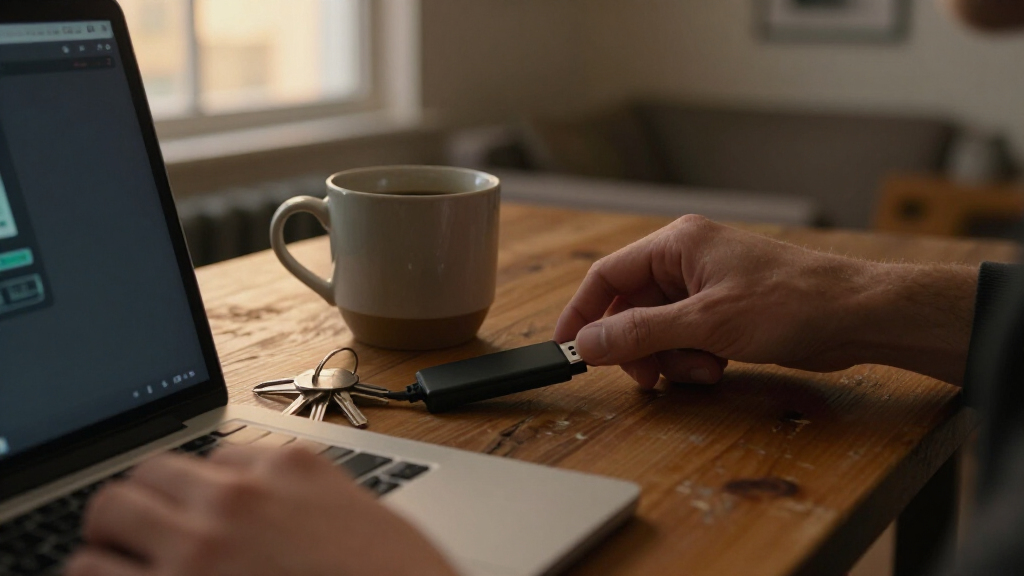

Encrypted USB flash drives split into two camps: affordable PIN-pad hardware drives that protect your data even on untrusted computers, and software-encrypted drives that trade some security for convenience and capacity. After comparing eight popular options, the Apricorn Aegis Secure Key 3 NX stands out as the best overall pick thanks to its on-device keypad, FIPS-validated encryption, and wear-resistant design — no software or admin rights needed. The iStorage datAshur PRO is the strongest alternative for regulated industries, while the Integral Crypto-197 16GB is the clear value choice for everyday office use. The main tradeoffs in this category come down to price versus certification level, PIN-entry convenience versus software dependence, and capacity versus physical security. Keep reading for the full breakdown, including which models are worth paying a premium for and which ones suit lighter-duty needs.

Get privacy and security gear delivered free — and shop member deals
- Fast, free delivery on millions of items
- Access to Prime Big Deal Days deals on October 6–7
- Prime Video, Amazon Music and more included
Key Takeaways
- The Aegis Secure Key 3 NX earns the top spot because its onboard PIN pad means it works on any computer without installing software or needing admin rights — a security advantage no software-based drive in this lineup can match.
- Integral‘s three entries (Crypto-197 4GB/16GB and Secure 360) prove you don’t need to spend heavily for solid hardware encryption, but their smaller capacities and lighter certifications place them in the value tier rather than the security-first tier.
- iStorage and Apricorn occupy the premium tier because both carry FIPS 140-2 Level 3 validation and brute-force self-destruct defenses — features that matter for compliance-driven buyers and are overkill for casual home use.
- The Kingston IronKey Locker+ 50 G2 is the only pick here that makes sense when capacity is the priority, offering 128GB with hardware encryption at a far lower cost-per-gigabyte than the FIPS-validated drives.
- The 4GB models (datAshur PRO and Crypto-197) aren’t mistakes in the lineup — they’re purpose-built for transporting small sensitive document sets where a lost drive must be a non-event, not a data breach.
| Integral Crypto-197 16GB USB 3.0 Hardware-Encrypted Flash Drive |  | Best Overall | Storage capacity: 16GB | Interface: USB 3.0 | Encryption: 256-bit AES hardware encryption | VIEW LATEST PRICE | See Our Full Breakdown |
| INNOPLUS Secure Flash Drive 32GB Encrypted USB 3.0 Drive |  | Best Value | Storage capacity: 32GB | Interface: USB 3.0 (USB Type-A) | Encryption: 256-bit AES XTS hardware encryption | VIEW LATEST PRICE | See Our Full Breakdown |
| Apricorn Aegis Secure Key 3 NX 8GB Encrypted USB 3.0 Flash Drive |  | Best Premium Security | Storage capacity: 8GB | Interface: USB 3.0 | Encryption: 256-bit hardware encryption | VIEW LATEST PRICE | See Our Full Breakdown |
| Kingston IronKey Vault Privacy 50 16GB Encrypted USB Drive |  | Best for Threat Protection | Storage capacity: 16GB | Encryption: FIPS 197-certified AES 256-bit XTS hardware encryption | Interface: USB 3.2 Gen 1 (USB Type-A) | VIEW LATEST PRICE | See Our Full Breakdown |
| Integral Crypto-197 4GB USB 3.0 Encrypted Flash Drive | | Best Compact Budget Pick | Storage capacity: 4GB | Interface: USB 3.0 | Encryption: 256-bit AES hardware encryption | VIEW LATEST PRICE | See Our Full Breakdown |
| Integral Secure 360 32GB Encrypted USB 3.0 Flash Drive |  | Best Value for Everyday Encryption | Storage Capacity: 32 GB | Interface: USB 3.0 (USB 3.2 Gen 1) | Encryption: 256-bit AES Secure Lock II | VIEW LATEST PRICE | See Our Full Breakdown |
| Kingston IronKey Locker+ 50 G2 128GB Encrypted USB Drive |  | Best for Large Secure Libraries | Storage Capacity: 128 GB | Interface: USB 3.2 Gen 1 (USB Type-A) | Encryption: XTS-AES 256-bit hardware encryption | VIEW LATEST PRICE | See Our Full Breakdown |
| iStorage datAshur PRO 4GB Encrypted USB Flash Drive |  | Best Maximum-Security Pick | Storage Capacity: 4 GB | Encryption: 256-bit AES-XTS hardware encryption | Authentication: 7–15 digit onboard PIN | VIEW LATEST PRICE | See Our Full Breakdown |
| encrypted USB flash drife | Storage capacity | Interface | Encryption | Compatibility |
|---|---|---|---|---|
| Integral Crypto-197 16GB USB 3 | 16GB | USB 3.0 | 256-bit AES hardware encryption | PC and Mac |
| INNOPLUS Secure Flash Drive 32 | 32GB | USB 3.0 (USB Type-A) | 256-bit AES XTS hardware encryption | Windows, Mac, Linux, embedded systems |
| Apricorn Aegis Secure Key 3 NX | 8GB | USB 3.0 | 256-bit hardware encryption | — |
| Kingston IronKey Vault Privacy | 16GB | USB 3.2 Gen 1 (USB Type-A) | FIPS 197-certified AES 256-bit XTS hardware encryption | — |
| Integral Crypto-197 4GB USB 3. | 4GB | USB 3.0 | 256-bit AES hardware encryption | PC and Mac |
| Integral Secure 360 32GB Encry | 32 GB | USB 3.0 (USB 3.2 Gen 1) | 256-bit AES Secure Lock II | Windows and macOS |
| Kingston IronKey Locker+ 50 G2 | 128 GB | USB 3.2 Gen 1 (USB Type-A) | XTS-AES 256-bit hardware encryption | — |
| iStorage datAshur PRO 4GB Encr | 4 GB | USB 3.2 | 256-bit AES-XTS hardware encryption | Windows, macOS, Linux, Chrome, Android, and other USB-enabled systems |
More Details on Our Top Picks
Integral Crypto-197 16GB USB 3.0 Hardware-Encrypted Flash Drive
This option stands out for balancing certified security, plug-and-play simplicity, and enough capacity for everyday sensitive files. The FIPS 197-certified 256-bit AES hardware encryption lives on the drive itself, so there’s nothing to install and no subscription — a genuine advantage over the Apricorn Aegis Secure Key 3 NX, which asks more setup effort in exchange for deeper admin controls. Auto-locking when unplugged or when the host PC locks means a forgotten drive in a coffee shop stays locked. Compared with its 4GB sibling, the 16GB capacity makes it practical for documents, backups, and media rather than just text files.
The tradeoff is unforgiving: six wrong password attempts wipe everything. That protects data but punishes forgetfulness.
Pros:- FIPS 197-certified 256-bit AES hardware encryption with no software or subscription needed
- Automatically locks when disconnected or when the host computer locks
- Rugged double-layer waterproof build survives drops and spills
- 16GB capacity handles real-world documents and backups, unlike tiny 4GB alternatives
Cons:- Data and encryption key are erased after just 6 failed password attempts
- Password must be 8–16 alphanumeric characters, so weak or short PINs aren’t accepted
Best for: Office workers and students who carry sensitive documents and want certified encryption with zero software hassle
Not ideal for: Anyone who tends to forget passwords — six failed attempts permanently erases the drive’s contents
- Storage capacity:16GB
- Interface:USB 3.0
- Encryption:256-bit AES hardware encryption
- Certification:FIPS 197
- Password:8–16 alphanumeric characters
- Failed-attempt policy:Data erased after 6 attempts
- Compatibility:PC and Mac
- Build:Waterproof double-layer construction
Our verdict“The safest all-round choice for buyers who want certified hardware encryption and automatic locking without managing software.”
INNOPLUS Secure Flash Drive 32GB Encrypted USB 3.0 Drive
For buyers who want the most encrypted storage per pound, this model makes the most sense. It pairs 256-bit AES XTS hardware encryption with 32GB of capacity — double the room of the Integral Crypto-197 16GB — while keeping the price accessible. Speed is its quiet strength: rated reads up to 480 MB/s comfortably outpace the Kingston IronKey Vault Privacy 50’s 250 MB/s, which matters if you regularly move large encrypted archives. Cross-platform support across Windows, macOS, Linux, and embedded systems is broader than most rivals here, with no drivers required.
It isn’t certified to FIPS 140-2 like the Apricorn, so compliance-driven buyers should look elsewhere. And the self-destruct after ten wrong passwords is real: forget the password and the data is gone.
Pros:- 32GB capacity — the most storage among the smaller drives in this lineup
- Fast performance with reads up to 480 MB/s and writes up to 160 MB/s
- Works across Windows, Mac, Linux, and embedded systems with no drivers
- Durable zinc-alloy and ABS housing
Cons:- Lacks formal FIPS validation, unlike the Apricorn and Integral options
- Data is permanently erased after ten incorrect password attempts
Best for: Budget-minded users who want maximum encrypted capacity and fast transfers without paying certification premiums
Not ideal for: Government or regulated-industry buyers who need formal FIPS 140-2 validation on the device
- Storage capacity:32GB
- Interface:USB 3.0 (USB Type-A)
- Encryption:256-bit AES XTS hardware encryption
- Read speed:Up to 480 MB/s
- Write speed:Up to 160 MB/s
- Compatibility:Windows, Mac, Linux, embedded systems
- Build:Zinc-alloy and ABS shell
Our verdict“The best capacity-to-cost pick for everyday users who value speed and storage over formal security certifications.”
Apricorn Aegis Secure Key 3 NX 8GB Encrypted USB 3.0 Flash Drive
This is the drive you buy when compliance is non-negotiable. Its FIPS 140-2 Level 3 validation sits a tier above the FIPS 197 certification on the Integral Crypto-197 and Kingston IronKey Vault Privacy 50 — Level 3 means the drive actively defends its encryption keys against physical tampering, not just data at rest. Features the others simply don’t offer include separate admin and user modes, two read-only modes for safe insertion into untrusted machines, data recovery PINs, and support for Aegis Configurator so IT teams can manage fleets of drives centrally.
The compromises are real: 8GB is the smallest capacity here, and this level of validation commands a premium. Compared with the INNOPLUS, you’re trading storage and speed for audit-grade security.
Pros:- FIPS 140-2 Level 3 validated — the strongest certification in this lineup
- Separate administrator and user modes for managed deployments
- Two read-only modes and data recovery PINs for safer, more flexible use
- Aegis Configurator support enables centralized fleet management
Cons:- Only 8GB of storage — the smallest capacity in the roundup
- Carries a premium price typical of Level 3 validated hardware
- Admin and user mode setup adds complexity compared with simple password drives
Best for: IT departments, contractors, and regulated organizations that must satisfy FIPS 140-2 Level 3 requirements
Not ideal for: Casual users — the small capacity, premium cost, and admin-mode complexity are overkill for personal file protection
- Storage capacity:8GB
- Interface:USB 3.0
- Encryption:256-bit hardware encryption
- Validation:FIPS 140-2 Level 3
- Modes:Separate admin and user modes; two read-only modes
- Additional features:Data recovery PINs; Aegis Configurator compatible
Our verdict“The clear pick when procurement rules demand FIPS 140-2 Level 3, provided 8GB covers your file sizes.”
Kingston IronKey Vault Privacy 50 16GB Encrypted USB Drive
Where the Integral Crypto-197 focuses on encrypting stored data, this Kingston goes further by defending the drive itself. Its standout differentiators are BadUSB attack protection and brute-force safeguards — protections against firmware-level attacks that trick a PC into trusting a malicious device, which none of the other drives here explicitly address. Configurable password modes and dual write-protect settings make it a strong fit for plugging into machines you don’t fully trust, similar in spirit to the Apricorn’s read-only modes but at a friendlier level of complexity. Reads up to 250 MB/s keep day-to-day transfers brisk, and TAA compliance broadens its appeal for US government-adjacent purchases.
Tradeoffs: 16GB fills fast with media, and password management discipline is entirely on you.
Pros:- BadUSB attack protection guards against firmware-level USB threats
- Brute-force password protection and configurable password modes
- Dual write-protect settings for safe use on untrusted machines
- TAA compliant with solid 250 MB/s read speeds
Cons:- 16GB capacity limits larger file transfers and backups
- Full protection depends on users properly configuring password modes
Best for: Security-conscious professionals who move between untrusted computers and want firmware-level attack protection
Not ideal for: Users who need room for large media libraries — 16GB disappears quickly once encryption overhead is factored in
- Storage capacity:16GB
- Encryption:FIPS 197-certified AES 256-bit XTS hardware encryption
- Interface:USB 3.2 Gen 1 (USB Type-A)
- Read speed:Up to 250 MB/s
- Write speed:Up to 180 MB/s
- Security features:Brute-force and BadUSB protection; dual write-protect
- Compliance:TAA compliant
Our verdict“The best choice for anyone whose main worry is hostile computers rather than just stolen data.”
Integral Crypto-197 4GB USB 3.0 Encrypted Flash Drive
This is the low-commitment entry point into hardware encryption. It shares the same FIPS 197-certified 256-bit AES hardware encryption, auto-lock behavior, and dual-layer waterproof build as its 16GB sibling — the only meaningful difference is capacity. For carrying credentials, contracts, tax documents, or a small KeePass vault, 4GB is genuinely enough, and buying encrypted storage this small keeps the cost of securing a handful of files proportionate. Compared with the iStorage datAshur PRO 4GB, it delivers the same certification class at a more approachable price point, though the iStorage adds keypad convenience.
The obvious ceiling: 4GB rules out photos, video, or any sizable backup, and the same six-attempt data wipe applies. Write your password down somewhere safe.
Pros:- FIPS 197 certified 256-bit AES hardware encryption at an entry-level cost
- Automatically locks when disconnected from the host
- Dual-layer waterproof construction with hardened inner case and silicone outer shell
- No software installation or accounts required
Cons:- Only 4GB of storage, too small for media or backups
- Data is erased after six unsuccessful password attempts
Best for: Users who only need to carry a small set of sensitive documents and want certified encryption cheaply
Not ideal for: Anyone backing up media or large folders — 4GB fills after a handful of files
- Storage capacity:4GB
- Interface:USB 3.0
- Encryption:256-bit AES hardware encryption
- Certification:FIPS 197
- Password:8–16 alphanumeric characters
- Failed-attempt policy:Data erased after 6 attempts
- Compatibility:PC and Mac
- Build:Dual-layer waterproof construction
Our verdict“A sensible, inexpensive way to encrypt a small document set with the same certification as its larger sibling.”
Integral Secure 360 32GB Encrypted USB 3.0 Flash Drive
Most encrypted drives force you to choose between security and affordability, but the Integral Secure 360 splits the difference well for casual users. Its 256-bit AES Secure Lock II encryption covers the essentials, and the dual-partition layout means you can keep public files on one side and protected files behind a password on the other — something the Apricorn Aegis Secure Key 3 NX doesn’t offer, since it treats the whole drive as secure by default.
The tradeoff is seriousness. Where the Kingston IronKey Locker+ 50 G2 brings FIPS 197 certification and hardware-level XTS encryption, the Secure 360 relies on a software-based scheme that’s fine for personal documents but not for regulated data. Also note the 10-failed-attempt data wipe: convenient anti-theft, brutal if you forget your own password.
Pros:- 256-bit AES encryption for protecting sensitive files
- Separate public and encrypted partitions let you carry mixed content on one drive
- Capless rotating housing means no lost caps
- Works on both Windows and macOS with no software installation or subscription
Cons:- All data is permanently erased after 10 failed password attempts
- Real-world transfer speeds often fall well below the quoted 5 Gbps interface ceiling
- Software-based encryption lacks the certifications of hardware-encrypted rivals
Best for: Students and office workers who want password-protected storage for everyday documents without paying enterprise-level prices
Not ideal for: Anyone handling compliance-sensitive or regulated data — software encryption and no FIPS certification make it a poor fit for professional security requirements
- Storage Capacity:32 GB
- Interface:USB 3.0 (USB 3.2 Gen 1)
- Encryption:256-bit AES Secure Lock II
- Failed-Attempt Policy:Drive resets and data is erased after 10 failed attempts
- Design:Black capless housing with 362-degree rotating cover
- Compatibility:Windows and macOS
- Warranty:2 years
Our verdict“A sensible, low-cost entry point for everyday file protection — just don’t trust it with data you can’t afford to lose or that requires certified encryption.”
Kingston IronKey Locker+ 50 G2 128GB Encrypted USB Drive
When your encrypted archive outgrows the 8–32GB capacities common in this category, the IronKey Locker+ 50 G2 is where I’d point you first. With 128GB of FIPS 197-certified, XTS-AES 256-bit hardware encryption and speeds up to 145 MB/s read and 115 MB/s write, it moves big backups far faster than the Integral Secure 360, whose software encryption and smaller partition make bulk transfers a slower affair.
The dual admin/user password system is a genuinely useful feature for IT-managed deployments — an admin can reset a forgotten user PIN without wiping the drive. The main limitation is physical: it’s USB Type-A only, so newer laptops relying solely on USB-C will need an adapter or hub. Compared with the iStorage datAshur PRO, it trades the onboard keypad for software-based unlocking, which means it only works conveniently on Windows and macOS machines.
Pros:- XTS-AES 256-bit hardware encryption with FIPS 197 certification
- Dual admin/user passwords with complex and passphrase modes for flexible recovery
- 128GB capacity is far larger than most encrypted drives in this class
- Fast real-world throughput at up to 145 MB/s read and 115 MB/s write
Cons:- USB Type-A connector only — no direct compatibility with USB-C-only devices
- Requires host software for authentication, so it can’t unlock on arbitrary systems like keypad-based drives
Best for: Professionals and IT teams who need to secure large volumes of files — backups, client archives, or encrypted media libraries — on certified hardware
Not ideal for: Users with USB-C-only laptops or tablets who want to avoid carrying adapters, and anyone who needs PIN-based unlocking across operating systems beyond Windows and macOS
- Storage Capacity:128 GB
- Interface:USB 3.2 Gen 1 (USB Type-A)
- Encryption:XTS-AES 256-bit hardware encryption
- Certification:FIPS 197
- Read Speed:Up to 145 MB/s
- Write Speed:Up to 115 MB/s
- Dimensions:0.73″ × 0.37″ × 0.37″
Our verdict“The pick when capacity and certified hardware encryption matter more than connector versatility — ideal for large, Windows- or macOS-centric secure archives.”
iStorage datAshur PRO 4GB Encrypted USB Flash Drive
If the threat model includes physical tampering — not just a lost bag — the iStorage datAshur PRO sits a tier above everything else here. Its FIPS 140-2 Level 3 certification (plus NATO Restricted approval) means the encryption hardware itself is hardened against attack, a step beyond the FIPS 197 certification on the Kingston IronKey Locker+ 50 G2, which validates the algorithm rather than the physical defenses. The onboard PIN keypad unlocks the drive before it ever connects to a host, so it works on Windows, macOS, Linux, Chrome, and even Android without installing anything.
That security comes at a cost, and not just financial: 4GB is tiny, so this is for critical documents rather than media libraries — the Locker+ 50 G2 holds 32 times more. Daily PIN entry also adds friction the Integral Secure 360 avoids with simple password prompts.
Pros:- FIPS 140-2 Level 3 certified hardware encryption among the strictest in this lineup
- 7–15 digit onboard PIN authentication works without software on virtually any OS
- IP57 dust and water resistance survives harsh field conditions
- Fast USB 3.2 performance at up to 169 MB/s read and 135 MB/s write
Cons:- Only 4GB of capacity, limiting it to documents rather than large archives
- PIN must be entered on the drive each time, adding friction to frequent use
- Maximum speeds depend heavily on the host device
Best for: Government, defense, healthcare, and legal users who handle highly sensitive documents and need certified, tamper-resistant protection across any OS
Not ideal for: Anyone needing to store large files or media — 4GB fills fast — or casual users who’ll find daily PIN entry tedious for low-stakes data
- Storage Capacity:4 GB
- Encryption:256-bit AES-XTS hardware encryption
- Authentication:7–15 digit onboard PIN
- Certification:FIPS 140-2 Level 3, NLNCSA DEP-V, NATO Restricted
- Ingress Protection:IP57 dust and water resistant
- Interface:USB 3.2
- Read Speed:Up to 169 MB/s
- Write Speed:Up to 135 MB/s
- Compatibility:Windows, macOS, Linux, Chrome, Android, and other USB-enabled systems
Our verdict“The security-first choice for small volumes of genuinely sensitive data — buy it for certification and tamper resistance, not for space.”
How We Picked
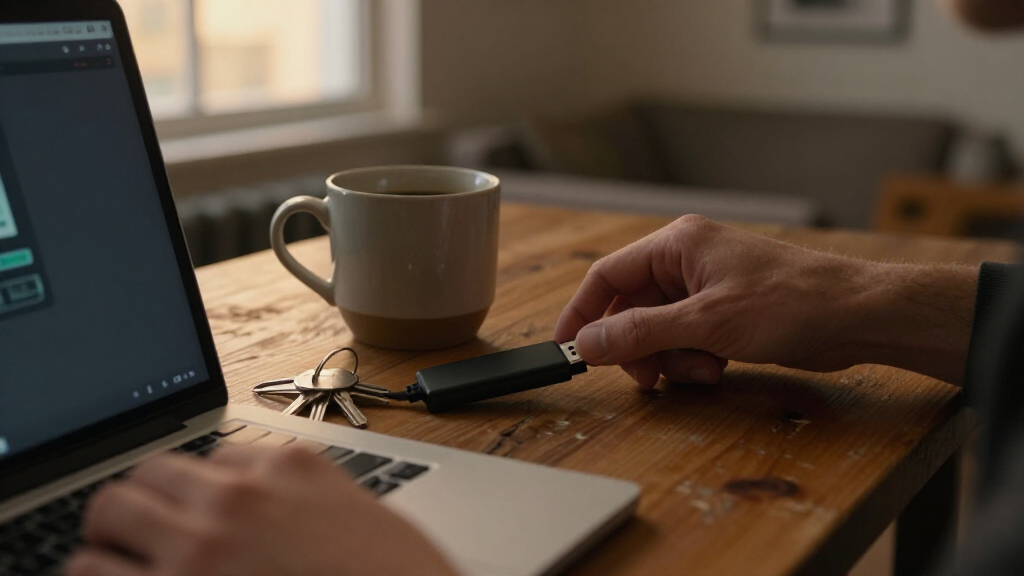
I ranked these drives around three questions a buyer actually faces: how the encryption is unlocked, how much tamper protection the hardware provides, and what the total cost looks like for the capacity you get. Drives with onboard keypads (Apricorn, iStorage, Integral Secure 360) scored higher on versatility because they work on any USB port without software installs, admin rights, or operating system compatibility worries. Certification level was the second filter — FIPS 140-2 Level 3 validated drives outrank uncertified ones because independent validation is what auditors and IT departments actually accept. I also weighed brute-force defenses (self-destructing encryption keys after failed PIN attempts), physical build quality, and warranty length as proxies for long-term reliability.
The ranking logic follows buyer priority rather than spec sheets. The Aegis Secure Key 3 NX leads because it combines the highest security standard with the most flexible unlock method. iStorage sits just behind on equal security with a slightly higher price. Kingston’s two entries split by use case — the Vault Privacy 50 for security-focused users, the Locker+ 50 G2 for capacity seekers. Integral’s three drives fill the value and entry-level tiers, ordered by capacity and feature set, because they deliver dependable encryption where certification and ruggedness matter less.
| encrypted USB flash drife | Interface | Certification | Compatibility | Read speed |
|---|---|---|---|---|
| Integral Crypto-197 16GB USB 3 | USB 3.0 | FIPS 197 | PC and Mac | — |
| INNOPLUS Secure Flash Drive 32 | USB 3.0 (USB Type-A) | — | Windows, Mac, Linux, embedded systems | Up to 480 MB/s |
| Apricorn Aegis Secure Key 3 NX | USB 3.0 | — | — | — |
| Kingston IronKey Vault Privacy | USB 3.2 Gen 1 (USB Type-A) | — | — | Up to 250 MB/s |
| Integral Crypto-197 4GB USB 3. | USB 3.0 | FIPS 197 | PC and Mac | — |
| Integral Secure 360 32GB Encry | USB 3.0 (USB 3.2 Gen 1) | — | Windows and macOS | — |
| Kingston IronKey Locker+ 50 G2 | USB 3.2 Gen 1 (USB Type-A) | FIPS 197 | — | Up to 145 MB/s |
| iStorage datAshur PRO 4GB Encr | USB 3.2 | FIPS 140-2 Level 3, NLNCSA DEP-V, NATO Restricted | Windows, macOS, Linux, Chrome, Android, and other USB-enabled systems | Up to 169 MB/s |
Factors to Consider When Choosing Encrypted USB Flash Drives
Before picking a specific drive, it helps to understand what actually separates a secure purchase from an expensive mistake in this category. The factors below shaped how I ranked the eight drives above — and they’ll help you match a model to your real threat level.Hardware Encryption vs. Software Encryption
This is the single most consequential choice, and it’s where buyers most often go wrong. A hardware-encrypted drive keeps the encryption chip and PIN entry on the device itself, meaning the unlocking happens before the drive ever appears as storage to the host computer — malware on that computer never sees your unencrypted data. Software-based encryption, by contrast, relies on a program running on the host machine, which means admin rights, OS compatibility issues, and exposure to keylogging. If you’ll plug into shared or public machines, hardware encryption with a physical keypad isn’t a luxury; it’s the whole point. Buyers who only move files between their own trusted computers can save money with a software-encrypted option like the IronKey Locker+ 50 G2. The mistake to avoid is assuming any drive labeled ‘encrypted’ offers the same protection — the unlocking mechanism matters more than the marketing on the box.
Certification Level and Compliance Requirements
If you handle data subject to GDPR, HIPAA, or government contracts, certification isn’t optional — it’s the difference between a defensible security posture and a fine waiting to happen. FIPS 140-2 Level 3 validation, found on the Aegis Secure Key 3 NX and datAshur PRO, means the drive has been independently tested to resist physical tampering and to erase its keys if someone tries to break in. Uncertified drives may still use strong AES-256 encryption, but no auditor will accept ‘the manufacturer says it’s secure’ as evidence. The common mistake is paying certification-level prices for uncertified drives, or the reverse — buying a cheap uncertified drive for regulated data and discovering the gap during an audit. Match the certification to your actual obligation, not to a vague sense that more security is always better. For personal tax documents, uncertified hardware encryption is perfectly reasonable.
Capacity: Why Bigger Isn’t Always Smarter
Encrypted drives cost far more per gigabyte than standard flash storage, so overbuying capacity wastes money that’s better spent on security features. A 4GB or 8GB drive holds thousands of text documents, spreadsheets, and PDFs — exactly the file types that typically justify encryption. Video, photos, and large backups rarely belong on an encrypted stick anyway; they belong on encrypted external SSDs or cloud storage. The buyers who genuinely need 128GB of encrypted portable storage, like the IronKey Locker+ 50 G2 offers, usually know who they are because they have a specific workflow demanding it. A useful exercise: inventory what you’d actually put on the drive, double it for growth, and buy that size. The savings between a 32GB and a 128GB encrypted drive can fund an entire second drive for different purposes.
Brute-Force Protection and Self-Destruction
Every drive in this roundup uses strong encryption, which means the realistic attack path isn’t breaking the cipher — it’s guessing your PIN. That’s why brute-force defense is where premium drives earn their price. The Aegis and datAshur models erase their encryption keys after a configurable number of wrong attempts, rendering the data permanently unreadable even with the correct PIN afterward. Cheaper drives may allow unlimited guesses, which turns a weak four-digit PIN into a solvable problem for a patient attacker. When comparing drives, look for the failed-attempt limit and whether it’s configurable by an admin. One caution: self-destruct features mean you can lock yourself out permanently, so drives with admin recovery modes or dual personas (like the datAshur’s admin and user PINs) offer a safety net worth having if multiple people share the device.
USB Version, Speed, and Real-World Throughput
Encryption adds overhead, so an encrypted USB 3.0 drive will never hit the speeds of an unencrypted one with the same interface. Still, USB 3.0 matters here: every drive in this lineup uses it, and you’ll feel the difference when transferring multi-gigabyte files compared to older USB 2.0 encrypted sticks. What matters more in practice is consistency — drives that maintain steady write speeds under encryption load make daily backups far less painful than ones that throttle. Buyers transferring mostly small documents can ignore speed entirely; anyone moving databases or encrypted disk images should prioritize it. Also check whether the drive works across your operating systems without drivers, since some software-encrypted models limit cross-platform use. The keypad-driven hardware drives have an edge here because once unlocked, they present as plain storage to any OS.
Physical Durability and Total Cost of Ownership
An encrypted drive carries your most sensitive files, so it will likely travel — and travel kills cheap flash drives. Look for ruggedized housings, waterproofing, and dust protection, all of which the premium models here advertise. Keypad durability deserves special attention: a worn-out button on a PIN-pad drive can render the whole device unusable, which is why Apricorn uses coated, wear-resistant keypads that don’t reveal which buttons are pressed most often. Warranty length is a decent proxy for build confidence — five-year warranties on the premium tier versus shorter coverage on value drives tells you what the manufacturers expect. Finally, factor in replacement cost if the drive is lost: a cheaper uncertified drive that gets lost with sensitive data on it is far more expensive than a certified one that self-wipes. Total cost of ownership in this category is dominated by risk, not purchase price.
Frequently Asked Questions
Do I really need a PIN-pad drive, or is software encryption enough?
It depends entirely on which computers you’ll plug into. A PIN-pad drive like the Aegis Secure Key 3 NX or datAshur PRO unlocks itself before connecting to the host machine, so it works on locked-down office PCs, public terminals, and machines where you can’t install software. Software-encrypted drives like the IronKey Locker+ 50 G2 require running an application, which means admin rights, OS compatibility checks, and exposure to keyloggers capturing your password. If your workflow involves only your own trusted computers, software encryption is more convenient and usually cheaper per gigabyte. If you travel, use shared machines, or handle compliance-sensitive data, the keypad approach is worth the premium. The security difference isn’t theoretical — it’s the gap between the host computer seeing ciphertext only versus having your unlock credential typed on its keyboard.
Why are some encrypted drives so much more expensive for less storage?
You’re paying for tamper-resistant hardware, certification, and self-destruct electronics rather than flash memory. A FIPS 140-2 Level 3 validated drive like the datAshur PRO must physically resist epoxy removal, chip probing, and case intrusion, with epoxy-potted internals and circuitry that erases keys on attack detection — none of which is cheap to manufacture or validate. The certification process itself adds cost, since an accredited lab tests the implementation rather than taking the manufacturer’s word. Storage chips are a small fraction of the bill of materials in these devices, which is why capacity upgrades move the price far less than security tier does. If you don’t need certification, drives like the Integral Crypto-197 deliver real hardware encryption at a fraction of the cost. The mistake is comparing encrypted drives to standard flash drives on price-per-gigabyte — they’re different products solving different problems.
What happens if I forget my PIN — can the data be recovered?
No, and that’s by design. On every hardware-encrypted drive in this roundup, the encryption key exists only inside the device and is itself encrypted behind your PIN. There’s no manufacturer backdoor, no recovery service, and no way for even the vendor to extract your files — which is exactly the property that makes these drives trustworthy. Some premium models, including the datAshur PRO and Aegis Secure Key 3 NX, offer an admin PIN that can recover or re-provision a drive if a user PIN is lost, which is valuable when multiple people share devices under IT oversight. On admin-less models, a forgotten PIN means the drive must be reset, which wipes everything. The practical implication: keep your PIN somewhere secure and separate from the drive itself, and treat any files on an encrypted stick as needing a backup copy elsewhere.
Are the small 4GB and 8GB drives still worth buying in 2026?
Yes, when the drive’s job is transporting a small set of highly sensitive documents rather than bulk storage. A 4GB datAshur PRO or 8GB Aegis Secure Key 3 NX holds thousands of PDFs, contracts, medical records, or credential files — the material that justifies encryption in the first place. The smaller capacity actually aligns with good security practice: less data on a portable device means less exposure if it’s lost, and top-tier security features cost the same regardless of storage size. These small premium drives make excellent dedicated-purpose keys — one for client files, one for personal records — rather than general-purpose storage. They stop making sense the moment you need to carry media libraries or backups, at which point a larger capacity drive or an encrypted external SSD is the better tool. Buy capacity for the files you’ll actually encrypt, not out of storage anxiety.
Can I use one encrypted drive across Windows, Mac, and Linux?
Hardware-encrypted drives with keypads handle this best, because once unlocked they appear as a standard USB mass-storage device that every operating system reads natively. The Aegis Secure Key 3 NX, datAshur PRO, and Integral Secure 360 all work this way — no drivers or software needed on any host. Software-encrypted drives are more restricted: they depend on a companion application, and some support only Windows, or offer read-only access on Mac. Before buying a software-based model like the IronKey Locker+ 50 G2, check the vendor’s platform support against every system you’ll use. One cross-platform caveat applies to everyone: format the unlocked drive as exFAT if you’ll move between Windows and Mac, since NTFS is read-only on macOS and FAT32 caps file sizes at 4GB. The platform question is another reason keypad drives dominate for people who work across mixed environments.
Conclusion
Matching the right encrypted drive to your situation comes down to your threat level and budget. For the best overall balance, the Apricorn Aegis Secure Key 3 NX leads this lineup with FIPS-validated security, an onboard keypad that works anywhere, and rugged build quality — the drive I’d point most buyers toward. The iStorage datAshur PRO is the best premium choice for regulated industries and organizations needing admin PIN management alongside equal-grade tamper protection. Value seekers get two strong options: the Integral Crypto-197 16GB for dependable everyday hardware encryption, or the Kingston IronKey Locker+ 50 G2 if 128GB of capacity is the priority. The Crypto-197 4GB earns the best-for-beginners slot as a low-cost way to adopt hardware encryption habits, while the Secure 360 suits small teams wanting keypad convenience without premium pricing, and the IronKey Vault Privacy 50 fits professionals who want certified-grade encryption in a software-unlocked, high-portability format. Whatever you choose, the decision that matters most is picking hardware encryption with a failed-attempt limit — everything else is refinement on that foundation.
Evergreen bestsellers Picks
bestsellers
As an affiliate, we earn on qualifying purchases.