
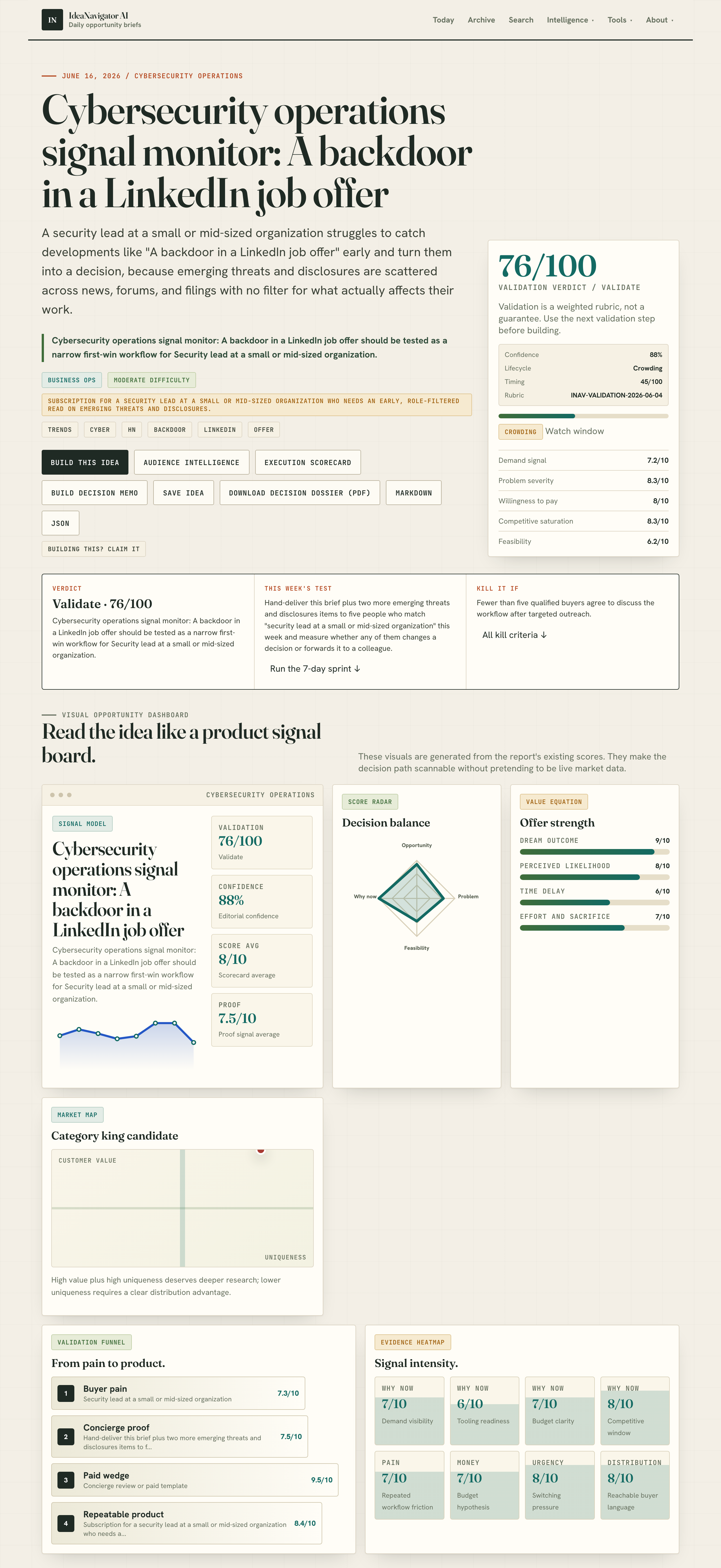
📊 Full opportunity report: Cybersecurity Operations Signal Monitor: A Backdoor In A LinkedIn Job Offer on IdeaNavigator AI — validation score, market gap, and execution plan.

Get privacy and security gear delivered free — and shop member deals
- Fast, free delivery on millions of items
- Access to Prime Big Deal Days deals on October 6–7
- Prime Video, Amazon Music and more included
TL;DR
Cybersecurity analysts have confirmed the detection of a backdoor embedded in a LinkedIn job offer. This development underscores the evolving tactics used by hackers and the importance of early threat detection for smaller organizations.
Cybersecurity analysts have confirmed the presence of a backdoor embedded in a LinkedIn job offer. This discovery highlights a new tactic used by hackers to gain unauthorized access and underscores the need for organizations to scrutinize emerging threats more effectively. The detection was made by cybersecurity operations signal monitors and is considered a significant alert for small and mid-sized organizations vulnerable to targeted cyberattacks.
The backdoor was identified through cybersecurity monitoring tools that analyze job postings and other online signals for malicious activity. According to sources familiar with the investigation, the malicious code was embedded within a seemingly legitimate LinkedIn job listing, which could have been used to deploy malware or gain persistent access to targeted systems.
Cybersecurity experts note that such techniques are increasingly sophisticated, with hackers leveraging social engineering and trusted platforms like LinkedIn to target organizations with limited cybersecurity resources. The incident was flagged as part of routine monitoring, and no confirmed data breaches have yet been reported as a result. For more on cybersecurity monitoring tools, see this overview.
Implications for Small and Mid-Sized Organizations
This development demonstrates how attackers are exploiting popular professional networks to deliver malicious payloads, especially targeting smaller organizations that may lack advanced security measures. Early detection of such threats is crucial to prevent potential data breaches, financial loss, or operational disruptions. The incident also emphasizes the importance of integrating threat intelligence into regular security workflows to identify emerging tactics before they cause harm.
As an affiliate, we earn on qualifying purchases.
Rise of Malicious Job Postings in Cyber Threat Landscape
Over recent years, cybercriminals have increasingly used fake or compromised job postings as vectors for malware and backdoors. These tactics aim to exploit the trust users place in professional networking sites. The recent detection aligns with broader trends of targeted attacks against organizations perceived as less protected. Previously, similar methods have been used to deliver ransomware or steal credentials, but embedding backdoors directly into job offers marks a notable escalation.
threat detection software for small business
As an affiliate, we earn on qualifying purchases.
As an affiliate, we earn on qualifying purchases.
Extent and Impact of the Backdoor Threat
It is not yet clear how widespread this particular backdoor is or how many organizations may have been targeted. Details about the specific payload, the attackers behind it, and whether any data has been compromised remain undisclosed. Security experts are still assessing the full scope of the threat and potential vulnerabilities.
cyber threat intelligence platforms
As an affiliate, we earn on qualifying purchases.
As an affiliate, we earn on qualifying purchases.
Monitoring and Response Strategies for Organizations
Cybersecurity teams are advised to enhance their monitoring of online signals, especially job postings on platforms like LinkedIn. Organizations should review their security protocols, conduct threat assessments, and consider deploying additional detection tools. Further investigations are expected to reveal more about the attack methods and help develop targeted defense measures.
As an affiliate, we earn on qualifying purchases.
Key Questions
How can organizations detect backdoors in online job postings?
Organizations should implement threat intelligence tools that monitor suspicious activity in online job listings, analyze embedded code, and verify the legitimacy of postings through multiple channels.
What are the signs of a malicious job offer?
Unusual request for personal information, discrepancies in job details, or links that lead to suspicious websites can indicate malicious intent. Always verify job postings through official channels.
Should small organizations be more concerned about these threats?
Yes, smaller organizations often lack extensive cybersecurity defenses, making them attractive targets for hackers employing social engineering and online signals as attack vectors.
What steps should organizations take after discovering such a threat?
Organizations should isolate affected systems, conduct thorough security audits, notify relevant authorities if necessary, and update their security measures to prevent future incidents.
Is this type of attack common now?
While embedding malicious code in online job postings is a relatively recent tactic, it reflects a broader trend of cybercriminals exploiting trusted platforms for targeted attacks.
Source: IdeaNavigator AI
Fall Picks
fall essentials
As an affiliate, we earn on qualifying purchases.