
📊 Full opportunity report: Near-miss Detection AI For Existing Warehouse CCTV on IdeaNavigator AI — validation score, market gap, and execution plan.

Get privacy and security gear delivered free — and shop member deals
- Fast, free delivery on millions of items
- Access to Prime Big Deal Days deals on October 6–7
- Prime Video, Amazon Music and more included
TL;DR
An AI system designed to analyze existing warehouse CCTV footage for near-misses is entering testing. It aims to identify forklift-pedestrian conflicts and speed violations, helping safety managers proactively address hazards.
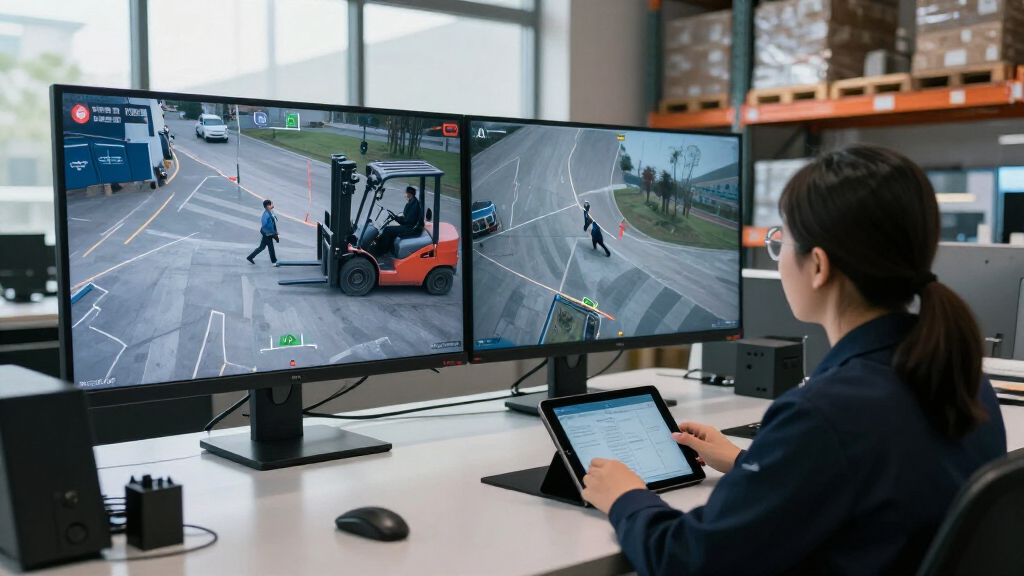
Testing has begun on an AI system that analyzes existing warehouse CCTV footage to detect near-misses, such as forklift-pedestrian proximity and rack contact. The technology aims to assist safety managers in identifying hazards before injuries occur, addressing a longstanding challenge of reviewing large volumes of CCTV data.
The AI system can ingest real-time RTSP camera feeds from warehouses and automatically flag incidents like forklift-to-pedestrian proximity, blind-corner near-misses, rack contact, and speed violations. It then compiles a weekly digest of clips, including dates, shifts, and severity levels, to support safety meetings.
This initiative is targeting warehouses and third-party logistics providers (3PLs) that operate dozens of cameras across multiple shifts. The goal is to provide a cost-effective way to improve hazard detection without requiring manual review of extensive footage, which is often neglected due to resource constraints.
According to sources familiar with the project, the AI’s validation involves processing two weeks of archived footage from three mid-market warehouses, with safety managers reviewing the near-miss reels to assess the system’s accuracy and usefulness. The approach aims to demonstrate potential reductions in incident rates and insurance premiums.
Potential Impact on Warehouse Safety Monitoring
This technology could significantly enhance safety oversight by enabling continuous, automated analysis of CCTV footage. By proactively identifying near-misses, warehouses can address hazards before injuries happen, potentially reducing incident rates and associated costs. Insurance companies are also showing interest, as documented safety improvements may lead to premium discounts.
Furthermore, this approach addresses a key industry challenge: the difficulty of reviewing vast amounts of CCTV data manually. Automating near-miss detection could lead to more consistent safety practices and better incident reporting, ultimately improving overall warehouse safety culture.
warehouse CCTV near-miss detection system
As an affiliate, we earn on qualifying purchases.
As an affiliate, we earn on qualifying purchases.
Advances in Vision Models Enable New Safety Tools
Recent developments in computer vision have made it feasible to classify safety-critical events on commodity CCTV feeds. These models can now detect proximity between forklifts and pedestrians, monitor speed violations, and recognize contact with racks, all in real-time or from archived footage.
Historically, warehouses recorded hundreds of hours of CCTV daily, but most footage was never reviewed unless an injury or incident occurred. The new AI solutions aim to change this by providing automated analysis, which could transform safety management practices across the industry.
This testing phase reflects a broader trend of integrating AI into industrial safety workflows, driven by the availability of affordable, high-quality vision models and increasing regulatory and insurance pressure to improve safety performance.
“The AI system can process existing CCTV feeds to automatically flag near-misses, providing safety managers with actionable insights without manual review.”
— an anonymous researcher
AI safety monitoring for warehouses
As an affiliate, we earn on qualifying purchases.
As an affiliate, we earn on qualifying purchases.
Unconfirmed Aspects of AI System Performance
It is not yet clear how accurately the AI system can identify near-misses across diverse warehouse environments or how well safety managers will accept and integrate the weekly digests into their workflows. The results of the validation process are still pending, and broader deployment details remain unconfirmed.
forklift pedestrian proximity alert camera
As an affiliate, we earn on qualifying purchases.
As an affiliate, we earn on qualifying purchases.
Next Steps for Validation and Deployment
In the coming weeks, the participating warehouses will review the near-miss reels generated by the AI system. The developers plan to collect feedback on accuracy, usefulness, and willingness to pay. If successful, a broader rollout could follow, with additional features and integrations planned for future versions.
warehouse speed violation detection camera
As an affiliate, we earn on qualifying purchases.
As an affiliate, we earn on qualifying purchases.
Key Questions
How does the AI detect near-misses in warehouse CCTV footage?
The AI uses computer vision models trained to classify forklift-pedestrian proximity, speed violations, and contact with racks, analyzing existing RTSP camera feeds to flag potential hazards automatically.
What are the benefits of using AI for warehouse safety monitoring?
Automated analysis can identify hazards more consistently and promptly, reducing manual review workload, improving incident reporting, and potentially lowering injury rates and insurance premiums.
When will this AI system be available for widespread use?
The system is currently in testing with selected warehouses. Broader deployment will depend on validation results and industry feedback, expected within the next few months.
Are there any limitations to the current AI technology?
It remains to be seen how well the AI performs across diverse warehouse layouts and camera setups. Accuracy and acceptance by safety teams are still under evaluation.
How does this AI compare to traditional safety monitoring methods?
Unlike manual review, this AI provides continuous, automated analysis, offering real-time or retrospective hazard detection without requiring extensive human effort.
Source: IdeaNavigator AI
Fall Picks
fall essentials
As an affiliate, we earn on qualifying purchases.