
TL;DR

Get privacy and security gear delivered free — and shop member deals
- Fast, free delivery on millions of items
- Access to Prime Big Deal Days deals on October 6–7
- Prime Video, Amazon Music and more included
U.S. District Judge Sara Hill ruled that a Tulsa County sheriff’s deputy violated a woman’s Fourth Amendment rights by searching Flock Safety’s license-plate database for her vehicle without a warrant. Hill ordered evidence obtained after the search suppressed and described extended, broad tracking through the system as “indiscriminate mass surveillance.”
A federal judge ruled this week that a Tulsa County sheriff’s deputy violated a woman’s Fourth Amendment rights by searching Flock Safety’s license-plate database for her vehicle without a warrant. U.S. District Judge Sara Hill ordered evidence obtained after that search suppressed, and warned that extended, broad location tracking through the system can amount to “indiscriminate mass surveillance.”
According to TechCrunch, which cited reporting by 404 Media, the deputy searched Flock for the woman’s license plate without first obtaining a warrant. Judge Hill said he had “no apparent reason” to conduct the search other than that the vehicle had a California plate. The ruling concerns the deputy’s conduct in this case; it does not establish a binding rule for other courts.
The deputy later relied on the woman’s Flock travel history as part of the justification for searching her car. He allegedly found 91 pounds of methamphetamine. Hill wrote that evidence obtained after the database search “must be suppressed as the fruit of a poisonous tree.” The source report does not specify which additional evidence was covered by the order or describe the case’s full procedural posture.
Hill also addressed the broader privacy implications of license-plate reader networks. She wrote that recording people’s movements in public becomes constitutionally problematic when authorities can passively catalogue whereabouts over time and use that information for any purpose. The judge distinguished the system from the individual-focused location-data issue in the Supreme Court case Carpenter v. United States, describing Flock as collecting information on vehicles passing network-connected cameras and making it available to law enforcement on demand.
Limits on Warrantless Plate Searches
The ruling highlights a legal question facing police departments that use automated license-plate readers: whether officers may search accumulated location records without a warrant, and how the scope and purpose of a search affect its constitutionality. Hill’s decision gives a concrete example of a court rejecting a search where, as she described it, the deputy had no apparent reason beyond the vehicle’s out-of-state plate.
For the woman in this case, the immediate consequence is that evidence gathered after the database search is subject to suppression under Hill’s order. That could affect the prosecution’s ability to rely on evidence connected to the car search, though the source report does not establish the case’s eventual outcome. For law enforcement agencies and communities, the decision adds to scrutiny of systems that can retain and search records of many drivers’ movements.
The ruling is not binding precedent, so its reach is limited. Still, it may inform arguments in other cases about warrants, privacy expectations, and how long-term aggregation of public-location data differs from a single observation. Hill’s broader comments make clear that the concern she identified was not simply one plate query, but the capacity to track many people over time and retrieve that information later.
license plate reader privacy protection
As an affiliate, we earn on qualifying purchases.
As an affiliate, we earn on qualifying purchases.
Growing Scrutiny of Flock Networks
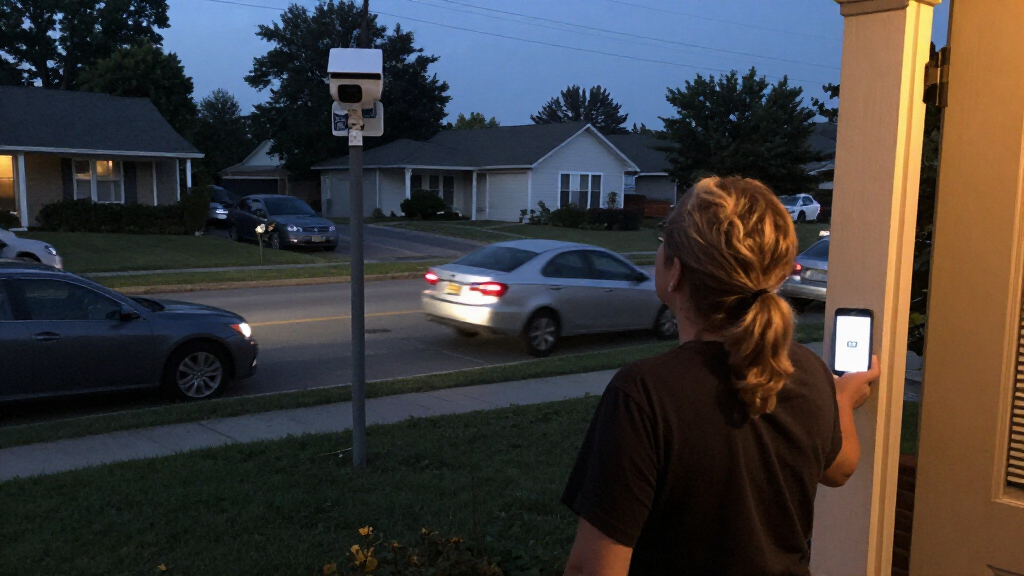
Flock Safety provides automated license-plate reader technology used by law enforcement and other customers. The cameras capture plate information from vehicles that pass them; police can search the resulting records to help investigate crimes. Hill’s opinion, as described in the source report, focused on a deputy’s warrantless search for one woman’s plate and the subsequent use of her travel history.
The decision arrives amid wider debate over the technology. TechCrunch reported that local and state governments, including Florida and Texas, have said they will stop using Flock. Those decisions reflect changes in government use, but the source does not establish that every agency in either state has ended its use or explain the scope of each action.
On the Friday before the October 3 report, Sen. Bernie Sanders introduced the Block Flock Act, which would bar federal agencies from using automated license-plate readers such as Flock. The proposal is a legislative initiative, not a law in force. Separately, Flock CEO Garrett Langley has called for a “compromise” between privacy and public safety and apologized to women stalked by law enforcement officers using the system, according to TechCrunch.
“He has called for a “compromise” between privacy and safety and offered an apology to women stalked by law enforcement officers using Flock.”
— Flock Safety CEO Garrett Langley, as reported by TechCrunch
As an affiliate, we earn on qualifying purchases.
The Ruling’s Reach Remains Limited
The decision does not create binding precedent, according to the source report, and the available account does not provide the full written opinion, the case’s name, or its complete procedural history. It is also unclear whether prosecutors will appeal, how the suppression order affects the underlying case, or precisely which evidence the order excludes beyond evidence obtained after the Flock search.
The source does not establish whether the ruling will change policies across Tulsa County or other agencies, or whether the judge’s broader discussion of mass surveillance will be adopted by other courts. The amount of time the woman’s location records covered and the specific database records returned are also not detailed in the report.
As an affiliate, we earn on qualifying purchases.
Appeal and Policy Responses
The immediate next steps will depend on the parties in the underlying criminal case and any decision to challenge Hill’s ruling. If the order stands, prosecutors will have to proceed without evidence it excludes; the available reporting does not say what other evidence may remain or whether the case will continue.
Separately, Congress may consider the Block Flock Act, while state and local agencies face decisions about whether to keep using license-plate readers and under what safeguards. Those developments are distinct from Hill’s ruling: the legislation would require further action to become law, and the judge’s decision applies to the search before her rather than automatically changing every agency’s practices.
As an affiliate, we earn on qualifying purchases.
Key Questions
What did the federal judge rule?
Judge Sara Hill ruled that a Tulsa County sheriff’s deputy violated a woman’s Fourth Amendment rights by searching Flock Safety’s database for her license plate without a warrant.
What happened to the evidence gathered afterward?
Hill wrote that evidence obtained after the Flock search “must be suppressed as the fruit of a poisonous tree.” The source report does not give the full scope of the evidence covered or the eventual status of the criminal case.
Does the ruling ban Flock or set a nationwide rule?
No. The ruling addresses a particular search and, according to the source report, does not create binding precedent. It does not ban Flock or automatically dictate policy for other agencies.
What is the Block Flock Act?
Sen. Bernie Sanders introduced the bill on the Friday before the October 3, 2026 report. It would bar federal agencies from using automated license-plate readers such as Flock, but it is a proposal and is not described as law.
Source: hn
Halloween Picks
halloween
As an affiliate, we earn on qualifying purchases.