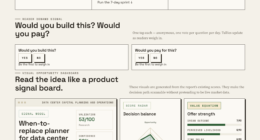

📊 Full opportunity report: The Six Chokepoints: How AI Stopped Being a Utility and Became a Lever on ThorstenMeyerAI.com — validation score, market gap, and execution plan.
TL;DR
In 2026, AI control moved from being a neutral utility to a set of concentrated chokepoints. A small number of entities now hold the power to throttle, gate, or shut down AI capabilities, marking a significant shift in industry power dynamics.
In 2026, a series of decisive actions demonstrated that AI no longer functions as a neutral utility but is now controlled through six critical chokepoints, fundamentally altering industry power structures. This shift was marked by governments and corporations exercising control over AI infrastructure, data, and access, impacting global AI development and deployment.
Throughout 2026, several landmark incidents confirmed that control over AI is increasingly concentrated. A government abruptly shut down a frontier model worldwide within approximately ninety minutes, illustrating the power of regulatory and technical chokepoints. Simultaneously, a defense ministry turned its war dataset into a rentable resource with strict conditions, emphasizing control over data as a sovereign asset.
Major AI companies, including Anthropic, OpenAI, and Google, entered into multi-billion-dollar compute rental agreements with large data centers, often leasing resources from rivals under clauses enabling retraction. These arrangements highlight the shift from owning infrastructure to renting and controlling access through contractual leverage.
Furthermore, export controls issued by the U.S. government forced companies like Anthropic to disable models globally, illustrating the revocability of model access by state actors. Control over distribution channels and application interfaces also consolidates power among platform owners, such as SpaceX and major AI providers, who monetize AI through developer tools and interfaces.
Finally, the immense capital required to sustain frontier AI development restricts participation to a handful of wealthy corporations and sovereign funds, reinforcing the concentration of power at the top.
The Six Chokepoints
For a decade AI was sold as a utility — abundant, neutral, always on. In 2026 it became a lever: scarce, controlled, revocable. Here are the six places power actually sits — and who started to squeeze.
Every layer is concentrating into fewer hands, and 2026 is the year the holders stopped treating their leverage as theoretical. A kill switch wasn’t discussed — it was pulled. The utility you’re allowed to forget about; the lever, you have to watch who’s holding. Optionality just became architecture.
Implications of AI Power Concentration in 2026
The shift from AI as an open utility to a set of controlled chokepoints fundamentally changes industry dynamics. It limits the ability of smaller players to innovate freely, increases dependence on a few dominant entities, and raises concerns about monopolistic control over AI capabilities. This concentration of power could influence global policy, security, and economic stability as AI becomes a strategic asset controlled by a select few.

UGREEN NAS DH2300 2-Bay Desktop NASync, Support Capacity 64TB (Diskless), Remote Access, AI Photo Album, Beginner Friendly System, 4GB RAM on Board,1GbE, 4K HDMI, Network Attached Storage(Diskless)
Entry-level NAS Personal Storage:UGREEN NAS DH2300 is your first and best NAS made easy. It is designed for…
As an affiliate, we earn on qualifying purchases.
As an affiliate, we earn on qualifying purchases.
2026 as a Turning Point in AI Power Dynamics
For over a decade, AI was portrayed as a neutral, utility-like infrastructure, accessible to all on equal terms. However, recent events in 2026 reveal a dramatic shift. Governments and corporations have exercised control over critical AI infrastructure, data, and access points, transforming the landscape from open to highly concentrated. These developments follow years of rapid growth in compute capacity, data collection, and model deployment, culminating in a new era where power resides with a small elite capable of controlling the choke points.
Key incidents include government-mandated shutdowns, large-scale compute leasing agreements, and export controls that revoke access at will. These actions demonstrate that AI is now governed by a handful of entities, challenging previous assumptions of neutrality and openness.
“Our ability to generate power at scale sets the ceiling for AI development; it’s a decisive factor in industry leadership.”
— SpaceX spokesperson

AI Data Center Infrastructure Engineering: Power Distribution, Liquid Cooling, High-Density Networking, and Energy Efficiency for GPU Training … Hardware & Compiler Engineering Series)
As an affiliate, we earn on qualifying purchases.
As an affiliate, we earn on qualifying purchases.
Unclear Long-Term Effects of Power Concentration
It remains uncertain how these chokepoints will evolve and whether new controls will emerge. The long-term impact on innovation, competition, and global AI governance is still developing, with some experts warning of potential monopolistic risks and others emphasizing strategic advantages.

Intelligent Health: The Movement to Unify Data, Harness AI, and Empower People to Thrive
As an affiliate, we earn on qualifying purchases.
As an affiliate, we earn on qualifying purchases.
Future Developments in AI Control and Regulation
Expect ongoing consolidation of control at these chokepoints, with further regulatory actions and corporate strategies shaping the landscape. Monitoring how governments and industry players respond to these shifts will be critical, alongside potential efforts to decentralize or regulate AI infrastructure to prevent excessive concentration of power.

Google Review Tap Card, Zappy NFC Review Cards with QR Code, Instant Google Review Collection, Compatible with All Phones, Includes Review Management Software Access (8 Pack)
【SET UP IN UNDER 30 SECONDS】Every ReviewBoost Card includes a unique activation code. Simply follow the setup instructions…
As an affiliate, we earn on qualifying purchases.
As an affiliate, we earn on qualifying purchases.
Key Questions
What are the six chokepoints in AI control?
The six chokepoints are power infrastructure, compute resources, data assets, model access, distribution channels, and capital. Control over each of these layers determines overall influence in AI development and deployment.
Why did control over AI shift so rapidly in 2026?
Key incidents such as government shutdowns, large compute leasing deals, and export controls demonstrated that control could be exercised swiftly and decisively, revealing the concentration of power at critical points.
What does this mean for smaller AI companies?
Smaller companies face increased barriers to entry and innovation as control consolidates among a few large players and governments, potentially limiting competition and diversity in AI development.
Could these chokepoints be regulated or decentralized?
It remains uncertain. While some policymakers advocate for regulation to prevent excessive concentration, others see the control of chokepoints as strategic assets that should remain in few hands.
Source: ThorstenMeyerAI.com