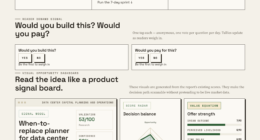

📊 Full opportunity report: Data: The One Thing You Can’t Rent on ThorstenMeyerAI.com — validation score, market gap, and execution plan.
TL;DR
In 2026, the AI industry faces a pivotal shift as data becomes the primary chokepoint. Companies can rent compute, but exclusive, verified data is now the key to advancing AI. This change favors established players and raises new industry barriers.
In 2026, the AI industry has reached a critical point where data scarcity is reshaping competitive advantage. While companies can still rent compute power, access to verified, proprietary data is now becoming the defining factor in AI progress, marking a shift from open scraping to fenced, licensed datasets.
Recent industry developments confirm that the era of freely scraping the internet for training data is ending. Major legal settlements, such as Anthropic’s $1.5 billion copyright settlement, and ongoing lawsuits like The New York Times against OpenAI, illustrate a move toward market-based licensing of data. This shift results in a high entry barrier, favoring large incumbents with deep pockets and making it more difficult for startups to access critical data sources.
Simultaneously, the value of expert-labeled, verified data has surged, as models increasingly require domain-specific knowledge from specialists like lawyers, scientists, and medical professionals. This has led to a surge in investments in data labeling firms and a redefinition of data as a strategic asset, with some data now being generated exclusively for specific models, such as Ukraine’s combat drone footage used under strict conditions.
Data: The One Thing You Can’t Rent
The free part of “all human knowledge” is running out. As compute and models commoditize, the corpus you can’t replicate becomes the moat — so data is being fenced, priced, and, in places, treated as a national asset.
Data was supposed to be the abundant input. It’s the scarce one. It’s also the chokepoint you can actually own — so guard your proprietary data, and don’t hand it to a provider who can become your competitor (the lesson everyone fled Scale to learn). Nations: license it like Ukraine — keep the model, keep the leverage.
Why Data Ownership Is Now a Strategic Necessity
The shift to fencing and licensing data fundamentally alters the AI landscape. It consolidates industry power among large firms capable of affording expensive datasets and licensing fees, creating high barriers for new entrants. This change also raises concerns about data privacy, control, and the potential for increased industry monopolization, making data ownership a key survival strategy for AI developers.

Aleplay SDS OSHA Data Labels for Chemical Safety 3×4 Inch MSDS Stickers with GHS Pictograms HMIS & Hazard Compliant Secondary Containers, 100 Stickers Per Roll
Right To Know SDS/MSDS Stickers—These stickers presents a user-friendly label that provides brief guidance to help workers who…
As an affiliate, we earn on qualifying purchases.
As an affiliate, we earn on qualifying purchases.
The Evolution of Data in AI Development
Historically, AI models trained on publicly available web data, with minimal legal restrictions. By 2025, legal actions and licensing agreements began to reshape data access. Notably, Anthropic’s legal settlement set a precedent that scraping copyrighted works without licensing is no longer permissible, pushing the industry toward paid data markets. Meanwhile, the importance of expert-curated data has increased as models require domain-specific accuracy, making data a scarce and valuable resource.
“The court’s ruling clarifies that fair use does not extend to large-scale piracy, marking a turning point for data sourcing in AI training.”
— Legal expert involved in Anthropic settlement
licensed AI training datasets
As an affiliate, we earn on qualifying purchases.
As an affiliate, we earn on qualifying purchases.
Unclear Impacts of Data Fencing on Innovation
It remains uncertain how widespread and long-lasting the effects of data fencing will be. While large firms can afford licensing, the impact on smaller startups and open-source projects is still evolving. Additionally, the future availability of verified, high-quality data from sensitive or proprietary sources is unpredictable, and legal challenges may continue to influence data access policies.

Domain-Specific Small Language Models: Efficient AI for local deployment
As an affiliate, we earn on qualifying purchases.
As an affiliate, we earn on qualifying purchases.
Upcoming Industry Shifts and Policy Developments
Expect increased legal and commercial negotiations around data licensing, with more companies establishing proprietary datasets and licensing agreements. Regulatory developments may further define data ownership rights and restrictions, potentially leading to industry standards for data sharing and privacy. Monitoring these legal and market trends will be essential for understanding how AI development will proceed.
proprietary data collection tools
As an affiliate, we earn on qualifying purchases.
As an affiliate, we earn on qualifying purchases.
Key Questions
Why can’t AI models simply generate more synthetic data to overcome scarcity?
While synthetic data is increasingly used, it carries risks of errors and model collapse, especially in complex domains where accuracy is critical. Verified, human-made data remains essential for reliable AI training.
How does data fencing benefit large companies?
Data fencing creates barriers to entry, allowing established firms with resources to secure exclusive datasets, thus maintaining competitive advantages and limiting access for startups.
Will open-source models be unaffected by these data restrictions?
Open-source models may face challenges in accessing high-quality, proprietary data, potentially limiting their performance or requiring alternative data sources, but some open data initiatives may persist.
What legal precedents are influencing data licensing in AI?
Settlements like Anthropic’s and ongoing lawsuits establish that scraping copyrighted works without licensing is unlawful, pushing the industry toward formal licensing agreements for training data.
Source: ThorstenMeyerAI.com