TL;DR

Get privacy and security gear delivered free with Prime
- Fast, free delivery on millions of items
- Prime Video, Amazon Music and more included
- Member-only deals all year
Anthropic’s Claude Code team says Claude can now write and run task-specific JavaScript workflows that create temporary groups of subagents for complex tasks. The feature, called dynamic workflows, is aimed at work that benefits from parallel execution, independent review or structured judgment, but Anthropic says it can use far more tokens than a single-agent request.
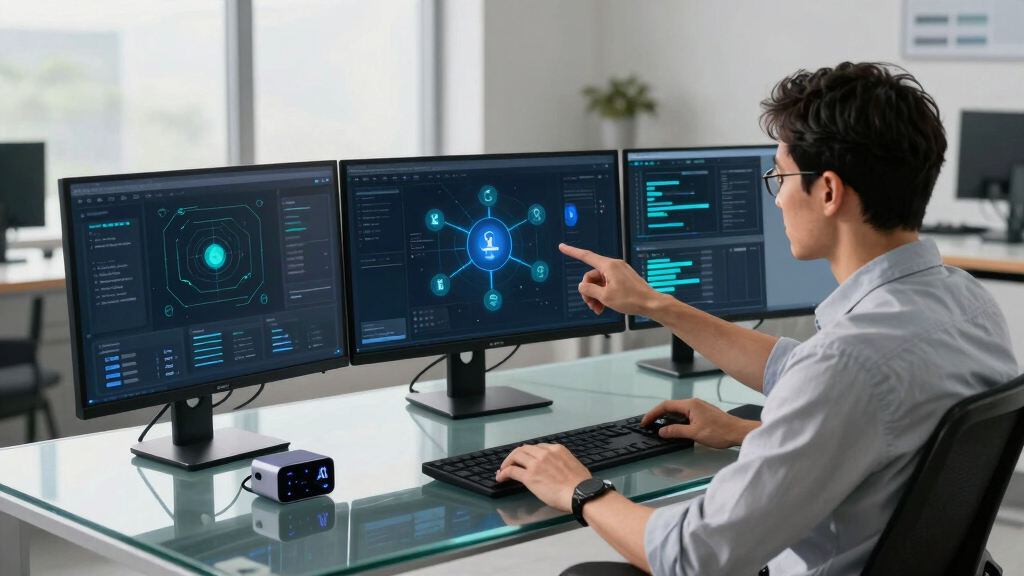
Anthropic’s Claude Code team says Claude can now build dynamic workflows that spawn and coordinate temporary subagents during a single task, a change aimed at complex work where one agent may lose track, stop early or grade its own output too generously.
The feature was described in Anthropic’s June 2, 2026 Claude blog post, “A harness for every task: dynamic workflows in Claude Code,” by Thariq Shihipar and Sid Bidasaria. According to the source material, Claude writes a small JavaScript harness on the fly, using special functions to spawn, coordinate and wait for subagents while using ordinary JavaScript to handle data.
Each subagent can receive a focused brief, work in its own context window and, in some setups, run on a different model. The workflow can fan out work across agents, collect structured outputs, send results to separate reviewers and synthesize the final answer after a barrier step waits for the group to finish.
Anthropic’s own caveat is central to the announcement: this approach can consume meaningfully more tokens and is intended for complex, high-value tasks, not routine edits or simple questions. The source material frames the feature as the third part of a Claude Code arc alongside skills, which package organizational knowledge, and loops, which decide how far to keep delegating over time.
When one agent isn’t enough: Claude now builds its own team on the fly
Skills package what you know; loops decide how far you delegate over time. Dynamic workflows are the third axis — within a single task, Claude writes its own harness and assembles a temporary team of subagents. Think of it as Claude drawing an org chart for one job.
The shift is from prompting a worker to commissioning a team — more output, more cost, and a manager’s judgment required. Reach for a workflow when a task is big, parallel, adversarial, or judgment-heavy — and when you can feel a single agent getting lazy, grading its own homework, or losing the plot. Bound it (token budgets, pilot first) — workflows can spawn hundreds of agents and burn far more tokens. For everything else, don’t hire five people to change a lightbulb.
Claude Moves Beyond Solo Agents
The development matters because it shifts some Claude Code work from single-agent execution toward task-specific orchestration. For readers building with AI agents, the practical question is no longer only how to prompt one model, but when to divide work among agents with separate roles, budgets and review steps.
The source material points to three common problems in long agent tasks: agentic laziness, where an agent declares work done before finishing; self-preferential bias, where it favors its own prior output; and goal drift, where constraints fade across long sessions or summarized history. Dynamic workflows are presented as a response to those problems: split the job, isolate briefs and have independent agents check results.
That design could matter for large code migrations, deep research reports, claim-by-claim fact checks, backlog triage, security review patterns and other work where parallelism or adversarial review can improve the final result. The tradeoff is cost and control: a workflow that creates many agents can burn far more tokens than a single Claude request.
As an affiliate, we earn on qualifying purchases.
A Harness Written Per Task
Anthropic’s post describes dynamic workflows as a way for Claude to write the orchestration layer around itself. In the framing summarized by Thorsten Meyer AI, skills package what an organization knows, loops guide repeated delegation over time, and dynamic workflows organize multiple agents inside one task.
The source material lists several workflow patterns Claude can compose. Classify-and-act routes work by task type. Fan-out-and-synthesize runs parallel agents and merges results. Adversarial verification asks a separate agent to test or challenge an output. Generate-and-filter produces many candidates and keeps the strongest. Tournament uses agent competition and judging. Loop-until-done keeps spawning work until a stop condition is met.
The article also highlights a security pattern called quarantine: agents that read untrusted public content should be barred from high-privilege actions, while a separate agent handles those actions. That is a defensive separation-of-duties model, not an instruction for offensive use.
“The plain description is that Claude writes its own harness — the orchestration scaffolding around the model — custom-built on the fly for the task in front of it.”
— Thorsten Meyer AI
JavaScript AI agent orchestration software
As an affiliate, we earn on qualifying purchases.
As an affiliate, we earn on qualifying purchases.
Costs And Limits Remain Open
Several details are still developing. The source material does not provide a public benchmark showing how much dynamic workflows improve results across task types, nor does it give a standard cost range for common workflows. It is also unclear how often Claude will choose the right workflow shape without human correction.
There are also operational questions for teams using Claude Code. Readers will want to know how to set token budgets, when to require a pilot run, how to audit subagent outputs and how to prevent an automated workflow from scaling beyond the intended scope. The source material warns that workflows can spawn many agents and use far more tokens than expected.
As an affiliate, we earn on qualifying purchases.
Teams Test Workflow Boundaries
The next step is practical adoption: developers and AI teams will likely test dynamic workflows on tasks where parallel review, independent verification or structured ranking can justify the extra cost. Anthropic’s Claude Code documentation at code.claude.com/docs is the place users are directed for implementation details.
For now, the confirmed development is that Anthropic has described the mechanism and use cases for Claude Code dynamic workflows. The open question is how reliably teams can convert that capability into better results without creating excessive token spend or workflow sprawl.
complex AI task coordination software
As an affiliate, we earn on qualifying purchases.
As an affiliate, we earn on qualifying purchases.
Key Questions
What did Anthropic announce about Claude Code?
Anthropic described dynamic workflows, a Claude Code capability where Claude can write and run a JavaScript orchestration harness that coordinates subagents during one complex task.
How is this different from using one Claude agent?
Instead of one agent handling every step in one long thread, a workflow can assign parts of the task to separate subagents with focused briefs, then merge and review their outputs.
When would dynamic workflows be useful?
The source material points to large refactors, research reports, fact-checking, backlog ranking, post-mortems and other tasks that benefit from parallel work or independent review.
What is the main downside?
The main downside is token cost. Anthropic’s caveat, as summarized in the source material, is that dynamic workflows use meaningfully more tokens and are meant for complex, high-value work.
What remains unknown?
Public evidence is still limited on performance gains, cost ranges and how reliably Claude chooses the right workflow for each task without human oversight.
Source: Thorsten Meyer AI
Columbus Day / Indigenous Peoples' Day Picks
long weekend sales
As an affiliate, we earn on qualifying purchases.