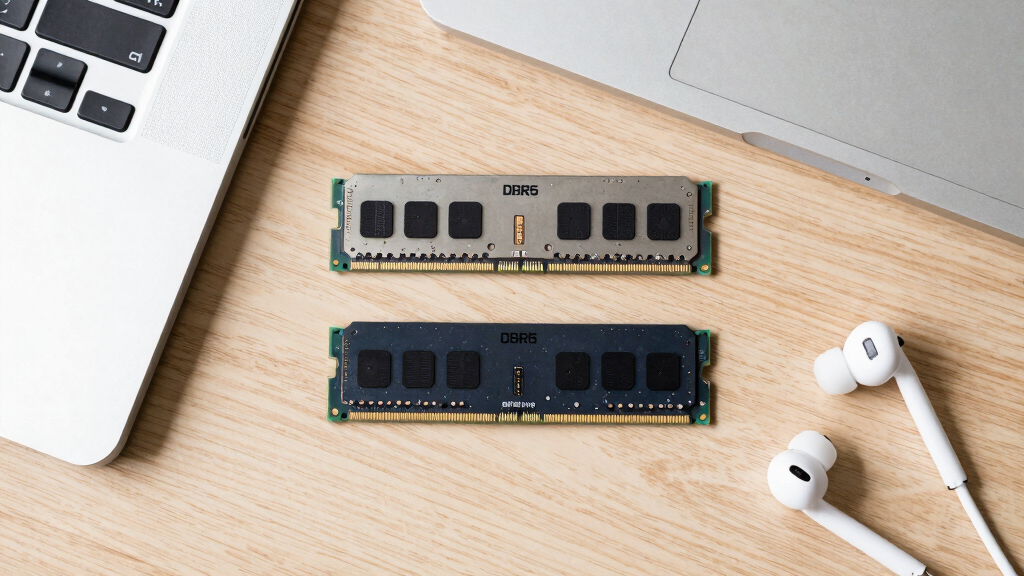

📊 Full opportunity report: DDR5 Now, DDR6 Soon: A Buyer’s Field Guide on ThorstenMeyerAI.com — validation score, market gap, and execution plan.
Open a free Amazon Business account
Business pricing, bulk buying and tax-exempt orders.
Create a free accountAs an affiliate, we earn on qualifying purchases.
TL;DR
DDR5 remains the recommended memory standard through 2028, with DDR6 not expected to be mainstream until 2027–2030. Buyers should prioritize DDR5 now and avoid waiting for DDR6, which is still in development.
DDR5 memory remains the recommended choice for mainstream PC builders in 2026, with industry sources confirming that DDR6 will not be widely available until 2027 or later. Experts advise consumers to purchase DDR5 now, rather than delay for DDR6, which is still in development and will carry a significant price premium at launch.
Market forecasts indicate that DDR5-6000 with CL30 timings offers the best value for most users, balancing speed and cost. Higher-speed DDR5 kits, such as DDR5-8000, are considered unnecessary for typical gaming or productivity workloads, as real-world gains are minimal.
Capacity planning remains critical: 32GB is sufficient for most gaming and desktop tasks, while 64GB suits content creators and heavy multitaskers. Buying 128GB modules now is discouraged due to high prices and the likelihood of underutilization until the market stabilizes.
Regarding DDR4, experts warn against new builds on this older standard, as DDR4 production is ending and prices are converging with DDR5. Building on DDR4 in 2026 would mean investing in a platform with limited future support.
As for DDR6, industry insiders confirm it is not yet a product for consumers. DDR6 introduces significant technical improvements, such as quadruple sub-channels and much higher speeds, but requires new CPUs, chipsets, and modules, with broad adoption not expected before 2027–2030. Early adoption involves risks like immature memory profiles and limited capacity options.
DDR5 now, DDR6 soon
A buyer’s field guide. The 20-year instinct — wait for prices to drop, or wait for the next generation — is broken this cycle. Buy the DDR5 you actually need now; don’t wait for DDR6. Here’s the reasoning.
Driven to end-of-life, production slashed. Same money, dead-end socket. Leave a working DDR4 box alone — but never start a new build on DDR4 to “save.”
A framework, not a gamble. Buy the DDR5 you need now, at the sweet spot, in the capacity you’ll actually use — don’t buy DDR4, don’t wait for DDR6. The two costliest mistakes in this market are the ones that feel prudent: waiting for a price drop that isn’t coming, and waiting for a next-gen part that launches dearer than what’s on the shelf. Next: The SSD Squeeze.
Why Buying DDR5 in 2026 Makes Sense
For most consumers, purchasing DDR5 now is a cost-effective decision, as waiting for DDR6 could mean paying a premium for a product that won’t be available for years. Delaying upgrades risks missing out on platform improvements and performance gains in CPUs and GPUs, which are critical in the current market. The ongoing memory shortage and high prices make patience unwise for typical users, and DDR6 remains a roadmap technology rather than a current solution.
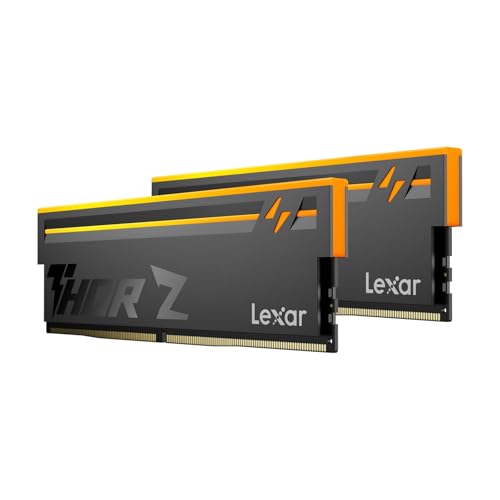
Lexar Thor Z RGB DDR5 RAM 32GB Kit (2x16GB) 6000MHz CL38 DRAM 288-Pin UDIMM
- High-Speed Performance: 6000MHz DDR5 with CL38 latency
- Enhanced Thermal Management: Sandblasted aluminum heatsink for cooling
- Vibrant RGB Lighting: Customizable, bright RGB effects
As an affiliate, we earn on qualifying purchases.
As an affiliate, we earn on qualifying purchases.
The 2026 Memory Market and Future Outlook
The memory market has experienced significant price volatility due to supply shortages and increased demand, leading to historically high prices for DDR5 modules. Manufacturers have shifted focus toward DDR5, with DDR4 nearing end-of-life. DDR6, announced by JEDEC, is still in development, with initial applications in enterprise and AI servers expected around 2026–27. Mainstream adoption in desktops and laptops is projected for 2027, with full market penetration not until 2030.
Historically, new memory standards take several years to reach mass adoption, and early versions often carry a premium. The transition from DDR4 to DDR5 has been slower than previous generational shifts, and DDR6’s higher speeds and new physical form factor (CAMM2) will require new hardware platforms.
“DDR6 will require new chipsets and CPUs, and broad adoption won’t happen until at least 2027 or later. Early adopters will face higher costs and limited options.”
— Major motherboard manufacturer spokesperson
As an affiliate, we earn on qualifying purchases.
Unconfirmed Aspects of DDR6 Adoption Timeline
While industry forecasts suggest DDR6 will not be mainstream until 2027–2030, exact timelines depend on hardware development, manufacturing capacity, and market demand. Early DDR6 modules and compatible systems are still in prototype or limited release stages, and prices remain uncertain. Additionally, the impact of technological improvements and potential hardware delays could alter the expected rollout schedule.
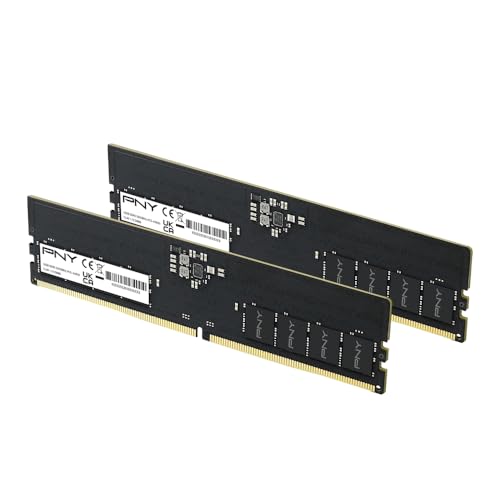
PNY DDR5 16GB (2x8GB) 5600MHz CL46 Performance Desktop Memory Kit
- Compatibility: Supports Intel 12th-14th Gen and AMD Ryzen 7000-9000
- Memory Technology: DDR5 for faster performance and efficiency
- Standards and Reliability: Meets JEDEC standards with high-quality ICs
As an affiliate, we earn on qualifying purchases.
As an affiliate, we earn on qualifying purchases.
Next Steps for Buyers and Industry Watchers
Consumers should focus on building or upgrading with DDR5-6000 modules for the foreseeable future. Monitoring JEDEC standards and motherboard compatibility lists will help identify when DDR6 modules and compatible platforms become available. Industry insiders predict that mainstream DDR6 adoption will accelerate around 2027, with early products appearing in high-end and enterprise sectors before trickling down to consumer PCs. Buyers should also stay informed about platform updates and new CPU launches that will support DDR6.

Crucial 32GB DDR5 RAM Kit (2x16GB), 5600MHz (or 5200MHz or 4800MHz) Laptop Memory 262-Pin SODIMM, Compatible with Intel Core and AMD Ryzen 7000, Black – CT2K16G56C46S5
- Memory Capacity: 32GB DDR5 RAM Kit (2x16GB)
- Memory Speed: 5600MHz, 5200MHz, or 4800MHz
- Performance Boost: Enhances multitasking and responsiveness
As an affiliate, we earn on qualifying purchases.
As an affiliate, we earn on qualifying purchases.
Key Questions
Should I buy DDR4 memory in 2026 to save money?
No. DDR4 is nearing end-of-life, and new builds on DDR4 will limit future upgrade options. Building on DDR5 is recommended for compatibility and longevity.
Is DDR6 worth waiting for in 2026?
Most users should not wait for DDR6, as it won’t be widely available until at least 2027, and early versions will carry a high price premium. For typical workloads, DDR5 remains the best choice now.
What DDR5 configuration offers the best value in 2026?
DDR5-6000 with CL30 timings provides an optimal balance of speed, latency, and cost for most users, including gamers and content creators.
When will DDR6 become mainstream for desktops?
Industry forecasts suggest DDR6 will be common in mainstream desktops around 2027–2028, with broader adoption by 2030.
What should I look for when choosing memory for my new build?
Prioritize DDR5-6000 CL30 modules, appropriate capacity for your workload, and compatibility with your motherboard and CPU. Avoid overbuying capacity or waiting unnecessarily.
Source: ThorstenMeyerAI.com
Baby shower & registry season Picks
baby registry must-haves
As an affiliate, we earn on qualifying purchases.



![Stalking The Wily Hacker: 40 Years Later – Cliff Stoll [Video]](https://vultrade.com/wp-content/uploads/2026/08/stalking-the-wily-hacker-40-years-later-cliff-stoll-video-featured-260x140.jpg)