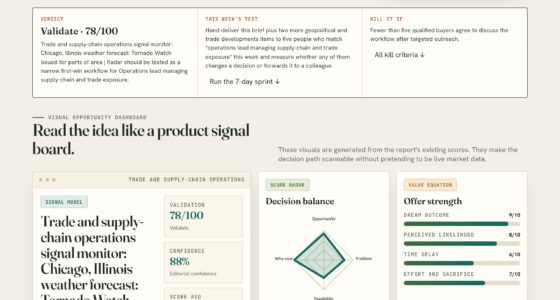
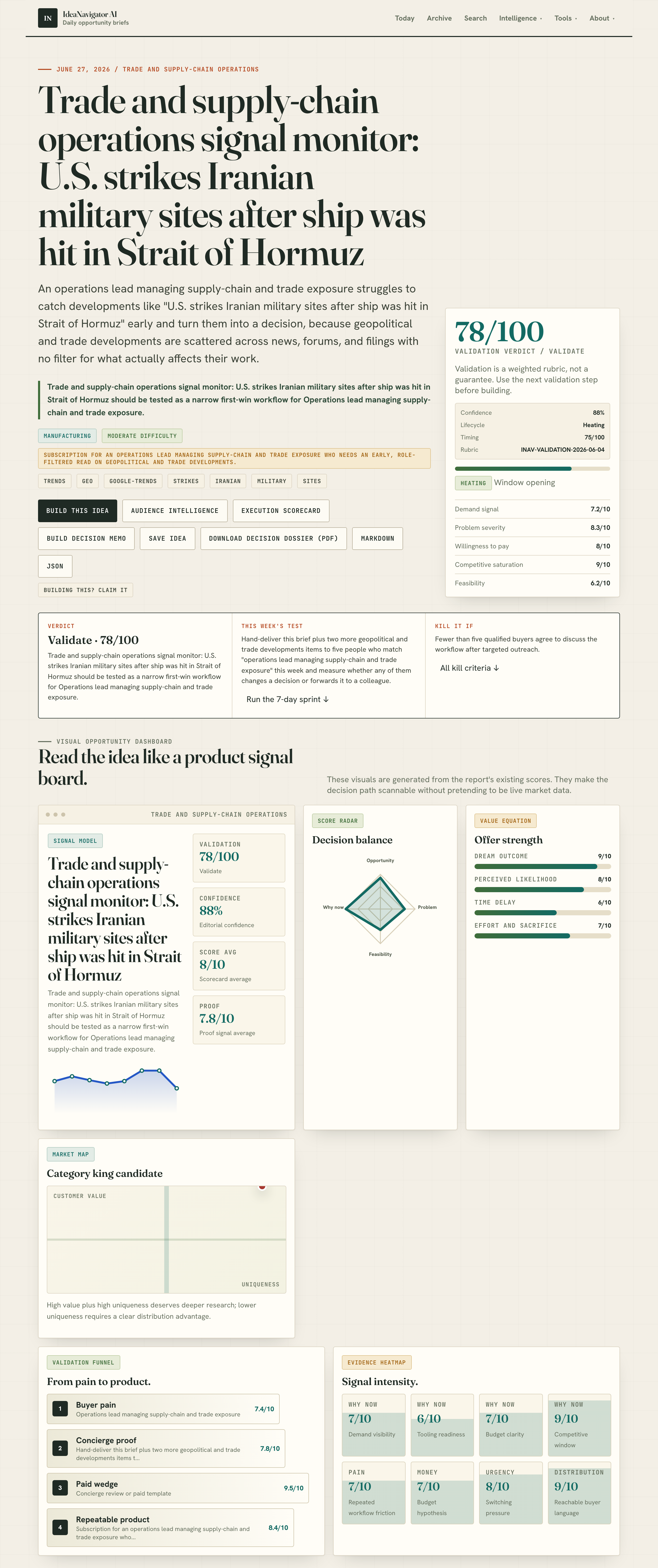
📊 Full opportunity report: Trade and supply-chain operations signal monitor: U.S. strikes Iranian military sites after ship was hit in Strait of Hormuz on IdeaNavigator AI — validation score, market gap, and execution plan.

Get privacy and security gear delivered free with Prime
- Fast, free delivery on millions of items
- Prime Video, Amazon Music and more included
- Member-only deals all year
TL;DR
The United States reportedly launched strikes on Iranian military sites after a ship was hit in the Strait of Hormuz. This development impacts trade and supply chains and signals heightened regional tensions.
The United States has launched strikes on Iranian military targets following an attack on a commercial vessel in the Strait of Hormuz, according to multiple reports. This escalation in military activity is significant for global trade routes and regional stability. The incident has immediate implications for supply chains and geopolitical relations in the Middle East.
According to sources familiar with the situation, the U.S. military targeted Iranian military sites in response to the recent attack on a merchant ship in the Strait of Hormuz. The attack on the vessel, which remains unnamed, prompted the U.S. to take military action, marking a notable escalation in the ongoing tensions between the two countries. The strikes reportedly occurred early this morning, with initial reports indicating damage to Iranian military infrastructure.
Iranian officials have yet to issue an official statement confirming the strikes, and there is no independent verification of the extent of damage or the targets hit. The incident comes amid heightened tensions over Iran’s regional activities and recent attacks on shipping in the Strait of Hormuz, a critical chokepoint for global oil and trade routes.
Trade and supply-chain operators are closely monitoring the situation, as increased military activity in the region can lead to disruptions in shipping, insurance costs, and broader geopolitical instability. The U.S. government has not yet issued a formal statement explaining the rationale behind the strikes or the scope of the military response.
Implications for Global Trade and Regional Stability
This development matters because the Strait of Hormuz is a vital conduit for nearly a third of the world’s oil trade. Military actions in this region can cause disruptions, increase insurance premiums, and create uncertainty for global supply chains. The escalation also signals a potential increase in regional conflict, which could have wider economic and geopolitical repercussions. For trade operators, early awareness of such military actions is crucial for risk management and contingency planning.
marine supply chain monitoring system
As an affiliate, we earn on qualifying purchases.
As an affiliate, we earn on qualifying purchases.
Recent Escalations in Iran-U.S. Tensions and Strait Incidents
Over the past year, tensions between the U.S. and Iran have escalated due to Iran’s regional activities, including attacks on shipping and drone strikes. The Strait of Hormuz has been a flashpoint for these tensions, with multiple incidents involving ships and military vessels. The U.S. has previously conducted targeted strikes in response to Iranian military activity, but this is among the most significant recent escalations.
The attack on the merchant vessel in question occurred earlier this week, with initial reports suggesting it was a deliberate attack, possibly by Iranian-backed forces. The U.S. response today marks a shift toward more direct military action, raising concerns about further escalation in the region.
“We acted in self-defense to neutralize threats against American interests and regional stability.”
— U.S. Defense Department spokesperson
As an affiliate, we earn on qualifying purchases.
Unconfirmed Details of the Strike Targets and Damage
It is not yet clear which specific Iranian military sites were targeted or the extent of damage caused. Iran has not officially confirmed the strikes, and independent verification remains unavailable. The precise timing and scope of the military response are still emerging, and regional analysts are awaiting further details from official sources.
As an affiliate, we earn on qualifying purchases.
Expected Developments and Regional Responses
Further statements from the U.S. and Iranian officials are anticipated in the coming hours or days. Monitoring of regional military movements and shipping activity will be critical to assess potential escalation. Diplomatic efforts or de-escalation measures may follow, but the situation remains fluid. Supply chain operators should prepare for possible disruptions or increased security risks in the Strait of Hormuz and surrounding areas.
As an affiliate, we earn on qualifying purchases.
Key Questions
What triggered the U.S. strikes in Iran?
According to reports, the strikes were in response to an attack on a merchant ship in the Strait of Hormuz, which the U.S. attributes to Iranian military or proxy forces.
Are there confirmed casualties or damage from the strikes?
No independent confirmation is available yet regarding casualties or the extent of damage to Iranian military sites.
Could this lead to broader conflict in the region?
The escalation increases the risk of broader conflict, especially if further military actions or retaliations occur. The situation remains highly uncertain.
How might this affect global oil prices?
Disruptions in the Strait of Hormuz could lead to increased oil prices due to supply concerns, impacting global markets.
What should trade operators do in response?
Operators should monitor regional developments closely, assess supply chain risks, and prepare contingency plans for potential disruptions.
Source: IdeaNavigator AI
Halloween Picks
halloween
As an affiliate, we earn on qualifying purchases.