📊 Full opportunity report: Phone-based injury-risk movement screening for hiring on IdeaNavigator AI — validation score, market gap, and execution plan.

Get privacy and security gear delivered free with Prime
- Fast, free delivery on millions of items
- Prime Video, Amazon Music and more included
- Member-only deals all year
TL;DR
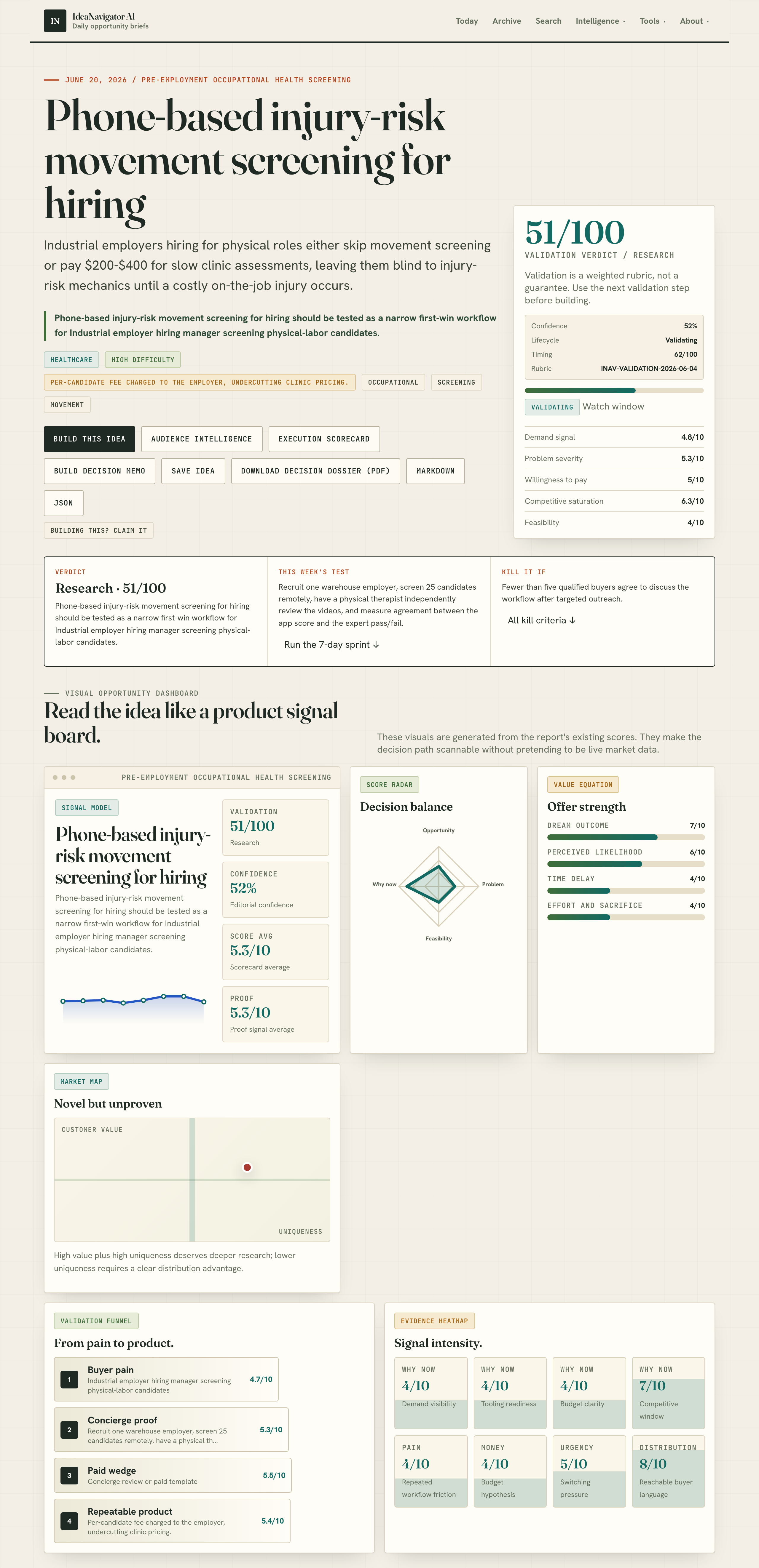
A pilot program is testing a phone-based movement screening tool for industrial hiring. It uses AI to evaluate candidates’ physical mechanics remotely, aiming to improve injury prevention and reduce costs.
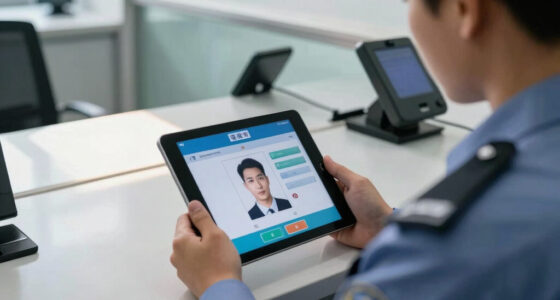
A new remote movement screening tool using phone cameras and AI is being tested for pre-employment injury risk assessment in industrial hiring. This approach aims to help employers identify candidates with risky lifting mechanics before hiring, potentially reducing costly on-the-job injuries.
The screening method involves candidates performing 5-7 simple movements, such as squats and lifts, while recording via their phones. An AI-powered app analyzes the videos to generate a pass/fail injury risk score within 24 hours, at a cost of approximately $30-50 per candidate. This process is designed as a faster, cheaper alternative to traditional clinic assessments, which can cost $200-$400 and take several days. The initiative is targeting industrial employers who currently lack efficient, scalable screening options for physically demanding roles. A pilot with one warehouse employer will involve screening 25 candidates remotely, with independent physical therapists reviewing the videos to measure the app’s accuracy against expert judgment. The goal is to validate whether this remote approach can reliably identify candidates at higher injury risk, thus enabling proactive prevention measures.Potential Impact on Industrial Hiring and Injury Prevention
This development could transform pre-employment screening in physically demanding industries by providing a quick, cost-effective method to assess injury risk remotely. If validated, it could lead to widespread adoption, lowering workplace injury rates and associated costs. It also addresses a significant gap where current screening methods are either too expensive or too slow, often leaving employers blind to injury mechanics until after an incident occurs.
As an affiliate, we earn on qualifying purchases.
Advances in Phone Cameras and AI Enable Remote Movement Assessment
Recent improvements in smartphone camera quality and pose estimation AI have made remote movement analysis feasible. Traditionally, injury risk assessments required in-clinic evaluations costing hundreds of dollars and days to schedule. Rising workers’ compensation costs have increased pressure on employers to adopt more proactive screening measures. This initiative builds on the trend toward remote health assessments, leveraging technology to streamline hiring processes for physically demanding roles.
“Using phone cameras and AI, we can remotely evaluate a candidate’s lifting mechanics with a reasonable degree of accuracy, potentially preventing injuries before they happen.”
— an anonymous researcher
As an affiliate, we earn on qualifying purchases.
Uncertainties Around Validation and Effectiveness
It is not yet confirmed how accurately the app’s injury risk scores will align with expert assessments or real-world injury outcomes. The pilot involves a small sample size, and further validation is needed to determine if this method can reliably replace or supplement traditional assessments. Additionally, questions remain about how well the approach will scale across different industries and job types.
As an affiliate, we earn on qualifying purchases.
Next Steps in Pilot Testing and Validation
The pilot program will involve screening 25 candidates remotely, with independent physical therapists reviewing the videos to compare with app scores. Results from this pilot will determine the method’s accuracy and feasibility for broader deployment. If successful, plans include expanding testing to more employers and refining the AI model for improved reliability. Long-term, the goal is to integrate this screening into standard pre-employment processes for physically demanding roles.
phone camera pose estimation software
As an affiliate, we earn on qualifying purchases.
As an affiliate, we earn on qualifying purchases.
Key Questions
How does the phone-based screening work?
Candidates perform a series of simple movements while recording with their phones. An AI app analyzes the videos to assess injury risk based on movement mechanics, providing a pass/fail score within 24 hours.
What are the benefits of remote screening over traditional methods?
Remote screening is faster, cheaper, and more scalable. It can be conducted before hiring, reducing the likelihood of costly injuries and enabling proactive risk management.
Has this approach been proven effective?
Effectiveness is still being tested. The current pilot aims to validate the accuracy of AI-generated scores against expert assessments, but conclusive results are pending.
Who is funding or developing this technology?
The initiative is being developed by a team leveraging recent advances in AI and smartphone technology, with no specific company or sponsor disclosed.
Could this replace in-clinic assessments entirely?
It is too early to say. The goal is to supplement or replace traditional screening methods if validated, but further research is needed to confirm its reliability across different settings.
Source: IdeaNavigator AI
Halloween Picks
halloween
As an affiliate, we earn on qualifying purchases.