📊 Full opportunity report: Phone-photo Gauge Reading To Replace Clipboard Rounds on IdeaNavigator AI — validation score, market gap, and execution plan.

Get privacy and security gear delivered free — and shop member deals
- Fast, free delivery on millions of items
- Access to Prime Big Deal Days deals on October 6–7
- Prime Video, Amazon Music and more included
TL;DR
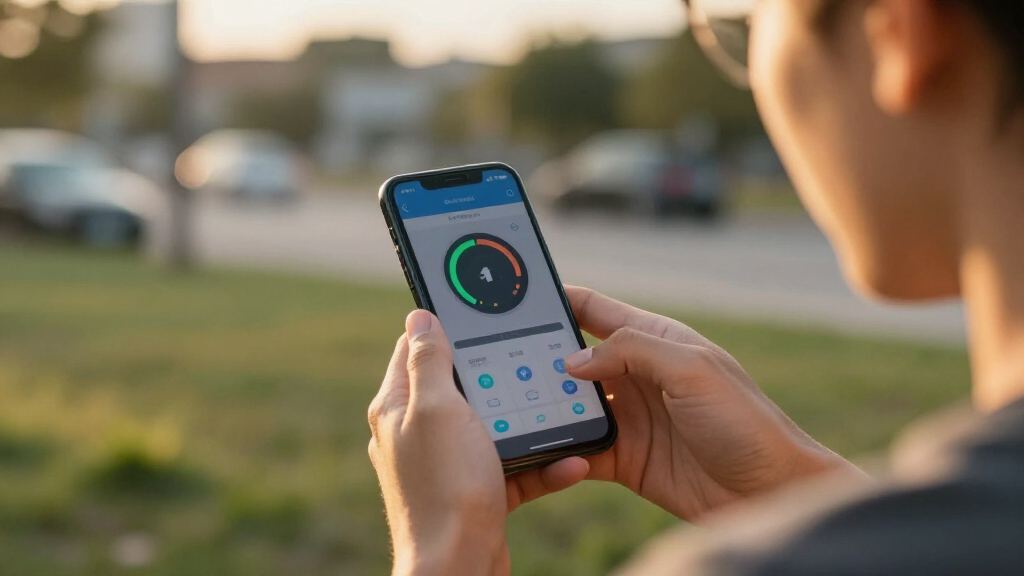
A pilot project is testing the use of phone photos to read analog gauges, aiming to replace manual clipboard rounds. This approach could improve data accuracy and enable better trend analysis without costly sensor retrofits.
Industrial facilities are testing a new method that uses phone photos to read analog gauges, replacing traditional clipboard rounds. This initiative aims to improve data accuracy, reduce transcription errors, and enable real-time trend analysis without the need for costly sensor retrofits. The pilot involves technicians photographing gauges during routine checks, with an app analyzing the images to log readings and flag anomalies automatically.
The approach is designed for facilities where technicians perform daily rounds, manually transcribing gauge readings from analog dials, sight glasses, and counters onto paper. These paper logs are often stored without further analysis, making it difficult to detect developing failures early. The new system leverages recent advances in sight recognition models, which reliably read gauge values from ordinary phone photos.
During the pilot, technicians will photograph each gauge during their rounds. The app will automatically extract the gauge reading, compare it to expected ranges, and log the data with timestamps and location tags. If readings fall outside normal parameters, the system flags these as anomalies for immediate review. Over time, this process intends to build a digital trend history that can inform maintenance decisions and prevent failures.
According to organizers, the pilot aims to validate whether phone-photo readings can match or surpass the accuracy of manual transcription, while also capturing early signs of equipment issues more effectively. The cost advantage is significant: this method requires no retrofitting of legacy equipment with sensors, which can be prohibitively expensive, especially in older facilities.
Potential Impact on Maintenance and Data Accuracy
This development could significantly improve the accuracy and timeliness of gauge readings in industrial operations. By automating data collection, facilities can reduce human error and detect anomalies earlier, potentially avoiding costly equipment failures. The approach also offers a scalable, low-cost alternative to sensor retrofitting for legacy systems, making digital transformation more accessible for older plants. If successful, this method could reshape routine maintenance workflows across multiple industries, leading to more reliable operations and data-driven decision-making.
As an affiliate, we earn on qualifying purchases.
Legacy Equipment and the Need for Better Monitoring Solutions
Many industrial facilities still rely on manual readings of analog gauges, a process that is prone to errors and often lacks systematic trend analysis. Traditionally, retrofitting gauges with IoT sensors offers a solution but involves high installation costs and technical challenges, especially with legacy equipment. Recent advances in sight recognition models, which can accurately interpret analog dials from photographs, open new possibilities for non-intrusive data collection. Pilot programs like this aim to test whether phone photos can serve as a practical replacement for clipboard rounds, offering a low-cost, scalable solution.
The idea has gained momentum as industries seek to improve operational reliability without significant capital expenditure. The pilot is part of a broader trend toward leveraging AI and computer vision to automate routine maintenance tasks and enhance data integrity in industrial settings.
industrial gauge recognition software
As an affiliate, we earn on qualifying purchases.
As an affiliate, we earn on qualifying purchases.
Uncertainties About Accuracy and Integration
It is not yet clear how the phone-photo approach will perform across different types of gauges and lighting conditions. The pilot will compare error rates between photo-based readings and traditional clipboard methods over one month, but comprehensive results are still pending. Additionally, questions remain about how well the system integrates into existing workflows and whether it can reliably flag all critical anomalies in real time.
Further validation is needed to determine if this method can replace manual rounds entirely or if it will serve best as a supplementary tool during transitional periods.
gauge reading scanner for industrial equipment
As an affiliate, we earn on qualifying purchases.
As an affiliate, we earn on qualifying purchases.
Next Steps in Pilot Testing and Evaluation
The pilot will run at three facilities over the next month, with data collection focusing on accuracy, anomaly detection, and user acceptance. Afterward, results will be analyzed to assess whether the photo-based system reduces errors and improves early detection of equipment issues. If successful, plans may include wider deployment and potential integration with existing maintenance management systems.
Further development could involve refining the app’s AI models and expanding the system to include additional types of gauges and operational parameters. Stakeholders will also evaluate cost-benefit metrics to determine long-term viability and scalability.
As an affiliate, we earn on qualifying purchases.
Key Questions
How accurate are phone photos in reading analog gauges?
Preliminary tests suggest that recent sight recognition models can reliably interpret gauge readings from phone photos, matching manual transcription accuracy in controlled settings. However, full validation across varied conditions is ongoing.
Will this replace manual rounds entirely?
It is too early to say whether the phone-photo method will fully replace manual rounds. The pilot aims to evaluate if it can serve as a low-cost, reliable supplement or replacement, but further testing is needed.
What are the cost implications of adopting this system?
The approach requires no retrofitting of legacy equipment, making it a potentially low-cost alternative to sensor installation. Costs primarily involve software subscriptions and training, which are expected to be significantly lower than hardware retrofits.
What types of gauges can this system read?
The system is designed to read analog dials, sight glasses, and counters from photographs. Its effectiveness across different gauge types and conditions is currently being tested in the pilot.
When will this system be available for wider use?
If the pilot demonstrates success, wider deployment could follow within the next 6 to 12 months, depending on validation results and industry adoption rates.
Source: IdeaNavigator AI
Fall Picks
fall essentials
As an affiliate, we earn on qualifying purchases.