
📊 Full opportunity report: Family Caregiving From Afar: Could AI Calls Help? on IdeaNavigator AI — validation score, market gap, and execution plan.

Get privacy and security gear delivered free with Prime
- Fast, free delivery on millions of items
- Prime Video, Amazon Music and more included
- Member-only deals all year
TL;DR
IdeaNavigator AI proposes testing scheduled AI phone calls as a daily check-in for independent seniors who live alone. The suggested pilot would involve 15 senior-and-adult-child pairs over three weeks; no results, service launch or evidence of effectiveness are reported.
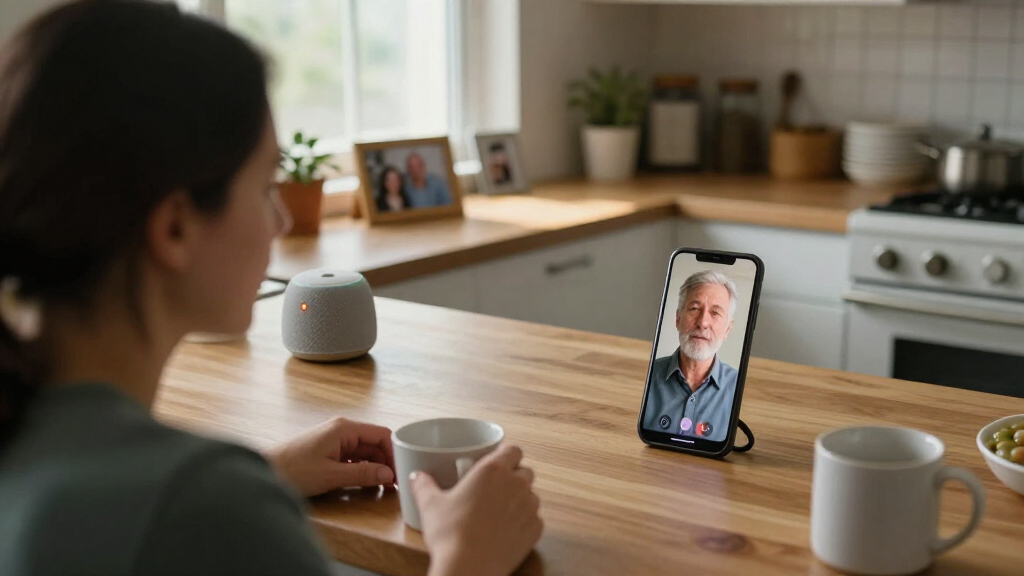
IdeaNavigator AI has proposed testing daily AI phone calls that ask older adults living alone a few wellness questions and alert a family member if a call is missed or raises concern. The idea is aimed at adult children who live in another city, but it remains a proposed pilot rather than a reported, operating service.
The proposed service would place a scheduled call each day to a senior’s landline or mobile phone. During the brief conversation, the AI would ask a small number of wellness questions. It would then send the adult child a simple “all clear” message or flag a missed call or a concerning response, according to the IdeaNavigator AI concept.
The proposal responds to a specific concern: relatives may not be able to call every day, and a fall or difficult day could go unnoticed without a routine check. The call is intended to provide a regular point of contact and notify family when the expected check-in does not happen. The description does not say that the system would detect a fall directly, assess a person medically or contact emergency services.
To test the idea, IdeaNavigator AI recommends setting up calls for 15 senior-and-adult-child pairs for three weeks. The proposed measures are whether seniors answer and whether family members consider the all-clear alerts valuable enough to pay for. No pilot results, participant feedback, pricing or evidence that families would subscribe have been provided.
A Daily Signal for Distant Families
For relatives who live far away, a predictable check-in could make it easier to notice when a parent has not answered or has said something that merits follow-up. The proposed alert could offer an additional signal between family conversations, particularly for families unable to maintain a daily calling routine.
That signal would have limits. An all-clear message would indicate, at most, that a call was answered and the exchange did not trigger the system’s concern criteria. It would not establish that a person is safe throughout the day. Likewise, a missed call could have ordinary causes, such as a phone being unavailable, and would need interpretation by a family member. The proposal’s value depends on how reliably the service distinguishes routine circumstances from situations requiring attention.
The suggested subscription model would charge the adult child monthly for each parent. Whether families would pay depends not only on call completion, but also on whether the alerts are trusted, useful and proportionate. The proposed three-week test is designed to explore call-answer rates and perceived value, not to establish that the calls prevent injuries or replace in-person care.
Products Worth Considering

LG UltraGear 27-Inch QHD OLED Gaming Monitor, 240Hz, 0.03ms, G-SYNC Compatible, FreeSync Premium Pro, HDMI 2.1

Samsung 27-inch Odyssey OLED G6 QD-OLED QHD Gaming Monitor

Samsung 27-Inch Odyssey QD-OLED G8 4K 240Hz Gaming Monitor
As an affiliate, we earn on qualifying purchases.
The Proposed Call-and-Alert Model
The idea is framed as a narrow aging-in-place wellness check, not a broad caregiving platform. Its proposed first version has three basic steps: place a daily call, ask a few questions and send a summary or flag to the adult child. IdeaNavigator AI says current voice AI can support short, natural-sounding calls over landlines or mobile phones; the proposal does not provide technical tests or independent evidence for that claim.
The plan also differs from continuous monitoring. It relies on a senior answering a scheduled call and responding to questions. It does not describe sensors, location tracking, a human call center or a clinician reviewing the exchange. The proposed pilot would test a small group over three weeks, a limited trial that could offer early feedback on use and willingness to pay but would not by itself show how the service performs across a larger or more varied population.
Reliability, Privacy and Response
No operating product or trial findings are described. The proposal does not specify how the AI would decide that a response is concerning, what wording the calls would use, how the system would handle confusion or speech difficulties, or what happens after a missed call. It is also unclear whether an alert would prompt the family member to call back, contact someone nearby or take another step.
Privacy and consent details are not provided. The plan does not explain whether calls would be recorded, how answers and contact information would be stored, who could access them, or how a senior could pause or stop calls. Nor does it state how the service would respond to a phone outage or a person who does not answer. These details matter because families could otherwise treat an automated all-clear as stronger reassurance than the call can support.
The claim that voice AI can make these calls affordable at scale is part of the proposal, not a demonstrated cost or market result. No subscription price, operating cost, safety evaluation or comparison with existing check-in options is given. It is also not yet clear whether seniors would welcome automated calls or find them repetitive.
The Three-Week Pilot Proposal
The next step described is a test involving 15 senior-and-adult-child pairs over three weeks. The proposed evaluation would track how often seniors answer and ask families whether the all-clear alerts are worth paying for. No launch date, recruitment details or completed results are reported.
If a pilot proceeds, useful follow-up information would include how missed calls and concerning answers are handled, whether seniors consent to the calls, and what privacy protections apply. Until those details and trial findings are available, the concept should be understood as an early proposal for a routine family check-in—not a proven safety service.
Source: IdeaNavigator AI
Key Questions
What would the proposed AI calls do?
The service would call a senior daily, ask a few wellness questions and send an adult child an all-clear message or a flag if the call is missed or a response is concerning.
Has the service launched or been tested?
The available description presents a proposed pilot, not a launched service or completed trial. No test results are reported.
Who is the proposed service for?
It is intended for independent seniors living alone and adult children who live in another city and want a routine check-in.
Would an all-clear confirm that a senior is safe?
No. The proposal describes a message following a call, but gives no evidence that it can confirm someone’s safety beyond that exchange or detect a fall.
What would the proposed pilot measure?
IdeaNavigator AI suggests testing 15 senior-and-adult-child pairs for three weeks, measuring call-answer rates and whether families find the alerts worth paying for.
Source: IdeaNavigator AI