
TL;DR

Get privacy and security gear delivered free with Prime
- Fast, free delivery on millions of items
- Prime Video, Amazon Music and more included
- Member-only deals all year
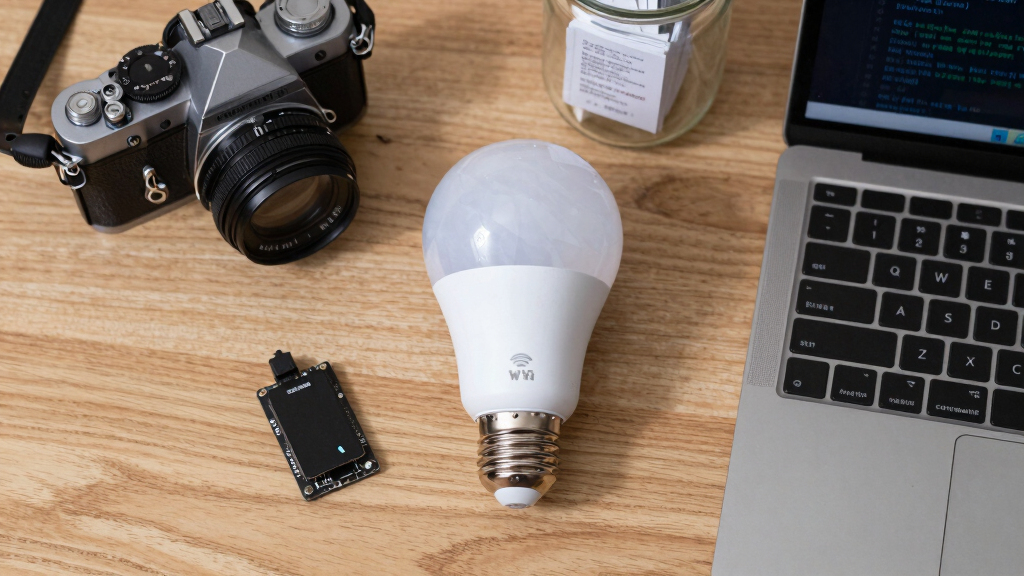
An anonymous researcher has developed an open-source project to turn Wi-Fi smart lightbulbs into digital banned book libraries. The prototype uses ESP32 firmware and hosts nearly 2MB of content without cloud services, emphasizing stealth and resilience.
A security researcher has repurposed a Wi-Fi-enabled smart lightbulb to serve as a stealth digital library of banned books, using open-source firmware and minimal hardware modifications. This development highlights potential uses of IoT devices for resilient, covert information sharing, and underscores privacy and security concerns around smart home technology.
The project involves reprogramming an ESP32-powered Tasmota-flashed smart lightbulb to host a library of banned books, utilizing its Wi-Fi capabilities. The prototype allocates nearly 2MB of storage space for content, achieved through filesystem optimization and text compression, despite the device’s limited 4MB onboard memory. The system broadcasts an open Wi-Fi network and hosts a server accessible to nearby devices, with no reliance on cloud services or sensitive credentials.
The developer, an anonymous researcher, documented the process on a blog and shared code openly on Codeberg, encouraging others to replicate or expand the project. The setup supports over-the-air updates and is designed for resilience and stealth, making it suitable for covert distribution of content. However, modifying the firmware can brick the device, and users should exercise caution, especially when traveling internationally with these devices.
Implications for Privacy and Digital Resistance
This project demonstrates how everyday IoT devices like smart lightbulbs can be repurposed for covert information sharing, raising concerns about security, privacy, and censorship circumvention. It emphasizes the potential for open-source hardware to serve as resilient, decentralized repositories of information, which could be exploited for both positive resistance and malicious purposes. The initiative also highlights the importance of securing IoT devices against unauthorized modifications and the need for awareness about their capabilities.
As an affiliate, we earn on qualifying purchases.
Background on IoT Devices and Digital Stealth Projects
Smart lightbulbs with Wi-Fi capabilities have become common in home automation, often running open-source firmware like Tasmota. Previous efforts have explored hacking IoT devices for security research or entertainment, but this project takes a novel turn by creating a portable, covert library of banned books. The idea draws inspiration from cyberpunk themes of resistance and resilience, and aligns with ongoing discussions about digital censorship and privacy.
The developer’s approach builds on existing open-source firmware modifications, pushing the boundaries of what these devices can do. While the hardware limitations are significant, the project demonstrates that even small-capacity devices can host meaningful content through careful optimization.
“This project shows how IoT devices can be used as resilient, stealthy repositories for digital content, emphasizing both their potential and risks.”
— an anonymous researcher
As an affiliate, we earn on qualifying purchases.
Unclear Aspects of Long-Term Security and Usage
It is not yet clear how durable or scalable this setup is over time, especially regarding firmware updates, device stability, or potential detection. The security risks associated with modifying IoT devices for covert purposes are also not fully understood, including the possibility of detection by network monitoring tools or authorities. Additionally, the legal implications of hosting banned books in this manner remain uncertain and vary by jurisdiction.
As an affiliate, we earn on qualifying purchases.
Next Steps for Open-Source Digital Libraries via IoT Devices
The developer plans to continue refining the project, possibly increasing capacity or adding features like encryption. Community interest may lead to further open-source adaptations, with users experimenting with different hardware or content types. Monitoring how such projects evolve and how authorities respond will be critical for understanding the broader implications of covert digital repositories in IoT devices.
Wi-Fi smart bulb with custom firmware
As an affiliate, we earn on qualifying purchases.
As an affiliate, we earn on qualifying purchases.
Key Questions
Can I replicate this project with my smart lightbulb?
Yes, if your bulb is based on ESP32 hardware and can be flashed with Tasmota firmware, you can follow the provided guides to set up a similar library. However, modifying firmware carries risks, including bricking the device, and should be done carefully.
Does this project require internet access or cloud services?
No, the system operates independently of cloud services, hosting content locally on the device and broadcasting an open Wi-Fi network for nearby devices to connect.
Is hosting banned books legal?
The legality varies by jurisdiction. Hosting or distributing banned books may violate local laws, and users should be aware of legal risks before attempting such projects.
What are the security risks involved?
Modifying IoT firmware can introduce vulnerabilities, and covert setups may be detected through network monitoring. Users should understand these risks before proceeding.
Could this be used maliciously?
Yes, the technology could be exploited for malicious purposes, such as hosting illegal content or creating covert communication channels. Awareness and security measures are essential.
Source: Tom’s Hardware: For The Hardcore PC Enthusiast
Halloween Picks
halloween
As an affiliate, we earn on qualifying purchases.