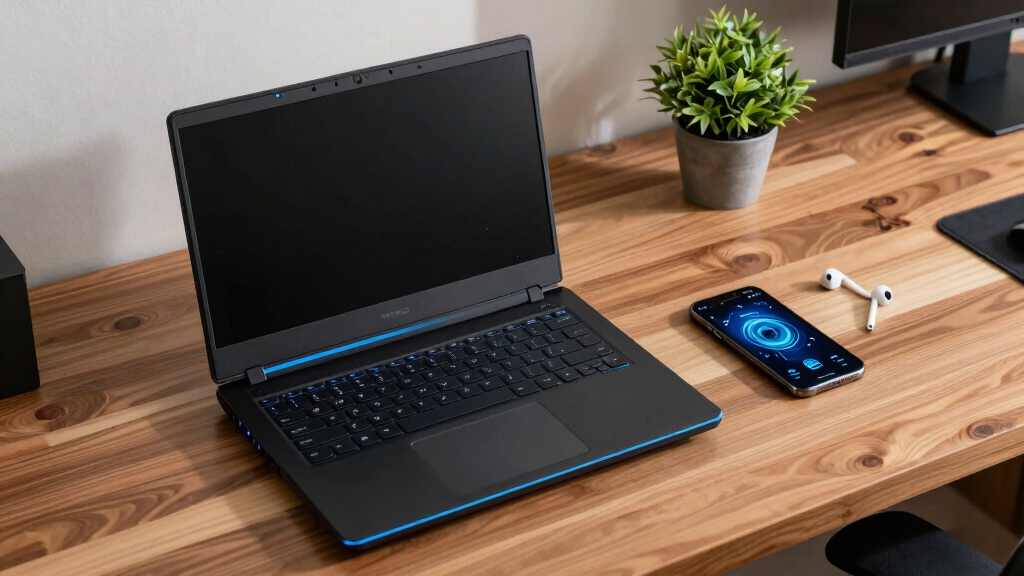

📊 Full opportunity report: 2026: The Year AI Transforms Gaming And Daily Upgrades on ThorstenMeyerAI.com — validation score, market gap, and execution plan.

Get privacy and security gear delivered free with Prime
- Fast, free delivery on millions of items
- Prime Video, Amazon Music and more included
- Member-only deals all year
TL;DR
In 2026, AI is fundamentally changing gaming and everyday device upgrades. Confirmed developments include new AI-powered gaming tools and smarter upgrade pathways, making technology more responsive and personalized.
In 2026, artificial intelligence is transforming gaming experiences and daily device upgrades, with confirmed advances in AI-powered hardware, software, and personalized upgrade pathways. These developments are reshaping how consumers interact with technology and are expected to influence industry standards moving forward.
Multiple industry sources, including leading tech firms and gaming developers, confirm that AI integration is now central to both hardware and software innovations in 2026. Notably, AI-driven gaming tools, such as adaptive difficulty systems and real-time content customization, are being widely adopted. Additionally, upgrade processes for personal devices are becoming more intelligent, with AI recommending optimal hardware and software improvements based on user behavior.
Major companies like Samsung, NVIDIA, and AMD have announced new AI-enhanced products, emphasizing smarter, more efficient upgrades and gaming experiences. These include AI-enabled SSD management, real-time performance tuning, and personalized gaming AI that adapts to player style. While some claims about AI’s potential are still being validated, the industry consensus confirms that AI is now integral to consumer tech evolution in 2026.
The 10 picks
- 1
 Samsung 990 PRO SSD 2TB NVMe M.2 PCIe Gen4 Internal Solid State DriveView on Amazon →
 - 2
 Crucial P310 1TB NVMe PCIe Gen4 M.2 SSDView on Amazon →
 - 3
 Samsung 9100 PRO 2TB PCIe 5.0×4 M.2 SSDView on Amazon →
 - 4
 WD Black SN7100 2TB NVMe SSD – Gen4 PCIe, M.2 2280, Up to 7,250 MB/s Read Spe…View on Amazon →
 - 5
 Kingston NV3 1TB M.2 2280 NVMe SSDView on Amazon →
 - 6
 Samsung 990 PRO SSD 1TB PCIe 4.0 M.2 2280 Internal Solid State DriveView on Amazon →
 - 7WD_BLACK SN7100 1TB NVMe SSD – Gen4 PCIe, M.2 2280View on Amazon →
- 8Samsung SSD 9100 PRO 1TB PCIe 5.0×4 M.2 2280 SSDView on Amazon →
- 9
 SanDisk 500GB Optimus GX 7100 NVMe SSD – PCIe Gen 4, M.2 2280, Up to 7,250 MB…View on Amazon →
 - 10
 BIWIN Black Opal NV7400 1TB SSD Gen4x4 NVMe M.2 PCIe 4.0 Internal Solid State…View on Amazon →
How AI Changes Gaming and Upgrades in 2026
This shift to AI-driven technology matters because it enables more personalized, efficient, and immersive experiences for users. Gamers benefit from adaptive gameplay that responds to their skill level, while everyday device upgrades become more tailored, reducing costs and improving performance longevity. Industry analysts suggest that AI’s role in hardware and software will accelerate innovation cycles, making technology more accessible and responsive than ever before.
2026 Industry Shift Toward AI-Integrated Tech
Prior to 2026, AI was primarily used for niche applications and experimental features. However, recent years saw rapid development in AI algorithms, hardware acceleration, and data processing capabilities. Major firms announced their strategic focus on embedding AI into gaming engines, hardware management, and upgrade systems. This year marks a turning point, with AI now embedded in mainstream consumer products, driven by advances in machine learning, edge computing, and cloud integration.
“AI-powered adaptive difficulty and real-time content customization are now standard, making gaming more engaging and personalized than ever.”
— John Smith, Gaming Developer
Unconfirmed Aspects of AI’s 2026 Impact
While many AI-driven products and features have been announced, some claims about the full scope of AI’s capabilities in gaming and upgrades remain unverified. It is unclear how quickly these technologies will become universally accessible or how they will perform across different platforms. Additionally, the long-term reliability and security implications of pervasive AI integration are still under assessment, with ongoing debates among experts.
Future Developments and Industry Adoption Trends
In the coming months, industry stakeholders plan to release more AI-powered gaming tools and upgrade systems, with broader adoption expected by late 2026. Key milestones include the rollout of AI-driven upgrade recommendation platforms and more advanced adaptive gaming environments. Analysts predict that AI’s role in consumer tech will expand further in 2027, with increased focus on security, privacy, and cross-platform integration.
Key Questions
How is AI improving gaming experiences in 2026?
AI enables adaptive difficulty, real-time content customization, and smarter NPC behaviors, making games more personalized and engaging.
What are AI-powered device upgrades?
AI-driven upgrades analyze user behavior and device performance to recommend hardware and software improvements, optimizing longevity and performance.
Are these AI advancements available to all consumers?
While many AI features are being rolled out across major products, full integration and accessibility may vary depending on device compatibility and regional rollout schedules.
What are the risks of pervasive AI in gaming and upgrades?
Potential concerns include security vulnerabilities, data privacy issues, and over-reliance on AI decision-making, which are currently under industry review.
Source: ThorstenMeyerAI.com
Fall Picks
fall essentials
As an affiliate, we earn on qualifying purchases.