
📊 Full opportunity report: Parenting Trends And Student Suspensions: Analyzing The Connection on IdeaNavigator AI — validation score, market gap, and execution plan.
Listen free for 30 days with Audible
Thousands of audiobooks and originals — cancel anytime.
Start your free trialAs an affiliate, we earn on qualifying purchases.
TL;DR
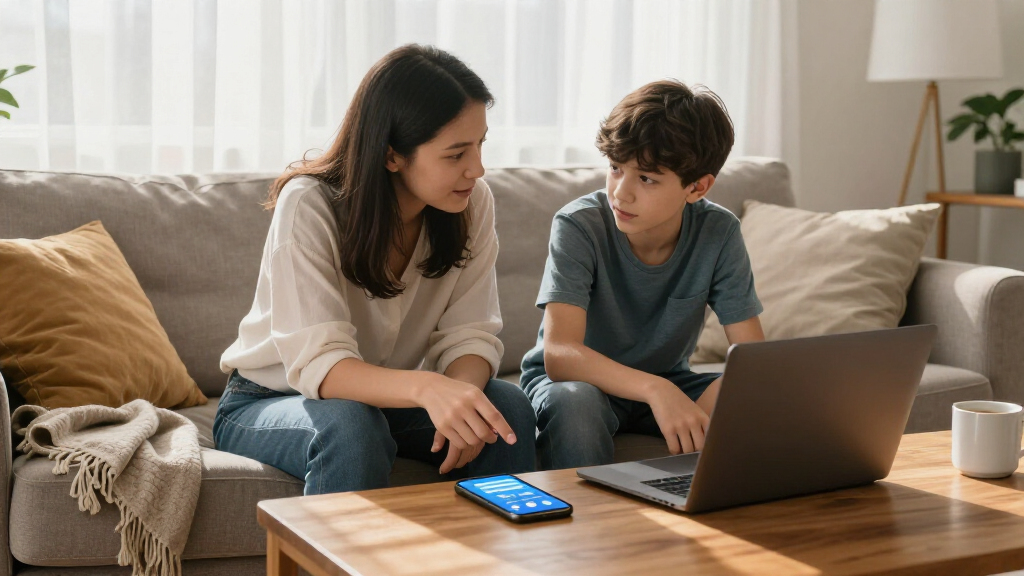
Recent analysis shows a rising connection between parenting trends and student suspensions. Experts warn that family behaviors may influence school discipline rates, prompting calls for further research.
Recent data indicates a growing link between parenting behaviors and student suspension rates across multiple school districts. The findings suggest that family dynamics and parenting styles may influence disciplinary outcomes, a development that educators and policymakers are increasingly scrutinizing. This connection matters because it could impact how schools approach discipline and family engagement strategies.
Researchers analyzed suspension data from various districts over the past 12 months and found that suspensions for minor infractions, such as bringing coffee to school or dress code violations, have risen in tandem with certain parenting trends. These trends include increased parental involvement in behavioral expectations and heightened sensitivity to perceived student autonomy.
Experts caution that while the correlation is clear, causation has not been definitively established. Some school officials and child psychologists suggest that heightened parental involvement may lead to stricter enforcement of discipline, or alternatively, that certain parenting styles could inadvertently contribute to behavioral issues that result in suspensions.
School administrators report that disciplinary policies are evolving, with some districts implementing more zero-tolerance approaches, possibly influenced by family attitudes toward authority. Conversely, some parents are advocating for more lenient responses, citing concerns over student mental health and autonomy. The interplay between these factors is complex and still under investigation.
Implications of Parenting Trends on School Discipline Policies
This emerging link is significant because it suggests that family behaviors and attitudes may directly influence school disciplinary actions. If parental involvement or parenting styles are contributing to higher suspension rates, educators may need to reconsider how they engage families and design discipline policies. Understanding this connection could lead to more effective strategies that balance authority with family collaboration, ultimately reducing unnecessary suspensions and supporting student well-being.
parenting books on discipline and behavior management
As an affiliate, we earn on qualifying purchases.
As an affiliate, we earn on qualifying purchases.
Background on Parenting and School Discipline Shifts
Over the past decade, parenting trends have shifted toward increased involvement in children’s daily routines and behavioral expectations, fueled by social media, parenting blogs, and advocacy groups. Simultaneously, schools have faced pressure to address behavioral issues more consistently, sometimes adopting zero-tolerance policies. Recent reports from educational research highlight rising suspension rates, particularly for minor infractions, prompting investigations into potential family influences.
Prior studies have shown that parental attitudes toward authority, discipline, and autonomy can shape children’s behavior and responses to school rules. However, the extent to which these trends impact suspension rates at a systemic level remains underexplored. The current analysis aims to fill this gap by examining the correlation between evolving parenting behaviors and disciplinary outcomes.
As an affiliate, we earn on qualifying purchases.
Unconfirmed Causality and Broader Impact
It is not yet clear whether parenting trends directly cause higher suspension rates or if other factors, such as school policy changes or community norms, play a larger role. Researchers caution that correlation does not imply causation, and ongoing studies aim to clarify these relationships. Additionally, the variability across districts makes broad generalizations difficult at this stage.
As an affiliate, we earn on qualifying purchases.
Next Steps in Research and Policy Evaluation
Researchers plan to conduct longitudinal studies to better understand causality between parenting behaviors and suspension outcomes. Schools and policymakers are also being encouraged to analyze their disciplinary data in the context of family engagement strategies. Future reports may provide clearer guidance on how family influence can be managed to reduce unnecessary suspensions and improve student outcomes.
As an affiliate, we earn on qualifying purchases.
Key Questions
Are parenting styles directly causing increased suspensions?
Currently, the data shows a correlation, but causality has not been definitively established. Further research is needed to determine direct effects.
How might schools respond to these findings?
Schools may consider reviewing their disciplinary policies and family engagement practices to better understand the influence of parenting trends and develop more balanced approaches.
What specific parenting behaviors are linked to suspensions?
Trends include increased parental involvement in behavioral expectations and heightened sensitivity to autonomy, but the exact behaviors and their impacts are still being studied.
Could this trend lead to policy changes?
Potentially, if further research confirms a causal link, policymakers might adjust disciplinary approaches to incorporate family engagement strategies aimed at reducing suspensions.
Is this issue uniform across different regions?
No, variability exists across districts and communities, making it necessary to tailor approaches based on local contexts and data.
Source: IdeaNavigator AI
Flea & tick season Picks
flea and tick prevention
As an affiliate, we earn on qualifying purchases.