
📊 Full opportunity report: Forezai · TradingAgents: A Trading Firm Made of Agents on ThorstenMeyerAI.com — validation score, market gap, and execution plan.

Get privacy and security gear delivered free with Prime
- Fast, free delivery on millions of items
- Prime Video, Amazon Music and more included
- Member-only deals all year
TL;DR
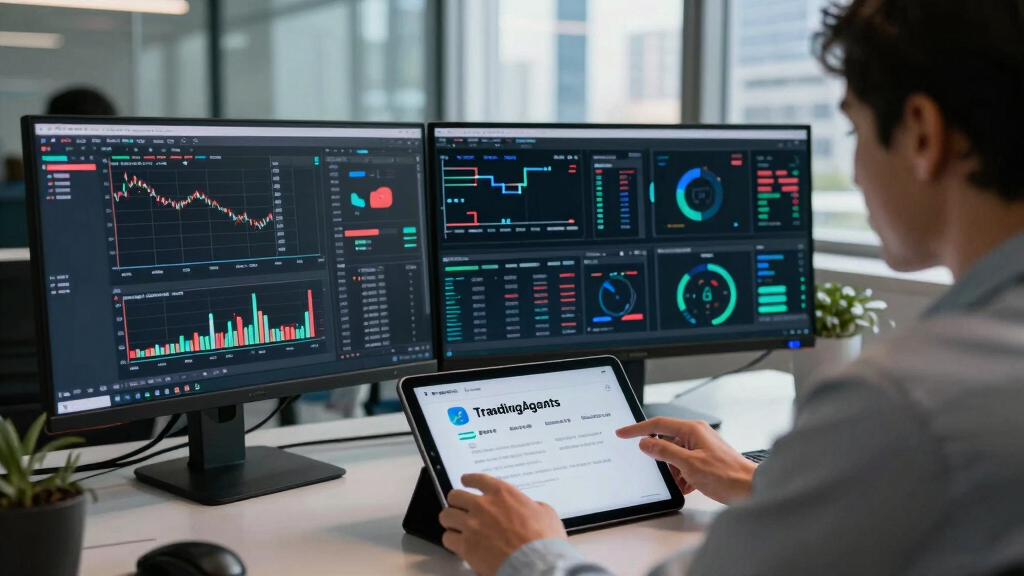
Forezai has unveiled TradingAgents, a novel multi-agent framework that organizes specialized AI agents to simulate a trading desk. This structure aims to reduce overconfidence and improve decision accountability in automated trading. The system is designed for research, not financial advice.
Forezai has launched TradingAgents, a framework that organizes AI agents into a structured trading desk to enhance decision-making in automated trading research. You can learn more about it in Forezai · TradingAgents: A Trading Firm Made of Agents. This development aims to address overconfidence issues associated with single-model AI systems by replicating organizational roles such as analysts, traders, and risk managers. For more context on multi-agent AI systems, see Forezai · TradingAgents.
TradingAgents is a multi-agent system designed to mirror the structure of a traditional trading desk. It features specialized analyst agents focusing on fundamentals, news sentiment, and technical signals, whose findings feed into a debate between a bull and a bear researcher. This debate determines whether a trade proposal is generated by a trader agent, which then undergoes vetting by a risk manager agent.
The system emphasizes structured disagreement and explicit oversight, recording each step for auditability. This approach is similar to the principles discussed in Forezai · TradingAgents. Its architecture aims to reduce reliance on any single AI model’s overconfidence by fostering critical debate and risk assessment before executing trades. The framework is built to be provider-agnostic and modular, allowing different models to serve different roles within the system.
TradingAgents — a firm made of agents
A single model is an overconfidence machine. So this isn’t one AI — it’s a whole desk: analysts, a bull and a bear who argue, a trader, and a risk manager who can say no.
Not financial, investment, legal or tax advice; not a recommendation or solicitation to trade, invest or use any software. Forezai · TradingAgents is an experimental research framework, provided “as is” without warranty of accuracy or profitability. Trading and automated trading carry a substantial risk of loss including total loss of capital; past or backtested performance does not indicate future results. Market and trading-software access is regulated or restricted in some jurisdictions — you are solely responsible for compliance with applicable law. Consult a licensed professional before any financial decision. Produced with AI assistance under human editorial oversight; independent commentary, the author’s own views. Product and company names are trademarks of their respective owners; mention does not imply endorsement.
Implications for AI-Driven Trading Decision Processes
TradingAgents introduces a new approach to automated trading research by organizing AI models into a collaborative, organizational structure. It demonstrates that structured disagreement and layered oversight can produce more accountable and potentially more reliable decision-making than single-model systems. This approach could influence future AI trading tools by emphasizing transparency, auditability, and organizational discipline, addressing concerns about overconfidence and unchecked AI outputs in financial markets.
automated trading research software
As an affiliate, we earn on qualifying purchases.
As an affiliate, we earn on qualifying purchases.
Background on AI in Trading and Organizational Approaches
Previous developments in AI trading have often relied on single models or minimal oversight, risking overconfidence and unaccountable decisions. Forezai’s earlier work, such as Polybot, focused on isolated forecasts conflicting with market prices. TradingAgents builds on the understanding that traditional trading firms organize roles—analysts, traders, risk managers—to mitigate individual biases. This system formalizes that structure into an AI research framework, reflecting industry practices in a digital environment.
“TradingAgents is not about any one agent being smart; it’s about organized disagreement and layered oversight producing better, more accountable decisions.”
— Thorsten Meyer, Forezai
As an affiliate, we earn on qualifying purchases.
Unclear Aspects of System Performance and Adoption
It is not yet clear how TradingAgents performs in live trading environments or its real-world profitability. As an experimental research framework, its effectiveness remains unproven outside controlled settings. The degree to which this architecture can reduce overconfidence or improve decision accuracy in practice is still under evaluation. Additionally, adoption by actual trading firms and integration with existing systems are ongoing questions.
As an affiliate, we earn on qualifying purchases.
Next Steps for Development and Evaluation
Forezai plans to release TradingAgents for public use, encouraging academic and industry testing. Future developments may include benchmarking its decision quality against traditional models, expanding its modularity, and integrating more sophisticated debate and veto mechanisms. Monitoring its performance in simulated and live trading scenarios will be crucial to assessing its practical value and potential for broader adoption.
As an affiliate, we earn on qualifying purchases.
Key Questions
How does TradingAgents differ from traditional AI trading systems?
TradingAgents organizes multiple specialized AI agents into a structured decision-making process, mimicking a trading desk, with layered oversight and explicit debate. Traditional systems often rely on single models or less formal oversight.
Is TradingAgents intended for live trading or research only?
It is designed as a research framework, not as a commercial or live trading system. Its purpose is to explore organizational AI decision-making and improve understanding of multi-agent collaboration.
Can TradingAgents reduce overconfidence in AI models?
Yes, its architecture aims to mitigate overconfidence by fostering structured disagreement and requiring risk vetting, which can prevent over-reliance on any single model’s output.
What are the main components of the TradingAgents framework?
The system includes analyst agents (fundamentals, sentiment, technical), debate between bull and bear researchers, a trader agent proposing actions, and a risk manager agent vetting decisions.
Will TradingAgents be integrated into existing trading firms?
Currently, it is a research prototype; integration into real trading operations would require further validation and development. Its design allows customization and testing by interested parties.
Source: ThorstenMeyerAI.com
Columbus Day / Indigenous Peoples' Day Picks
long weekend sales
As an affiliate, we earn on qualifying purchases.