
The best business mesh WiFi system balances dependable coverage, room to grow, and straightforward management. My best overall pick is the TP-Link Deco XE75, whose tri-band Wi-Fi 6E design gives a growing office more wireless capacity for mesh traffic and connected devices. The NETGEAR Orbi 370 stands out for businesses weighing Wi-Fi 7, while the TP-Link Deco X55 three-pack is a practical Wi-Fi 6 choice for smaller teams. The key tradeoff is paying for newer standards and extra bands versus choosing a simpler system that suits today’s workload. Read on for the full breakdown and guidance on matching a setup to your space.

Get privacy and security gear delivered free — and shop member deals
- Fast, free delivery on millions of items
- Access to Prime Big Deal Days deals on October 6–7
- Prime Video, Amazon Music and more included
Key Takeaways
- The Deco XE75 is the strongest all-around fit in this group: tri-band Wi-Fi 6E gives it a useful capacity advantage over the dual-band Deco X55 and S4 options.
- Wi-Fi 7 is not one uniform upgrade: Orbi 370, Deco BE23, Deco BE5000, and Deco 7 Pro differ in band design and positioning, so match the model to device load and network plans.
- The three-pack Deco X55 is a sensible starting point for many small offices: Wi-Fi 6 and mesh coverage without the premium focus of the Wi-Fi 7 systems.
- Deco S4 is the entry-level choice, not a future-proof pick: its older Wi-Fi 5 standard may fit light use, but can constrain a busy or device-dense workplace.
- Pack size matters as much as the router name: the X55 one-pack and S4 two-pack may suit expansion or smaller layouts, but neither provides the same out-of-box node count as a three-pack.
| TP-Link Deco X55 AX3000 Wi-Fi 6 Mesh System (3-Pack) |  | Best Value for Busy Small Offices | Wi-Fi standard: Wi-Fi 6 | Wi-Fi speed: AX3000, up to 2402 Mbps + 574 Mbps | Coverage: Up to 6,500 sq ft | VIEW LATEST PRICE | See Our Full Breakdown |
| NETGEAR Orbi 370 Series WiFi 7 Mesh System, 3-Pack |  | Best for Wi-Fi 7 on Cable or Fiber | Wi-Fi standard: Wi-Fi 7 | Bands: Dual-band | Maximum speed: Up to 5 Gbps | VIEW LATEST PRICE | See Our Full Breakdown |
| TP-Link Deco 7 BE23 Wi-Fi 7 Dual-Band Mesh System, 3-Pack |  | Best for Multi-Gigabit Wired Offices | Wi-Fi standard: Wi-Fi 7 | Bands: Dual-band | Combined speed: Up to 3.6 Gbps | VIEW LATEST PRICE | See Our Full Breakdown |
| TP-Link Deco XE75 AXE5400 Tri-Band Wi-Fi 6E Mesh System, 3-Pack |  | Best for High-Density, Wide-Area Offices | Wi-Fi standard: Wi-Fi 6E | Wi-Fi bands: 6 GHz, 5 GHz, 2.4 GHz | Maximum combined speed: Up to 5,400 Mbps | VIEW LATEST PRICE | See Our Full Breakdown |
| Amazon eero 6+ Mesh Wi-Fi System, Gigabit, 3-Pack |  | Best for Simple Smart-Office Setup | Wi-Fi standard: Wi-Fi 6 | Maximum internet plan speed: Up to 1 Gbps | Coverage: Up to 4,500 sq. ft. | VIEW LATEST PRICE | See Our Full Breakdown |
| TP-Link Deco X55 AX3000 Wi-Fi 6 Mesh System (1-Pack) | 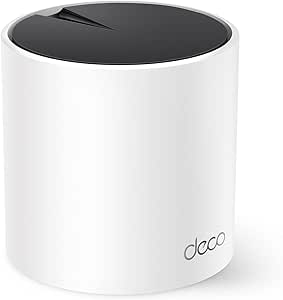 | Best Single-Unit Business Starter | Wi-Fi standard: Wi-Fi 6 | Wi-Fi class: AX3000 | Maximum listed speed: Up to 2402 Mbps + 574 Mbps | VIEW LATEST PRICE | See Our Full Breakdown |
| TP-Link Deco 7 Pro Tri-Band Wi-Fi 7 Mesh System, BE10000, 3-Pack |  | Best Premium High-Capacity Kit | Wi-Fi standard: Wi-Fi 7 | Bands: Tri-band: 6 GHz, 5 GHz, 2.4 GHz | Maximum combined speed: BE10000, up to 10,086 Mbps | VIEW LATEST PRICE | See Our Full Breakdown |
| TP-Link Deco S4 AC1900 Mesh Wi-Fi System, 3-Pack |  | Best Value for Basic Wide-Area Coverage | Wi-Fi standard: Wi-Fi 5 (802.11ac) | Wi-Fi class: AC1900 | Pack size: 3 units | VIEW LATEST PRICE | See Our Full Breakdown |
| TP-Link Deco 7 BE5000 Dual-Band Wi-Fi 7 Mesh System |  | Best for Wi-Fi 7 Coverage Without Tri-Band | Wi-Fi standard: Wi-Fi 7 | Bands: Dual-band | Maximum combined speed: Up to 5 Gbps | VIEW LATEST PRICE | See Our Full Breakdown |
| TP-Link Deco S4 Whole Home Mesh Wi-Fi System, 2-Pack |  | Best Compact Mesh Kit for Small Offices | Pack size: 2 units | Wi-Fi standard: Wi-Fi 5 | Wi-Fi speed: AC1900 | VIEW LATEST PRICE | See Our Full Breakdown |
| business mesh WiFi system | Wi-Fi standard | Coverage | Backhaul | Device capacity |
|---|---|---|---|---|
| TP-Link Deco X55 AX3000 Wi-Fi | Wi-Fi 6 | Up to 6,500 sq ft | Wired Ethernet backhaul supported | — |
| NETGEAR Orbi 370 Series WiFi 7 | Wi-Fi 7 | Up to 6,000 sq. ft. | — | Up to 70 devices |
| TP-Link Deco 7 BE23 Wi-Fi 7 Du | Wi-Fi 7 | Up to 6,500 sq. ft. (3-pack) | Wired and wireless | Up to 150 devices |
| TP-Link Deco XE75 AXE5400 Tri- | Wi-Fi 6E | Up to 7,200 sq. ft. | — | Up to 200 devices |
| Amazon eero 6+ Mesh Wi-Fi Syst | Wi-Fi 6 | Up to 4,500 sq. ft. | — | 75+ devices |
| TP-Link Deco X55 AX3000 Wi-Fi | Wi-Fi 6 | Up to 2,500 sq. ft. per unit | Wired Ethernet supported | — |
| TP-Link Deco 7 Pro Tri-Band Wi | Wi-Fi 7 | Up to 7,600 sq. ft. | Wired and wireless | Over 200 devices |
| TP-Link Deco S4 AC1900 Mesh Wi | Wi-Fi 5 (802.11ac) | Up to 5,500 sq. ft. | Wired Ethernet supported | — |
| TP-Link Deco 7 BE5000 Dual-Ban | Wi-Fi 7 | Up to 6,600 sq. ft. | Wired and wireless | — |
| TP-Link Deco S4 Whole Home Mes | Wi-Fi 5 | Up to 3,800 sq. ft. | Wired Ethernet supported | Up to 75 devices |
More Details on Our Top Picks
TP-Link Deco X55 AX3000 Wi-Fi 6 Mesh System (3-Pack)
The Deco X55 suits small offices that need broad coverage and room for many everyday devices without moving to Wi-Fi 7. Its three units cover up to 6,500 square feet, and the stated capacity of 150 devices gives it more headroom than the NETGEAR Orbi 370’s 70-device limit. Three Gigabit Ethernet ports on each unit also make it easier to connect fixed equipment, while wired backhaul can help keep mesh links steady when offices have Ethernet cabling.
Compared with the newer Deco 7 BE23, the X55 offers older Wi-Fi 6 and Gigabit rather than 2.5 Gbps ports, so it is less suited to faster wired connections. Its app and basic HomeShield tools cover routine management, but advanced security features may require a paid service. A modem is also needed for most internet providers.
Pros:- Three-unit system is rated to cover up to 6,500 square feet
- Supports up to 150 connected devices
- Three Gigabit Ethernet ports per unit and wired backhaul support
- App management includes basic HomeShield security and QoS
Cons:- Wi-Fi 6 and Gigabit ports trail the Wi-Fi 7 and 2.5 Gbps connections of the Deco 7 BE23
- Advanced HomeShield features may require a paid service
- A modem is required for most internet providers
Best for: Small offices that want broad mesh coverage, many connected devices, and multiple wired connections without needing Wi-Fi 7 or multi-gigabit Ethernet.
Not ideal for: Businesses with multi-gigabit internet, Wi-Fi 7 clients, or a requirement for advanced security controls without an added subscription.
- Wi-Fi standard:Wi-Fi 6
- Wi-Fi speed:AX3000, up to 2402 Mbps + 574 Mbps
- Coverage:Up to 6,500 sq ft
- Maximum connected devices:Up to 150
- Ethernet ports:3 Gigabit ports per unit
- Pack size:3 units
- Backhaul:Wired Ethernet backhaul supported
- Setup and management:TP-Link Deco app
Our verdict“Choose the Deco X55 for a large small-office footprint and plentiful wired ports, but look to the Deco 7 BE23 if you need Wi-Fi 7 or faster Ethernet.”
NETGEAR Orbi 370 Series WiFi 7 Mesh System, 3-Pack
The Orbi 370 is the clearest fit here for a business upgrading to Wi-Fi 7 while keeping a three-piece router-and-satellite layout. It is rated for up to 5 Gbps and internet plans up to 2.5 Gbps, giving it a higher stated speed ceiling than the Deco 7 BE23’s 3.6 Gbps combined rate. Wi-Fi 6 and Wi-Fi 5 compatibility also means existing devices can remain connected during an upgrade.
The tradeoff is capacity and coverage: its stated limits are 70 devices and 6,000 square feet, below the Deco X55 and Deco 7 BE23 figures. It is dual-band, and the supplied information does not specify Ethernet port counts or wired backhaul support, so buyers should confirm those needs before choosing it for an equipment-heavy office. The Armor trial is temporary; continued Armor service requires a separate subscription, and this model is made for US use only.
Pros:- Wi-Fi 7 with speeds up to 5 Gbps and compatibility with Wi-Fi 6 and Wi-Fi 5 devices
- Three-piece router-and-two-satellite setup covers up to 6,000 sq. ft.
- Supports internet plans up to 2.5 Gbps
- App-guided setup, automatic firmware updates, and additional satellite support
Cons:- Rated for up to 70 devices, fewer than the Deco X55 and Deco 7 BE23
- NETGEAR Armor requires a separate subscription after its 30-day trial
- Made for use in the US only
Best for: US-based offices with cable or fiber service, Wi-Fi 7 devices, and an internet plan up to 2.5 Gbps that need a router plus two satellites.
Not ideal for: High-density offices expecting more than 70 connected devices, locations outside the US, or buyers who need specified multi-gigabit wired ports or a larger rated coverage area.
- Wi-Fi standard:Wi-Fi 7
- Bands:Dual-band
- Maximum speed:Up to 5 Gbps
- Coverage:Up to 6,000 sq. ft.
- Device capacity:Up to 70 devices
- System configuration:Router and two satellites
- Internet plan compatibility:Up to 2.5 Gbps
- Security:Advanced Router Protection, automatic firmware updates, and 30-day NETGEAR Armor trial
- Compatibility and region:Cable or fiber internet; Wi-Fi 6 and Wi-Fi 5 devices; US use only
Our verdict“Pick the Orbi 370 for a US office pairing Wi-Fi 7 with cable or fiber service up to 2.5 Gbps, but choose a higher-capacity alternative for many more than 70 devices.”
TP-Link Deco 7 BE23 Wi-Fi 7 Dual-Band Mesh System, 3-Pack
The Deco 7 BE23 makes the strongest case for offices that need fast wired links as well as a current wireless standard. Each unit has two 2.5 Gbps WAN/LAN ports, a useful distinction from the Deco X55’s three Gigabit ports: the BE23 can better accommodate multi-gigabit internet or wired equipment, though it provides fewer ports per unit. Wired and wireless backhaul options also let businesses use existing Ethernet runs or place nodes where cabling is unavailable.
Its rated coverage reaches 6,500 square feet, with support for up to 150 devices—on par with the X55’s device count and higher than the Orbi 370’s. The dual-band design and 3.6 Gbps combined speed sit below the Deco XE75’s tri-band, 5,400 Mbps rating, so the XE75 may suit a larger, busier office better. A modem is needed for most providers.
Pros:- Wi-Fi 7 with combined speeds up to 3.6 Gbps
- Two 2.5 Gbps WAN/LAN ports per unit
- Supports both wired and wireless backhaul
- Rated to cover up to 6,500 sq. ft. and support up to 150 devices
Cons:- Dual-band design has a lower stated combined speed than the tri-band Deco XE75
- Two Ethernet ports per unit may be limiting where several devices need wired connections
- A modem is required for most internet providers
Best for: Small and midsize offices with multi-gigabit wired equipment or internet service that want Wi-Fi 7 and flexible backhaul across a three-unit mesh.
Not ideal for: Businesses that need tri-band Wi-Fi, more than two Ethernet connections at each node, or advanced business security features beyond the listed capabilities.
- Wi-Fi standard:Wi-Fi 7
- Bands:Dual-band
- Combined speed:Up to 3.6 Gbps
- Coverage:Up to 6,500 sq. ft. (3-pack)
- Device capacity:Up to 150 devices
- Ethernet ports:2 × 2.5 Gbps WAN/LAN ports per unit
- Backhaul:Wired and wireless
- Dimensions:5.9 × 5.9 × 2.44 inches per unit
Our verdict“Choose the Deco 7 BE23 when 2.5 Gbps wired connections and Wi-Fi 7 matter more than the extra band offered by the Deco XE75.”
TP-Link Deco XE75 AXE5400 Tri-Band Wi-Fi 6E Mesh System, 3-Pack
For an office with many connected devices spread across a large floor plan, the Deco XE75 offers the highest stated capacity and coverage among these five picks: up to 200 devices and 7,200 square feet. Its tri-band Wi-Fi 6E design adds a 6 GHz band, giving compatible devices another band to use rather than relying only on 2.4 GHz and 5 GHz. That makes it a more capacity-focused choice than the dual-band Deco 7 BE23, which is newer-generation Wi-Fi 7 but rated for fewer devices and less coverage.
The compromise is that this is Wi-Fi 6E, not Wi-Fi 7, and the product data does not list Ethernet port counts or backhaul options. A modem is required for most providers, and some HomeShield features need a premium service. I would favor the XE75 for a broad, device-dense workspace, not a business whose priority is Wi-Fi 7 or documented multi-gigabit wired connectivity.
Pros:- Rated to cover up to 7,200 sq. ft.
- Supports up to 200 connected devices
- Tri-band Wi-Fi 6E includes a 6 GHz band
- App-based setup and management with Alexa compatibility
Cons:- Uses Wi-Fi 6E rather than Wi-Fi 7, unlike the Deco 7 BE23 and Orbi 370
- Ethernet port count and backhaul options are not specified in the supplied product data
- Some HomeShield features require a premium service
Best for: Larger, device-dense offices that prioritize coverage, tri-band connectivity, and room for up to 200 connected devices.
Not ideal for: Businesses that need Wi-Fi 7, verified multi-gigabit Ethernet ports, or advanced HomeShield features without a premium service.
- Wi-Fi standard:Wi-Fi 6E
- Wi-Fi bands:6 GHz, 5 GHz, 2.4 GHz
- Maximum combined speed:Up to 5,400 Mbps
- Coverage:Up to 7,200 sq. ft.
- Device capacity:Up to 200 devices
- Package quantity:3-pack
- Security:TP-Link HomeShield
- Setup and management:App-based; Alexa compatible
Our verdict“Choose the Deco XE75 for a wide, busy workspace that benefits from tri-band capacity, but select the Deco 7 BE23 if Wi-Fi 7 is the priority.”
Amazon eero 6+ Mesh Wi-Fi System, Gigabit, 3-Pack
The eero 6+ is the straightforward pick for a small office that wants app-guided setup and smart-home connectivity without chasing the largest coverage or device figures. Its three units are rated for up to 4,500 square feet and 75+ devices, while the built-in Thread and Zigbee hub can bring compatible smart-office devices onto the network without a separate hub. TrueMesh traffic routing is intended to manage paths between nodes, and backward compatibility with earlier eero devices may help businesses expanding an existing eero setup.
Compared with the Deco X55 and Deco 7 BE23, the eero has a smaller stated coverage area and lower device ceiling than either model’s 150-device rating. It supports internet plans up to 1 Gbps, so it is not the fit for a multi-gigabit connection. Online security and additional network management features also require a separate subscription, which makes its simple setup less compelling for businesses seeking included advanced controls.
Pros:- Three-pack coverage rated for up to 4,500 sq. ft.
- Supports 75+ devices and internet plans up to 1 Gbps
- Built-in Thread and Zigbee smart-home hub
- TrueMesh routing, app-guided setup, and compatibility with previous-generation eero devices
Cons:- Lower stated coverage and device capacity than the Deco X55 and Deco 7 BE23
- Limited to internet plans up to 1 Gbps
- Online security and additional network management features require a separate subscription
Best for: Small offices already using eero, or teams that want app-guided mesh management and a built-in Thread and Zigbee hub for compatible smart devices.
Not ideal for: Larger offices, businesses with more than 75 connected devices, multi-gigabit internet plans, or buyers who want online security features without a subscription.
- Wi-Fi standard:Wi-Fi 6
- Maximum internet plan speed:Up to 1 Gbps
- Coverage:Up to 4,500 sq. ft.
- Device capacity:75+ devices
- Pack size:3-pack
- Radio channel:160 MHz
- Smart-home hub:Thread and Zigbee
- Compatibility:Backward-compatible with previous-generation eero devices
Our verdict“Pick the eero 6+ for an easy-to-manage small office with compatible smart devices, but choose the Deco X55 or BE23 for greater stated capacity and coverage.”
TP-Link Deco X55 AX3000 Wi-Fi 6 Mesh System (1-Pack)
For a small office that needs one capable access point now and room to grow, I’d pick the Deco X55 1-Pack. It can work as a standalone router or join a Deco mesh later, so you don’t have to buy multiple nodes before you know where coverage is weak. Its three Gigabit Ethernet ports and wired-backhaul support also give a small team practical options for connecting fixed equipment. Compared with the three-unit Deco S4 AC1900, this is a stronger starting point for Wi-Fi performance, but it covers less area as packaged and has no extra nodes for immediate whole-office coverage. The tradeoff is straightforward: one unit is easier to place and manage, yet larger offices will need additional compatible Deco units. A separate modem is required for most providers.
Pros:- Works as a standalone router or as part of an expandable Deco mesh
- Wi-Fi 6 offers a newer wireless generation than the Deco S4 AC1900
- Three Gigabit Ethernet ports support wired office devices
- Supports wired backhaul and app-based setup and remote management
Cons:- One unit may not cover larger offices without additional Deco nodes
- A separate modem is required for most internet providers
Best for: A small office or home-based business that needs one Wi-Fi 6 router now and expects to expand coverage with compatible Deco units later
Not ideal for: Businesses needing out-of-the-box coverage across several rooms or floors, since this package includes only one unit
- Wi-Fi standard:Wi-Fi 6
- Wi-Fi class:AX3000
- Maximum listed speed:Up to 2402 Mbps + 574 Mbps
- Coverage:Up to 2,500 sq. ft. per unit
- Ethernet:3 Gigabit ports per unit
- Backhaul:Wired Ethernet supported
- Security:TP-Link HomeShield
Our verdict“Choose this single-unit X55 if you want a Wi-Fi 6 office network that can grow later; choose a multi-unit kit if you need broad coverage immediately.”
TP-Link Deco 7 Pro Tri-Band Wi-Fi 7 Mesh System, BE10000, 3-Pack
When a business needs broad coverage, modern Wi-Fi, and room for many active devices, the Deco 7 Pro 3-Pack is the premium choice in this group. Its three nodes cover up to 7,600 square feet, while tri-band Wi-Fi 7 adds a 6 GHz band alongside 5 GHz and 2.4 GHz. That gives compatible devices another band to use, although real speeds still depend on distance, walls, and network conditions. Compared with the dual-band Deco 7 BE5000, this model has a higher advertised combined speed and adds a third band, plus multiple 2.5G ports and USB 3.0. The tradeoff is that many small offices may not benefit enough to justify choosing this over a simpler system. It also needs a separate modem, and mesh backhaul requires at least two Deco units.
Pros:- Three-unit coverage is listed up to 7,600 sq. ft. and supports over 200 devices
- Tri-band Wi-Fi 7 includes 6 GHz, 5 GHz, and 2.4 GHz
- Four 2.5G WAN/LAN ports, a listed 10G WAN/LAN port, and USB 3.0 offer versatile connectivity
- Supports wired or wireless backhaul, VPN features, AI-assisted roaming, and app management
Cons:- A separate modem is required
- Advertised wireless speeds vary with distance, obstacles, and network conditions
- Mesh backhaul requires at least two Deco units
Best for: Larger offices with many connected devices, Wi-Fi 7 clients, and a need for multi-node coverage plus faster wired connections
Not ideal for: Small teams with basic internet and few Wi-Fi 7 devices, where a dual-band or Wi-Fi 6 system may be a more fitting setup
- Wi-Fi standard:Wi-Fi 7
- Bands:Tri-band: 6 GHz, 5 GHz, 2.4 GHz
- Maximum combined speed:BE10000, up to 10,086 Mbps
- Coverage:Up to 7,600 sq. ft.
- Device capacity:Over 200 devices
- Ethernet ports:Four 2.5G WAN/LAN ports; listing also mentions a 10G WAN/LAN port
- USB:USB 3.0
- Backhaul:Wired and wireless
- Modem:Separate modem required
Our verdict“Choose the Deco 7 Pro for a large, device-dense office that can make use of tri-band Wi-Fi 7 and its expanded wired connectivity.”
TP-Link Deco S4 AC1900 Mesh Wi-Fi System, 3-Pack
The Deco S4 3-Pack suits a business that values coverage and straightforward roaming more than the latest Wi-Fi generation. Three units are rated for up to 5,500 square feet, and a single network name helps staff move between rooms without manually switching networks. Its six Gigabit Ethernet ports and wired-backhaul support are useful if you can connect nodes by Ethernet. Compared with the newer Wi-Fi 6 Deco X55, the S4 uses Wi-Fi 5, so it is a more basic fit for busy networks or newer high-throughput devices. Its listed support for up to 100 devices may suit a small office, but that figure doesn’t mean every device can run demanding tasks at once. It also requires a separate modem for most providers.
Pros:- Three units provide listed coverage up to 5,500 sq. ft.
- Single-network roaming supports movement between coverage areas
- Six Gigabit Ethernet ports across the kit and wired-backhaul support
- Includes parental controls and Alexa guest-network controls
Cons:- Wi-Fi 5 is an older standard than the Wi-Fi 6 Deco X55 and Wi-Fi 7 Deco systems
- A separate modem is required for most internet providers
Best for: Small businesses in spread-out spaces that want three mesh units, wired-backhaul options, and simple single-network roaming
Not ideal for: Offices with heavy simultaneous video calls, large file transfers, or a preference for Wi-Fi 6 or Wi-Fi 7
- Wi-Fi standard:Wi-Fi 5 (802.11ac)
- Wi-Fi class:AC1900
- Pack size:3 units
- Coverage:Up to 5,500 sq. ft.
- Maximum connected devices:Up to 100
- Ethernet:6 total Gigabit ports; 2 per unit
- Frequency bands:Dual-band
- Backhaul:Wired Ethernet supported
- Voice assistant:Amazon Alexa compatibility
Our verdict“Choose this three-pack when broad basic coverage and wired ports matter more than newer Wi-Fi standards or the highest throughput.”
TP-Link Deco 7 BE5000 Dual-Band Wi-Fi 7 Mesh System
The Deco 7 BE5000 is the middle path for businesses that want Wi-Fi 7 and broad coverage but don’t need the tri-band design of the Deco 7 Pro. It is listed for up to 6,600 square feet and more than 150 devices, with wired and wireless backhaul options. That makes it a practical candidate for a distributed office, though those coverage and capacity figures are not guarantees of uniform performance in every layout. Its 2.5G Ethernet and VPN support add useful flexibility for faster wired links and remote access needs. Compared with the Deco 7 Pro, it is dual-band and has a lower listed combined speed, so it gives up the 6 GHz band and some capacity headroom. HomeShield’s premium security features require a paid service, and a separate modem is required.
Pros:- Listed coverage up to 6,600 sq. ft. and support for over 150 devices
- Wi-Fi 7 with wired and wireless backhaul options
- 2.5G Ethernet supports faster wired connections than standard Gigabit
- Includes AI-assisted roaming, VPN support, and app-based management
Cons:- Dual-band design lacks the 6 GHz band found on the Deco 7 Pro
- A separate modem is required
- Premium HomeShield security features require a paid service
Best for: A business that wants Wi-Fi 7 across a broad area and has a mix of wireless and wired devices, without needing the Deco 7 Pro’s tri-band setup
Not ideal for: Teams that specifically need tri-band 6 GHz capacity, or buyers who require premium HomeShield security features without a paid service
- Wi-Fi standard:Wi-Fi 7
- Bands:Dual-band
- Maximum combined speed:Up to 5 Gbps
- Coverage:Up to 6,600 sq. ft.
- Supported devices:Over 150
- Ethernet:2.5G
- Backhaul:Wired and wireless
- Management:Deco app
- Modem:Required separately
Our verdict“Choose the Deco 7 BE5000 if you want Wi-Fi 7 and wide coverage but don’t need the Deco 7 Pro’s extra band or higher advertised speed.”
TP-Link Deco S4 Whole Home Mesh Wi-Fi System, 2-Pack
For a small office that needs a second coverage point without a three-unit kit, the Deco S4 2-Pack keeps the setup simple. It is rated for up to 3,800 square feet, supports up to 75 devices, and lets users roam under one network name. Router and access point modes give it some flexibility if the business already has networking equipment, while wired Ethernet backhaul can help connect the two units where cabling is available. Compared with the three-unit Deco S4 AC1900, this package covers less area and has a lower listed device capacity, but it avoids adding a node the office may not need. The tradeoff is Wi-Fi 5 rather than a newer standard, along with just two Gigabit ports per unit. A separate modem is required for most providers.
Pros:- Two-unit coverage is listed up to 3,800 sq. ft.
- Supports up to 75 devices and single-network roaming
- Router and access point modes fit different existing network setups
- Supports wired Ethernet backhaul and includes parental controls
Cons:- Wi-Fi 5 is older than the Wi-Fi 6 Deco X55 and Wi-Fi 7 Deco options
- Two Gigabit Ethernet ports per unit may limit wired-device connections
- A separate modem is required for most internet providers
Best for: A small office with a few rooms that wants two mesh nodes, basic parental controls, and router or access point operating modes
Not ideal for: Larger or device-dense workplaces that need more than two nodes, higher capacity, or Wi-Fi 6 or Wi-Fi 7
- Pack size:2 units
- Wi-Fi standard:Wi-Fi 5
- Wi-Fi speed:AC1900
- Coverage:Up to 3,800 sq. ft.
- Device capacity:Up to 75 devices
- Ethernet:4 Gigabit ports total; 2 per unit
- Modes:Router and access point
- Backhaul:Wired Ethernet supported
- Setup:Deco app for Android and iOS
Our verdict“Choose this two-pack for a smaller workplace that needs simple mesh coverage and flexible operating modes without an extra node.”

How We Picked
I ranked these systems by how well their wireless standards, band configurations, and mesh-node bundles suit real business needs: stable coverage across work areas, enough capacity for staff and devices, and a setup that does not demand specialist network skills. I also weighed practical growth considerations, such as whether a business can add nodes or benefit from newer client devices, against the complexity of buying beyond its current needs.
The order favors systems with a stronger balance of capacity and flexibility for varied small-business workloads. That puts the tri-band Deco XE75 first, with Wi-Fi 7 options next for buyers who value newer standards and the X55 as a more measured Wi-Fi 6 alternative. Simpler or older-standard models rank lower because they make more sense for modest workloads or tighter layouts than for busy offices. These are consumer mesh systems, so buyers needing managed access points, advanced network controls, or formal business support should compare dedicated business networking equipment too.
| business mesh WiFi system | Wi-Fi standard | Backhaul |
|---|---|---|
| TP-Link Deco X55 AX3000 Wi-Fi | Wi-Fi 6 | Wired Ethernet backhaul supported |
| NETGEAR Orbi 370 Series WiFi 7 | Wi-Fi 7 | — |
| TP-Link Deco 7 BE23 Wi-Fi 7 Du | Wi-Fi 7 | Wired and wireless |
| TP-Link Deco XE75 AXE5400 Tri- | Wi-Fi 6E | — |
| Amazon eero 6+ Mesh Wi-Fi Syst | Wi-Fi 6 | — |
| TP-Link Deco X55 AX3000 Wi-Fi | Wi-Fi 6 | Wired Ethernet supported |
| TP-Link Deco 7 Pro Tri-Band Wi | Wi-Fi 7 | Wired and wireless |
| TP-Link Deco S4 AC1900 Mesh Wi | Wi-Fi 5 (802.11ac) | Wired Ethernet supported |
| TP-Link Deco 7 BE5000 Dual-Ban | Wi-Fi 7 | Wired and wireless |
| TP-Link Deco S4 Whole Home Mes | Wi-Fi 5 | Wired Ethernet supported |
Factors to Consider When Choosing Best Business Mesh WiFi System
Choosing a mesh kit for work is not just a matter of picking the newest Wi-Fi label. I would start with the office layout and work demands, then decide how much capacity, management, and expansion the business truly needs.
Match capacity to the busiest hour
Count the devices active at the same time, not just the employees on the payroll. Laptops, phones, printers, cameras, meeting-room displays, and guest devices can all compete for airtime. A busy video-call schedule can stress a network more than occasional downloads, even if the internet connection is fast. Newer Wi-Fi standards may help with compatible clients, but they do not remove congestion from a crowded channel or a limited broadband plan. Avoid buying on a headline speed alone; check whether the system’s bands and node placement suit your busiest rooms. If most devices are older and the office workload is light, a well-placed Wi-Fi 6 kit may be a better use of resources than paying for Wi-Fi 7.
Plan node placement before choosing a pack
Mesh nodes need a usable wireless path between them, so putting one in a dead zone can simply extend a weak signal. Sketch the workspace, mark thick walls, floors, and long corridors, then place nodes where they can reach both the router and the areas that need coverage. A three-pack is not automatically better if two well-positioned nodes can cover a compact office. Conversely, open floor plans can hide weak spots around meeting rooms, stock areas, or separate suites. Check whether nodes can use wired Ethernet backhaul; a cable between units can reduce the wireless load and improve consistency. Confirm local cabling and power access before assuming an additional node will fix coverage.
Treat Wi-Fi generation as a compatibility decision
Wi-Fi 7 can make sense when the business is buying new laptops and phones or expects to keep the network for several years. Its benefits depend on compatible client devices, the specific router’s band design, and the demands of the environment. Wi-Fi 6E adds access to the 6 GHz band for supported devices, which can provide a less crowded lane where regulations and conditions allow. Older devices will continue to connect using supported standards, but they will not gain the newest features. A common mistake is paying for a new generation before checking what the staff actually use. Choose around the device refresh cycle and workload, not the biggest number on the box.
Check management and security needs early
Consumer mesh systems can simplify basic setup, but business networks may need separate staff and guest access, device policies, logs, or centralized administration. Verify those functions on the exact model and software plan before deployment; do not assume every mesh kit offers business-grade controls. A guest network can keep visitors from using the main wireless password, but it is not a replacement for a full security design. Ask who will update firmware, change credentials, and respond when a node goes offline. If the business handles sensitive records or must meet formal compliance rules, consult an IT professional before relying on a home-oriented mesh app. Paying more for wireless speed will not fill a gap in network administration.
Compare wired ports, backhaul, and broadband
Mesh performance is limited by the connection feeding the system and by the links between nodes. Check the port speeds and quantities on the exact kit, especially if a desktop, point-of-sale terminal, network printer, or switch needs a wired connection. Ethernet backhaul can be more useful than a faster wireless label in a building with existing cabling. Also confirm that the internet plan and modem can deliver the throughput the office expects; a router cannot raise a slow service tier. For a growing workplace, leave room for wired switching and avoid filling every available port on day one. This helps prevent a coverage purchase from becoming a second hardware project.
Buy for a realistic growth path
Think about the next few years of staff, devices, and workspace changes, but avoid treating every possible expansion as certain. A one-pack can work as a single router or as an addition to a compatible mesh setup, while multi-packs provide more nodes at the outset. Before mixing kits, verify compatibility across models and generations rather than assuming every unit in a product family works identically. Consider whether the business may move, add a second floor, or lease space with different construction; each can change the number and placement of nodes required. A modest system that can be expanded may be a better fit than a premium kit sized for a hypothetical office. Set a clear threshold for when you would add a node or move to managed business networking.
Frequently Asked Questions
Is a consumer mesh system suitable for a small business?
It can suit a small office with straightforward coverage needs, a limited number of users, and someone available to manage basic setup and updates. Mesh is helpful when a single router leaves weak spots across several rooms. The tradeoff is that consumer systems may not offer the monitoring, policy controls, support, or segmentation a larger or regulated workplace needs. Check the exact guest-network and administration features before connecting business devices. If the network supports sensitive operations or several teams with different access needs, compare dedicated business access points and a managed gateway.
Should I choose Wi-Fi 7 or Wi-Fi 6 for an office?
Choose Wi-Fi 7 when compatible devices and a multi-year refresh plan make its newer capabilities relevant to your workload. Wi-Fi 6 remains a practical option for many small offices, particularly when staff devices are older or the broadband connection is the main limit. Wi-Fi 7 labels alone do not tell the whole story: band configuration, node links, wired ports, and placement still affect day-to-day results. You may also need to replace client devices before they can use newer features. Compare the cost and expected service life against the actual device mix rather than upgrading solely for the generation name.
How many mesh nodes does a small office need?
There is no reliable node count based only on floor area because walls, floors, interference, and building shape affect signal reach. Begin with the fewest units likely to cover the office and place them where each node has a strong connection to the rest of the mesh. Add a node only when a measured coverage gap remains; too many units can add radio traffic without solving a poor layout. A multi-room or multi-floor office may need more nodes than an open workspace of similar size. If the building has Ethernet runs, wired backhaul can make a smaller node count work more effectively.
Will a mesh WiFi kit improve slow video calls if my broadband is limited?
Mesh can improve the wireless connection between a device and the router, especially where coverage is weak, but it cannot increase the speed supplied by the internet provider. Video-call trouble may also come from congestion, a poor modem connection, interference, or a device using a distant node. Test a wired connection near the router to separate broadband issues from Wi-Fi issues. If that connection is also slow or unstable, contact the provider or review the service plan before replacing the mesh system. If wired performance is sound but calls fail in particular rooms, node placement or backhaul is a more likely place to investigate.
Can I add a single Deco unit to an existing multi-pack later?
A single-unit Deco listing may be useful for extending an existing compatible setup, but confirm model and firmware compatibility before buying. Matching the product family name does not guarantee that every generation or feature works identically together. Check the manufacturer’s current compatibility information and whether the added unit supports the functions you need, such as wired backhaul. Also consider whether the new node can be placed where it has a strong link to an existing unit; placing it inside a dead zone will not create a reliable extension. If the office depends on stable connectivity, test the proposed placement before relying on it for critical work.
Conclusion
For most small offices seeking a balanced mesh setup, I recommend the TP-Link Deco XE75 as the best overall pick, especially when tri-band capacity and Wi-Fi 6E support match the device mix. The TP-Link Deco X55 three-pack is my best value direction for buyers who want a practical Wi-Fi 6 foundation without aiming for the newest standard. For a best premium choice, compare the Wi-Fi 7 Deco 7 Pro and NETGEAR Orbi 370 against your client devices and office workload before paying for newer capabilities. The Deco S4 three-pack is the best for beginners with light demands and a straightforward layout, while the X55 one-pack or S4 two-pack can suit smaller spaces or compatible expansion needs. For a specific need—such as higher wireless capacity, a compact setup, or a cautious upgrade—choose by band design, node count, and compatibility, not Wi-Fi generation alone; businesses needing advanced oversight should look at managed business networking.
Halloween Picks
halloween
As an affiliate, we earn on qualifying purchases.