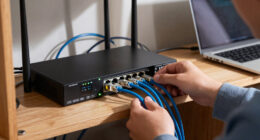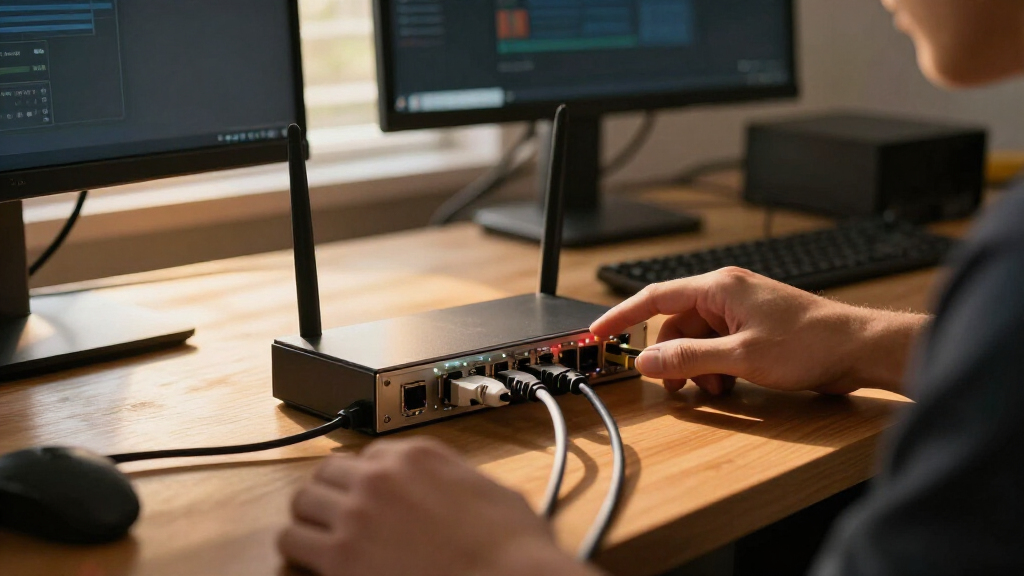

When a network switch is expected to stay online, redundant power inputs can matter as much as port count: they let a compatible switch draw from a backup DC source if its primary feed fails. My three picks serve different needs. The Antaira LNX-C500G-T is the straightforward choice for a small industrial network that needs five Gigabit ports and broad DC input support. The SICSOLINK 8-Port adds six PoE+ ports and automatic power failover for powered devices. For solar, vehicle, or camera deployments that need management and more ports, the LINOVISION 12-Port stands out with cloud control and a wide DC input range.

Get privacy and security gear delivered free with Prime
- Fast, free delivery on millions of items
- Prime Video, Amazon Music and more included
- Member-only deals all year
The tradeoff is not simply basic versus advanced. I would weigh PoE capacity, management needs, input voltage, environmental protection, and the cost of added complexity. Redundant inputs do not supply backup energy by themselves: each switch still needs two suitable, independently powered sources if the goal is to survive a source failure. I rank these options by how clearly their design fits a real redundant-power use case, while accounting for port capacity and practical limitations.
Key Takeaways
- Antaira LNX-C500G-T: the simplest fit for five Gigabit connections, 12–48 VDC redundant power, and cold or hot industrial installations without PoE demands.
- SICSOLINK SL-P0602-ID: a better match when six devices need PoE+ and automatic failover between dual 44–55 VDC inputs; its 180 W stated PoE budget deserves careful planning.
- LINOVISION 12-Port: the strongest feature set for managed camera, solar, and vehicle networks, with L2+ controls, two SFP ports, and redundant 12–48 VDC inputs.
- Redundant input terminals only help when the switch is connected to two viable power sources; they are not a battery, UPS, or guarantee against a shared upstream failure.
- Check the environment and electrical design before choosing: IP30 and IP40 enclosures do not indicate water resistance, and PoE output limits vary by model and input voltage.
| Antaira LNX-C500G-T Industrial 5-Port Unmanaged Gigabit Ethernet Switch |  | Best Overall for Simple Industrial Networks | Ports: 5 Gigabit Ethernet (10/100/1000TX) | Power input: Redundant 12–48 VDC | Operating temperature: -40 to 75°C | VIEW LATEST PRICE | See Our Full Breakdown |
| SICSOLINK Industrial 8-Port Gigabit PoE+ Switch |  | Best for Straightforward PoE+ Failover | Ports: 8 total: 6 PoE+ and 2 Gigabit uplink | PoE standard: IEEE 802.3af/at | Maximum PoE per port: 30 W | VIEW LATEST PRICE | See Our Full Breakdown |
| LINOVISION Industrial 12 Ports L2+ Cloud Managed Solar PoE Switch | 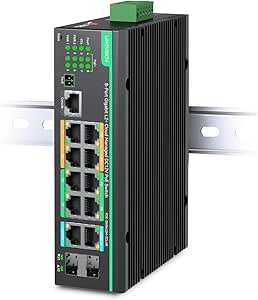 | Best for Managed Solar and Camera Networks | Ports: 12 Gigabit: 8 PoE, 2 uplink, and 2 SFP | Management: L2+ and cloud management; VLAN, QoS, ACL, static routing, and link aggregation | Redundant power inputs: 2-channel DC 12–48 V | VIEW LATEST PRICE | See Our Full Breakdown |
| switch with redundant power | Ports | Operating temperature | Protection | Warranty |
|---|---|---|---|---|
| Antaira LNX-C500G-T Industrial | 5 Gigabit Ethernet (10/100/1000TX) | -40 to 75°C | 6 kV ESD, 2 kV EFT, reverse polarity, and overload protection | 5 years |
| SICSOLINK Industrial 8-Port Gi | 8 total: 6 PoE+ and 2 Gigabit uplink | -40°C to 80°C | — | 1 year |
| LINOVISION Industrial 12 Ports | 12 Gigabit: 8 PoE, 2 uplink, and 2 SFP | -40 to 75°C | 4 kV surge immunity and 6 kV ESD protection | — |
More Details on Our Top Picks
Antaira LNX-C500G-T Industrial 5-Port Unmanaged Gigabit Ethernet Switch
I rank the Antaira first for buyers whose main requirement is reliable Ethernet switching with redundant 12–48 VDC input, not PoE or remote management. Its five Gigabit ports cover a modest control cabinet, machine cell, or small industrial network, while the fanless metal housing avoids a moving part that may be unwelcome in a dusty or vibration-prone installation. Compared with the two PoE models here, it keeps the job focused: connect networked equipment, provide two power feeds, and mount the unit on a DIN rail or wall.
The wide -40 to 75°C operating range is a meaningful differentiator for installations that may face cold starts or high cabinet temperatures. The listed 6 kV ESD, 2 kV EFT, reverse-polarity, and overload protections also speak to electrical conditions beyond a typical office network. Those details do not remove the need for proper grounding, supply selection, or installation practices, but they make this a more suitable candidate for a hard-working industrial location than a basic desktop switch.
Its simplicity is also the limitation. This is an unmanaged, non-PoE switch, so it cannot power cameras or access points over Ethernet, and it offers no VLAN configuration or remote monitoring. Buyers needing those capabilities should compare it with the managed LINOVISION or PoE-equipped SICSOLINK. The Antaira’s IP30 enclosure is another boundary: it protects against some contact and object ingress but is not a water-resistant enclosure. I would put it inside a suitable cabinet if exposure to splashes, washdown, or outdoor weather is possible.
The 8K MAC address table and 10K jumbo-frame support give it headroom for a small network, but the core case is still its practical balance of five Gigabit ports, broad DC input, and uncomplicated installation. The listed five-year warranty is longer than SICSOLINK’s one-year term, though warranty conditions should always be checked for the intended region and application. For a compact network that does not need PoE or management, this is the most restrained and easy-to-match pick in the group.
Pros:- Five Gigabit Ethernet ports suit compact industrial networks.
- Redundant 12–48 VDC power inputs include reverse-polarity and overload protection.
- Fanless metal enclosure supports operation from -40 to 75°C.
- DIN-rail and wall mounting options, plus a listed five-year warranty.
Cons:- No PoE, managed features, or remote monitoring.
- IP30 offers limited ingress protection and is not a water-resistance rating.
Best for: Industrial users who need five Gigabit connections, dual 12–48 VDC power sources, wide-temperature operation, and simple unmanaged switching.
Not ideal for: Buyers who need PoE, VLANs, remote management, more than five ports, or direct exposure to water and outdoor weather.
- Ports:5 Gigabit Ethernet (10/100/1000TX)
- Power input:Redundant 12–48 VDC
- Operating temperature:-40 to 75°C
- Mounting:DIN rail or wall
- Enclosure:Fanless IP30 metal
- Protection:6 kV ESD, 2 kV EFT, reverse polarity, and overload protection
- MAC address table:8K
- Warranty:5 years
Our verdict“I would choose the Antaira for a small, tough network where redundant DC input and uncomplicated Gigabit switching matter more than PoE or management.”
SICSOLINK Industrial 8-Port Gigabit PoE+ Switch
For a site where the switch must power cameras or other PoE devices, the SICSOLINK is the most direct fit. It combines six 802.3af/at PoE+ ports with two Gigabit uplinks, and its dual 44–55 VDC inputs are described as providing automatic failover. That makes it more useful than the Antaira when the devices themselves need power through their network cables. The two uplinks also leave the six PoE ports available for endpoints, a practical distinction in a compact camera network.
The stated maximum is 30 W per PoE port, with a total PoE budget of 180 W. That figure gives a useful planning ceiling, but it should not be read as six ports each receiving 30 W at once: the total budget and per-port limit both apply. The listing also gives a 200 W maximum power figure, which is not the same as the 180 W PoE budget. I would confirm how the manufacturer defines that 200 W figure and check the expected draw of every connected device before treating the system as fully loaded.
Unlike the unmanaged Antaira, the SICSOLINK offers DIP-switch options for loop and storm protection, VLAN isolation, long-range mode, and AI watchdog functions. These controls can be useful for a small installation where an administrator wants basic behavior changes at the switch without a management interface. They are not a substitute for the full monitoring and configuration options of the LINOVISION. Buyers who need centrally managed VLANs, ACLs, or detailed remote diagnostics should look there instead.
Its metal IP40 housing and -40°C to 80°C temperature specification suggest a broader industrial operating envelope than many conventional switches, and DIN-rail or wall mounting keeps installation flexible. Still, IP40 is not a water-protection rating, and the listed one-year warranty is shorter than Antaira’s five years. The SICSOLINK is a focused choice for PoE endpoints and dual-feed switching, but I would verify the power budget, supply compatibility, and failover behavior with the seller or documentation before depending on it for a critical camera system.
Pros:- Six IEEE 802.3af/at PoE+ ports and two Gigabit uplinks.
- Dual 44–55 VDC inputs are described as supporting automatic failover.
- DIP-switch options include VLAN isolation, loop and storm protection, long-range mode, and watchdog functions.
- Metal IP40 enclosure, DIN-rail or wall mounting, and a -40°C to 80°C operating range.
Cons:- The stated 180 W PoE budget is lower than the listed 200 W maximum power figure; buyers should clarify the distinction.
- IP40 does not indicate water protection, and the listed warranty is one year.
- The 44–55 VDC input range is narrower than the Antaira and LINOVISION options.
Best for: Installers who need up to six PoE+ endpoints, two Gigabit uplinks, and dual 44–55 VDC inputs with stated automatic failover.
Not ideal for: Users who require water-resistant installation, a long listed warranty, extensive managed networking, or an unambiguous high-load PoE budget without further verification.
- Ports:8 total: 6 PoE+ and 2 Gigabit uplink
- PoE standard:IEEE 802.3af/at
- Maximum PoE per port:30 W
- Stated PoE budget:180 W
- Power inputs:Dual 44–55 VDC
- Operating temperature:-40°C to 80°C
- Enclosure and mounting:Metal IP40; 35 mm DIN rail or wall
- Warranty:1 year
Our verdict“I would pick the SICSOLINK when six PoE+ devices and automatic DC input failover matter more than extensive management or a broad input-voltage range.”
LINOVISION Industrial 12 Ports L2+ Cloud Managed Solar PoE Switch
The LINOVISION is the most capable option here for a distributed camera or remote-site network. Its 12 Gigabit ports include eight PoE ports, two Gigabit uplinks, and two SFP ports, so a deployment can connect powered devices, reach an upstream network over copper, or use fiber where the link calls for it. It also adds L2+ functions such as VLAN, QoS, ACL, static routing, and link aggregation. Compared with the SICSOLINK’s DIP-switch controls, this is a more suitable choice when network policy and remote administration need to be part of the design.
Its standout power feature is flexibility: the listing describes redundant 12–48 VDC inputs and an input range spanning 8–57 VDC for the built-in PoE voltage booster. It is presented for solar, vehicle, and UPS systems, where the available DC voltage may differ from the conventional supply used in an office. PoE capacity varies with input: the stated total is 240 W at 48 V, 180 W at 24 V, and 70 W at 12 V. That relationship matters. A buyer using a 12 V battery cannot plan around the 240 W figure and should size the system against the budget for the actual input voltage.
Remote cloud control can help an operator inspect or cycle PoE ports and adjust settings without visiting a remote cabinet. Automatic ONVIF camera discovery is another camera-specific convenience. Those capabilities set it apart from the simpler Antaira and SICSOLINK, but they also introduce a greater setup and administration burden. I would confirm cloud service requirements, security practices, available documentation, and the exact management features before putting it on a network where remote access is tightly controlled.
The fanless IP40 metal enclosure, DIN-rail or wall mounting, -40 to 75°C operating range, 4 kV surge immunity, and 6 kV ESD protection point toward industrial use. As with the other IP40 unit, the rating does not mean it can be exposed to rain or washdown. The product listing does not provide a warranty term in the supplied specifications, so I would check coverage directly rather than infer it. This is the strongest fit for a managed, multi-device DC-powered deployment; it is excessive for a basic five-port network and needs careful PoE budgeting, especially at lower input voltages.
Pros:- Twelve Gigabit ports include eight PoE ports, two uplinks, and two SFP ports.
- L2+ and cloud management add VLAN, QoS, ACL, static routing, link aggregation, and remote PoE controls.
- Redundant DC inputs and voltage boosting support varied DC-powered installations.
- PoE budgets are stated for 48 V, 24 V, and 12 V inputs, helping buyers plan around different power systems.
Cons:- Available PoE budget falls from 240 W at 48 V to 70 W at 12 V, so voltage and load must be planned together.
- IP40 does not indicate water resistance.
- The supplied specifications do not state a warranty term, and cloud management adds setup and security considerations.
Best for: Network installers building managed camera, solar, vehicle, or remote-site systems that need multiple PoE outputs, fiber options, and flexible DC input.
Not ideal for: Buyers who only need a few unmanaged Ethernet ports, want a simple setup, require water protection, or need a clearly stated warranty term and fixed PoE budget without voltage-dependent planning.
- Ports:12 Gigabit: 8 PoE, 2 uplink, and 2 SFP
- Management:L2+ and cloud management; VLAN, QoS, ACL, static routing, and link aggregation
- Redundant power inputs:2-channel DC 12–48 V
- PoE output:IEEE 802.3af/at; four 45 W and four 30 W ports as listed
- Total PoE budget:240 W at 48 V; 180 W at 24 V; 70 W at 12 V
- Operating temperature:-40 to 75°C
- Enclosure and mounting:Fanless IP40 metal; DIN rail or wall
- Protection:4 kV surge immunity and 6 kV ESD protection
Our verdict“I would choose LINOVISION for a managed camera or remote DC-powered network that can use its extra ports and controls, but not for a small plug-and-play installation.”
How We Picked
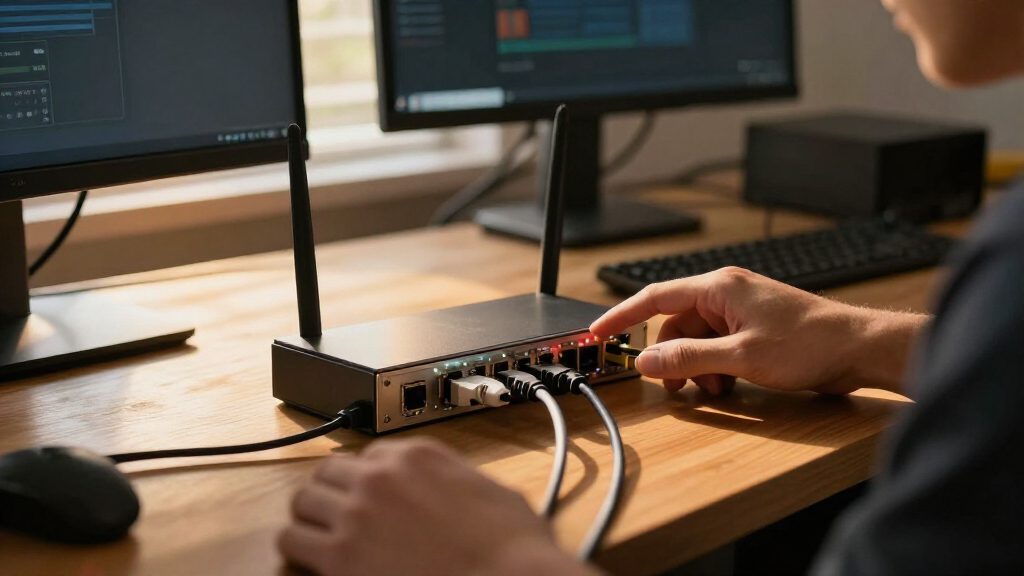
I focused on the specific promise in this roundup: a switch with redundant power inputs, rather than an ordinary Ethernet switch that happens to be rugged. All three listed products describe dual or redundant DC power connections. I then compared what those inputs mean alongside the features that shape a purchase: port count, PoE support, management, voltage range, enclosure rating, mounting, and temperature limits.
My ranking gives priority to a clear, useful fit rather than raw feature count. The Antaira comes first for a dependable, uncomplicated five-port role and a clearly stated 12–48 VDC input range, protection features, and long operating-temperature span. It does not offer PoE, so it is not a universal winner. SICSOLINK ranks next for buyers who need PoE+ endpoints and automatic input failover, but its stated power figures and shorter listed warranty warrant closer checking. LINOVISION offers the broadest network capability, including L2+ management, cloud controls, SFP ports, and variable-voltage PoE. I place it third not because it lacks useful features, but because it brings more configuration and power-budget details to verify before deployment.
I have not treated the phrase “redundant power” as proof of a complete resilient system. These switches need suitable external power supplies, and two inputs may not protect against a common failure if both supplies share the same circuit, battery, or upstream converter. I also distinguish input redundancy from PoE output continuity: a switch’s ability to keep powered devices online depends on its power supply arrangement, load, configuration, and recovery behavior. Ratings and specifications below are based on the product information supplied, not independent testing. Where a specification is absent or figures need reconciliation, I call that out rather than filling the gap with an assumption.
| switch with redundant power | Operating temperature | Enclosure and mounting |
|---|---|---|
| Antaira LNX-C500G-T Industrial | -40 to 75°C | — |
| SICSOLINK Industrial 8-Port Gi | -40°C to 80°C | Metal IP40; 35 mm DIN rail or wall |
| LINOVISION Industrial 12 Ports | -40 to 75°C | Fanless IP40 metal; DIN rail or wall |
Factors to Consider When Choosing Best Switch With Redundant Power
I would choose between these switches by starting with the job the network must do when one power source fails. Redundant inputs are useful only when the power architecture, connected load, and switch capabilities line up. The following checks separate a simple resilient Ethernet installation from a more demanding PoE or managed network.
Confirm what redundant power protects
A switch with two DC inputs can accept two suitable feeds, but the inputs do not create power on their own. For meaningful resilience, connect supplies that are independently capable of supporting the switch and its load. If both feeds come from the same failing battery, converter, breaker, or upstream circuit, a single fault may still take down both. I would check whether the manufacturer describes automatic failover, whether the two inputs can be connected simultaneously, and what happens during a transfer. SICSOLINK explicitly describes automatic failover; the supplied details for Antaira and LINOVISION specify redundant inputs but do not describe the failover behavior in the same terms.
Also separate switch redundancy from system redundancy. A switch may stay powered while its upstream router, fiber link, or PoE endpoints lose power. For a critical site, map the full path from source to device and identify shared points of failure rather than treating a second input terminal as a complete backup plan.
Match DC input range to the power source
Input voltage is a practical filter, especially in solar, vehicle, and industrial systems. Antaira lists redundant 12–48 VDC power, while SICSOLINK specifies dual 44–55 VDC inputs. LINOVISION is aimed at variable DC installations and lists redundant 12–48 V inputs alongside a broader DC8–57 V PoE booster description. These ranges are not interchangeable. Check the voltage your supply provides under normal operation and during charging, startup, or load changes, then compare it with the switch’s accepted input range.
I would also verify polarity, current capacity, wiring requirements, grounding, and supply protection. The input range alone does not say how much current a switch draws at a given PoE load. For a remote installation, cable length and voltage drop can further affect what arrives at the switch. Consult the manufacturer’s wiring and power documentation before connecting a battery or vehicle system.
Size PoE by total load, not port count
PoE switches need two checks: the maximum output available on each port and the total budget shared among all ports. SICSOLINK lists 30 W per port and a 180 W budget, so six connected devices cannot all be assumed to receive 30 W simultaneously. LINOVISION lists four 45 W and four 30 W ports, but its total budget changes with input voltage: 240 W at 48 V, 180 W at 24 V, and 70 W at 12 V. A system that works on a 48 V supply may need a different device mix or supply plan at 12 V.
Make a device-by-device list that includes startup draw, expected peak demand, and any future additions. Leave room for fluctuations instead of building exactly to the listed ceiling. Antaira has no PoE, which makes it the clearest option when endpoints use their own power sources and PoE budgeting would add cost or complexity without helping the installation.
Decide how much management you need
An unmanaged switch such as the Antaira keeps configuration simple, but it cannot provide the listed VLAN, QoS, or cloud controls found on LINOVISION. SICSOLINK sits between those approaches: DIP switches enable selected functions such as VLAN isolation, loop and storm protection, long-range mode, and watchdog behavior, but that is different from a full management interface. LINOVISION offers L2+ tools and remote PoE control, useful when a network operator needs to change settings or cycle a camera port from another location.
More management features can help with troubleshooting and network separation, but they also require a plan for credentials, software or cloud access, updates, and administration. I would not choose a managed model just because it has the longest feature list. If the network has five devices and no need for segmentation or remote controls, the Antaira may be easier to maintain. If a deployment has many cameras or remote sites, LINOVISION’s added controls may justify the extra setup.
Treat enclosure ratings and temperature as separate checks
All three products are intended for industrial-style installation and list broad operating-temperature ranges. Antaira specifies -40 to 75°C; SICSOLINK lists -40°C to 80°C; LINOVISION lists -40 to 75°C. Those limits can help with cold or hot cabinets, but they do not establish performance in every installation. Cabinet temperature, ventilation, mounting orientation, and power load all affect real operating conditions.
The enclosure ratings are equally easy to misread. Antaira is IP30, while SICSOLINK and LINOVISION are IP40. Neither rating should be treated as protection against rain or water exposure. If the switch will be outdoors, near washdown, or in a damp location, use a properly rated enclosure and suitable cable glands, or select equipment designed for that exposure. Fanless construction reduces moving parts, but it does not remove the need to manage heat.
Compare ports, mounting, and ownership details
Count the ports you need now and the connections you may add, including uplinks. Antaira gives five copper Gigabit ports; SICSOLINK reserves two of its eight ports for Gigabit uplinks; LINOVISION combines PoE ports, copper uplinks, and two SFP slots. Fiber uplinks can be useful for longer links or electrical isolation, but buyers should verify compatible SFP modules and the required fiber type. A larger port count is useful only if the added connections suit the network.
Finally, check physical fit, DIN-rail or wall mounting, warranty coverage, and documentation. Antaira lists a five-year warranty and includes mounting options; SICSOLINK lists a one-year warranty; the supplied LINOVISION specifications do not provide a term. I would verify warranty conditions, supply requirements, and support availability before purchase, especially for a system expected to run unattended.
Frequently Asked Questions
What does redundant power mean on an Ethernet switch?
It means the switch has more than one power input intended to let it remain powered if one feed fails, subject to the manufacturer’s design and wiring instructions. The feature does not supply backup energy by itself. I would connect each input to a suitable source and avoid relying on two feeds that share the same point of failure. Check whether the product documents automatic failover and what conditions apply.
Do all three switches provide automatic power failover?
The SICSOLINK listing specifically says its dual 44–55 VDC inputs provide automatic failover. Antaira and LINOVISION list redundant power inputs, but the supplied product details do not describe failover behavior with the same level of specificity. Before a critical installation, I would confirm the transfer behavior, wiring method, and allowable input arrangement in the manufacturer documentation rather than assume that every dual-input switch behaves identically.
Which of these switches is best for PoE cameras?
For a small camera network with up to six PoE+ devices, SICSOLINK offers six PoE+ ports and two Gigabit uplinks. LINOVISION is a stronger match when the installation needs more ports, SFP connections, cloud control, or L2+ management, though its PoE budget varies by input voltage. Antaira does not provide PoE, so it is only a fit when cameras or other endpoints have separate power.
Can I use these switches outdoors?
The listed IP30 and IP40 ratings do not establish water resistance, so I would not mount any of these switches exposed to rain, spray, or washdown based only on those ratings. Their industrial temperature ranges and metal enclosures address other installation needs, not water ingress. Use a suitable protective enclosure and cable entries, and confirm that the installation will stay within the switch’s temperature and power specifications.
How should I compare PoE budgets when input voltage changes?
Use the PoE budget specified for the voltage that will actually power the switch, then compare it with the combined demand of connected devices. LINOVISION lists different total budgets at 48 V, 24 V, and 12 V, so its maximum figure cannot be applied to every DC source. For SICSOLINK, compare the 180 W total budget with the 30 W per-port limit; neither figure alone describes every possible load arrangement. Leave capacity for startup demand and future devices.
Conclusion
For a compact industrial network that needs resilient DC input without PoE, I would choose the Antaira LNX-C500G-T: it has five Gigabit ports, a broad 12–48 VDC input range, and a long listed temperature span, with the tradeoff of no management or water protection. If the priority is powering cameras or other endpoints from the switch, the SICSOLINK is the more direct fit for six PoE+ devices and stated automatic failover, provided its 180 W budget suits the planned load and its input range matches the supply.
For a larger, managed solar, vehicle, or camera installation, I would shortlist the LINOVISION for its L2+ controls, cloud features, SFP ports, and variable DC capability. Its voltage-dependent PoE budget and unspecified warranty in the supplied information call for careful verification. Whichever model fits, connect redundant inputs to genuinely suitable sources, plan PoE around real demand, and protect IP30 or IP40 equipment from water exposure.
Halloween Picks
halloween
As an affiliate, we earn on qualifying purchases.