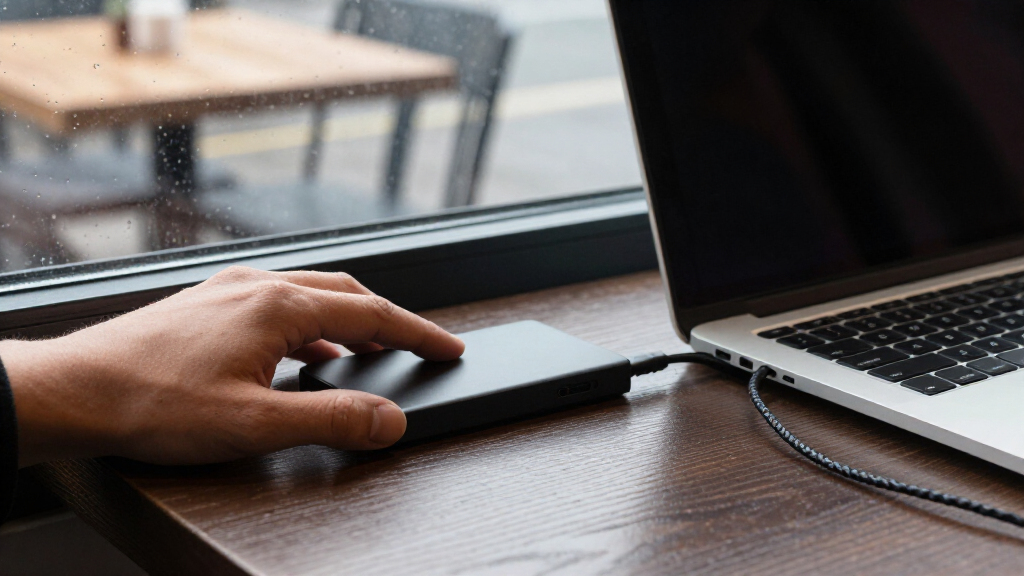

Encrypted external hard drives protect files from unauthorized access, but the right choice depends on how you balance security, capacity, speed, and ease of use. My best overall pick is the Apricorn Aegis Padlock 1TB, which pairs hardware encryption with a practical capacity. The Aegis Fortress L3 is the specialist choice for buyers who need a more demanding security standard, while the OSCOO touchscreen encrypted SSD stands out for buyers who want an SSD-style option. The WD My Passport drives offer larger capacities, but their inclusion here should not be mistaken for a claim that they provide the same dedicated hardware-encryption controls as the Apricorn models. Read on for the full breakdown of what separates these options and which tradeoffs matter for your use.

Get privacy and security gear delivered free with Prime
- Fast, free delivery on millions of items
- Prime Video, Amazon Music and more included
- Member-only deals all year
Key Takeaways
- The Apricorn Aegis Padlock 1TB is the most balanced dedicated-security pick in this lineup: it offers hardware encryption without the smaller 500GB capacity of the other Padlock listing.
- The Aegis Fortress L3 serves a narrower, higher-security need; its FIPS 140-2 Level 3 designation sets it apart, but most home users may not need that level of certification.
- The OSCOO 1TB is the SSD-format alternative, but buyers should compare its documented security features and connection details rather than assuming every touchscreen drive has the same protections.
- WD My Passport capacity choices range from 2TB to 5TB, making them relevant for larger storage needs, but buyers should verify the exact model’s encryption and security controls before treating it as a dedicated encrypted drive.
- Capacity alone does not determine the best fit: a smaller hardware-encrypted drive may be a better match for sensitive documents, while a larger drive may suit bulk backups if its security capabilities meet the buyer’s requirements.
| Apricorn Aegis Padlock 500GB USB 3.0 Hardware-Encrypted Portable External Hard Drive |  | Best for Software-Free Security | Storage capacity: 500 GB | Encryption: 256-bit AES-XTS hardware encryption | Interface: USB 3.0; compatible with USB 2.0 and 1.1 | VIEW LATEST PRICE | See Our Full Breakdown |
| WD My Passport 4TB Portable External Hard Drive, Black |  | Best for Backup and Everyday Storage | Storage capacity: 4 TB | Connectivity: USB 3.1; compatible with USB 3.0 | Security: Password protection and hardware encryption | VIEW LATEST PRICE | See Our Full Breakdown |
| OSCOO 1TB Touchscreen Encrypted External SSD |  | Best for Speed and On-Drive Status | Storage capacity: 1 TB | Interface: USB 3.2 Gen 2×2 | Maximum read speed: 2,000 MB/s | VIEW LATEST PRICE | See Our Full Breakdown |
| WD My Passport 5TB Portable External Hard Drive, Black |  | Best for Maximum Portable Capacity | Storage capacity: 5 TB | Form factor: 2.5 inches | Connectivity: USB 2.0, USB 3.0, and USB 3.1 | VIEW LATEST PRICE | See Our Full Breakdown |
| Apricorn Aegis Fortress L3 2TB FIPS 140-2 Level 3 Encrypted Portable Drive |  | Best for Validated, High-Control Security | Storage capacity: 2 TB | Encryption: 256-bit AES-XTS hardware encryption | Security validation: FIPS 140-2 Level 3 | VIEW LATEST PRICE | See Our Full Breakdown |
| Apricorn Aegis Padlock 1TB Hardware-Encrypted Portable External Hard Drive | | Best for Software-Free Security | Storage capacity: 1TB (1024GB) | Encryption: 256-bit AES-XTS hardware encryption | Interface: USB 3.0; backward compatible with USB 2.0 and 1.1 | VIEW LATEST PRICE | See Our Full Breakdown |
| WD My Passport 2TB Portable External Hard Drive, Black |  | Best for Everyday Backups | Storage capacity: 2TB | Drive type: Mechanical hard drive | Form factor: 2.5 inches | VIEW LATEST PRICE | See Our Full Breakdown |
| encrypted external hard drife | Storage capacity | Interface | Form factor |
|---|---|---|---|
| Apricorn Aegis Padlock 500GB U | 500 GB | USB 3.0; compatible with USB 2.0 and 1.1 | 2.5 inches |
| WD My Passport 4TB Portable Ex | 4 TB | — | — |
| OSCOO 1TB Touchscreen Encrypte | 1 TB | USB 3.2 Gen 2×2 | — |
| WD My Passport 5TB Portable Ex | 5 TB | — | 2.5 inches |
| Apricorn Aegis Fortress L3 2TB | 2 TB | USB 3.0 | — |
| Apricorn Aegis Padlock 1TB Har | 1TB (1024GB) | USB 3.0; backward compatible with USB 2.0 and 1.1 | 2.5 inches |
| WD My Passport 2TB Portable Ex | 2TB | — | 2.5 inches |
More Details on Our Top Picks
Apricorn Aegis Padlock 500GB USB 3.0 Hardware-Encrypted Portable External Hard Drive
The Apricorn Aegis Padlock 500GB suits buyers who want encryption controlled by the drive itself, rather than security features tied to a computer app. Its keypad and 256-bit AES-XTS hardware encryption let you unlock it without installing software or needing admin rights, a practical advantage on managed work computers. Compared with the WD My Passport 4TB, it gives up substantial capacity and the WD’s backup software, but its physical keypad makes access less dependent on host-device setup. The metal enclosure and epoxy-protected circuitry add protection against physical tampering. Its main tradeoff is the 5400-rpm mechanical drive: transfers and access will feel slower than the OSCOO SSD, and 500GB leaves less room for large media libraries. Choose it for controlled, portable storage—not speed or bulk capacity.
Pros:- 256-bit AES-XTS hardware encryption works in real time
- Keypad access avoids installing software or sharing a password with the host computer
- Epoxy-protected circuitry and a metal enclosure add physical security
- USB 3.0 works with USB 2.0 and 1.1 ports
Cons:- 500GB is limited beside the 4TB and 5TB WD My Passport options
- The 5400-rpm mechanical drive is slower than the OSCOO SSD
- No included backup or ransomware-defense software is specified
Best for: People carrying sensitive work files between shared or managed computers who need keypad access without installing software.
Not ideal for: Photographers or video editors with large libraries, or anyone prioritizing fast transfers and high capacity.
- Storage capacity:500 GB
- Encryption:256-bit AES-XTS hardware encryption
- Interface:USB 3.0; compatible with USB 2.0 and 1.1
- Form factor:2.5 inches
- Rotational speed:5400 rpm
- Read speed:600 megabytes per second (listed)
- Enclosure material:Metal
- Color:Black
Our verdict“Pick this Apricorn when keypad-controlled, software-free encryption matters more than speed or generous capacity.”
WD My Passport 4TB Portable External Hard Drive, Black
The WD My Passport 4TB is the balanced pick for buyers who want encrypted storage alongside a large space for everyday files. It pairs password protection and hardware encryption with device-management software that adds backup and ransomware-defense features, making it more of an all-in-one storage routine than the keypad-focused Apricorn Aegis Padlock 500GB. Its 4TB capacity also gives media collections more room than that Apricorn, while the slim portable design suits a laptop bag. The tradeoff is that the included backup features depend on WD software; buyers seeking a drive that handles access independently of host software may prefer the Apricorn. Compared with the 5TB My Passport, this model offers less headroom, but its 4TB remains a substantial capacity for regular backup and file storage.
Pros:- 4TB capacity accommodates substantial document and media collections
- Password protection and hardware encryption help protect stored files
- Included management software provides backup and ransomware-defense features
- Slim, durable portable design
Cons:- The included backup features require WD device-management software
- Offers 1TB less capacity than the WD My Passport 5TB
- Does not list the standalone keypad access offered by the Apricorn Aegis Padlock
Best for: Laptop owners who want an encrypted portable archive with room for photos, video, and routine backups, plus software-based backup tools.
Not ideal for: Buyers who need keypad-based unlocking without host software, or those who want the largest capacity in this lineup.
- Storage capacity:4 TB
- Connectivity:USB 3.1; compatible with USB 3.0
- Security:Password protection and hardware encryption
- Backup features:Device-management software with backup and ransomware defense
- Color:Black
- Warranty:3-year limited warranty
Our verdict“Choose the 4TB My Passport for portable encrypted storage with bundled backup tools, unless you need keypad access or the lineup’s maximum capacity.”
OSCOO 1TB Touchscreen Encrypted External SSD
The OSCOO 1TB Touchscreen Encrypted External SSD is the speed-focused choice here, pairing hardware encryption and password protection with listed read speeds up to 2,000 MB/s. Unlike the mechanical WD My Passport drives, its SSD design is better suited to moving large projects quickly, while the touchscreen makes capacity, temperature, and transfer speed visible on the drive itself. Its 52 g weight and zinc-alloy housing also suit a light travel setup. That performance depends on a compatible USB 3.2 Gen 2×2 connection; on slower ports, buyers should not expect the listed top speed. The Apricorn Aegis Fortress L3 offers more explicit security validation and keypad protections, while OSCOO favors speed and device versatility. ProRes recording also depends on compatible Apple hardware, so it is not a universal camera workflow.
Pros:- SSD performance with listed read speeds up to 2,000 MB/s
- Hardware encryption and password protection
- Touchscreen displays transfer speed, temperature, and available capacity
- Light 52 g zinc-alloy design with broad device compatibility
Cons:- Top speeds require a compatible USB 3.2 Gen 2×2 device
- 1TB capacity is lower than either WD My Passport model
- ProRes recording support depends on compatible Apple devices
Best for: Mobile creators moving large files between compatible USB-C devices who value SSD speed, on-drive status, and hardware encryption.
Not ideal for: People who need FIPS-validated security, keypad PIN entry, or reliable top speeds from older USB connections.
- Storage capacity:1 TB
- Interface:USB 3.2 Gen 2×2
- Maximum read speed:2,000 MB/s
- Maximum write speed:1,800 MB/s
- Security:Hardware encryption and password protection
- Weight:52 g
- Housing:Zinc alloy
- Compatibility:Windows, Mac, iPhone, iPad, Android devices, cameras, and gaming consoles
Our verdict“Choose the OSCOO for encrypted, high-speed transfers on compatible devices, but pick an Apricorn Fortress if validated security controls matter more.”
WD My Passport 5TB Portable External Hard Drive, Black
If storage space is the deciding factor, the WD My Passport 5TB holds the largest capacity among these five drives. It combines password protection and hardware encryption with backup software that offers ransomware protection, giving it a broader everyday-storage role than the security-focused Apricorn Aegis Padlock 500GB. The 2.5-inch, 7.4-ounce design remains portable, and its capacity suits people keeping extensive photo, video, or document archives together. The tradeoff is connectivity: it supports USB 2.0, 3.0, and 3.1, but lacks the OSCOO’s newer USB 3.2 Gen 2×2 interface and SSD speeds. Its backup tools also rely on included software, unlike the Apricorn’s software-free keypad access. Pick it for capacity and familiar USB compatibility, not fast editing workflows.
Pros:- Largest listed capacity in this five-drive selection at 5TB
- Password protection and hardware encryption
- Backup software includes ransomware protection
- Portable 2.5-inch design weighing 7.4 ounces
Cons:- USB 2.0/3.0/3.1 connectivity is older than the OSCOO’s USB 3.2 Gen 2×2 interface
- Backup features depend on included software
- Mechanical-drive performance is not suited to SSD-speed workflows
Best for: People who want to carry a large photo, video, or document archive on one encrypted drive and value bundled backup tools.
Not ideal for: Video editors who need SSD-level transfer speeds, or users who want keypad access without management software.
- Storage capacity:5 TB
- Form factor:2.5 inches
- Connectivity:USB 2.0, USB 3.0, and USB 3.1
- Hardware encryption:Yes
- Weight:7.4 ounces
- Dimensions:4.22 x 2.95 x 0.75 inches
- Compatible devices:Desktop, laptop, and tablet
- Warranty:3-year limited warranty
Our verdict“Choose the 5TB My Passport when capacity and bundled backup tools outweigh the need for faster SSD transfers or keypad-based access.”
Apricorn Aegis Fortress L3 2TB FIPS 140-2 Level 3 Encrypted Portable Drive
The Apricorn Aegis Fortress L3 is the security specialist in this group. Its FIPS 140-2 Level 3 validation, on-the-fly 256-bit AES-XTS encryption, keypad PIN entry, forced PIN enrollment, and brute-force defense make it a stronger fit for regulated or sensitive work than either WD My Passport model. Read-only modes add a useful option when files should be accessed without being changed. Compared with the Aegis Padlock 500GB, it provides 2TB and more explicit security controls, though both use a 5400-rpm mechanical drive and USB 3.0. This is not the lightweight speed pick: at 1.1 pounds, it is heavier than the OSCOO SSD, and it requires a powered USB port. Mass configuration also requires separately sold Aegis Configurator software.
Pros:- FIPS 140-2 Level 3 validation
- 256-bit AES-XTS hardware encryption with keypad PIN entry and forced enrollment
- Read-only modes help limit unintended changes
- Brute-force defense and aluminum enclosure
Cons:- Requires a powered USB port
- At 1.1 pounds, it is heavier than the OSCOO SSD and WD portable drives
- Aegis Configurator for mass configuration is sold separately
Best for: Organizations and professionals handling sensitive data who need validated hardware encryption, PIN controls, and read-only access modes.
Not ideal for: Travelers prioritizing a light drive, editors seeking SSD transfers, or teams needing mass configuration without buying separate software.
- Storage capacity:2 TB
- Encryption:256-bit AES-XTS hardware encryption
- Security validation:FIPS 140-2 Level 3
- Interface:USB 3.0
- Drive form factor:2.5 inches
- Rotational speed:5400 rpm
- Weight:1.1 pounds
- Compatible platforms:PC, Mac, and Linux
Our verdict“Choose the Fortress L3 for validated security controls and PIN-based access, accepting extra weight and mechanical-drive performance.”
Apricorn Aegis Padlock 1TB Hardware-Encrypted Portable External Hard Drive
The Aegis Padlock suits buyers who want hardware encryption without installing software. It encrypts data in real time with 256-bit AES-XTS and uses a physical keypad for access, so protection does not depend on backup utilities or a particular operating system. Compared with the WD My Passport 2TB, it puts more emphasis on dedicated security features—including epoxy-sealed circuitry and a brute-force self-destruct function—rather than bundled backup and management software. Its USB 3.0 connection also works with older USB 2.0 and 1.1 ports, which can help when moving between older computers. The tradeoff is capacity: 1TB is half the WD’s 2TB, and the listed 120 MB/s transfer rate is a more useful speed reference than the conflicting 0.5 GB/s read-speed figure.
Pros:- 256-bit AES-XTS hardware encryption operates in real time without software installation.
- Keypad access and a brute-force self-destruct feature add protection beyond a password-only setup.
- Compatible with Windows, Mac, and Linux, plus USB 3.0, 2.0, and 1.1 connections.
- Epoxy-sealed circuitry adds a physical security measure.
Cons:- Its 1TB capacity is lower than the 2TB WD My Passport in this roundup.
- The listing gives conflicting speed figures: 120 MB/s transfer rate and 0.5 GB/s read speed.
- The cache-memory value is listed without a unit, making that specification difficult to interpret.
Best for: People who move sensitive files between Windows, Mac, and Linux computers and want keypad access without installing encryption software.
Not ideal for: Buyers keeping large media libraries or frequent backups who need more than 1TB, or shoppers who want included backup software and clearly stated speed figures.
- Storage capacity:1TB (1024GB)
- Encryption:256-bit AES-XTS hardware encryption
- Interface:USB 3.0; backward compatible with USB 2.0 and 1.1
- Form factor:2.5 inches
- Rotational speed:5400 rpm
- Listed transfer rate:120 MB/s
- Compatibility:Windows, Mac, and Linux
- Additional security features:Epoxy-sealed circuitry, brute-force self-destruct feature, and wear-resistant keypad
Our verdict“Choose the Aegis Padlock if software-free, keypad-controlled encryption matters more to you than extra capacity or bundled backup tools.”
WD My Passport 2TB Portable External Hard Drive, Black
The WD My Passport 2TB is a practical pick for buyers who want encrypted storage alongside everyday backup tools. Its password protection and hardware encryption help protect stored files, while included backup and device-management software support routine file copies. Compared with the Apricorn Aegis Padlock 1TB, the WD doubles the capacity and adds a software-led backup setup, but the Apricorn is the stronger fit for someone who wants a keypad and security features that do not require software installation. The WD’s compact 2.5-inch mechanical drive is suited to carrying documents, photos, and videos, though the listing does not specify transfer speed. Buyers should also be ready to download and install the software; this is less plug-and-play than the Apricorn’s hardware-first approach.
Pros:- 2TB capacity provides twice the storage of the 1TB Apricorn Aegis Padlock in this roundup.
- Password protection and hardware encryption help safeguard stored files.
- Backup and device-management software support regular file-management tasks.
- Compact 2.5-inch design is suited to portable storage.
Cons:- Backup and management software requires download and installation.
- Transfer speed is not specified in the product data.
- The listing does not describe keypad access or the physical security features offered by the Apricorn Aegis Padlock.
Best for: Everyday users who want a portable 2TB drive for file backups and password-protected storage, and are comfortable installing companion software.
Not ideal for: People who need keypad-based access, software-free encryption, or a clearly stated transfer speed for planning large file transfers.
- Storage capacity:2TB
- Drive type:Mechanical hard drive
- Form factor:2.5 inches
- Connectivity:USB 2.0 and USB 3.0
- Security:Password protection and hardware encryption
- Included software:Backup and device-management software
- Color:Black
- Warranty:3-year limited warranty
Our verdict“Pick the WD My Passport 2TB for higher-capacity portable backups with encryption if you do not mind installing its software.”
How We Picked
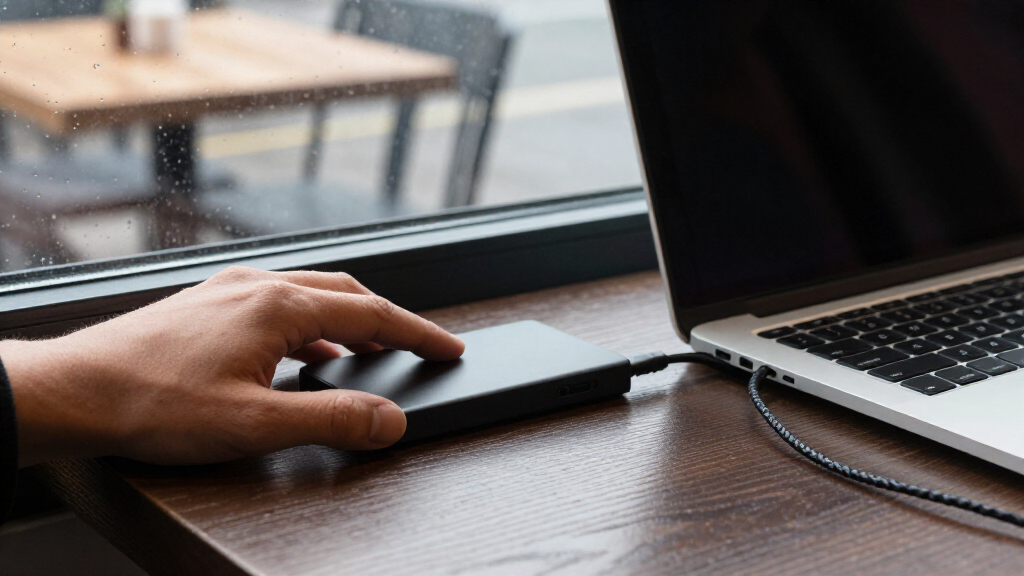
I ranked these drives by how clearly their listed features support the main goal of this roundup: protecting stored data, not simply adding portable capacity. Dedicated hardware encryption and stated security certification carried more weight than capacity alone. I also considered how each option fits likely buyer needs, including everyday transport, larger backups, and security requirements that may call for formal certification.
That ranking puts the Apricorn Aegis Padlock 1TB first as a practical balance of dedicated encryption and usable capacity, with the 500GB Padlock suited to buyers who can work within less space. The Aegis Fortress L3 ranks as a premium, specialized option rather than the default for everyone. OSCOO offers an SSD-format alternative, while the WD My Passport models are included as capacity-focused choices whose specific encryption features should be checked against the buyer’s security requirements. I would not treat a product as equivalent to a purpose-built encrypted drive unless its documentation clearly supports that claim.
| encrypted external hard drife | Interface |
|---|---|
| Apricorn Aegis Padlock 500GB U | USB 3.0; compatible with USB 2.0 and 1.1 |
| WD My Passport 4TB Portable Ex | — |
| OSCOO 1TB Touchscreen Encrypte | USB 3.2 Gen 2×2 |
| WD My Passport 5TB Portable Ex | — |
| Apricorn Aegis Fortress L3 2TB | USB 3.0 |
| Apricorn Aegis Padlock 1TB Har | USB 3.0; backward compatible with USB 2.0 and 1.1 |
| WD My Passport 2TB Portable Ex | — |
Factors to Consider When Choosing Encrypted External Hard Drives
Choosing an encrypted drive means matching the protection method to the risk and routine it needs to handle. These broader checks can help you avoid paying for security you will not use—or relying on a drive whose protections do not meet your needs.
Match the Security Method to Your Threat
Start by asking what you need to protect against: casual access if a drive is lost, workplace data-handling rules, or a more demanding security policy. A password prompt is not automatically proof of hardware encryption, and software encryption can depend on a computer or application being set up correctly. Check the manufacturer’s documentation for the encryption method, how authentication works, and what happens after repeated failed attempts. For regulated or organizational data, confirm the exact certification and required level with the responsible security team. A more advanced security label is only useful if the device meets the actual policy. For ordinary personal backups, ease of consistent use may matter more than certification you do not need.
Choose Capacity Around Real Files and Backup Plans
Estimate the data you need to carry now, then leave room for growth and versioned backups. Photos, video, and full-computer backups can consume space far faster than documents, so a drive that seems spacious for work files may feel cramped later. Multiple backup copies matter more than buying the largest single drive: one portable encrypted drive is not protection against every failure or loss. Consider whether you need a travel copy or a destination for a broad archive, since those jobs can call for different capacities. Avoid choosing a small drive solely because it is cheaper to carry if that encourages you to omit important files. Equally, do not pay for unused capacity if it makes the device less convenient to keep with you.
Compare HDD and SSD for Your Routine
External hard drives and SSDs differ in speed, moving parts, and typical use, so first decide whether you will frequently open or edit files directly from the device. An SSD can suit frequent transfers and a compact mobile workflow, while an HDD can make sense when the priority is storing a larger collection. Neither form factor removes the need for backups or careful handling. Check the connection standard and your computer’s ports before buying; a fast drive cannot transfer quickly through a slower connection. Also look for clear manufacturer information about sustained transfers, not just a headline interface label. Match the device to your actual workflow rather than assuming that faster is always better.
Plan for Lost Passwords and Device Changes
Security can become a problem if you cannot access your own files, so read the recovery and reset instructions before storing anything important. Some devices may make recovery impossible after a forgotten password or reset, while others may offer a controlled recovery process. Save recovery information separately from the drive, and never keep the only copy of a password beside the device. Think about which computers you will use and whether the authentication method works with them without special software or administrative access. If several people need access, establish a clear process before the drive becomes the sole home for shared files. A protection method that is too awkward to use can lead to unsafe workarounds.
Check Compatibility and Ownership Costs
Before purchase, verify supported operating systems, file-system format, included cables, and any software needed for setup. A drive formatted for one system may require reformatting for another, and reformatting can erase existing data. Confirm whether encryption is built into the drive or relies on a bundled application, then check that the application is available for every computer you plan to use. For shared or long-term storage, factor in how updates, warranty support, and replacement accessories are handled. Keep a separate backup of important files in case a cable, enclosure, or authentication component fails. The best choice is the one you can access securely across the devices and years you expect to use it.
Frequently Asked Questions
Are the WD My Passport drives in this roundup equivalent to the Apricorn hardware-encrypted models?
Do not assume they are equivalent based on the product name or capacity. The Apricorn Aegis Padlock and Fortress listings explicitly identify hardware encryption, while the WD listings provided here identify My Passport portable drives without specifying dedicated hardware-encryption controls. Check the exact WD model’s current product documentation for encryption features before storing sensitive data on it. If you need a drive with clearly stated hardware encryption, the Apricorn options are the more direct match in this lineup. A standard portable drive may still suit routine storage, but it should not be selected as a security substitute without verification.
Should I choose the 500GB Aegis Padlock or the 1TB version?
Choose based on the amount of data you must carry and how often you can safely move or archive files elsewhere. The 500GB model can suit a focused collection of documents or a compact travel set, while the 1TB version leaves more room for growth and larger file sets. Both are listed as hardware-encrypted Padlock drives, so capacity is the clearest distinction in the information provided. Before deciding, account for the space needed by backups and future additions rather than only the files currently on your computer. If you are unsure, the added capacity of the 1TB option can reduce the need to reorganize soon.
Does the Aegis Fortress L3 make sense for personal backups?
It can, but its stated FIPS 140-2 Level 3 certification is most relevant when a policy or security requirement calls for that level of assurance. For ordinary personal backups, the extra certification may not address the biggest risks, such as keeping only one copy of important files or forgetting the access credentials. Compare its security requirements and operating procedure with the simpler Padlock options before choosing. If your organization specifies certified hardware, confirm that this exact product and certification meet its rules. Otherwise, a less specialized encrypted drive may be easier to use day to day.
Is the OSCOO touchscreen encrypted SSD a better choice than a portable hard drive?
It may be a better fit if you want an SSD-format drive and value its touchscreen-based access approach, but those features do not answer every security question. Verify the encryption method, authentication behavior, supported systems, and connection details in the manufacturer’s documentation before relying on it for sensitive files. An SSD can suit frequent transfers, while a conventional hard drive may appeal more when capacity is the priority. Also consider how you will recover access if the touchscreen or authentication process becomes unavailable. Choose it for a workflow advantage you will use, not just because the interface appears more advanced.
Can one encrypted external drive serve as my only backup?
No single portable drive should be the only copy of important data. Encryption helps protect files if someone gains physical access to the device, but it does not protect against drive failure, accidental deletion, loss, or damage. Keep at least one separate backup, ideally stored in a different place or through a different method, and check that you can restore files from it. For sensitive data, protect every copy rather than leaving an unencrypted duplicate on another device. Treat encryption and backup redundancy as separate parts of a safe storage plan.
Conclusion
For most buyers seeking a clearly identified hardware-encrypted option, I would choose the Apricorn Aegis Padlock 1TB as the best overall: it offers a practical middle ground between dedicated protection and capacity. The 500GB Aegis Padlock is the best value-style fit for people carrying a smaller, defined set of files, while the Aegis Fortress L3 is the best premium choice for buyers whose security policy calls for its stated certification. The OSCOO touchscreen SSD is the best specific alternative for those who prefer an SSD format, provided its documented security and compatibility meet their needs. For beginners, I would favor the Padlock model that provides enough space without adding unnecessary security complexity. Consider a WD My Passport when your priority is portable capacity, but verify its exact encryption features before treating it as a dedicated encrypted drive.
Halloween Picks
halloween
As an affiliate, we earn on qualifying purchases.