
TL;DR

Get privacy and security gear delivered free with Prime
- Fast, free delivery on millions of items
- Prime Video, Amazon Music and more included
- Member-only deals all year
Infrastructure standards make audits easier by giving teams consistent configurations, records, and approval steps to show how systems are protected. When hardware, access, updates, and exceptions follow a shared pattern, auditors can sample evidence more quickly and teams can find gaps before an audit begins. Start with a small set of documented baselines, assign owners, and keep records alongside the systems they describe.
On audit day, a team can lose an hour hunting for the record that explains why one server has a different login setting from the rest. The machine may be safe; the problem is that nobody can quickly show how it got that way.
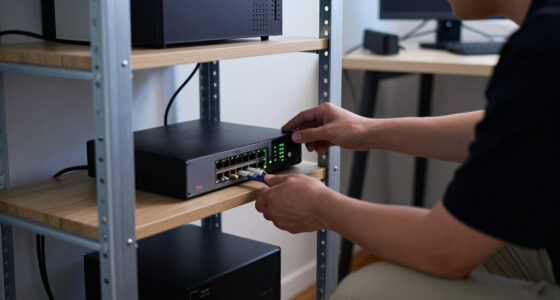
Infrastructure standards give teams a shared way to configure, document, and review the hardware and systems they depend on. When those standards match everyday work, an audit becomes less like rummaging through a closet of tangled cables and more like following labeled shelves.
This guide explains how standards make evidence easier to find, where they reduce confusion, and how to introduce them without turning useful security work into paperwork for its own sake. You will see practical examples for servers, network equipment, access, and exceptions.
Connect each standard to current implementation evidence, a named owner, and a review record.
Use separate but consistently structured baselines for different infrastructure classes.
Maintain an inventory that reflects active, retired, moved, and vendor-constrained assets.
Record changes and exceptions with reasons, approvals, safeguards, owners, and review dates.
Pilot a small, checkable standard and revise it when repeated exceptions show the baseline no longer fits.
Infrastructure • Audit readiness
Why Infrastructure Standards Make Audits Easier
Shared baselines connect expected settings to current records, named owners, and review steps. That gives teams a clear way to explain how systems are protected and helps auditors find evidence without a last-minute search.
A standard helps when it leads directly to evidence someone can verify.
Turn scattered systems into evidence you can follow
A standard states what should be in place. Evidence shows whether it is in place and who checked. Connecting the two saves reviewers from guessing which unwritten rule applies to each device.
Describe the expected state
Set practical requirements for asset names, ownership, supported software, access, logging, and update reviews.
Show how systems meet it
Link the baseline to actual configuration records, approved access lists, and maintenance evidence.
Keep the proof current
Record who checked the evidence and when. A polished document alone cannot prove that daily practice follows it.
Make repeat questions easier to answer
Reviewers can test a defined baseline across similar systems instead of learning each one from scratch. Consistency gives teams a reference point while allowing different infrastructure classes to have different settings.
Settings that fit the device.
A firewall and a storage appliance do different jobs. Give each a suitable baseline, then use the same record format for owner, approved settings, evidence location, review date, and exceptions.
Define
Specify the expected configuration.
Apply
Configure the system to match.
Compare
Check samples for drift.
Explain
Document justified differences.
Make it clear what belongs in the audit
A reliable inventory answers which systems exist, what they do, who owns them, and whether they are in scope. It should reflect operational reality, not only procurement history.
- Identify: unique asset name and location or service
- Assign: technical owner and business purpose
- Track: lifecycle status and configuration records
- Reconcile: compare discovery, purchase, and disposal records
Explain why a system looks different
A change record connects the current configuration to the decision behind it. Match the review to the size of the change so records stay useful without burying staff in forms.
Record what changed
Capture maintenance and configuration changes with enough detail to trace the result.
Make the reason visible
Include the reason, approver, owner, safeguards, start date, and expiry or review date.
Revise when patterns repeat
Repeated exceptions may show that a baseline no longer fits the environment. Pilot, review, and adjust it.
A short evidence map prevents last-minute scrambling
Choose one infrastructure class and a small, checkable baseline. Give each requirement an evidence location, an owner, and a review record before extending the approach.
Select
Choose a useful pilot class.
Document
Set a concise baseline.
Connect
Link owners and evidence.
Improve
Review drift and exceptions.
Standards turn scattered systems into evidence you can follow
Infrastructure standards make audits easier by giving systems a common baseline that auditors and staff can compare with actual configurations and records. A standard states what should be in place; evidence shows whether it is in place and who checked. That connection saves time because reviewers do not have to guess whether each device follows a different unwritten rule.
Imagine a small company with 30 servers. If each one has a different naming pattern, patch record, and owner field, a reviewer must piece together the story server by server. A standard can require a clear asset name, a responsible team, a supported operating system, and a record of the latest update review. The team can then produce a consistent set of evidence and explain any differences.
A standard is not proof by itself. A polished document that describes a process nobody follows can make an audit harder, since it highlights a gap between policy and reality. The useful chain is simple: requirement, implementation, record, review. For example, a requirement to restrict management access should connect to the network configuration, an approved access list, and a recent check.
A good standard makes the expected state easy to describe and the real state easy to verify.
That clarity also helps when the person who built a system has moved to another role. Instead of relying on memory or a hallway conversation, the next administrator can see the expected settings and the records that support them.
Products Worth Considering

Amazon Kindle Scribe Colorsoft 64GB (1st Generation)

Bose QuietComfort True Wireless Earbuds with Active Noise Cancellation, Black

Bose SoundLink Flex Bluetooth Speaker (2nd Gen), Portable Waterproof Speaker, Black
As an affiliate, we earn on qualifying purchases.
A shared baseline cuts repeat questions during reviews
Infrastructure standards make audits easier because reviewers can test one defined baseline across many similar systems instead of learning each system from scratch. A baseline gives teams a reference point for common controls, such as approved firmware, account settings, logging, and update schedules. The auditor can sample systems and ask focused questions about differences.
Consider a branch office with four network switches installed at different times. Without a shared baseline, one may use a newer firmware release, another may keep an old administrator account, and a third may store logs in a different place. Those variations might have valid reasons, but staff need to identify and explain each one. A standard can specify the expected configuration and the evidence used to confirm it.
Consistency does not mean every device must be identical. A storage appliance and a firewall have different jobs, and a standard should reflect those differences. Teams can maintain separate baselines for different device classes while using the same structure: owner, approved settings, evidence location, review date, and exception process.
That structure turns a vague question such as “Are the switches secure?” into a practical review: “Do sampled switches match the approved baseline, and are deviations documented?” Clear questions produce useful evidence. They also help teams catch drift, such as a temporary setting that remained after a maintenance window ended.
Clean inventories help you prove what belongs in scope
Infrastructure standards make audits easier when they define what information every asset record must contain. Auditors need to know which systems exist, what they do, who owns them, and whether they fall within the review. A reliable inventory gives those answers without a series of emails and spreadsheet searches.
For example, an organization may have office routers, cloud-hosted virtual machines, badge readers, backup appliances, and a few forgotten devices in a wiring cabinet. If records cover only the main servers, the audit scope will have holes. An inventory standard can require each asset to have a unique identifier, location or service, technical owner, business purpose, lifecycle status, and a link to its configuration or maintenance records.
The inventory should reflect operational reality, not just procurement history. A laptop returned to a supplier, a retired switch still listed as active, or a test server with no named owner can create confusing evidence. A practical process updates records when equipment is installed, reassigned, moved, or retired. The responsible team can then reconcile the inventory with discovery tools and purchase or disposal records on a schedule that fits the environment.
When an auditor selects a sample, a clean record helps staff trace it from the asset list to the system and its supporting evidence. Good inventory data makes scope visible. It also helps the organization find unsupported or forgotten equipment before a reviewer does.
Documented changes explain why a system looks different
Infrastructure standards make audits easier by giving teams a consistent record of what changed, why it changed, who approved it, and how they checked the result. Reviewers often see the current configuration, but need context to understand how it reached that state. A change record connects the setting on screen to the decision behind it.
Suppose a server receives a temporary exception to a standard logging requirement while a storage issue is investigated. If the change record names the owner, business reason, approval, start date, compensating safeguards, and expiry or review date, the team can explain the difference quickly. If the exception exists only in a chat message, the reviewer may not know whether it was approved or forgotten.
A change process should match the size of the change. Replacing a faulty power supply does not need the same review as altering firewall rules for a shared service. Standards can distinguish routine maintenance, planned configuration changes, emergency work, and deviations from baseline. This keeps records useful without burying staff in forms.
Teams should also connect change records to implementation evidence. A ticket may show approval, while a configuration snapshot or maintenance log confirms what was actually changed. Decision records and technical evidence answer different questions. Together, they create a clear trail and help teams spot recurring changes that may point to a flawed baseline.
A short evidence map prevents last-minute scrambling
Infrastructure standards make audits easier when teams decide in advance where each type of evidence lives and who maintains it. An evidence map links a requirement to the system records that demonstrate it, so staff can respond without searching through old email, shared drives, and ticket queues. It also shows where evidence is missing while there is still time to fix the process.
For a patching requirement, the map might point to the server inventory, the approved maintenance schedule, update reports, and records of systems awaiting a maintenance window. A reviewer can then see both the routine and the exceptions. If a database server missed an update because a vendor-supported application needed testing, the evidence should show the reason, owner, safeguards, and next review date.
Start with a manageable set of common audit questions. For each one, list the requirement, evidence location, responsible role, and how often the record is checked. A monthly access review may have a different owner and storage location from an annual equipment replacement plan. The map need not be elaborate; a controlled document or maintained register can work if people can find and trust it.
Evidence should be current, readable, and tied to the system it describes. A screenshot with no device name or date may prove little. Label records with context—asset identifier, capture date, owner, and review period—so a future reader can interpret them without needing the original technician beside them.
- Choose a recurring audit question, such as whether administrator access is reviewed.
- Identify the standard, the system records, and the person responsible for each.
- Check a small sample and note missing, stale, or unclear evidence.
- Update the process and repeat the check on a defined schedule.
This modest routine turns audit preparation into ordinary maintenance instead of a frantic search through digital drawers.
Exceptions stay manageable when they have owners and dates
Infrastructure standards make audits easier when they explain how to handle systems that cannot meet the usual baseline. Older equipment, vendor constraints, or a critical service may require a temporary difference. An exception process lets teams record that decision, review the added risk, and set a path toward resolution.
For instance, an access-control panel may depend on a vendor-supported operating system that cannot receive the same updates as a general-purpose server. The team can document the affected asset, why replacement or updating is not currently practical, which safeguards limit exposure, who accepted responsibility, and when the decision will be reviewed. The record gives an auditor a clear explanation and gives the organization a reminder that the gap still needs attention.
Exceptions become risky when they have no owner or end date. A spreadsheet with dozens of entries labeled “temporary” can become a graveyard of old decisions. Standards should set a review cadence suitable for the risk and require closure evidence when the system returns to baseline or leaves service. A changed business need may also justify a new decision.
Not every deviation signals a failure. A documented, reviewed exception can show that a team understands a constraint and has chosen proportionate safeguards. The audit value comes from visibility and follow-through: people can see what differs, why it differs, who is accountable, and what happens next.
Start with a small set of standards people can maintain
Infrastructure standards make audits easier when they are short enough to use and specific enough to check. A large rulebook that staff avoid will not create reliable evidence. Start with the infrastructure that matters most to essential services, then build standards around real operating tasks and the records teams already maintain.
A practical first standard might cover server ownership, supported software, privileged accounts, update review, logging, and exception handling. The team can pilot it on a handful of servers, ask administrators where the wording does not match their work, and adjust the evidence requirements before adopting it more widely. For example, “review access regularly” is hard to verify; naming the responsible role, review interval, and record location makes the expectation actionable.
Keep the standard separate from detailed work instructions when that helps. The standard says what outcome is required; a runbook explains how staff perform a specific task. That distinction makes updates easier when a tool or workflow changes. Version history and an approval record help a reviewer understand which requirements applied during a given period.
Review standards when the infrastructure, business, or audit requirements change. A quarterly check may be sensible for fast-changing cloud configurations, while a slower review cycle may fit stable equipment. Use a cadence that matches the pace of change, and make one person or team accountable for keeping each standard current.
- Pick a small, high-impact system group for the first baseline.
- Write requirements in terms that can be checked and evidenced.
- Name the owner and record location for every recurring review.
- Track exceptions and update the standard when patterns repeat.
If teams repeatedly request the same exception, the baseline may need revision. Standards should make safe work repeatable, not force people to work around rules that no longer fit.
Frequently Asked Questions
Do infrastructure standards guarantee a successful audit?
No. Standards describe expectations, while an audit may also assess whether teams follow them and whether the evidence is reliable. A current baseline with clear records helps reviewers understand the environment, but gaps still need honest explanation and remediation.
How detailed should an infrastructure standard be?
Write enough detail that two staff members can tell whether a system meets the requirement and where to find proof. Keep task-by-task instructions in runbooks when they change more often than the standard. For example, name the required access review and its record, then let the operating procedure explain the steps in the tool.
Can different device types use different standards?
Yes. Firewalls, servers, backup appliances, and badge readers have different roles and capabilities. Use baselines suited to each class, while keeping shared fields such as owner, evidence location, exception handling, and review date consistent.
What should an audit exception record contain?
Record the affected asset, the unmet requirement, the reason, the accountable owner, approval, safeguards, and a review or expiry date. When the exception ends, keep a closure note showing whether the system returned to baseline or was retired.
Where should teams begin if their records are scattered?
Choose one important system group and one common audit question, such as how administrator access is reviewed. Map the requirement to the asset list, current configuration evidence, review record, and responsible role. Fix that small path first, then reuse the pattern for other systems.
Conclusion
Make audit readiness part of normal infrastructure care: define a baseline, keep the inventory honest, and connect each requirement to evidence someone can find and explain. That small discipline saves time during reviews and helps your team see drift while it is still manageable.
When every system has a clear place in the map, an audit feels less like opening a mystery box and more like switching on a well-labeled rack: each light tells you what is working and where to look next.