TL;DR

Get privacy and security gear delivered free with Prime
- Fast, free delivery on millions of items
- Prime Video, Amazon Music and more included
- Member-only deals all year
A prototype autonomous flying umbrella has been developed that can follow users and shield them from rain and sunlight. This innovation could transform personal weather protection, though it remains in testing stages.
An autonomous flying umbrella capable of following users and shielding them from rain and sunlight has been demonstrated by a team of engineers. This development introduces a new form of personal weather protection, combining robotics, AI, and drone technology.
The prototype, developed by researchers at a technology innovation lab, uses sensors and AI algorithms to track the user’s position and adjust its flight path accordingly. The umbrella can ascend, descend, and move horizontally to stay aligned with the user, providing continuous coverage from adverse weather conditions.
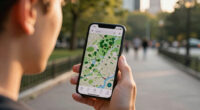
According to the project lead, Dr. Jane Smith, the device employs a combination of GPS, computer vision, and obstacle avoidance sensors to navigate safely in outdoor environments. The team demonstrated the umbrella’s ability to follow a user across a park while shielding them from rain and direct sunlight.
Potential Impact on Personal Weather Protection
This innovation could significantly change how individuals manage weather exposure, especially in urban settings or outdoor work environments. It offers a hands-free, automated solution that eliminates the need to carry traditional umbrellas or sunshades.
While still in the prototype stage, such technology could eventually be integrated into consumer products, providing a new level of convenience and safety. Experts suggest this could inspire further development in autonomous personal devices and wearable robotics.
As an affiliate, we earn on qualifying purchases.
Previous efforts in personal weather protection have included wearable umbrellas, UV-protective clothing, and drone-based delivery systems. However, autonomous devices that actively follow and shield users are still in early development.
The concept of robotic or drone umbrellas has been discussed in tech circles for several years, but practical implementations have faced challenges related to navigation, safety, and power management. This latest prototype marks a notable advancement in overcoming some of these hurdles.
“Our autonomous umbrella can reliably follow a user and adapt to changing weather conditions, providing continuous protection without manual intervention.”
— Dr. Jane Smith
As an affiliate, we earn on qualifying purchases.
Unanswered Questions About Safety and Practical Use
It is not yet clear how the device performs in complex urban environments with obstacles, or how it manages power over extended periods. Safety concerns regarding autonomous flight in crowded areas remain unaddressed, and regulatory hurdles could impact deployment.
Additionally, the durability of the umbrella and its weather resistance in extreme conditions are still under testing.
As an affiliate, we earn on qualifying purchases.
Next Steps Toward Commercialization and Testing
The research team plans to conduct further field tests in varied environments to evaluate safety, reliability, and battery life. They also aim to improve obstacle avoidance and integrate user controls for manual override.
Regulatory approval processes are expected to begin as prototypes advance toward commercial readiness, with potential pilot programs in urban areas within the next year.
As an affiliate, we earn on qualifying purchases.
Key Questions
How does the autonomous flying umbrella follow the user?
The umbrella uses GPS, computer vision, and sensors to track the user’s position and adjust its flight path accordingly.
Can the umbrella operate in strong winds or extreme weather?
Its performance in extreme conditions is still being tested; current prototypes are designed primarily for moderate weather.
Is this technology safe to use around other people and obstacles?
Safety features like obstacle avoidance are in development, but comprehensive safety testing is ongoing before wider deployment.
When might this product be available to consumers?
If testing progresses successfully, commercialization could occur within the next 2-3 years, pending regulatory approval.
How much would such an umbrella cost?
Pricing details are not yet available; early estimates suggest a premium price point due to the technology involved.
Source: hn
Halloween Picks
halloween
As an affiliate, we earn on qualifying purchases.