📊 Full opportunity report: Basketball Video Tools For Youth And Amateur Sports on IdeaNavigator AI — validation score, market gap, and execution plan.

Get privacy and security gear delivered free with Prime
- Fast, free delivery on millions of items
- Prime Video, Amazon Music and more included
- Member-only deals all year
TL;DR
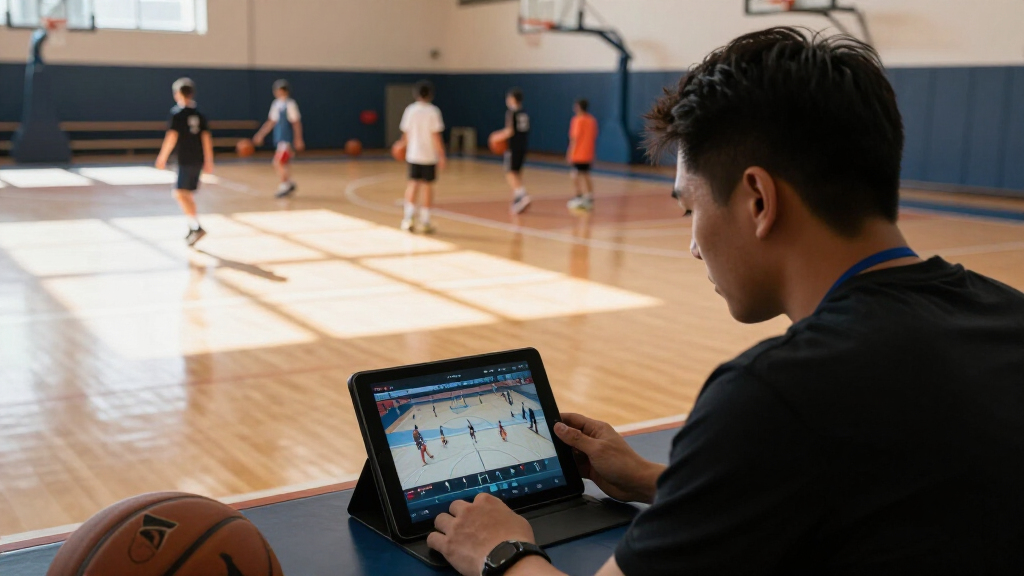
An IdeaNavigator AI concept proposes a basketball app that would use ordinary phone footage to create player-specific highlights, game stats and season profiles. It is a proposed product workflow, not a launched service or a validated market; accuracy and families’ willingness to pay remain open questions.
IdeaNavigator AI has proposed testing a basketball video app that would turn phone-recorded youth and amateur games into player-specific highlight reels and stat lines. The concept targets families seeking those materials without paying for a higher-budget team video program, but it has not been established that a working product exists or that its automated results are accurate.
The proposed minimum product would let a user upload a game recording and select a player for the system to identify. It would then generate a highlight reel with score overlays, produce a game-level stat line and maintain a shareable season profile. The suggested paying customers are parents or players, rather than teams or leagues.
The concept identifies a practical obstacle: families may record games on phones but lack time to clip plays by hand or compile statistics. IdeaNavigator AI suggests that computer vision could track players and detect events such as shots, rebounds and steals from ordinary footage. Those are proposed capabilities, not confirmed performance results; no accuracy figures, product tests or independent evaluations are provided.
The suggested revenue model combines a family subscription for a season with payment for individual reel exports. To test demand, the proposal calls for processing 100 games recorded by parents, measuring satisfaction with highlight accuracy and evaluating subscription conversion at AAU tournaments. No completed test results, pricing figures or conversion data are reported.
A Lower-Cost Route to Game Footage
If the proposed workflow proves reliable, it could reduce the manual work involved in turning a full game recording into usable clips and basic player records. That may matter to families who want materials for player development or recruiting profiles but do not have access to a costly team video setup. A shareable season profile could also make it easier to keep game-by-game material together.
The benefit depends on more than whether software can detect events. It would need to identify the selected player consistently, distinguish plays in crowded or obstructed footage, and avoid attributing another player’s actions to them. Errors in highlights or stats could make the output less useful, particularly where families rely on it to track performance. The concept therefore describes a potential convenience, not a demonstrated replacement for a trained scorer or established video service.
For the youth-sports technology market, the proposal is a narrow product hypothesis: start with a single sport, customer and task instead of building a broad platform. Its proposed tests could show whether families value automated outputs enough to pay for them, but the information available does not establish that a business has begun those tests.
As an affiliate, we earn on qualifying purchases.
From Parent Recordings to Player Reels
The idea focuses on a common format of amateur sports footage: games recorded from the stands or sidelines on a phone. A full recording preserves the game, but extracting one player’s contributions requires someone to locate moments, trim clips and organize them. The proposal treats that manual editing burden as the problem to solve.
Its rationale is that computer-vision tools may now be able to track players and recognize basketball events in standard phone video. That rationale is presented as a product premise; no particular model, system, benchmark or technical demonstration is identified. The proposal contrasts a phone-upload workflow with multi-camera systems, but supplies no comparative cost or performance data.
The suggested scope is deliberately limited to basketball highlights and stats for parents or players. Validation would begin with 100 parent-recorded games and then test subscription interest at AAU tournaments, a setting where families and players could assess the output. The outline gives no schedule, named developer or indication that the trial has started.
As an affiliate, we earn on qualifying purchases.
Accuracy, Pricing and Demand Remain Open
No working app, launch date, trial results or customer commitments are reported. It is unclear how the system would distinguish a selected player from teammates and opponents, particularly when players overlap, move out of frame or appear small in distant phone footage. The proposal also does not specify how it would handle score overlays, confirm the game score, or determine whether detected actions are correctly assigned.
The phrase “highlight accuracy satisfaction” describes a measure the proposed test would track; it is not evidence that users have approved the results. There is also no disclosed subscription price, per-reel export charge, estimate of operating costs or conversion baseline. Whether parents would pay for a season profile—and whether AAU tournament testing would represent a wider market—remains unknown.
The proposal does not detail how footage and player profiles would be stored, shared or controlled by families. Those questions would need answers before the concept could be judged as a dependable service, especially because youth game video can include people other than the selected player.
phone basketball game recording app
As an affiliate, we earn on qualifying purchases.
As an affiliate, we earn on qualifying purchases.
Testing Would Decide the Next Step
The next step set out in the concept is a 100-game test using parent footage. A useful assessment would need to report how often the system identifies the intended player and correctly captures relevant plays, alongside families’ satisfaction with the finished reels and stat lines. No timetable or test operator is named.
The proposal also calls for checking whether families take up a season subscription at AAU tournaments. Results would help determine whether the suggested payment model has demand beyond interest in a demonstration. Until such results are reported, the app should be understood as a product idea awaiting validation—not as an available tool with proven accuracy or established pricing.
Source: IdeaNavigator AI
basketball season profile software
As an affiliate, we earn on qualifying purchases.
As an affiliate, we earn on qualifying purchases.
Key Questions
Is this basketball video app available now?
The information describes a proposed product concept. It does not report a launch, a working app or a release date.
What would the app do?
The proposed app would use uploaded phone footage to identify a selected player, create highlight reels with score overlays, generate game stat lines and build a shareable season profile.
Has the app’s stat or highlight accuracy been tested?
No accuracy results are reported. The concept proposes processing 100 parent-recorded games and measuring satisfaction with the highlights, but does not say that the test has taken place.
Who is the proposed customer, and how might it charge?
The target customer is a parent or player seeking highlights and stats without a higher-budget team program. The suggested model is a seasonal family subscription plus a charge for individual reel exports; prices have not been specified.
Source: IdeaNavigator AI
Columbus Day / Indigenous Peoples' Day Picks
long weekend sales
As an affiliate, we earn on qualifying purchases.