
Choosing the best 10GbE managed switch requires balancing port density, thermal management, and software flexibility. My analysis identifies the Ubiquiti UniFi US-16-XG as the best overall choice for most users due to its robust aggregation capabilities and seamless ecosystem integration. For those prioritizing compact efficiency, the NETGEAR XS708E offers exceptional value with a fanless design suitable for quiet environments. The primary tradeoff in this category lies between active cooling performance and noise levels; high-density switches often require fans, while smaller units may throttle under sustained load. Continue reading to see how these models compare on power consumption, VLAN support, and long-term reliability.

Get privacy and security gear delivered free with Prime
- Fast, free delivery on millions of items
- Prime Video, Amazon Music and more included
- Member-only deals all year
Key Takeaways
- Fanless designs like the NETGEAR XS708E are limited to lower port counts and may throttle under heavy 10GbE sustained throughput.
- The Ubiquiti US-16-XG dominates in ecosystem integration but lacks the granular CLI control found in MikroTik or enterprise-grade alternatives.
- Entry-level managed switches like the SODOLA models often lack advanced Layer 3 routing features, restricting their use to basic VLAN segmentation.
- Power consumption varies drastically between models, with 12-port fiber-heavy switches like the TP-Link SX3008F running significantly cooler than copper-heavy counterparts.
- Web-managed interfaces on budget models like the TRENDnet TEG-7124WS often have higher latency in configuration changes compared to dedicated management platforms.
| Ubiquiti UniFi US-16-XG 16-Port 10G Managed Aggregation Switch |  | Best for UniFi Ecosystem Integration | Port Configuration: 12 SFP+ and 4 10GBASE-T RJ45 | Non-blocking Throughput: 160 Gbps | Switching Capacity: 320 Gbps | VIEW LATEST PRICE | See Our Full Breakdown |
| Real HD 5-Port 10Gb Managed Ethernet Switch |  | Best Compact Entry-Level Managed Switch | Port Configuration: 5 x 10Gb RJ45 | Switching Capacity: 100 Gbps | Supported Speeds: 10G, 5G, 2.5G, 1G, 100M | VIEW LATEST PRICE | See Our Full Breakdown |
| NETGEAR XS708E 8-Port 10-Gigabit Smart Managed Plus Switch |  | Best All-Copper 10GbE Workhorse | Port Configuration: 8 x 10G RJ45 + 1 x 10G SFP+ (Shared) | Switch Type: Smart Managed Plus | Placement: Desktop or Rackmount | VIEW LATEST PRICE | See Our Full Breakdown |
| SODOLA 6-Port 10Gb Managed Ethernet Switch |  | Best Hybrid Port Configuration | Port Configuration: 4 x 10G RJ45, 2 x 10G SFP+ | RJ45 Speeds: 100M/1G/2.5G/5G/10G | Management: Web Managed | VIEW LATEST PRICE | See Our Full Breakdown |
| NETGEAR XS512EM 12-Port 10G Multi-Gigabit Smart Managed Switch |  | Best High-Density Multi-Gig Switch | Port Configuration: 12 x Multi-Gig RJ45, 2 x SFP+ (Shared) | Supported Speeds: 100M, 1G, 2.5G, 5G, 10G | Switch Type: Smart Managed | VIEW LATEST PRICE | See Our Full Breakdown |
| MikroTik CRS304-4XG-IN 10-Gigabit Ethernet Switch |  | Best Silent Compact Option | Model: CRS304-4XG-IN | 10GbE Ports: 4 | Switch Type: Managed (Layer 1) | VIEW LATEST PRICE | See Our Full Breakdown |
| QNAP QSW-L3208-2C6T-US 8-Port 10GbE Multi-Gig Network Switch |  | Best Hybrid Copper/Fiber Value | Ports: 8 | RJ-45 Ports: 6 × 10GbE (Multi-Gig) | Combo Ports: 2 × 10GbE SFP+/RJ-45 | VIEW LATEST PRICE | See Our Full Breakdown |
| TRENDnet TEG-7124WS 12-Port 10G Web Smart Switch |  | Best for SMB Rack Deployments | Ports: 8 x 10GBASE-T, 4 x SFP+ | Switching Capacity: 240 Gbps | Layers: Layer 3 | VIEW LATEST PRICE | See Our Full Breakdown |
| SODOLA 5-Port 10GbE Web-Managed Switch |  | Best Budget Entry Point | Ports: 5 RJ45 | Port Speeds: 100 Mbps to 10 Gbps | Switch Type: Web-managed | VIEW LATEST PRICE | See Our Full Breakdown |
| TP-Link Omada SX3008F 8-Port 10G SFP+ L2+ Managed Switch |  | Best for Cloud-Managed Security | Ports: 8 × 10 Gbps SFP+ | Switch Type: Smart Managed L2+ | Management: Omada SDN / Standalone | VIEW LATEST PRICE | See Our Full Breakdown |
| 10GbE managed switch | Warranty | Switch Type | Port Configuration | Management |
|---|---|---|---|---|
| Ubiquiti UniFi US-16-XG 16-Por | — | — | 12 SFP+ and 4 10GBASE-T RJ45 | — |
| Real HD 5-Port 10Gb Managed Et | 1 Year | — | 5 x 10Gb RJ45 | Web Managed, SNMP |
| NETGEAR XS708E 8-Port 10-Gigab | Lifetime Limited Hardware | Smart Managed Plus | 8 x 10G RJ45 + 1 x 10G SFP+ (Shared) | — |
| SODOLA 6-Port 10Gb Managed Eth | 1 Year | — | 4 x 10G RJ45, 2 x 10G SFP+ | Web Managed |
| NETGEAR XS512EM 12-Port 10G Mu | Limited Lifetime Hardware | Smart Managed | 12 x Multi-Gig RJ45, 2 x SFP+ (Shared) | — |
| MikroTik CRS304-4XG-IN 10-Giga | — | Managed (Layer 1) | — | — |
| QNAP QSW-L3208-2C6T-US 8-Port | 2 years | Lite-managed | — | — |
| TRENDnet TEG-7124WS 12-Port 10 | Lifetime (US/Canada) | — | — | Web Smart |
| SODOLA 5-Port 10GbE Web-Manage | 1 year | Web-managed | — | LACP, QoS, VLAN, SNMP |
| TP-Link Omada SX3008F 8-Port 1 | 5 years | Smart Managed L2+ | — | Omada SDN / Standalone |
More Details on Our Top Picks
Ubiquiti UniFi US-16-XG 16-Port 10G Managed Aggregation Switch
The Ubiquiti UniFi US-16-XG distinguishes itself by prioritizing ecosystem cohesion over raw port flexibility. Unlike the NETGEAR XS708E, which offers standalone management, this switch is designed to be controlled exclusively through the UniFi Network Controller. This makes it an exceptional choice for existing UniFi users who want unified dashboards for switches, routers, and access points. However, this dependency is a significant tradeoff for those outside the ecosystem, as there is no standalone web interface for basic configuration. The mix of 12 SFP+ and four 10GBASE-T ports allows for efficient aggregation, connecting fiber uplinks to copper endpoints. While the 320 Gbps switching capacity ensures no bottlenecks, the lack of Layer 3 routing features means it functions strictly as a Layer 2 aggregation point. It is a specialized tool, not a general-purpose switch.
Pros:- Seamless integration with UniFi Network Controller for unified management
- High non-blocking throughput of 160 Gbps prevents bottlenecks
- Hybrid port configuration supports both fiber and copper uplinks
- Includes rack-mount brackets for professional installation
Cons:- Requires a UniFi controller for any management, limiting standalone use
- Limited to Layer 2 features, lacking advanced routing capabilities
- 10GBASE-T ports generate more heat than SFP+ options
Best for: Home lab enthusiasts and small businesses already running UniFi gateways or controllers who need a managed aggregation layer.
Not ideal for: Users without a UniFi controller or those who prefer standard SNMP/web GUI management, as it cannot be configured standalone.
- Port Configuration:12 SFP+ and 4 10GBASE-T RJ45
- Non-blocking Throughput:160 Gbps
- Switching Capacity:320 Gbps
- Management Type:Managed (UniFi Controller required)
- Layer Support:Layer 2
- Mounting:Rack-mountable (1U)
- Power Input:240 V AC
Our verdict“This switch is the ideal aggregation layer for UniFi networks, provided you already own the required controller hardware.”
Real HD 5-Port 10Gb Managed Ethernet Switch
For those needing basic management without enterprise complexity, the Real HD 5-Port offers a compelling entry point. It provides five native 10Gb RJ45 ports, contrasting sharply with the SODOLA 6-Port‘s hybrid SFP+/RJ45 layout. This model is strictly copper, which simplifies cabling for users who already have Cat6A infrastructure. The web-managed interface supports VLANs, QoS, and SNMP, offering more control than unmanaged alternatives like the TRENDnet options. However, the built-in fan is a notable drawback for noise-sensitive environments, unlike the quieter NETGEAR XS708E. Its compact desktop form factor makes it easy to place near a workstation, but the 5-port limit restricts its use to small clusters or specific high-speed links. It serves well as a dedicated backbone link between two high-performance devices.
Pros:- All five ports are native 10GbE RJ45 for easy copper connectivity
- Web-managed interface includes VLAN, QoS, and SNMP support
- Compact desktop design fits easily on shelves or desks
- Supports multi-gig speeds (2.5G/5G) for flexible device integration
Cons:- Built-in fan generates noise, unsuitable for quiet spaces
- Requires Cat6A or higher cabling for full 10Gb performance
- Limited to only five ports, restricting network expansion
Best for: Users needing a small, managed 10GbE copper switch for direct connections between NAS, servers, or workstations.
Not ideal for: Noisy environments like bedrooms or offices, as the fan can be audible under load, and users needing fiber connectivity.
- Port Configuration:5 x 10Gb RJ45
- Switching Capacity:100 Gbps
- Supported Speeds:10G, 5G, 2.5G, 1G, 100M
- Management:Web Managed, SNMP
- Cooling:Active Fan
- Dimensions:7.9 x 4.7 x 1.8 inches
- Warranty:1 Year
Our verdict“A solid, no-nonsense managed switch for small setups where all connections are copper and noise is not a primary concern.”
NETGEAR XS708E 8-Port 10-Gigabit Smart Managed Plus Switch
The NETGEAR XS708E strikes a balance between port density and ease of use, offering eight dedicated 10G RJ45 ports. Compared to the Real HD 5-Port, it doubles the available connections while maintaining a similar footprint. The addition of a shared SFP+ port provides some fiber flexibility, though it comes at the cost of one copper port. This switch is renowned for its quiet operation and energy efficiency, making it far more suitable for living spaces than the fan-heavy SODOLA 6-Port. While it is labeled “Smart Managed Plus,” its feature set is more basic than full L3 switches, lacking advanced routing. It is an excellent choice for users who want plug-and-play 10GbE with just enough management for VLANs and QoS, without the steep learning curve of enterprise gear.
Pros:- Eight native 10G RJ45 ports support multiple high-speed devices
- Quiet, fanless-like operation ideal for noise-sensitive areas
- Lifetime limited hardware warranty provides long-term peace of mind
- Shared SFP+ port offers optional fiber uplink capability
Cons:- SFP+ port is shared, disabling one RJ45 port when used
- Management features are limited compared to full enterprise switches
- No PoE support for powered devices
Best for: Home labs and small offices needing eight 10GbE copper ports with minimal noise and simple VLAN management.
Not ideal for: Users requiring extensive fiber uplinks or advanced Layer 3 routing features beyond basic VLANs.
- Port Configuration:8 x 10G RJ45 + 1 x 10G SFP+ (Shared)
- Switch Type:Smart Managed Plus
- Placement:Desktop or Rackmount
- Weight:3.6 kg
- Warranty:Lifetime Limited Hardware
- Cooling:Passive/Quiet Operation
- Voltage:240 V
Our verdict“The go-to choice for users who want reliable, quiet, all-copper 10GbE connectivity with basic management capabilities.”
SODOLA 6-Port 10Gb Managed Ethernet Switch
The SODOLA 6-Port stands out for its hybrid port layout, combining four multi-gig RJ45 ports with two SFP+ slots. This configuration offers more flexibility than the all-copper NETGEAR XS708E or the all-copper Real HD 5-Port, allowing users to mix fiber and copper connections seamlessly. It supports LACP and port mirroring, features often missing in entry-level switches, making it suitable for more complex network topologies. However, the internal fan is a significant compromise, generating noise that the quieter NETGEAR avoids. Additionally, the initial setup requires manually assigning an IPv4 address, which can be frustrating for beginners compared to the plug-and-play nature of the Ubiquiti US-16-XG. It is a feature-rich option for tech-savvy users who need specific link aggregation capabilities.
Pros:- Hybrid ports support both 10G SFP+ and multi-gig RJ45 devices
- Supports advanced features like LACP, port mirroring, and storm control
- Metal casing with removable fan option for noise reduction
- Supports wall-mounting for space-saving installation
Cons:- Fan noise is noticeable, potentially disruptive in quiet rooms
- Requires manual IPv4 assignment for initial web GUI access
- Documentation can be less intuitive than major brand alternatives
Best for: Tech-savvy users who need a mix of fiber and copper ports and require LACP or port mirroring for network redundancy.
Not ideal for: Beginners or noise-sensitive users, due to the fan noise and manual IP configuration requirements.
- Port Configuration:4 x 10G RJ45, 2 x 10G SFP+
- RJ45 Speeds:100M/1G/2.5G/5G/10G
- Management:Web Managed
- Key Features:LACP, VLAN, QoS, SNMP, Port Mirroring
- Cooling:Internal Fan (Removable)
- Mounting:Desktop or Wall-mounted
- Warranty:1 Year
Our verdict“A versatile hybrid switch for advanced users who prioritize feature depth and port flexibility over silence and ease of setup.”
NETGEAR XS512EM 12-Port 10G Multi-Gigabit Smart Managed Switch
For networks with many devices running at 2.5G or 5G speeds, the NETGEAR XS512EM is unmatched in this lineup. Its twelve multi-gigabit RJ45 ports automatically negotiate speeds, making it far more versatile than the SODOLA 6-Port‘s limited copper count. This switch is designed for gradual upgrades, allowing users to mix 1G, 2.5G, and 10G devices without replacing cabling. While it lacks the raw 10GbE port density of the Ubiquiti US-16-XG, it offers better value for mixed-speed environments. The shared SFP+ ports are a minor limitation, but the energy-efficient design and quiet operation compensate for this. It is the best choice for users who want to future-proof their network without committing entirely to expensive 10GbE hardware everywhere.
Pros:- Twelve multi-gig ports support 100M to 10G auto-negotiation
- Energy-efficient and quiet operation suitable for home offices
- Includes rack-mount kit for flexible installation options
- Lifetime limited hardware warranty enhances long-term value
Cons:- SFP+ ports are shared, reducing available copper ports when used
- Limited to US and Canada markets, restricting global availability
- No PoE support for powered devices like cameras or APs
Best for: Users with mixed-speed devices (2.5G/5G) who want a high-density switch that supports 10GbE uplinks.
Not ideal for: Networks requiring 100% 10GbE port density or users outside the US and Canada due to regional restrictions.
- Port Configuration:12 x Multi-Gig RJ45, 2 x SFP+ (Shared)
- Supported Speeds:100M, 1G, 2.5G, 5G, 10G
- Switch Type:Smart Managed
- Dimensions:12.9 x 8 x 1.7 inches
- Weight:5.5 pounds
- Warranty:Limited Lifetime Hardware
- Regional Availability:US and Canada only
Our verdict“The ideal multi-gigabit switch for mixed-speed networks that need high port density and quiet, reliable performance.”
MikroTik CRS304-4XG-IN 10-Gigabit Ethernet Switch
This unit stands out for its fanless metal design, making it the quietest choice in this lineup. Unlike the SODOLA 5-Port 10GbE, which relies on an internal cooling fan that can become distracting in office environments, the MikroTik operates silently while maintaining robust thermal performance thanks to its chassis. It is ideal for home labs or small offices where noise reduction is a priority. However, the tradeoff is limited port density with only four 10GbE ports, compared to the eight offered by the TP-Link Omada SX3008F. While it supports Layer 1 switching, advanced routing capabilities are absent, restricting its use to aggregation or backbone links rather than complex network segmentation tasks.
Pros:- Fanless operation ensures completely silent performance
- Dual power inputs provide redundancy for critical links
- Compact metal enclosure supports DIN rail mounting
Cons:- Limited to only four 10GbE data ports
- Lacks Layer 3 routing capabilities
- No active cooling may limit placement in hot environments
Best for: Home lab enthusiasts or small offices needing silent, reliable 10GbE connectivity without active cooling noise.
Not ideal for: Users requiring high port density or advanced Layer 3 routing features for complex network segmentation.
- Model:CRS304-4XG-IN
- 10GbE Ports:4
- Switch Type:Managed (Layer 1)
- Cooling:Fanless
- Power Inputs:Two DC jacks, terminal, PoE-in
- Weight:0.7 kg
- Mounting:DIN rail and screw
Our verdict“Choose this switch if silence and compact footprint matter more than having numerous ports or advanced routing.”
QNAP QSW-L3208-2C6T-US 8-Port 10GbE Multi-Gig Network Switch
This switch excels at bridging the gap between legacy copper and modern fiber infrastructure. It offers six multi-gigabit RJ-45 ports alongside two combo SFP+ ports, providing flexibility that the TP-Link Omada SX3008F lacks, as the TP-Link is exclusively SFP+. This makes the QNAP ideal for users transitioning from Cat6a cabling to fiber without replacing existing devices. The 160 Gbps switching capacity supports non-blocking throughput for mixed-speed environments. However, the management interface is described as “lite-managed,” offering fewer granular controls than the fully managed TRENDnet TEG-7124WS. It suits users who need VLANs and LACP but do not require complex static routing or extensive monitoring tools.
Pros:- Combines multi-gig copper and SFP+ connectivity
- High switching capacity supports mixed-speed traffic
- Smart cooling balances performance and noise
Cons:- Only two ports support SFP+ fiber connections
- Lite-managed interface lacks advanced routing features
Best for: Small businesses or power users mixing 2.5G/5G devices with high-speed fiber uplinks.
Not ideal for: Networks requiring fully managed Layer 3 routing or extensive SNMP monitoring capabilities.
- Ports:8
- RJ-45 Ports:6 × 10GbE (Multi-Gig)
- Combo Ports:2 × 10GbE SFP+/RJ-45
- Switching Capacity:160 Gbps
- Switch Type:Lite-managed
- Power Consumption:36 W
- Warranty:2 years
Our verdict“Buy this if you need a flexible mix of copper and fiber ports without paying for enterprise-grade routing.”
TRENDnet TEG-7124WS 12-Port 10G Web Smart Switch
Designed for server rooms, this switch combines eight 10GBASE-T ports with four 10G SFP+ slots, offering greater port variety than the MikroTik CRS304. Its 240 Gbps switching capacity and support for IPv4/IPv6 static routing place it firmly in the Layer 3 category, allowing it to handle inter-VLAN routing that simpler switches like the QNAP QSW-L3208 cannot. The rack-mountable metal housing ensures it fits standard 1U spaces, though its operational noise may be higher than fanless alternatives. While it supports SNMP monitoring and link aggregation, the “Web Smart” management interface may feel limited for engineers accustomed to CLI-heavy enterprise switches. It is a strong choice for SMBs needing routing and mixed media support in a rack.
Pros:- Combines eight 10G Ethernet ports with four SFP+ slots
- Supports IPv4/IPv6 static routing for inter-VLAN traffic
- Rack-mountable metal housing fits standard server cabinets
Cons:- Web Smart management offers fewer controls than fully managed switches
- Lifetime protection is limited to U.S. and Canada regions
Best for: SMBs needing rack-mounted switches with Layer 3 routing and mixed copper/fiber ports.
Not ideal for: Home users or quiet offices due to potential fan noise and rack-mount form factor.
- Ports:8 x 10GBASE-T, 4 x SFP+
- Switching Capacity:240 Gbps
- Layers:Layer 3
- Management:Web Smart
- Mounting:1U Rack Mountable
- Compliance:NDAA and TAA
- Warranty:Lifetime (US/Canada)
Our verdict“This is the go-to choice for SMBs needing Layer 3 routing and mixed media ports in a rack mount.”
SODOLA 5-Port 10GbE Web-Managed Switch
For those entering the 10GbE space on a tight budget, this switch offers five adaptive RJ45 ports that support speeds from 100 Mbps to 10 Gbps. This flexibility allows integration with older devices, unlike the TP-Link Omada SX3008F which requires SFP+ modules for every connection. The inclusion of VLAN, QoS, and port mirroring provides essential management tools often missing in unmanaged switches. However, the internal cooling fan is a significant drawback for noise-sensitive environments, making the fanless MikroTik CRS304 a better choice for desktops or quiet offices. Additionally, the requirement to set a static IPv4 address before initial access adds a layer of complexity for beginners compared to plug-and-play alternatives.
Pros:- Adaptive ports support speeds from 100 Mbps to 10 Gbps
- Includes managed features like VLAN and port mirroring
- Metal case provides durability for desktop use
Cons:- Internal fan may produce noticeable noise
- Requires manual IP configuration for initial access
Best for: Budget-conscious users needing basic managed features and mixed-speed device compatibility.
Not ideal for: Noise-sensitive environments or users requiring high port density beyond five connections.
- Ports:5 RJ45
- Port Speeds:100 Mbps to 10 Gbps
- Switch Type:Web-managed
- Max Power:30 W
- Management:LACP, QoS, VLAN, SNMP
- Cooling:Internal Fan
- Warranty:1 year
Our verdict“Pick this for low-cost entry into 10GbE networking if you can tolerate some fan noise.”
TP-Link Omada SX3008F 8-Port 10G SFP+ L2+ Managed Switch
This switch is tailored for users invested in the Omada SDN ecosystem, offering centralized cloud and app-based management that simplifies configuration across multiple devices. With eight SFP+ ports, it delivers high-speed fiber connectivity, but unlike the QNAP QSW-L3208, it lacks native RJ-45 ports, requiring transceivers for copper connections. Its strength lies in security features such as 802.1X authentication and ACLs, which are more robust than the basic VLAN support found on the SODOLA 5-Port. The five-year warranty adds long-term value, though the dependency on the Omada controller for full SDN features means standalone users might not utilize its primary selling point. It is best for those who want scalable, secure fiber backbones managed remotely.
Pros:- Centralized Omada SDN and cloud management
- Robust security features including 802.1X and ACLs
- Five-year manufacturer warranty provides peace of mind
Cons:- Requires SFP+ transceivers for copper connections
- Full SDN features require compatible Omada controllers
Best for: Users already using Omada SDN who need secure, cloud-managed fiber connectivity.
Not ideal for: Standalone users or those needing direct RJ-45 copper connections without transceivers.
- Ports:8 × 10 Gbps SFP+
- Switch Type:Smart Managed L2+
- Management:Omada SDN / Standalone
- Security:802.1X, ACL, DoS Defense
- Dimensions:17.32 × 7.09 × 1.73 in
- Weight:1.65 kg
- Warranty:5 years
Our verdict“Choose this switch if you want secure, cloud-managed fiber networking within the Omada ecosystem.”
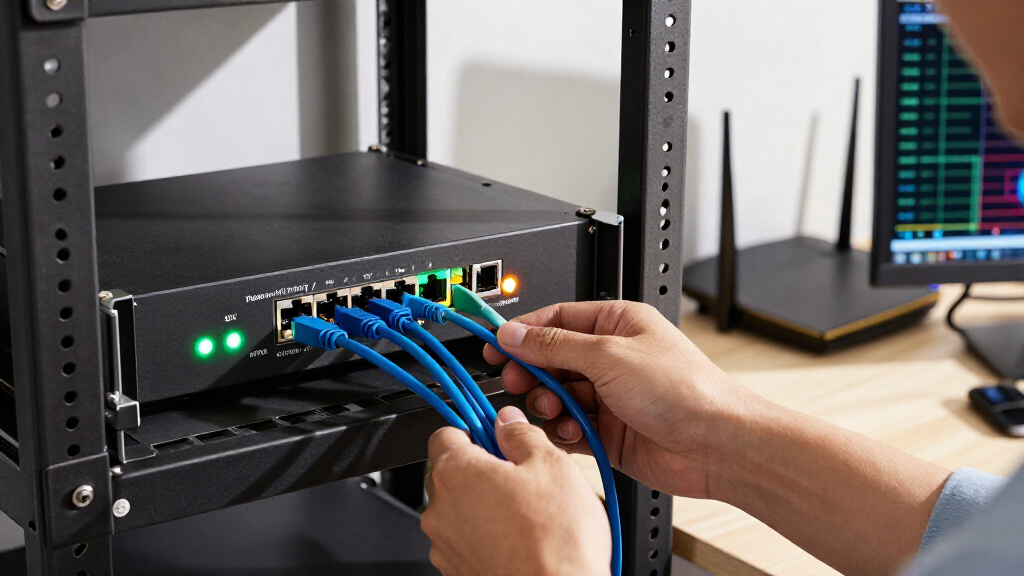
How We Picked
I evaluated these switches based on Layer 2 and Layer 3 feature depth, thermal performance, and management interface usability. While all candidates support 10GbE, the distinction lies in how they handle traffic prioritization, VLAN tagging, and link aggregation. I prioritized models that offer a clear upgrade path or specific advantages in noise-sensitive environments.
Ranking logic favored switches with proven stability in mixed-client networks and accessible firmware updates. I excluded models with closed ecosystems that limit third-party hardware compatibility, unless the ecosystem integration itself was a primary benefit. This approach ensures recommendations suit both home lab enthusiasts and small business IT managers seeking reliability.
| 10GbE managed switch | Management | Cooling | Switch Type |
|---|---|---|---|
| Ubiquiti UniFi US-16-XG 16-Por | — | — | — |
| Real HD 5-Port 10Gb Managed Et | Web Managed, SNMP | Active Fan | — |
| NETGEAR XS708E 8-Port 10-Gigab | — | Passive/Quiet Operation | Smart Managed Plus |
| SODOLA 6-Port 10Gb Managed Eth | Web Managed | Internal Fan (Removable) | — |
| NETGEAR XS512EM 12-Port 10G Mu | — | — | Smart Managed |
| MikroTik CRS304-4XG-IN 10-Giga | — | Fanless | Managed (Layer 1) |
| QNAP QSW-L3208-2C6T-US 8-Port | — | — | Lite-managed |
| TRENDnet TEG-7124WS 12-Port 10 | Web Smart | — | — |
| SODOLA 5-Port 10GbE Web-Manage | LACP, QoS, VLAN, SNMP | Internal Fan | Web-managed |
| TP-Link Omada SX3008F 8-Port 1 | Omada SDN / Standalone | — | Smart Managed L2+ |
Factors to Consider When Choosing Best 10GbE Managed Switch
Selecting a managed switch involves more than counting ports. These factors determine whether the device will serve your network for years or become a bottleneck.
Thermal Management and Noise Levels
10GbE ports generate substantial heat, making cooling a critical differentiator. Active cooling allows for higher port density and sustained performance but introduces noise, which is problematic in office or living spaces. Fanless designs are silent but often restrict the number of ports or require larger chassis to dissipate heat. Buyers must decide if silence is worth the potential performance throttling or reduced port count. Check the datasheet for operating temperature ranges to avoid thermal shutdowns in warm server rooms.
Layer 2 vs. Layer 3 Feature Sets
Many switches marketed as ‘managed’ only offer Layer 2 features like VLANs and STP. Layer 3 capabilities enable static routing, inter-VLAN routing, and dynamic routing protocols, reducing the need for a separate router. If your network grows beyond a single subnet, a Layer 3 switch simplifies architecture and improves throughput. Verify if the model supports inter-VLAN routing natively, as this feature is often omitted in budget-friendly options.
Port Configuration: Copper vs. Fiber
Copper (RJ45) 10GBASE-T ports offer flexibility for existing Cat6a cables but consume more power and generate more heat. SFP+ fiber ports are faster to initialize, cooler, and support longer distances, but require transceivers and fiber cabling. Hybrid models allow mixing both, offering a balance for upgrade paths. Consider your existing cabling infrastructure before committing to a specific port type, as retrofitting fiber can be costly and complex.
Management Interface and Ecosystem Lock-in
Proprietary management platforms like UniFi OS or Omada provide user-friendly dashboards but often lock you into that vendor’s hardware. Open standards or CLI-based management offer greater flexibility and scriptability for advanced users. Weigh the convenience of a unified controller against the freedom to mix hardware brands. For long-term scalability, vendor-agnostic management reduces the risk of forced obsolescence when a vendor discontinues support.
Power Over Ethernet (PoE) Requirements
Most 10GbE managed switches do not include PoE because the power budget for 10GbE PoE++ is extremely high and rare. If you need to power access points or cameras, ensure you have a dedicated PoE switch upstream. Do not assume 10GbE capability implies PoE support. Check the total power budget and per-port limits, as some models only support PoE on specific lower-speed ports, limiting flexibility.
Frequently Asked Questions
Do I need a Layer 3 switch if I already have a powerful router?
Not always, but it depends on your network topology. If you have multiple subnets or VLANs that need to communicate, a Layer 3 switch handles inter-VLAN routing locally, preventing traffic from hairpinning through your router. This reduces latency and frees up router CPU resources. However, if your router has sufficient throughput and you only have a single subnet, a Layer 2 managed switch is sufficient and more cost-effective.
Is 10GBASE-T worth it over SFP+ for a home lab?
10GBASE-T is convenient if you already have Cat6a cabling and devices with RJ45 ports. However, it consumes more power and generates more heat than SFP+ fiber. For a home lab where silence is key, SFP+ is often better, but it requires compatible transceivers and fiber cables. If you need to connect older devices or prefer copper’s ease of termination, 10GBASE-T is a valid choice despite the thermal tradeoffs.
Can I mix managed and unmanaged switches in the same network?
Yes, you can mix them, but it complicates troubleshooting and VLAN management. Unmanaged switches cannot tag VLANs, so they pass all traffic untagged, which can break segmentation. It is best to use managed switches for the core and distribution layers and reserve unmanaged switches for simple edge connections where VLANs are not required. Ensure your managed switch ports are configured to accept untagged traffic from the unmanaged devices.
How important is the switching backplane capacity?
Backplane capacity determines if the switch can handle full wire-speed traffic across all ports simultaneously without blocking. Most modern managed switches offer non-blocking architecture, meaning total throughput equals the sum of all port speeds. Verify the datasheet to ensure it is truly non-blocking, especially in budget models. If the backplane is undersized, performance will degrade under heavy load, creating bottlenecks even if individual ports are fast.
What is the main risk of buying a budget 10GbE managed switch?
The primary risks are limited firmware support and poor thermal management. Budget models often lack regular security updates, leaving networks vulnerable over time. They may also use inferior components that fail under sustained 10GbE load or in warm environments. Check for community feedback on long-term reliability and ensure the vendor has a track record of providing firmware updates for at least three years.
Conclusion
For most users seeking a balance of performance and ease of use, the Ubiquiti UniFi US-16-XG remains the best overall choice due to its robust build and ecosystem integration. If you need a quiet, compact solution for a home office, the NETGEAR XS708E offers the best value with its fanless design. For advanced users who require granular control and scripting capabilities, the MikroTik CRS304-4XG-IN provides the best premium feature set at a competitive price point. Beginners should avoid complex CLI-heavy devices and stick with web-managed options like the TP-Link Omada SX3008F for a gentler learning curve. Choose based on your specific noise tolerance, cabling infrastructure, and routing needs.
Fall Picks
fall essentials
As an affiliate, we earn on qualifying purchases.