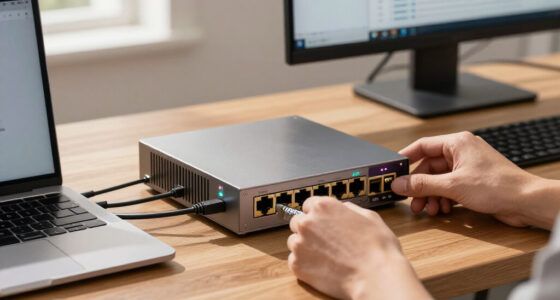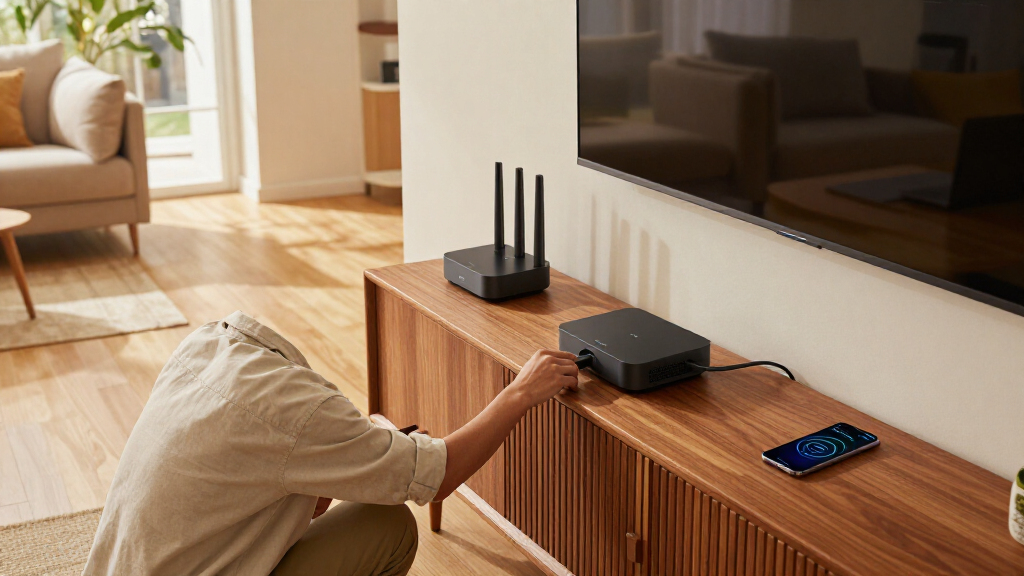

The TP-Link Deco BE95 is my best overall pick for a large home because its quad-band design gives a mesh network more room to manage traffic across multiple nodes. The NETGEAR Orbi 770 stands out for buyers who want a three-unit system and broad stated coverage, while the TP-Link Deco BE23 is a simpler, more restrained choice for homes that do not need premium tri-band hardware. The main tradeoff is between extra wireless capacity and the number of nodes or wired connections your home actually needs. A stronger router cannot fix poor node placement or a weak internet connection. Read on for the full breakdown and help matching a system to your floor plan, devices, and budget.

Get privacy and security gear delivered free — and shop member deals
- Fast, free delivery on millions of items
- Access to Prime Big Deal Days deals on October 6–7
- Prime Video, Amazon Music and more included
Key Takeaways
- The Deco BE95 leads on mesh capacity: its quad-band design gives it a stronger case for large, busy homes than the dual-band Deco BE23 and BE5000.
- Three-node kits can matter more than headline speed: the Orbi 770 three-pack and Orbi 370 three-pack provide additional placement flexibility compared with two-unit kits.
- Deco’s lineup spans very different needs: the BE23 and BE3600 are more modest dual-band options, while the BE17000 and BE10000 tri-band systems target buyers seeking more wireless headroom.
- Renewed systems call for extra scrutiny: the Orbi 370 renewed two-extender bundle and Deco BE3600 renewed option may suit cautious buyers only if condition, warranty, and included hardware are clear.
- Coverage claims are not a substitute for a floor plan: walls, floors, interference, and node placement can change real results, so a three-pack is not automatically better than a well-placed two-pack.
| TP-Link Deco BE95 Wi-Fi 7 Quad-Band Whole Home Mesh System |  | Best Overall for High-Capacity Large Homes | Wi-Fi standard: Wi-Fi 7 | Bands: Quad-band: two 6 GHz bands, 5 GHz, and 2.4 GHz | Combined speed class: BE33000 | VIEW LATEST PRICE | See Our Full Breakdown |
| NETGEAR Orbi 360 Series WiFi 7 Mesh System, 2-Pack |  | Best for Straightforward Mid-Size Coverage | WiFi standard: WiFi 7 | System type: Dual-band mesh | Included components: 1 router and 1 satellite | VIEW LATEST PRICE | See Our Full Breakdown |
| NETGEAR Orbi 370 Series WiFi 7 Mesh System (RBE373), Router and 2 Extenders, Renewed |  | Best Renewed Three-Node Coverage | Model: RBE373 | WiFi standard: WiFi 7 | Bands: Dual-band | VIEW LATEST PRICE | See Our Full Breakdown |
| TP-Link Deco 7 Pro Tri-Band Wi-Fi 7 Mesh System, BE10000, 3-Pack |  | Best for Broad Coverage and Wired Backhaul | Model: Deco 7 Pro | Wi-Fi standard: Wi-Fi 7 | Bands: Tri-band | VIEW LATEST PRICE | See Our Full Breakdown |
| TP-Link Deco 7 BE23 Wi-Fi 7 Dual-Band Mesh System, 2-Pack |  | Best Value for Smaller Large Homes | Model: Deco 7 BE23 | Wi-Fi standard: Wi-Fi 7 | Bands: Dual-band | VIEW LATEST PRICE | See Our Full Breakdown |
| NETGEAR Orbi 770 Series WiFi 7 Mesh System, 3-Pack, up to 8,000 sq. ft. |  | Best for Maximum Listed Coverage | WiFi standard: WiFi 7 | System type: Tri-band mesh | Package: 3-pack with router and satellites | VIEW LATEST PRICE | See Our Full Breakdown |
| TP-Link Deco 7 BE3600 WiFi 7 Whole Home Mesh System (Renewed) |  | Best Renewed Entry Point | WiFi generation: WiFi 7 | Wireless standard: 802.11.be | Combined data rate: Up to 3,600 Mbps | VIEW LATEST PRICE | See Our Full Breakdown |
| TP-Link Deco 7 BE5000 Dual-Band Wi-Fi 7 Mesh System |  | Best for High Device Counts | WiFi standard: WiFi 7 | Bands: Dual-band, 2.4 GHz and 5 GHz | Maximum combined speed: Up to 5 Gbps | VIEW LATEST PRICE | See Our Full Breakdown |
| NETGEAR Orbi 370 Series WiFi 7 Mesh System, 3-Pack |  | Best for Straightforward WiFi 7 Coverage | WiFi standard: WiFi 7 | Bands: Dual-band | System configuration: 3-pack with router and two satellites | VIEW LATEST PRICE | See Our Full Breakdown |
| TP-Link Deco 7 Pro Tri-Band Wi‑Fi 7 Whole Home Mesh System (BE17000) |  | Best for Multi-Gig Wired Setups | WiFi standard: WiFi 7, tri-band | Coverage: Up to 6,300 sq. ft. | Maximum devices: More than 200 | VIEW LATEST PRICE | See Our Full Breakdown |
| WiFi 7 mesh system for large home | Coverage | Bands | Device capacity | WiFi standard |
|---|---|---|---|---|
| TP-Link Deco BE95 Wi-Fi 7 Quad | — | Quad-band: two 6 GHz bands, 5 GHz, and 2.4 GHz | Over 200 devices | — |
| NETGEAR Orbi 360 Series WiFi 7 | Up to 4,000 sq. ft. | — | Up to 70 devices | WiFi 7 |
| NETGEAR Orbi 370 Series WiFi 7 | Up to 6,000 sq. ft. | Dual-band | — | WiFi 7 |
| TP-Link Deco 7 Pro Tri-Band Wi | — | Tri-band | Over 200 devices | — |
| TP-Link Deco 7 BE23 Wi-Fi 7 Du | Up to 4,500 sq. ft. | Dual-band | — | — |
| NETGEAR Orbi 770 Series WiFi 7 | Up to 8,000 sq. ft. | — | Up to 100 devices | WiFi 7 |
| TP-Link Deco 7 BE3600 WiFi 7 W | — | — | — | — |
| TP-Link Deco 7 BE5000 Dual-Ban | Up to 6,600 sq. ft. | Dual-band, 2.4 GHz and 5 GHz | Over 150 devices | WiFi 7 |
| NETGEAR Orbi 370 Series WiFi 7 | Up to 6,000 sq. ft. | Dual-band | Up to 70 devices | WiFi 7 |
| TP-Link Deco 7 Pro Tri-Band Wi | Up to 6,300 sq. ft. | — | — | WiFi 7, tri-band |
More Details on Our Top Picks
TP-Link Deco BE95 Wi-Fi 7 Quad-Band Whole Home Mesh System
The Deco BE95 earns my top spot for homes that need both broad mesh capacity and fast wired connections. Its four-band design, including two 6 GHz bands, gives it more wireless capacity than the dual-band Deco 7 BE23 and the tri-band Deco 7 Pro BE10000. That extra band allocation can help busy networks keep traffic moving, while simultaneous wired and wireless backhaul offers flexibility if only some nodes can use Ethernet. Two 10G ports, two 2.5G ports, and USB 3.0 also make this the strongest fit here for multi-gig internet and wired equipment. The tradeoff is that this much connectivity may be unnecessary for a household with modest service and few demanding devices. A modem is required for most providers, and some HomeShield features need a separate subscription.
Pros:- Four-band Wi-Fi 7 design includes two 6 GHz bands
- Two 10G ports plus two 2.5G ports support flexible multi-gig wired setups
- Supports simultaneous wired and wireless backhaul
- Rated to connect over 200 devices
Cons:- A modem is required for most internet providers
- Some HomeShield security features require a premium subscription
- Its extensive capacity and port selection may be more than many homes need
Best for: Owners of large, device-heavy homes who want multi-gig wired connections, flexible backhaul, and substantial wireless capacity.
Not ideal for: Households with basic internet plans or few connected devices that would not make use of its four bands and 10G ports.
- Wi-Fi standard:Wi-Fi 7
- Bands:Quad-band: two 6 GHz bands, 5 GHz, and 2.4 GHz
- Combined speed class:BE33000
- Device capacity:Over 200 devices
- 10G WAN/LAN ports:2, including one RJ45 and one SFP+/RJ45 combo
- Additional ports:2 × 2.5G ports and 1 × USB 3.0
- Backhaul:Simultaneous wired and wireless
- Management:TP-Link Deco app for Android and iOS
Our verdict“Choose the Deco BE95 if your large home has demanding Wi-Fi traffic and multi-gig wired gear; skip it if you mainly need basic whole-home coverage.”
NETGEAR Orbi 360 Series WiFi 7 Mesh System, 2-Pack
The Orbi 360 is the simplest fit in this group for buyers who want a router-and-satellite setup without building a more elaborate network. The included pair is rated for up to 4,000 sq. ft. and 70 devices, making it a more restrained choice than the three-node renewed Orbi 370, which is rated for 6,000 sq. ft. Its app-guided setup and support for WiFi 6 and WiFi 5 devices also suit homes upgrading gradually rather than replacing every device. But its dual-band layout has less room for traffic separation than the Deco BE95 or Deco 7 Pro BE10000, and the supplied coverage may fall short in a sprawling or multi-floor home. NETGEAR Armor is only included as a 30-day trial, and this system is specified for US use.
Pros:- Router and satellite are rated to cover up to 4,000 sq. ft.
- Supports up to 70 connected devices
- Works with WiFi 7, WiFi 6, and WiFi 5 devices
- Orbi app provides guided setup and network management
Cons:- Dual-band design offers less wireless capacity than the quad-band Deco BE95
- NETGEAR Armor requires a subscription after its 30-day trial
- Specified for US use, and actual coverage varies with the home and node placement
Best for: US households with a moderately large, open-plan home that want an app-guided WiFi 7 upgrade for a mix of newer and older devices.
Not ideal for: People covering a sprawling, multi-floor property or seeking extra mesh nodes, broad port selection, or built-in long-term security service.
- WiFi standard:WiFi 7
- System type:Dual-band mesh
- Included components:1 router and 1 satellite
- Coverage:Up to 4,000 sq. ft.
- Maximum speed:Up to 5 Gbps
- Device capacity:Up to 70 devices
- Internet plan compatibility:Up to 2.5 Gbps
- Compatibility:WiFi 7, WiFi 6, and WiFi 5 devices
- Region:US only
Our verdict“Pick the Orbi 360 for a simpler two-unit upgrade in a mid-size US home, but choose a larger-coverage kit for a sprawling layout.”
NETGEAR Orbi 370 Series WiFi 7 Mesh System (RBE373), Router and 2 Extenders, Renewed
For a large home where node placement matters more than premium wireless capacity, this renewed Orbi 370 package offers a practical advantage: one router and two extenders, with coverage rated up to 6,000 sq. ft. That makes it a better match for distant rooms than the two-unit Orbi 360, whose stated coverage is 4,000 sq. ft. It also keeps the WiFi 7 speed ceiling at up to 5 Gbps and supports up to 70 devices. The compromise is a dual-band system, unlike the tri-band Deco 7 Pro BE10000, and the renewed condition may not suit buyers who prefer new equipment. Its 2.5 Gigabit internet port is useful for a multi-gig connection, but the supplied details do not list the broader port options found on the Deco BE95.
Pros:- Three included units support flexible placement across a large home
- Rated to cover up to 6,000 sq. ft.
- Supports up to 70 connected devices
- Includes a 2.5 Gigabit Ethernet internet port and built-in security features
Cons:- Renewed condition may not suit buyers seeking new equipment
- Dual-band design has less capacity for traffic separation than the Deco 7 Pro BE10000
- Listed device capacity is lower than the Deco BE95’s over-200-device rating
Best for: Buyers with a larger home who need three mesh units for room-to-room reach and are comfortable choosing renewed networking equipment.
Not ideal for: Buyers who want a new system, tri-band capacity, or detailed multi-gig port flexibility for wired devices.
- Model:RBE373
- WiFi standard:WiFi 7
- Bands:Dual-band
- System configuration:1 router and 2 extenders
- Maximum speed:Up to 5 Gbps
- Coverage:Up to 6,000 sq. ft.
- Maximum connected devices:70
- Internet port:2.5 Gigabit Ethernet
- Condition:Renewed
Our verdict“Choose this renewed Orbi 370 package when three-node reach matters most and you accept a dual-band, renewed system.”
TP-Link Deco 7 Pro Tri-Band Wi-Fi 7 Mesh System, BE10000, 3-Pack
The three-unit Deco 7 Pro BE10000 is my coverage-first pick for buyers who want a new system with a substantial stated footprint and useful wired connections. Its 7,600 sq. ft. coverage rating exceeds the renewed Orbi 370’s 6,000 sq. ft., while its three bands and support for over 200 devices make it a stronger fit than the dual-band Orbi 360 for a busy household. Four 2.5G WAN/LAN ports across each system’s listed configuration and wired or wireless backhaul give owners options as they add Ethernet runs or multi-gig gear. The BE95 remains the higher-capacity pick, with quad-band Wi-Fi and 10G ports; the BE10000 gives up that headroom in exchange for a less extreme setup. A modem is still required for most providers, and actual coverage depends on layout and placement.
Pros:- Three-pack is rated to cover up to 7,600 sq. ft.
- Tri-band Wi-Fi 7 supports more capacity than the dual-band Orbi 370
- Supports over 200 devices
- Includes four 2.5G WAN/LAN ports and USB 3.0
Cons:- Does not offer the BE95’s quad-band design or 10G ports
- A modem is required for most internet providers
- Real-world coverage varies with obstacles, distance, and node placement
Best for: Families in large homes who need three mesh units, support for many devices, and 2.5G wired connections or backhaul.
Not ideal for: Buyers with 10G networking needs or households that do not need wide coverage and would rather avoid a modem-dependent setup.
- Model:Deco 7 Pro
- Wi-Fi standard:Wi-Fi 7
- Bands:Tri-band
- Combined speed class:BE10000
- Maximum coverage:7,600 sq. ft.
- Device capacity:Over 200 devices
- Wi-Fi speeds:Up to 5,188 Mbps on 6 GHz, 4,324 Mbps on 5 GHz, and 574 Mbps on 2.4 GHz
- Ethernet ports:Four 2.5G WAN/LAN ports
- Backhaul:Wired and wireless
Our verdict“Choose the Deco 7 Pro BE10000 for a large, device-heavy home that needs three nodes and 2.5G wired options without BE95-level capacity.”
TP-Link Deco 7 BE23 Wi-Fi 7 Dual-Band Mesh System, 2-Pack
The Deco 7 BE23 is the more restrained way to add Wi-Fi 7 to a home that needs decent reach but not flagship capacity. Its two units are rated for up to 4,500 sq. ft. and 150 devices, putting it ahead of the Orbi 360’s stated area and device limit on paper. Each unit also has two 2.5 Gbps WAN/LAN ports, a useful advantage for wired devices or a compatible multi-gig connection. Compared with the Deco 7 Pro BE10000, this is a dual-band system with a lower combined speed class, so it is less suited to simultaneous heavy traffic across a large household. Wired backhaul, MLO, VPN support, and an IoT network add flexibility, though most providers require a separate modem. The advertised combined speed is not a single-band speed.
Pros:- Two-unit system is rated to cover up to 4,500 sq. ft.
- Supports up to 150 devices
- Each unit has two 2.5 Gbps WAN/LAN ports
- Includes wired and wireless backhaul, VPN support, WPA3, and an IoT network
Cons:- Dual-band design has less capacity than the tri-band Deco 7 Pro BE10000
- A modem is required for most internet providers
- The combined speed figure does not represent the maximum speed of either individual band
Best for: Households with a moderately large home, many connected devices, and a preference for 2.5G ports and network controls over tri-band capacity.
Not ideal for: Owners of sprawling or highly congested homes who need three nodes, tri-band capacity, or greater headroom for heavy concurrent traffic.
- Model:Deco 7 BE23
- Wi-Fi standard:Wi-Fi 7
- Bands:Dual-band
- Maximum wireless speed:Up to 3,570 Mbps combined: 2,882 Mbps on 5 GHz and 688 Mbps on 2.4 GHz
- Pack size:2 units
- Coverage:Up to 4,500 sq. ft.
- Supported devices:Up to 150
- Ethernet ports:Two 2.5 Gbps WAN/LAN ports per unit
- Features:MLO, wired and wireless backhaul, AI roaming, VPN client and server support, and IoT network
Our verdict“Pick the Deco 7 BE23 if you want Wi-Fi 7, 2.5G ports, and useful device capacity for a moderately large home without stepping up to tri-band.”
NETGEAR Orbi 770 Series WiFi 7 Mesh System, 3-Pack, up to 8,000 sq. ft.
The Orbi 770 is the strongest fit here when coverage across a sprawling home matters more than minimizing hardware or cost. Its listed reach of up to 8,000 square feet exceeds the Deco 7 BE5000’s 6,600 square feet and the Orbi 370’s 6,000, while the tri-band design and claimed speeds up to 11 Gbps give it more headroom for busy households. The three-piece router-and-satellite kit can connect up to 100 devices, and the Orbi app provides guided setup and management. That reach is a stated maximum, not a promise for every floor plan; walls, placement, devices, and internet service affect results. NETGEAR Armor is a trial, not a permanent included service, and its later subscription cost is a tradeoff. It is also made for US use only.
Pros:- Listed coverage of up to 8,000 sq. ft. is the broadest among these five picks.
- Tri-band WiFi 7 and speeds up to 11 Gbps offer substantial capacity for demanding home networks.
- Supports up to 100 devices and is compatible with WiFi 6 and WiFi 5 devices.
- Orbi app provides guided setup and network management.
Cons:- NETGEAR Armor requires a separate subscription after the 30-day trial.
- Actual coverage and speeds depend on home layout, device mix, placement, and internet plan.
- Made for use in the US only.
Best for: Owners of large, multi-room homes who want a three-unit tri-band WiFi 7 system and value broad stated coverage over a smaller kit.
Not ideal for: Buyers with a compact home, or anyone who wants security features without a separate subscription after a trial.
- WiFi standard:WiFi 7
- System type:Tri-band mesh
- Package:3-pack with router and satellites
- Coverage:Up to 8,000 sq. ft.
- Maximum speed:Up to 11 Gbps
- Device capacity:Up to 100 devices
- Internet compatibility:Cable and fiber; plans up to 2.5 Gbps
- Security:NETGEAR Armor 30-day free trial; separate subscription required afterward
- Region:Made for use in the US only
Our verdict“Choose the Orbi 770 if your priority is the largest stated coverage area in this group and you can accept subscription-based security.”
TP-Link Deco 7 BE3600 WiFi 7 Whole Home Mesh System (Renewed)
The renewed Deco 7 BE3600 is the most restrained WiFi 7 option in this set: its up to 3,600 Mbps combined data rate is well below the Deco 7 BE5000’s 5 Gbps and the Orbi 770’s 11 Gbps. That makes it a better match for households seeking mesh coverage and everyday connectivity than for large homes with heavy simultaneous streaming, gaming, or very fast internet plans. AI-driven mesh optimization, parental controls, and HomeShield add useful network-management features, but the supplied details do not state a coverage area, device limit, or package size, so I can’t rank its reach against the other systems with confidence. Its renewed condition is another meaningful distinction: buyers should be comfortable choosing refurbished hardware rather than a new system.
Pros:- WiFi 7 mesh design is intended to reduce dead zones around the home.
- AI-driven mesh optimization can help manage connections across the network.
- Parental controls and HomeShield security features are included.
- Six ports are listed in the supplied specifications.
Cons:- Renewed condition may not suit buyers who want new hardware.
- Combined data rate is up to 3,600 Mbps, below the Deco 7 BE5000 and Orbi 770 claims.
- The supplied product data does not specify coverage, device capacity, or how many units are included.
Best for: Budget-conscious buyers who specifically want a renewed WiFi 7 Deco system for everyday household use and value app-based mesh features over high throughput.
Not ideal for: Owners of very large homes who need clearly stated coverage, high capacity, or stronger speed headroom for demanding workloads.
- WiFi generation:WiFi 7
- Wireless standard:802.11.be
- Combined data rate:Up to 3,600 Mbps
- Number of ports:6
- Special features:AI-driven mesh optimization, parental controls, and TP-Link HomeShield security
- Compatible devices:Tablets, gaming consoles, laptops, and smartphones
- Operating systems:iOS, macOS, and Windows
- Condition:Renewed
Our verdict“Pick this renewed Deco if everyday mesh features matter more than top-end speed and you are comfortable buying refurbished hardware.”
TP-Link Deco 7 BE5000 Dual-Band Wi-Fi 7 Mesh System
The Deco 7 BE5000 makes a strong case for a busy large home that needs broad coverage and room for many devices without moving to a tri-band system. Its stated coverage reaches 6,600 square feet and its capacity exceeds 150 devices, topping the Orbi 370’s listed 6,000 square feet and 70-device limit. The tradeoff is dual-band operation: unlike the tri-band Orbi 770, it has no third band, so wireless mesh traffic and client activity share fewer radio resources. Wired backhaul is supported, which can help households with Ethernet runs, but it requires at least two Deco units. AI-assisted roaming, VPN support, and app management add flexibility. The separate modem requirement also means this is not a one-box internet setup.
Pros:- Listed coverage reaches up to 6,600 sq. ft.
- Supports more than 150 devices, exceeding the Orbi 370’s stated capacity.
- Supports both wired and wireless backhaul.
- Includes AI-assisted roaming, VPN connections, and Deco app management.
Cons:- Dual-band design has less band capacity than tri-band options such as the Orbi 770.
- A separate modem is required.
- Wired backhaul requires at least two Deco units.
Best for: Large households with many connected devices, especially those able to use wired backhaul between Deco units.
Not ideal for: Buyers seeking a tri-band mesh system, or anyone who expects the mesh kit itself to replace a modem.
- WiFi standard:WiFi 7
- Bands:Dual-band, 2.4 GHz and 5 GHz
- Maximum combined speed:Up to 5 Gbps
- Coverage:Up to 6,600 sq. ft.
- Device capacity:Over 150 devices
- Backhaul:Wired and wireless; wired backhaul requires at least two Deco units
- Ethernet:2.5G Ethernet
- Management:Deco app
- Modem:Separate modem required
Our verdict“Choose the Deco 7 BE5000 for broad coverage and a high device count if dual-band operation and a separate modem fit your setup.”
NETGEAR Orbi 370 Series WiFi 7 Mesh System, 3-Pack
The Orbi 370 is a simpler, dual-band alternative for buyers who want a familiar three-piece Orbi setup without the Orbi 770’s higher claimed throughput. It covers up to 6,000 square feet and supports up to 70 devices, making it a more modest match for a large home than the Orbi 770, which lists 8,000 square feet and 100 devices. The system’s up to 5 Gbps WiFi 7 speed, Enhanced Backhaul, and app-guided setup suit households that want a straightforward upgrade and room to add a satellite later. Against the Deco 7 BE5000, it lists less coverage and a lower device ceiling, though it includes two satellites with its router. NETGEAR Armor is only a 30-day trial, and the system is US-only.
Pros:- Three-piece router-and-two-satellite setup covers up to 6,000 sq. ft.
- Supports WiFi 7 speeds up to 5 Gbps and up to 70 devices.
- Orbi app guides setup and supports device and guest-network management.
- Additional satellite can add up to 2,000 sq. ft. of stated coverage.
Cons:- Dual-band design offers less radio capacity than the tri-band Orbi 770.
- NETGEAR Armor requires a separate subscription after the 30-day trial.
- US-only use and variable real-world coverage limit its fit for some buyers.
Best for: Households wanting a three-piece Orbi WiFi 7 system for a sizable home, with guided setup and the option to expand coverage later.
Not ideal for: Buyers with a very large or device-dense home who need more stated coverage and capacity than this dual-band system provides.
- WiFi standard:WiFi 7
- Bands:Dual-band
- System configuration:3-pack with router and two satellites
- Coverage:Up to 6,000 sq. ft.
- Maximum speed:Up to 5 Gbps
- Device capacity:Up to 70 devices
- Internet compatibility:Cable and fiber; plans up to 2.5 Gbps
- Expansion:Additional satellite adds up to 2,000 sq. ft. of coverage
- Security:Advanced Router Protection, automatic firmware updates, and a 30-day NETGEAR Armor trial
Our verdict“Choose the Orbi 370 for app-guided WiFi 7 coverage across a sizable home if the Orbi 770’s greater stated reach is unnecessary.”
TP-Link Deco 7 Pro Tri-Band Wi‑Fi 7 Whole Home Mesh System (BE17000)
The Deco 7 Pro is the specialist pick for a large home built around multi-gig internet and wired equipment. Its tri-band WiFi 7 hardware lists up to 11,530 Mbps on 6 GHz, plus a 10 Gbps WAN/LAN port, a 2.5 Gbps LAN port, a 1 Gbps LAN port, and USB 3.0. That port selection gives it an advantage over the Deco 7 BE5000 for fast wired connections, while the Orbi 770 claims greater coverage at 8,000 square feet. The Pro’s two-unit package is rated for up to 6,300 square feet and more than 200 devices, but the coverage figure is lower than the Orbi 770’s and the package has only two units. A separate modem is required, and the listed Ethernet ports may not satisfy a setup with many wired devices.
Pros:- Tri-band WiFi 7 includes a 6 GHz band and listed speeds up to 11,530 Mbps.
- 10 Gbps WAN/LAN port supports high-speed internet or a fast wired connection.
- Rated for up to 6,300 sq. ft. and more than 200 connected devices.
- HomeShield includes parental controls, IoT protection, and real-time monitoring.
Cons:- Two-unit coverage rating is lower than the Orbi 770’s stated 8,000 sq. ft.
- A separate modem is required.
- Each unit has limited LAN options for homes with many wired devices.
Best for: Large-home owners with multi-gig internet, WiFi 7 clients, and a few high-speed wired devices who want tri-band mesh and detailed port options.
Not ideal for: Buyers who need the largest stated coverage area, a three-unit kit, or numerous wired LAN connections without adding network hardware.
- WiFi standard:WiFi 7, tri-band
- Coverage:Up to 6,300 sq. ft.
- Maximum devices:More than 200
- WiFi speeds:11,530 Mbps at 6 GHz; 4,324 Mbps at 5 GHz; 688 Mbps at 2.4 GHz
- WAN/LAN port:10 Gbps
- Additional LAN ports:2.5 Gbps and 1 Gbps
- USB:USB 3.0
- Units included:2 mesh units
- Dimensions per unit:4.65 × 4.65 × 7.80 inches
Our verdict“Choose the Deco 7 Pro if multi-gig wired connections and high device capacity matter more than maximum coverage or a larger unit count.”
How We Picked
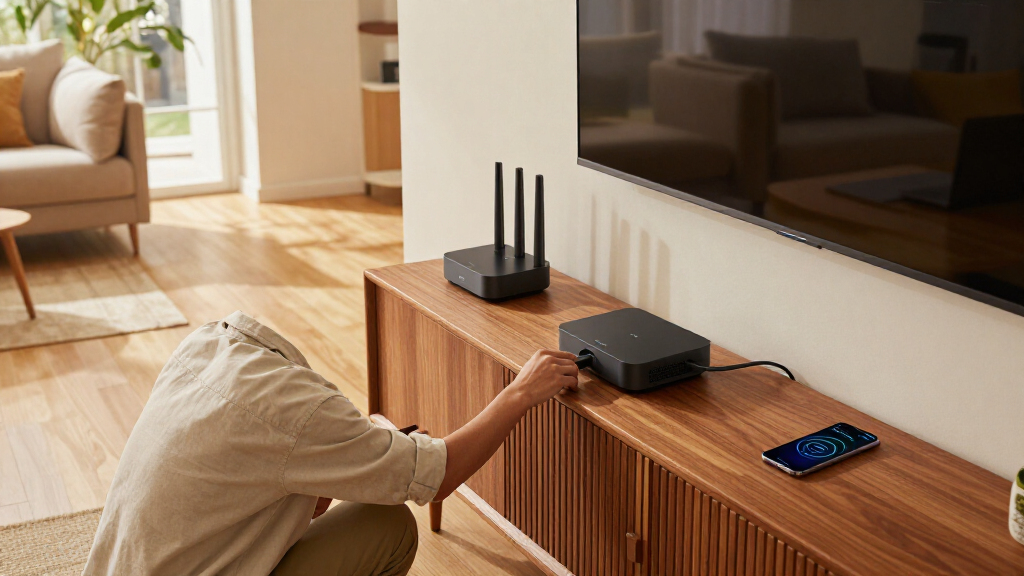
I ranked these systems around the challenges that define a large-home WiFi 7 setup: delivering a usable signal across distant rooms and floors, supporting many simultaneous devices, and making it practical to place nodes where the network needs them. I weighed band configuration, included node count, stated coverage where provided, wired connectivity, and the balance between wireless capacity and installation flexibility. I also considered setup and upkeep, since an elaborate system is less helpful if managing the network becomes a chore.
The order favors systems with a stronger combination of whole-home reach, backhaul capacity, and useful flexibility, rather than the highest advertised speed alone. That puts the quad-band Deco BE95 first, with the Orbi 770 and Deco’s tri-band models appealing to different layouts and workloads. More affordable dual-band kits rank lower for large homes with heavy traffic, but can be sensible when the home is less demanding or wired backhaul is available. Renewed models are judged with added caution because product condition and support terms can vary by seller.
| WiFi 7 mesh system for large home | Bands | Device capacity | WiFi standard | Coverage |
|---|---|---|---|---|
| TP-Link Deco BE95 Wi-Fi 7 Quad | Quad-band: two 6 GHz bands, 5 GHz, and 2.4 GHz | Over 200 devices | — | — |
| NETGEAR Orbi 360 Series WiFi 7 | — | Up to 70 devices | WiFi 7 | Up to 4,000 sq. ft. |
| NETGEAR Orbi 370 Series WiFi 7 | Dual-band | — | WiFi 7 | Up to 6,000 sq. ft. |
| TP-Link Deco 7 Pro Tri-Band Wi | Tri-band | Over 200 devices | — | — |
| TP-Link Deco 7 BE23 Wi-Fi 7 Du | Dual-band | — | — | Up to 4,500 sq. ft. |
| NETGEAR Orbi 770 Series WiFi 7 | — | Up to 100 devices | WiFi 7 | Up to 8,000 sq. ft. |
| TP-Link Deco 7 BE3600 WiFi 7 W | — | — | — | — |
| TP-Link Deco 7 BE5000 Dual-Ban | Dual-band, 2.4 GHz and 5 GHz | Over 150 devices | WiFi 7 | Up to 6,600 sq. ft. |
| NETGEAR Orbi 370 Series WiFi 7 | Dual-band | Up to 70 devices | WiFi 7 | Up to 6,000 sq. ft. |
| TP-Link Deco 7 Pro Tri-Band Wi | — | — | WiFi 7, tri-band | Up to 6,300 sq. ft. |
Factors to Consider When Choosing Best WiFi 7 Mesh System For Large Home
Choosing a mesh kit for a large home starts with the layout, not the WiFi 7 label. I would work out where the signal must reach, how many devices compete for bandwidth, and whether Ethernet can connect the nodes. Those details help distinguish a system that needs more wireless capacity from one that simply needs another well-placed node.
Match Node Count to the Floor Plan
A two-pack can cover a compact, open home more effectively than a three-pack placed poorly, while a home with multiple floors or separated wings may benefit from the extra placement options of a three-pack. Check which areas need dependable service, including workspaces, bedrooms, garages, and outdoor-adjacent rooms. Dense walls, masonry, radiant barriers, and floor materials can weaken signals more than the square footage suggests. Avoid placing every node at the edge of a dead zone; each satellite needs a solid connection back to the rest of the mesh. If you are unsure, plan for a central router location and one node per major coverage challenge rather than buying by the biggest coverage claim alone.
Choose Tri-Band or Quad-Band for a Reason
Extra bands can give mesh traffic and client devices more room, which is useful when several people stream, game, and work at once. But more bands do not automatically mean better coverage, and a router’s advertised combined speed is not the speed a single device will receive. A dual-band system may be enough for moderate use, especially when satellites can connect over Ethernet. For wireless-only links between nodes, tri-band or quad-band hardware can offer more capacity for backhaul traffic. I would pay for added bands when the home has heavy concurrent use or limited wiring, not simply because WiFi 7 sounds newer.
Plan for Wired Backhaul and Multi-Gig Internet
Ethernet backhaul connects mesh nodes by cable and can reduce the wireless burden between them, often making node placement and performance more consistent. Before choosing a kit, check the number and speed of its Ethernet ports against your existing switches, NAS, desktop computers, and internet service. Multi-gig ports are most useful when the modem, plan, and wired devices can all take advantage of them. If you cannot run cable, prioritize a system with enough wireless capacity for both client traffic and links between nodes. A common mistake is buying a high-speed mesh kit while overlooking a slower modem, switch, or Ethernet run that becomes the actual limit.
Treat Coverage Estimates as Starting Points
Manufacturer coverage figures describe an idealized area, not a guarantee that every room will have the same signal or speed. Layout, construction materials, neighboring networks, and node position all affect results. A long, narrow house can be harder to cover than a larger open-plan space, and a basement or detached room may need a dedicated node or wired connection. Compare coverage claims only alongside node count and your home’s shape. If reliable service matters in a specific room, leave room in your plan for a wired access point rather than expecting a central mesh kit to solve every obstruction.
Check Setup, Controls, and Ongoing Support
Mesh systems differ in how they handle guest access, parental controls, device visibility, security updates, and network troubleshooting. Decide which controls you will actually use before choosing a system, and check whether any desired feature requires an account or paid plan. A simple app can make adding nodes and resolving connection issues easier for less technical households. Also check how the system receives firmware updates and whether it supports the network features your household needs. A feature-rich system is a poor fit if routine management feels harder than the coverage problem it was meant to solve.
Weigh Renewed Hardware and Upgrade Timing
Renewed mesh systems can reduce the cost of entering a higher tier, but their condition, included accessories, return terms, and warranty can vary. Confirm that every listed router and satellite is included and that the seller’s support terms suit your expectations. For any WiFi 7 kit, check whether your current devices and internet plan can use its newer capabilities; older clients can still connect, but they will not gain WiFi 7-specific benefits. If most of your devices are older, reliable coverage and wired connections may matter more than a top-tier radio configuration. Buy for the household you expect to support over the system’s useful life, not just the newest device in the house.
Frequently Asked Questions
Should I choose a three-pack or a two-pack for a large home?
Choose based on the shape and construction of the home, not the label “large.” A two-pack may be enough for an open layout with a central router location, while a three-pack can help reach another floor, wing, or distant room. More nodes can also create extra wireless traffic if they are placed too close together or have weak links. Start by identifying the rooms that need coverage and where each unit can sit with a clear connection to the next. If Ethernet connects the nodes, a two-pack may perform well across a wider area than a wireless-only kit with poorly placed satellites.
Is a quad-band or tri-band mesh system worth choosing over dual-band?
It can be worthwhile when satellites rely on wireless connections and the household has many devices competing for network capacity. Extra bands can give the system more room to carry traffic between nodes while serving phones, computers, and streaming devices. For a home with Ethernet backhaul and moderate use, dual-band hardware may be a more sensible fit. Do not use the number of bands as a stand-in for coverage: walls and node placement still shape the signal. The Deco BE95 is the standout quad-band option here, while several Deco and Orbi choices offer different tri-band or dual-band tradeoffs.
Will WiFi 7 mesh improve service for devices that do not support WiFi 7?
Older WiFi devices can connect to a WiFi 7 mesh system, but they will continue to use the WiFi capabilities they support. They do not gain WiFi 7-only features simply by joining a newer network. A newer mesh can still help by improving coverage or managing multiple connections, but that benefit depends on placement, system capacity, and your internet connection. Before paying more for advanced wireless features, make a rough list of the devices that use your network most. If nearly all are older, prioritize reliable coverage and ports over future-facing specifications.
Can I mix different Deco or Orbi mesh models in one system?
Compatibility depends on the brand, model, and the manufacturer’s current mesh rules, so I would verify the exact model numbers before buying a mixed kit. Even where mixing is supported, the system may not deliver the same features or capacity across every node. A satellite with fewer bands or slower ports can affect how the mesh handles traffic in the area it serves. Matching units are usually simpler to manage and make expansion easier to plan. If adding a node later is part of your plan, check compatibility and whether that model is still available before choosing the main kit.
What should I verify before buying one of the renewed systems?
Check the seller’s description for the exact number of units, power adapters, and other included parts, since a bundle’s name may not clarify every item. Read the condition and return terms, and confirm what warranty or technical support applies. For a mesh kit, confirm that all nodes belong to the same compatible system and can be reset and set up normally. Renewed listings can make a higher-tier model more attainable, but uncertain condition or limited recourse may outweigh that benefit. If you depend on stable service for work or home devices, a new kit with clear support terms may be the safer choice.
Conclusion
For most buyers seeking a capable large-home system, I would start with the TP-Link Deco BE95 as the best overall pick: its quad-band design makes the strongest case here for busy, wireless-heavy homes. The Deco BE23 is my best value-style choice for households that want WiFi 7 without moving straight to premium multi-band hardware, while the NETGEAR Orbi 770 three-pack suits buyers who need the placement flexibility of three units. For a premium alternative, compare the TP-Link Deco BE17000 with the BE95 based on your need for high-capacity tri-band hardware and your wired setup. Beginners should favor the kit whose app, node count, and support fit their comfort level; the standard three-pack Orbi 370 is a straightforward option to investigate, while I would check renewed-unit terms closely before choosing a refurbished bundle. For homes with Ethernet between nodes, a dual-band Deco may be enough; for wireless-only links, a tri-band or quad-band system is the stronger direction.
Halloween Picks
halloween
As an affiliate, we earn on qualifying purchases.