
TL;DR

Get privacy and security gear delivered free with Prime
- Fast, free delivery on millions of items
- Prime Video, Amazon Music and more included
- Member-only deals all year
A late-June 2026 price snapshot shows RAM and SSDs have become one of the largest costs in high-end PCs and workstations. The shift is hitting DIY builders and teams buying high-capacity RDIMM workstations hardest because they often pay retail spot prices while larger OEMs rely on contracts and inventory.
High-end PC and workstation buyers are now facing a sharp memory-driven cost increase, with RAM and SSDs taking up about 35% of a PC bill of materials, according to HP investor comments cited in the source material. The shift matters because it changes the economics of DIY builds, where buyers often pay current retail prices rather than the contract prices used by major manufacturers.
HP told investors that memory had moved from roughly 15% to 18% of a PC bill of materials to about 35% in a single quarter, according to the source material. For builders, that means RAM and storage are no longer minor add-ons; in some midrange and premium configurations, they can rival or exceed the cost of a graphics card.
The source material cites a late-June 2026 build comparison in which a 32GB DDR5 kit cost about $369, close to the price of the RTX-class GPU in the same cart. It also says some premium builds that were around $2,000 a year earlier are now landing between $2,800 and $4,500, with memory and storage identified as the main moving cost.
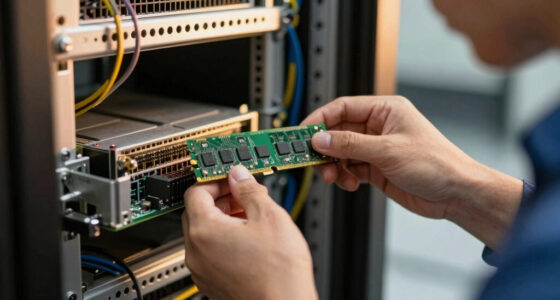
The impact is sharper for professional workstations that need larger modules. The source material says 96GB and 128GB DDR5 RDIMMs are among the scarcest parts because they are close to the server memory products that suppliers are prioritizing for higher-margin buyers, including large cloud and AI customers.
The high-end PC & workstation tax
If you build your own machines or spec your team’s workstations, you’re the most exposed buyer in this market — no hedge, no bulk contract, just a parts cart and a number you used to ignore, now the biggest line on the invoice.
OEMs buy on bulk contracts and hold hedged stock; you pay the spot price on the day. The DIY builder is now the most exposed buyer in the chain — and the prebuilt is sometimes cheaper. Price it before you commit.
96GB & 128GB DDR5 RDIMMs are the scarcest, closest to the server memory makers prioritize. 64GB RDIMM could cost 2× by end-2026 vs early 2025. The parts that define a workstation are the ones squeezed hardest.
The squeeze didn’t just raise prices — it inverted the value system of high-end building. Buy big, buy early, build it yourself: each enthusiast virtue is now a way to overpay. Discipline beats ambition in 2026 — right-size hard, buy deliberately, lean on bundles, treat the prebuilt as a real price check. You can’t avoid the AI tax levied a layer up in the fabs; you can refuse to pay more of it than the job needs. Next: Cloud’s Hidden Memory Bill.
DIY Savings Are Under Pressure
The change matters because it weakens a long-standing assumption in the PC market: that building a high-end machine reliably costs less than buying a comparable prebuilt. According to the source material, large OEMs such as Dell, HP and Lenovo can buy memory through bulk contracts, hold inventory, and spread price changes across shipments.
Individual buyers, by contrast, often face the retail spot price on the day they order. That makes a custom parts cart more exposed to sudden memory moves, especially for buyers who instinctively choose extra RAM or larger SSDs “to be safe.” The source material says a comparable prebuilt can now be cheaper than buying the same parts separately, though that will vary by configuration and seller.
As an affiliate, we earn on qualifying purchases.
AI Demand Reaches Retail
The report frames the development as part of a broader 2026 memory squeeze linked to demand for high-bandwidth and server-class memory. Earlier parts of the cited series traced pressure from HBM used in AI systems through DRAM, SSDs and retail components.
The key retail effect is that capacity once treated as affordable headroom now carries a much higher penalty. For workstation buyers, the source material points to 64GB, 96GB and 128GB DDR5 RDIMMs as exposed categories because they overlap with the memory capacities demanded by servers, AI systems and data-heavy professional machines.
As an affiliate, we earn on qualifying purchases.
Prices May Still Move
It is not yet clear how long the memory price pressure will last or whether retail prices will ease later in 2026. The source material describes its figures as point-in-time late-June 2026 prices and says the market is fast-moving.
It is also uncertain how often prebuilt systems will beat DIY carts in practice. The outcome depends on specific parts, inventory, rebates, warranty terms, and whether an OEM or system integrator is still selling machines built with lower-cost memory stock.
As an affiliate, we earn on qualifying purchases.
Buyers Reprice Before Building
The immediate next step for buyers is price comparison before purchase. The source material recommends right-sizing memory, avoiding unnecessary 128GB configurations, checking CPU and motherboard bundles, staging upgrades rather than buying all capacity upfront, and using a prebuilt quote as a benchmark before committing to a custom build.
The next installment in the cited series is expected to examine cloud’s hidden memory bill, moving the focus from retail hardware buyers to service providers and cloud customers affected by the same supply pressure.
gaming and professional PC components
As an affiliate, we earn on qualifying purchases.
As an affiliate, we earn on qualifying purchases.
Key Questions
What is the High-End PC and Workstation Tax?
It refers to the extra cost buyers are paying because RAM and SSD prices have risen sharply, making memory and storage a much larger share of premium PC and workstation budgets.
Why are DIY builders more exposed?
DIY buyers usually buy parts at current retail prices. Large OEMs can use bulk contracts and existing inventory, which may soften the impact of short-term memory price spikes.
Are prebuilts now cheaper than custom PCs?
Sometimes, according to the source material. A prebuilt system is not always cheaper, but buyers of high-end PCs are being advised to price one before buying separate parts.
Which workstation parts are most affected?
The source material points to 96GB and 128GB DDR5 RDIMMs as especially tight. These modules are close to the server memory categories prioritized by suppliers serving AI and data-center demand.
What can buyers do now?
Buyers can limit exposure by choosing only the memory they need now, comparing bundles, delaying non-urgent upgrades, reusing working parts, and checking prebuilt workstation pricing before ordering.
Source: Thorsten Meyer AI
Halloween Picks
halloween
As an affiliate, we earn on qualifying purchases.