
TL;DR
Listen free for 30 days with Audible
Thousands of audiobooks and originals — cancel anytime.
Start your free trialAs an affiliate, we earn on qualifying purchases.
Linux kernel version 6.9 introduced a change where suspend no longer clears disk encryption keys from memory. This update affects security practices for encrypted devices. The full implications are still being evaluated.
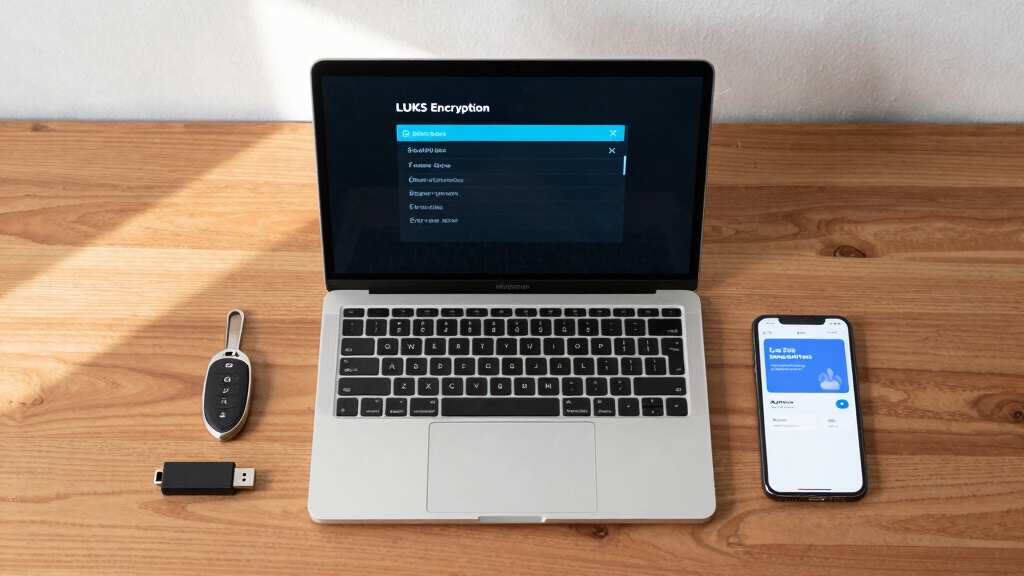
Since the release of Linux kernel 6.9, the behavior of LUKS suspend has changed, with the feature no longer wiping disk-encryption keys from memory during suspend or hibernate operations. This modification, confirmed by kernel developers, could impact the security of encrypted systems relying on this mechanism to protect keys during sleep states.
Prior to Linux 6.9, the kernel automatically cleared encryption keys from memory when suspending or hibernating, reducing the risk of key exposure if the system was compromised during sleep. Starting with version 6.9, this automatic wipe was disabled, meaning encryption keys may remain in memory during suspend, potentially accessible to malicious actors or forensic analysis.
The change was introduced as part of a broader update to suspend and resume behaviors, with developers citing performance and stability improvements. The Linux kernel mailing list and security advisories confirm the modification, but do not specify whether it is a temporary measure or a permanent change.
Implications for Disk Encryption Security Post-6.9
This change raises concerns about the security of systems using LUKS encryption, especially in scenarios where physical access or system compromise during suspend could expose encryption keys. Security experts warn that systems relying on automatic key wiping as a safeguard may now be more vulnerable during sleep states, particularly in portable or sensitive environments.
However, some argue that users can mitigate risks through additional security measures, such as full disk encryption with strong passphrases, hardware security modules, or BIOS/UEFI protections. The overall security impact depends on system configuration and threat models.
hardware security module for Linux
As an affiliate, we earn on qualifying purchases.
As an affiliate, we earn on qualifying purchases.
Background on LUKS and Suspend Key Management
Linux Unified Key Setup (LUKS) is the standard disk encryption method used in Linux systems, providing data security through encryption keys stored in memory during operation. Historically, Linux kernels have included features to clear these keys from memory during suspend or hibernate to prevent potential data leaks if the system is compromised while sleeping.
The behavior of wiping keys during suspend has been a security best practice, balancing usability with protection. The recent change in Linux 6.9 marks a departure from this practice, with the kernel no longer automatically clearing encryption keys during sleep states.
“The change was made to improve suspend stability and performance, but users should be aware of the security implications.”
— Linus Torvalds, Linux creator
full disk encryption hardware key protector
As an affiliate, we earn on qualifying purchases.
As an affiliate, we earn on qualifying purchases.
Extent of Security Risks and Long-Term Impact
It is not yet clear whether this change is a temporary adjustment or a permanent shift in Linux kernel security policies. The full security implications depend on how widely the change is adopted and whether additional safeguards are implemented by users or distributions.
Experts are still evaluating whether this modification significantly increases vulnerability in typical use cases or if it remains a concern primarily for high-security environments.
As an affiliate, we earn on qualifying purchases.
Monitoring and Mitigation Strategies for Users
System administrators and security professionals should review their suspend and hibernate configurations in Linux 6.9 and later. They may need to implement additional safeguards, such as full disk encryption with strong passphrases or hardware security modules, to mitigate potential risks.
Further kernel updates or patches may address security concerns, and users are advised to stay informed through Linux kernel security advisories and community discussions. Ongoing research will clarify the long-term security impact of this change.
As an affiliate, we earn on qualifying purchases.
Key Questions
Does Linux 6.9 completely remove the ability to wipe keys from memory?
No, the change specifically affects the automatic wiping of encryption keys during suspend. Manual or alternative methods may still be used to clear keys, but the default behavior has been modified.
Should I disable suspend on my Linux system due to this change?
Disabling suspend is not necessary for most users. Instead, consider additional security measures, especially if handling sensitive data or using portable devices.
Will future Linux updates restore the key wipe feature?
This remains uncertain. Kernel developers have not announced plans to revert this change, but future updates may address security concerns or provide configurable options.
How can I protect my encrypted data during suspend in Linux 6.9+?
Use full disk encryption with a strong passphrase, enable hardware security modules if available, and consider disabling suspend or using encrypted RAM solutions for high-security environments.
Source: hn
Back to school Picks
back to school
As an affiliate, we earn on qualifying purchases.