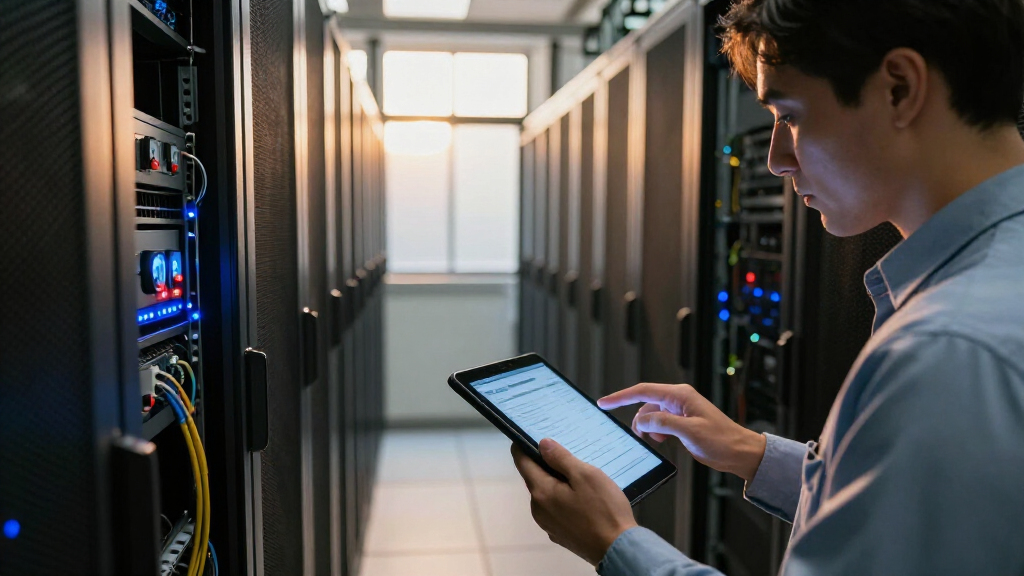

🔍 Read the full analysis: How Power Bills Fit Into The Cost Of AI Data Centers on ThorstenMeyerAI.com

Get privacy and security gear delivered free with Prime
- Fast, free delivery on millions of items
- Prime Video, Amazon Music and more included
- Member-only deals all year
TL;DR
Amazon, Alphabet, Microsoft and Meta spent about $202 billion on property and equipment from July through September 2026, more than twice their total a year earlier, according to the source’s calculation from company filings. Their financing mix now includes operating cash, debt, leases, partnerships and equity; long-term power contracts add another commitment whose cost and allocation are not fully detailed in the supplied material.
The spending tally covers property and equipment, including data centers, servers and chips. Amazon reported $77.3 billion in quarterly spending, Alphabet $51.4 billion, Microsoft $39.4 billion in cash capital spending, and Meta $33.9 billion. Microsoft’s figure rises to $45.2 billion when new finance leases are included. The combined year-earlier comparison was about $97 billion, based on the article’s summation of company cash-flow statements.
The companies are using outside funding alongside their operating cash. Meta said on October 26 that it plans to fund AI investments through “a balanced mix” of operating cash flow, investment-grade debt, strategic partnerships and equity capital. The source reports that Meta sold $25 billion of its stock and $12.5 billion of preferred shares, Microsoft issued $25 billion in bonds, and Amazon disclosed a loan facility of up to $80 billion secured by servers it will purchase. Those announcements show several financing channels in use, not a single standard approach.
Electricity is part of the same financial picture, but the supplied figures do not provide a consolidated dollar value for power bills; broader questions around powering AI data centers remain. The article reports that the four companies had about $1.02 trillion in future lease payments for arrangements that had not yet started as of September 30, calculated from their filings. Those lease commitments are not the same as power-contract obligations. The source says power agreements can run 15 to 20 years, while servers are typically written off over five to six years, creating a potential timing mismatch if revenue does not keep pace with costs.
Infographic 01 · One quarter, four companies
The bill doubled. The cash did not.
What Amazon, Microsoft, Alphabet and Meta paid for buildings, servers and chips from July to September 2026, set against the cash their businesses brought in.
AmazonQ3 2025: $35.1B spent
Spent $34.9B more than came in
AlphabetQ3 2025: $24.0B spent
Free cash flow −$9.1B
MicrosoftQ3 2025: $19.4B spent
$18.6B left over
MetaQ3 2025: $18.8B spent
Free cash flow −$2.1B
Cash purchases of property and equipment as reported; not all of it is for AI (Amazon also builds warehouses). Gaps for Amazon and Microsoft are my arithmetic; free cash flow for Alphabet and Meta as the companies report it. Microsoft’s quarter is its fiscal Q1 2027 (July–September 2026).
Sources: Amazon results, 29 Oct · Microsoft 10-Q, 28 Oct · Alphabet results, 28 Oct · Meta results, 21 Oct. Debt raised: cash flow statements, nine months 2026.
Powered by Thorsten Meyer AI
Power Contracts Extend the Cost Horizon
The spending matters beyond the companies’ quarterly results because data-center costs do not end when construction is complete. Electricity is an ongoing operating need, and long-term power contracts can commit a company to payments for years. The supplied material gives no combined price for those contracts, so the scale of the power bill cannot be compared directly with the reported capital spending or lease commitments.
The financing mix also affects who bears the risk. Borrowing places repayment obligations on the company; leases and partnerships can put assets or financing on other entities’ balance sheets; equity sales spread ownership. If AI services generate revenue more slowly than expected, companies and their financing partners still have to manage the commitments. The source identifies investors, building-owning entities and electricity customers as parties potentially exposed to costs, but it does not quantify how much risk each carries.
For households and businesses, the electricity connection is the most direct potential concern. Large data centers add demand to power systems, but the material does not establish whether the reported contracts will raise local bills, how costs are allocated among customers, or which projects require new generation and grid investment. Those outcomes depend on local utility arrangements and regulation, details not supplied here.
Products Worth Considering

DJI Mic 3 Wireless Microphone System (2 Transmitters, 1 Receiver, Charging Case)

Bose QuietComfort Wireless Bluetooth Headphones with Active Noise Cancellation, Mic, USB‑C Charging, Deep Bass, 24‑Hour Battery – White Smok

Anker SOLIX S2000 Portable Power Station, 2,010Wh, 1,500W
As an affiliate, we earn on qualifying purchases.
How the 2026 Build-Out Is Funded
The four companies’ spending accelerated sharply in the third quarter. Amazon’s quarterly property-and-equipment outlay rose from $35.1 billion a year earlier to $77.3 billion; Alphabet’s went from $24.0 billion to $51.4 billion; Microsoft’s cash spending rose from $19.4 billion to $39.4 billion; and Meta’s increased from $18.8 billion to $33.9 billion. Company guidance cited in the source points to continued high spending: Amazon forecast about $220 billion for 2026, Alphabet $195 billion to $205 billion, Microsoft about $170 billion, and Meta $135 billion to $145 billion. These are company forecasts, not final reported totals, and the companies’ accounting categories may differ.
Operating cash does not cover every company’s reported quarterly property-and-equipment spending under the source’s comparison. Amazon generated $42.4 billion in operating cash, Alphabet $42.3 billion and Meta $32.8 billion; Microsoft generated $58.0 billion. Comparing those figures with the spending amounts, the source says Microsoft was the only one of the four with operating cash remaining after that quarter’s spending. This comparison is a snapshot, not a full measure of each company’s liquidity, borrowing capacity or other cash flows.
The article describes five ways to finance data centers: operating cash, debt, leases, special-purpose or partner-owned facilities, and equity. It also points to long-term power agreements as a separate commitment. The source reports about $225 billion in long-term debt raised by Amazon, Alphabet and Meta during the first nine months of 2026, and notes Microsoft’s bond maturity extending to 2066. These figures and descriptions are attributed to the source’s review of company filings and announcements.
““Through a balanced mix of operating cash flow, investment-grade debt, strategic partnerships, and equity capital.””
— Meta, in a statement describing its funding approach on October 26, 2026
Power Costs and Risk Allocation
The source material does not give the total dollar value of the companies’ power contracts, identify all counterparties, or state how much electricity each data center is expected to use. It also does not quantify how much power costs are passed through to customers, borne by utilities, or covered by separate generation deals. The reported $1.02 trillion in future lease payments concerns leases that had not started; it should not be read as a power-contract total.
It remains uncertain whether expected AI revenue will cover the infrastructure and energy commitments as they come due. The figures describe announced spending, reported cash flows, financing and contractual commitments, but they do not establish that AI investment will produce a particular return—or that a financing shortfall will occur. The source’s discussion of newer GPU cloud providers and higher borrowing costs raises a risk question, but it does not provide enough detail to assess the finances of every provider or project.
Local effects on electricity bills are also not established by the information provided. Those depend on where data centers are built, how utilities procure power, who pays for grid upgrades, and the terms of contracts and regulation in each area.
Filings and Power Deals to Watch
The next evidence will come from company filings and quarterly results showing whether capital spending continues near current forecasts, how it is financed, and whether operating cash flow changes. Investors and customers can also watch for updates to the companies’ stated 2026 spending plans and any revisions to expectations for 2027.
For the power-bill question, the missing detail is project- and region-specific: electricity use, contract length and pricing, utility investment, and rules for allocating grid costs. Further disclosures or regulatory filings would be needed to determine whether data-center demand changes costs for other electricity users. Until those details are available, the scale of infrastructure spending is clear, but the eventual distribution of power costs remains unsettled.
Key Questions
How much did the four companies spend in the third quarter of 2026?
They spent about $202 billion on property and equipment from July through September, according to the source’s calculation from company filings. The total includes spending associated with data centers, servers and chips; it is not a separate measure of electricity bills.
Does the $1.02 trillion figure include power bills?
No. The source describes about $1.02 trillion in future lease payments for leases that had not started as of September 30, 2026. It does not provide a combined dollar total for the companies’ power contracts.
How are the companies financing data-center construction?
The source identifies operating cash, bonds and loans, leases, partnerships or building-owning entities, and equity sales. Meta specifically described a planned mix of cash flow, investment-grade debt, partnerships and equity.
Could AI data centers raise household electricity bills?
They may add demand to power systems, but the supplied material does not establish whether household bills will rise or how costs will be allocated. That depends on local utility contracts, grid investments and regulatory decisions.
What is the main financial risk identified in the report?
The source points to a timing mismatch: servers may be written off over five to six years, while power contracts and leases can last 15 to 20 years and some bonds longer. If revenue grows more slowly than costs, companies or their financing partners would still face those commitments.
Source: ThorstenMeyerAI.com