
📊 Full opportunity report: Anonymous daily check-ins for 12-step sponsors on IdeaNavigator AI — validation score, market gap, and execution plan.
Play games included with Prime
Start a Prime free trial and play with Amazon Luna on your devices.
Start playingAs an affiliate, we earn on qualifying purchases.
TL;DR
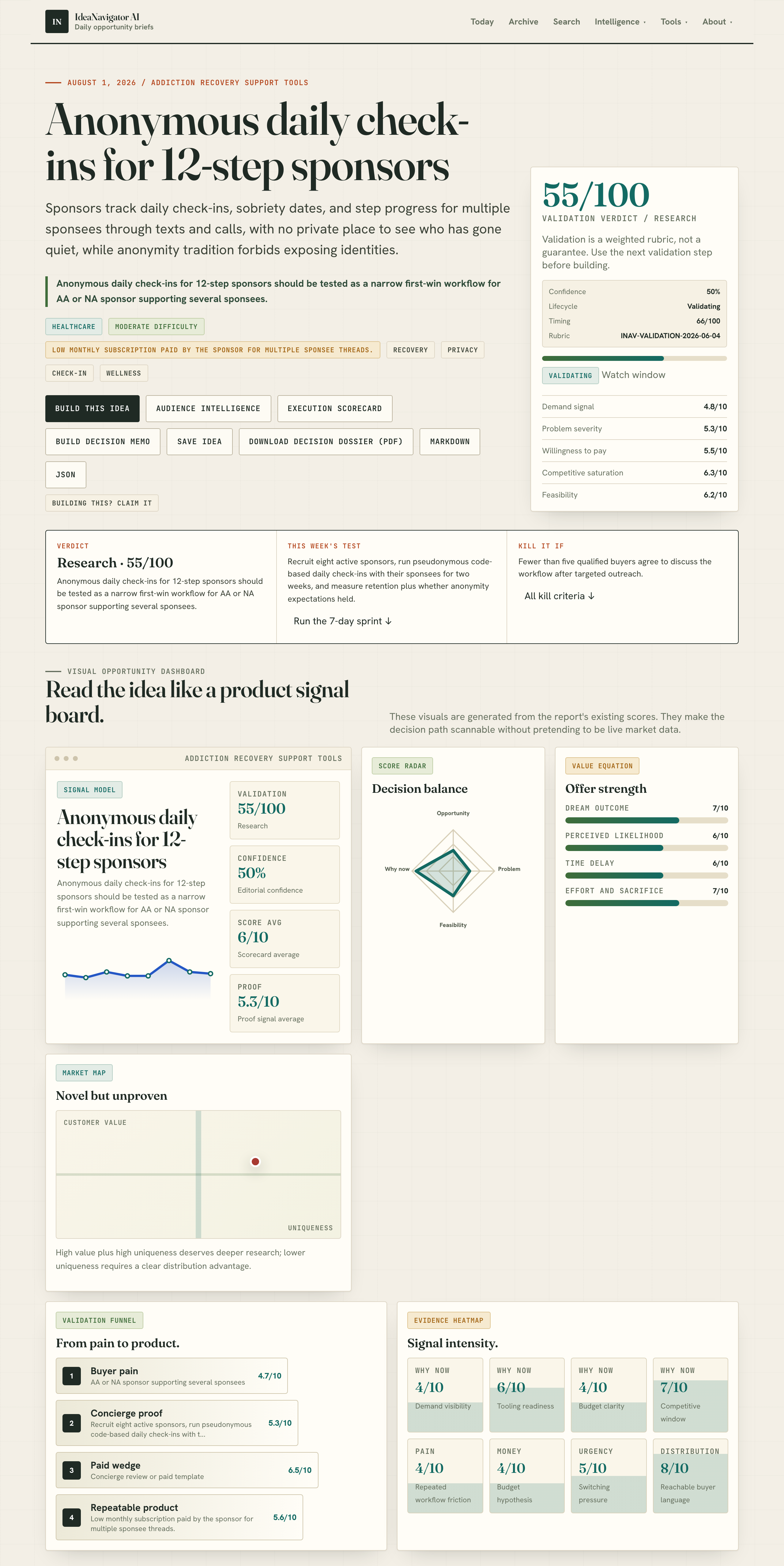
Researchers are testing a new tool enabling 12-step sponsors to perform anonymous daily check-ins with multiple sponsees. This innovation seeks to address privacy concerns while supporting recovery efforts. The pilot is set to run with eight sponsors over two weeks. If you’re interested in supporting your recovery journey, consider exploring our Kickstart Your Postpartum Recovery With Daily Check-ins program.
Researchers are testing a new prototype that allows 12-step sponsors to conduct anonymous daily check-ins with multiple sponsees through a pseudonymous thread system. This development aims to improve support tracking while maintaining the tradition of anonymity, which has historically limited digital solutions. You can Kickstart Your Postpartum Recovery With Daily Check-ins to learn more about supportive check-in systems.
The proposed system involves sponsors inviting sponsees via one-time codes, with daily check-ins recorded as simple green or red indicators, optionally accompanied by notes. No real names or phone numbers are stored, addressing privacy concerns that arise from mainstream messaging apps leaking personal contacts. The initiative is currently in a pilot phase, involving eight active sponsors who will use the system with their sponsees over a two-week period. Learn how support systems like this can assist recovery efforts.
According to an anonymous researcher involved in the project, the goal is to validate whether this pseudonymous approach can effectively support daily accountability and progress tracking without compromising the core anonymity principles of AA and NA. The system is designed as a low-cost, subscription-based tool, where sponsors pay a monthly fee for access to multiple sponsee threads. The pilot will measure retention rates and whether the system successfully preserves anonymity expectations.
Potential Impact on Digital Support in 12-Step Programs
This development could modernize how sponsors support sponsees, especially as recovery support increasingly shifts onto mobile devices. If successful, it offers a privacy-preserving alternative to traditional messaging apps, which often leak personal information. Maintaining anonymity while enabling effective check-ins could enhance engagement, accountability, and safety for participants, especially in digital or remote contexts.
anonymous support check-in app for recovery
As an affiliate, we earn on qualifying purchases.
As an affiliate, we earn on qualifying purchases.
Digital Innovation Meets Traditional Anonymity in Recovery Support
12-step programs like AA and NA have long prioritized anonymity, limiting digital tools that could facilitate daily support. Recent years have seen a rise in mobile apps aimed at recovery, but many struggle to balance privacy with functionality. The current initiative responds to this challenge by proposing a pseudonymous system that respects the core principles of anonymity while leveraging technology to improve support and oversight. This pilot builds on ongoing efforts to adapt traditional recovery methods to digital environments, especially given the increased reliance on remote communication during recent years.
“This system aims to provide a simple, private way for sponsors to check in with multiple sponsees daily without exposing identities or contacts.”
— an anonymous researcher
pseudonymous recovery support platform
As an affiliate, we earn on qualifying purchases.
As an affiliate, we earn on qualifying purchases.
Unconfirmed Effectiveness and Privacy Preservation
It is not yet clear whether the pseudonymous check-in system will effectively replace existing methods or fully meet anonymity standards in practice. The pilot’s short duration and limited participant number mean outcomes regarding retention, privacy, and user satisfaction remain uncertain. Further testing and validation are needed to confirm if this approach can scale or address all privacy concerns.
privacy-focused support tracking app
As an affiliate, we earn on qualifying purchases.
As an affiliate, we earn on qualifying purchases.
Next Steps in Pilot Testing and Validation
The current pilot involving eight sponsors will run for two weeks, with researchers measuring engagement, retention, and adherence to anonymity expectations. Pending positive results, developers may refine the system and consider broader deployment. Additional studies could explore long-term effectiveness and integration with existing recovery support tools.
12-step sponsor sponsee communication tool
As an affiliate, we earn on qualifying purchases.
As an affiliate, we earn on qualifying purchases.
Key Questions
How does the pseudonymous check-in system protect user privacy?
The system uses one-time codes for invitations, with daily check-ins recorded as simple indicators (green/red) and optional notes. No real names or contact details are stored, preserving participant anonymity.
Can this system replace traditional in-person sponsor support?
It is designed as a supplementary digital tool, not a replacement for in-person meetings. Its goal is to improve daily accountability and support in remote or digital contexts.
Will this system be available for all sponsors and sponsees?
Currently, the system is in a pilot phase with a limited number of active sponsors. Broader availability will depend on pilot outcomes and further development.
Does this approach comply with AA and NA’s tradition of anonymity?
The system is explicitly designed to respect anonymity by avoiding the storage of real names or contact information, aligning with traditional principles.
What are the main challenges anticipated with this system?
Potential challenges include ensuring user adoption, verifying privacy protections in practice, and demonstrating that the system effectively supports recovery without unintended breaches of anonymity.
Source: IdeaNavigator AI
Fall yard work Picks
leaf blowers
As an affiliate, we earn on qualifying purchases.