
TL;DR

Get privacy and security gear delivered free with Prime
- Fast, free delivery on millions of items
- Prime Video, Amazon Music and more included
- Member-only deals all year
Serial numbers help incident response teams distinguish a particular device, find related inventory and support records, and keep evidence items straight. They do not prove who used a device, where it has been, or whether it was compromised, so responders should check them against independent identifiers, logs, and documented custody records.
A laptop can look ordinary on a desk and still be the exact device at the center of an incident. Its model may match hundreds of others; its serial number can distinguish that one unit, helping a response team find its records and decide what to inspect.
That small label is useful, but it cannot tell you whether someone used the laptop or what happened on it. This guide explains what serial numbers can do for incident response, how to connect them to practical records, and why you should confirm them with other evidence.
Think of a serial number like a luggage tag: it helps staff match a bag to a record, but it does not reveal what happened to the bag on the journey. You’ll see how to make that identifier useful before an incident, during evidence collection, and as devices move through repair or reassignment.
A serial number can distinguish one manufacturer-identified unit from others of the same model.
Serial-number searches are most useful when they connect to current inventory, endpoint-management, procurement, and incident records.
Confirm a serial with other identifiers, such as an asset tag, hostname, management ID, or device certificate.
For evidence, record the identifier’s source, collection details, device condition, photographs where appropriate, and custody transfers.
A serial number does not prove who used a device, whether it was compromised, or where it is now.
Incident Response · Asset Identity
What Serial Numbers Can Do for Incident Response
A serial can help a response team pinpoint a device, find its records, and keep evidence items distinct. It is a useful lead, not a history of who used the device or what happened on it.
01 / Where it helps
Turn one label into a useful lead
A product model describes a class of devices. A serial can help separate one manufacturer-identified unit from the rest—if the value is readable and recorded correctly.
Scope the affected asset
An alert naming a model used by 80 employees is broad. Matching its serial to an inventory record can narrow the search to one assigned device and a practical inspection plan.
Find the related records
Search inventory, endpoint management, procurement, and incident records for owner, location, configuration, purchase, or support details that need verification.
Track handling and recovery
Use the identifier to keep collected devices distinct, verify a repaired or replacement unit, and account for equipment during return, reassignment, or retirement.
02 / Response workflow
Build a reliable path from label to action
Capture early, preserve the source of each value, and keep uncertainty visible as the device moves through the response.
Capture identifiers
Record manufacturer, model, serial, hostname, asset tag, and relevant hardware identifiers.
Search connected records
Check inventory, management, procurement, and incident systems. Know which record is authoritative.
Corroborate and inspect
Compare an independent identifier, such as a management ID, certificate, hostname, or asset tag.
Document custody
Note source, condition, photographs where appropriate, timestamps, handlers, transfers, and storage.
03 / Evidence check
Match the identifier to the question
Each value can answer a different question. Record where it came from; a physical label, operating system, and asset database are distinct sources.
| Identifier | Can help answer | Cannot prove alone |
|---|---|---|
| Manufacturer serial | Which manufacturer-identified unit is in view | ✗Who used it or whether it was compromised |
| Organization asset tag | Which internal inventory entry may apply | ~That the entry is current or accurate |
| Hostname or management ID | Which managed endpoint reported activity | ✗That the physical device has not changed |
| Logs and network records | What activity or connections were observed | ~Device identity without correlation |
04 / Keep the record useful
Small process choices make a big difference
Serials are only as reliable as the surrounding asset process. The goal is a traceable link between the physical item and records responders can actually search.
Preserve and validate
Keep the value as printed or reported, account for formatting differences, and flag duplicates or implausible entries rather than merging them quietly.
Track changes over time
Record repairs, motherboard or component replacement, reassignment, and disposal. Components may have their own serials.
Limit unnecessary exposure
A serial is generally not secret or an access credential. Restrict detailed inventory data appropriately and avoid publishing identifiers without a reason.
05 / Limits & corroboration
One identifier is one piece of evidence
Serials may be missing, duplicated, mistyped, obscured, replaced, or spoofed. Software-reported values may not be equivalent to the physical manufacturer label.
Compare endpoint telemetry, authentication logs, network records, configuration systems, certificates, management IDs, and physical inspection.
The serial helps distinguish the item. Notes about collection, handling, transfer, and storage explain its evidence history. Both matter.
Use serial numbers to pinpoint the device in an incident
Serial numbers help incident responders identify a particular device within a larger group of similar hardware. A model name tells you what kind of laptop or switch you’re looking at; a serial number can help distinguish the unit involved in an alert, outage, or investigation.
For instance, imagine an endpoint alert names a laptop model used by 80 employees. A responder who can match the reported serial to an inventory record may narrow the search to one assigned device, its user, and its office. That gives the team a practical starting point for checking the alert and planning an inspection.
Serial numbers are stable identifiers assigned to individual devices or components by a manufacturer. “Stable” describes their intended role; it does not promise that every number is unique, legible, or correctly stored in every system. A sticker may be scratched, a value may be mistyped, or a software-reported identifier may not match the physical label.
That distinction matters when scope is still unclear. A matching serial can help responders locate the device and related records, but they should check the value against other identifiers before drawing conclusions. It points to a device; it does not tell the whole story.
barcode asset tags for laptops with serial number labels
As an affiliate, we earn on qualifying purchases.
As an affiliate, we earn on qualifying purchases.
Connect a serial number to records that answer useful questions
A serial number becomes useful when it links a physical device to reliable, searchable records. Depending on what an organization tracks, a lookup may show a device’s assigned user, location, purchase details, configuration, support history, and management status.
Suppose a server-room alert refers to one network switch. A responder finds the serial on the chassis, then searches the organization’s inventory and change records. Those entries might identify the rack, the team responsible for maintenance, and a recent replacement. Each detail gives the team something specific to verify, such as whether the replaced unit was properly removed from management.
That lookup works only when systems share usable information. If procurement stores one format, endpoint management stores another, and incident records cannot search either, a correct serial may lead nowhere. Teams should agree which system owns the authoritative record and how responders can find it quickly.
A serial can act like a joining key between records, much like a claim number helps connect a customer call to paperwork. It does not create missing records or resolve conflicting ones by itself. When two systems list different users or locations, preserve that discrepancy and investigate it instead of quietly choosing the tidier entry.
USB barcode scanner for IT asset inventory
As an affiliate, we earn on qualifying purchases.
As an affiliate, we earn on qualifying purchases.
Combine serial numbers with other identifiers before you act
Responders should confirm a serial number with at least one independent identifier before using it to make a high-impact decision. Useful comparisons can include an asset tag, hostname, device-management ID, device certificate, assigned user, or network observation. The right combination depends on what the device and the organization make available.
For example, a laptop label may show a serial that differs by one character from the inventory entry. The hostname and management ID might still point to the same enrolled device, while a physical inspection confirms the label. Recording the mismatch helps the team work out whether it came from a typing error, a repair, or another cause.
Keep track of where each identifier came from. A value read from a chassis label, one reported by an operating system, and one copied from an asset database are not interchangeable sources. If a device is suspected of tampering, that source history may help responders judge how much weight to give each value.
A small comparison table can make the limits clear. Treat each identifier as one piece of a puzzle: several matching pieces give a clearer picture, while one mismatch is a reason to check the records rather than force a match.
| Identifier | What it can help answer | What it cannot prove by itself |
|---|---|---|
| Manufacturer serial | Which manufacturer-identified unit is in view | Who used it or whether it was compromised |
| Organization asset tag | Which internal inventory entry may apply | That the entry is current or accurate |
| Hostname or management ID | Which managed endpoint reported activity | That the physical device has not changed |
tamper-evident evidence bags for electronics
As an affiliate, we earn on qualifying purchases.
As an affiliate, we earn on qualifying purchases.
Capture device details early to keep evidence clear
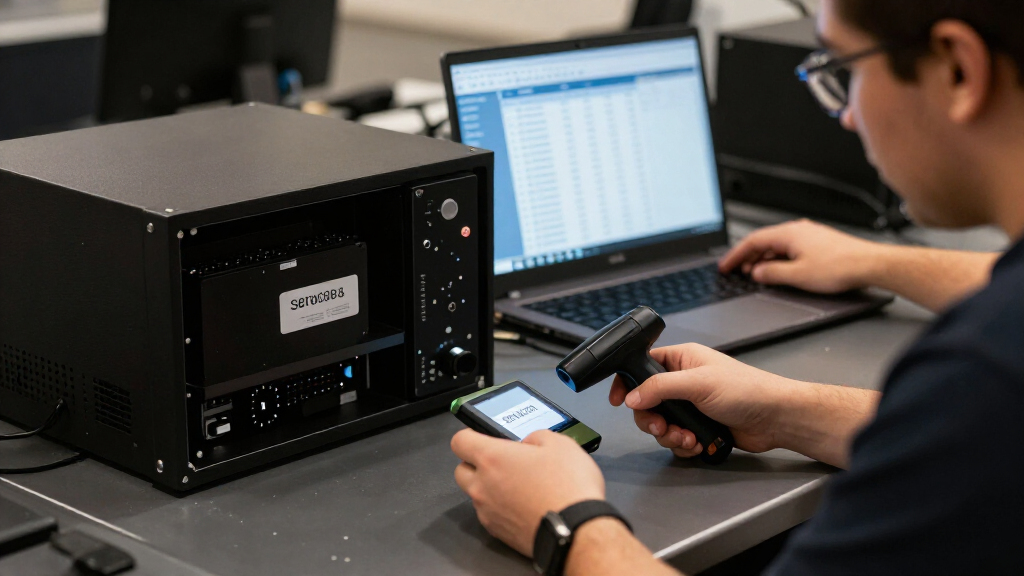
Record identifiers as soon as a device becomes relevant to an investigation. Early notes help responders distinguish one device from another and explain how they reached a conclusion, especially when several similar laptops or drives are collected at once.
Picture a team collecting three dark laptops from a shared office. Without photographs and identifying notes, “the laptop from the meeting room” can quickly become ambiguous. A record of the visible serial, asset tag, collection time, device condition, and collector gives each item a clearer identity as it moves to secure storage.
When a device is evidence, follow your organization’s evidence-handling procedures. Note who collected, handled, transferred, and stored it, along with relevant timestamps and the source of each identifier. A serial number helps distinguish the physical item; custody notes describe its handling. Neither replaces the other.
If a label is unreadable, record that it is unreadable rather than guessing. An asset tag, hostname, management record, or component serial may help identify the item. Keep the uncertainty visible in the case notes so a later reviewer does not mistake an unverified value for a confirmed fact.
IT asset inventory management software serial number tracking
As an affiliate, we earn on qualifying purchases.
As an affiliate, we earn on qualifying purchases.
Use serial numbers to support containment and recovery
Serial numbers can help teams locate, isolate, inspect, and recover the intended device during an incident. The number supports decisions by connecting a physical unit to location or management records; responders still need to confirm the target before taking action.
For instance, a company may need to isolate one laptop after an alert while keeping other machines in the same department online. A serial lookup can help identify the assigned device and check its management record, while a hostname or device-management ID helps confirm which endpoint to isolate. This reduces the chance of disrupting the wrong person’s work.
Serials can also support recovery after a repair or replacement. If a vendor returns a device, staff can compare its serial and service notes with the case record before putting it back into use. When a motherboard or other component changes, the device may have more than one relevant serial, so record what was replaced and when.
During an incident, serial numbers are most helpful as part of a verified chain of decisions: find the asset, cross-check its identity, consult relevant logs, take the appropriate response action, and document the result. A serial may help the team find where the device is recorded; it cannot track physical location by itself.
Know what a serial number cannot tell you
A serial number does not prove who used a device, whether it was compromised, or what happened on it. It identifies a unit only as reliably as the label, reporting method, and records allow. Responders need other evidence to answer questions about activity and impact.
For example, finding a laptop with the serial listed in an alert can establish that the device is relevant to the investigation. It cannot show whether the alert reflects malicious activity, a harmless software change, or activity by a particular person. Endpoint telemetry, authentication logs, network records, configuration history, and physical inspection can help answer those questions.
Identifiers can also be missing, duplicated, mistyped, obscured, or misreported. Some components carry their own numbers, and a software-reported identifier may not be the same as the manufacturer’s physical serial. If records disagree, note the conflict and check independent evidence instead of silently merging entries.
A serial number is not a password or an authentication credential. It is generally not secret, and it should not grant access on its own. Still, detailed asset identifiers can expose information about equipment or support coverage, so organizations should avoid publishing them unnecessarily.
Build a simple process for reliable serial-number records
A dependable serial-number process starts with careful capture and continues through every repair, handoff, and retirement. You do not need a complicated system to make records more useful; you need consistent fields, clear ownership, and a way to search during an incident.
Consider a new laptop that arrives for an employee. Staff record the printed serial and assigned asset tag, link the entry to the device-management record, and update the record when the laptop changes hands. If it later enters an investigation, responders can compare the physical label with the records and note any gaps.
- Capture the identifiers: Record manufacturer, model, serial, asset tag, hostname, and available management or hardware IDs.
- Preserve the original value: Store the identifier as printed or reported, and record any normalized version separately.
- Check for conflicts: Flag duplicates, missing values, and implausible entries for review rather than merging them automatically.
- Link the records: Make serial-number searches work across inventory, endpoint management, procurement, and incident-response systems.
- Document changes: Record repairs, component replacements, reassignments, disposal, and evidence custody transfers.
- Limit unnecessary exposure: Restrict detailed inventory access to people who need it for their work.
These habits make asset identification faster and more defensible, while leaving room to correct errors. Device identity systems and hardware attestation can add other evidence, but their availability varies. Accurate inventory and incident records still matter.
Frequently Asked Questions
Can a serial number tell me whether a device was hacked?
No. A serial can help you identify the device so responders can examine its alerts, logs, and forensic evidence. It does not show whether a compromise occurred.
Can I use a serial number to track a device’s location?
Not by itself. Location information comes from inventory records, device-management tools, network observations, or physical recovery. A serial can help connect the device to those records when they are current.
Is every serial number unique?
A serial is intended to identify a product unit within a manufacturer’s system, but you should not assume every observed value is globally unique, valid, or correctly recorded. Compare it with other identifiers and records when the match matters.
What is the difference between a serial number and an asset tag?
A manufacturer typically assigns the serial number, while an organization assigns its own asset tag for internal tracking. Recording both helps staff match a physical device to the organization’s inventory.
What should responders record when collecting a device as evidence?
Record the identifiers visible or reported, their source, the collection time, device condition, and custody transfers. Take photographs where appropriate and follow your organization’s evidence-handling procedures; do not guess at a missing or unreadable serial.
What if the serial number is missing or unreadable?
Record that it is missing or unreadable, then use available identifiers such as an asset tag, hostname, management ID, device certificate, or component serial. Keep the uncertainty in the notes so nobody treats a substitute value as a confirmed serial.
Can someone change or spoof a serial number?
Some identifiers can be altered or misreported, and a value can also be copied incorrectly. Treat the serial as a useful clue and corroborate it against independent records and evidence.
Conclusion
Use serial numbers to find the right device and its records, then check that match against independent identifiers and evidence. Capture the number carefully, preserve discrepancies, and document what happens to the device from collection through recovery.
A serial is a useful label on the trail, not the trail itself. Pair it with good records and careful investigation, and it can help your team keep its bearings when the room gets noisy.
Halloween Picks
halloween
As an affiliate, we earn on qualifying purchases.