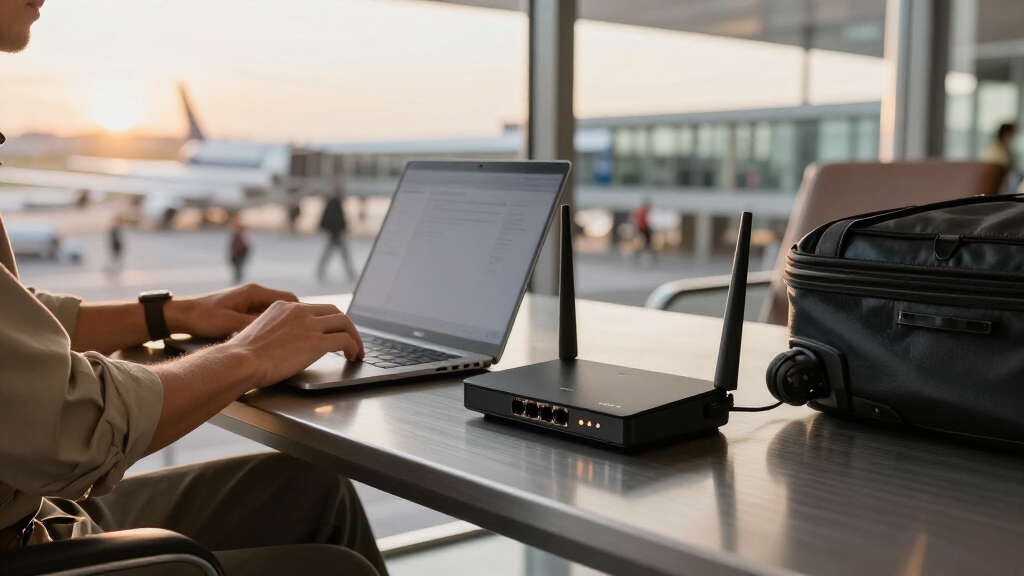
The best secure travel router hardware gives you a private Wi-Fi network on the road, with VPN support and controls that fit your comfort with setup. My best overall pick is the GL.iNet GL-MT3000 Beryl AX, which balances newer Wi-Fi, VPN features, and useful wired connectivity. The GL-AXT1800 Slate AX is a strong alternative for travelers who want Wi-Fi 6 in a different form factor, while the compact Mango models suit simpler, lower-demand setups. The main tradeoff is between speed and connectivity on one side and size, setup effort, and simpler hardware on the other. Read on for the full comparison, buying guidance, and recommendations by traveler type.

Get privacy and security gear delivered free with Prime
- Fast, free delivery on millions of items
- Prime Video, Amazon Music and more included
- Member-only deals all year
Key Takeaways
- The GL-MT3000 Beryl AX leads the lineup for travelers who want a well-rounded mix of Wi-Fi 6, VPN capability, and a 2.5G WAN port without moving to a more specialized setup.
- The Slate AX and Beryl AX serve different priorities. Both bring Wi-Fi 6, but buyers should compare their port and form-factor needs rather than treating them as interchangeable.
- The Mango and AR300M16 favor compactness and simpler travel needs over newer wireless standards and higher-throughput workloads.
- The Opal is a middle-ground choice for buyers seeking dual-band AC1200 hardware, while the Wi-Fi 5 UniFi Travel Router appeals more to users already invested in UniFi.
- The two-pack Beryl AX listing is not a distinct router design. It makes sense only when two units are genuinely useful; the single-router Beryl AX is the clearer choice for most solo travelers.
| GL.iNet GL-MT300N-V2 Mango Portable Travel Wi-Fi Router |  | Best Lightweight Budget Pick | Model: GL-MT300N-V2 | Wi-Fi: 2.4 GHz, 802.11b/g/n (Wi-Fi 4), up to 300 Mbps | Ethernet: 2 ports; LAN bandwidth up to 100 Mbps | VIEW LATEST PRICE | See Our Full Breakdown |
| GL.iNet GL-AXT1800 Slate AX Wi-Fi 6 Travel Router |  | Best for Large Travel Groups | Model: GL-AXT1800 | Wi-Fi: Wi-Fi 6, dual-band; up to 600 Mbps on 2.4 GHz and 1200 Mbps on 5 GHz | Combined wireless speed: Up to 1800 Mbps | VIEW LATEST PRICE | See Our Full Breakdown |
| GL.iNet GL-SFT1200 Opal AC1200 Dual-Band Travel Router | 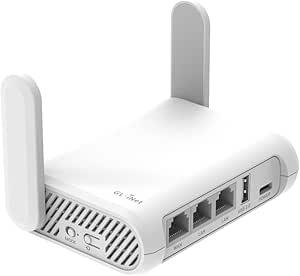 | Best Value for Wired Connections | Model: GL-SFT1200 Opal | Wi-Fi: Wi-Fi 5 (802.11ac), dual-band | Wireless speeds: Up to 300 Mbps on 2.4 GHz and 867 Mbps on 5 GHz | VIEW LATEST PRICE | See Our Full Breakdown |
| GL.iNet GL-MT3000 Beryl AX Wi-Fi 6 Travel Router | 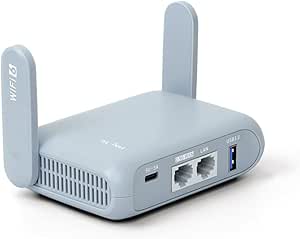 | Best Overall Secure Travel Router | Wi-Fi: Wi-Fi 6, dual-band | Wireless speeds: 574 Mbps on 2.4 GHz and 2402 Mbps on 5 GHz | Ethernet: 2.5 Gbps WAN and 1 Gbps LAN | VIEW LATEST PRICE | See Our Full Breakdown |
| GL.iNet GL-MT3000 Beryl AX Wi-Fi 6 Travel Router – 2.5 G WAN, VPN, OpenWrt (Pack of 2) | | Best Two-Router Setup | Pack contents: 2 GL-MT3000 Beryl AX travel routers | Wi-Fi: Wi-Fi 6 (802.11ax), dual-band | Dual-band speeds: 574 Mbps on 2.4 GHz and 2402 Mbps on 5 GHz | VIEW LATEST PRICE | See Our Full Breakdown |
| GL.iNet GL-MT300N-V2 Mango Portable Travel VPN Router with Wall Mount |  | Best for Lightweight, Flexible Setup | Model: GL-MT300N-V2 | Wi-Fi: Wi-Fi 5; 802.11ac | Security: WPA2-PSK or WPA3-PSK | VIEW LATEST PRICE | See Our Full Breakdown |
| GL.iNet GL-AR300M16 Mini Travel Wi-Fi Router | 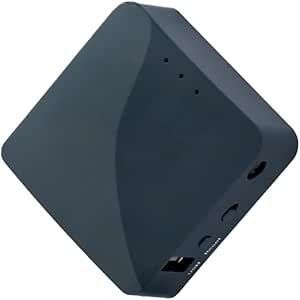 | Best for VPN Control on a Small Network | Model: GL-AR300M16 | Operating system: OpenWrt | VPN support: OpenVPN and WireGuard client and server | VIEW LATEST PRICE | See Our Full Breakdown |
| Ubiquiti UniFi Travel Router (UTR), Dual-Band Wi-Fi 5 |  | Best for UniFi Network Management | Model: UniFi Travel Router (UTR) | Wi-Fi: Wi-Fi 5; 2.4 GHz and 5 GHz | Data transfer rate: 433 Mbps | VIEW LATEST PRICE | See Our Full Breakdown |
| secure travel router hardware | Wi-Fi | Model | Power | Ethernet |
|---|---|---|---|---|
| GL.iNet GL-MT300N-V2 Mango Por | 2.4 GHz, 802.11b/g/n (Wi-Fi 4), up to 300 Mbps | GL-MT300N-V2 | 5 V; can use laptop USB or power bank | 2 ports; LAN bandwidth up to 100 Mbps |
| GL.iNet GL-AXT1800 Slate AX Wi | Wi-Fi 6, dual-band; up to 600 Mbps on 2.4 GHz and 1200 Mbps on 5 GHz | GL-AXT1800 | — | — |
| GL.iNet GL-SFT1200 Opal AC1200 | Wi-Fi 5 (802.11ac), dual-band | GL-SFT1200 Opal | — | — |
| GL.iNet GL-MT3000 Beryl AX Wi- | Wi-Fi 6, dual-band | — | 5 V | 2.5 Gbps WAN and 1 Gbps LAN |
| GL.iNet GL-MT3000 Beryl AX Wi- | Wi-Fi 6 (802.11ax), dual-band | — | — | 2.5 Gbps WAN and 1 Gbps LAN per router |
| GL.iNet GL-MT300N-V2 Mango Por | Wi-Fi 5; 802.11ac | GL-MT300N-V2 | USB or 5V DC adapter | — |
| GL.iNet GL-AR300M16 Mini Trave | Wi-Fi 4, 2.4 GHz | GL-AR300M16 | 5 V | 2 ports; LAN bandwidth 10/100 Mbps |
| Ubiquiti UniFi Travel Router | Wi-Fi 5; 2.4 GHz and 5 GHz | UniFi Travel Router (UTR) | USB-C | — |
More Details on Our Top Picks
GL.iNet GL-MT300N-V2 Mango Portable Travel Wi-Fi Router
I’d choose the Mango for a simple security upgrade when carrying minimal gear matters more than speed. It can turn hotel Ethernet or public Wi-Fi into a private network, and its OpenWrt firmware and pre-installed OpenVPN client give travelers a path to route traffic through a VPN. At just 39 g, it is much easier to pack than the GL.iNet Slate AX or Beryl AX. That small footprint comes with clear limits: the Mango is 2.4 GHz only, uses Wi-Fi 4, and its Ethernet ports top out at 100 Mbps. I’d pick the Opal instead if dual-band Wi-Fi and gigabit wired connections matter. The Mango is the leanest fit here for basic travel networking, not for high-throughput work or a crowded group.
Pros:- Creates a private Wi-Fi network from public wireless or a wired connection
- OpenWrt and a pre-installed OpenVPN client support VPN-based routing
- Very light at 39 g and can run from a laptop USB port or power bank
- Two Ethernet ports provide flexible wired setup options
Cons:- Single-band 2.4 GHz Wi-Fi 4 is less suited to busy networks and high-throughput use
- 100 Mbps Ethernet ports limit wired speed
- A power adapter is not included
Best for: Solo travelers who want a lightweight router for basic VPN-backed browsing on hotel or public networks.
Not ideal for: Travelers who need 5 GHz Wi-Fi, fast wired transfers, or enough capacity for many demanding devices.
- Model:GL-MT300N-V2
- Wi-Fi:2.4 GHz, 802.11b/g/n (Wi-Fi 4), up to 300 Mbps
- Ethernet:2 ports; LAN bandwidth up to 100 Mbps
- VPN:OpenVPN client
- Firmware:OpenWrt
- Security:WPA2-PSK
- Power:5 V; can use laptop USB or power bank
- Weight:39 g (1.41 oz)
Our verdict“Choose the Mango for a minimal, USB-powered VPN travel setup, but pick the Opal or a Wi-Fi 6 model if speed and dual-band coverage matter more.”
GL.iNet GL-AXT1800 Slate AX Wi-Fi 6 Travel Router
The Slate AX is my pick when one travel router needs to serve a group, with support for up to 120 connected devices and dual-band Wi-Fi 6. Its OpenVPN and WireGuard support gives buyers two VPN protocol options, while the stated VPN speeds are higher than the Beryl AX’s listed limits. That makes it a stronger fit for multiple devices sharing a connection, though actual performance still depends on the upstream network and VPN service. Compared with the simpler Opal, the Slate AX adds Wi-Fi 6 capacity, WPA3, and USB file sharing, but it also brings more settings to manage. The physical switch needs configuration in the admin panel before it works as intended, and captive networks with time limits may require reconnecting. I’d favor it for connected groups, not for travelers who want the smallest, simplest device.
Pros:- Dual-band Wi-Fi 6 with MU-MIMO and OFDMA is built for multiple connected devices
- Supports both OpenVPN and WireGuard, with listed VPN speeds up to 500 Mbps and 550 Mbps respectively
- Supports up to 120 connected devices
- External USB storage can be shared through SAMBA and WebDav
Cons:- Physical feature switch must be configured in the admin panel before use
- Hotel or public Wi-Fi time limits can require router reconnection
- More features and settings may be unnecessary overhead for solo travelers
Best for: Families, small work teams, and travelers with many phones, laptops, and tablets sharing hotel or public Wi-Fi.
Not ideal for: Light packers or first-time router users who prefer a very simple setup and do not need high device capacity or USB file sharing.
- Model:GL-AXT1800
- Wi-Fi:Wi-Fi 6, dual-band; up to 600 Mbps on 2.4 GHz and 1200 Mbps on 5 GHz
- Combined wireless speed:Up to 1800 Mbps
- Maximum connected devices:120
- VPN protocols:OpenVPN and WireGuard
- Listed VPN speeds:Up to 500 Mbps OpenVPN; up to 550 Mbps WireGuard
- Firmware and security:OpenWrt 21.02; WPA3
- Ports and file sharing:3 ports; gigabit LAN; SAMBA and WebDav file sharing via external USB storage
Our verdict“Pick the Slate AX when a group needs one Wi-Fi 6 travel network with multiple VPN options; choose the Opal for a simpler, less feature-heavy setup.”
GL.iNet GL-SFT1200 Opal AC1200 Dual-Band Travel Router
The Opal is a practical middle ground for travelers who want VPN support and gigabit Ethernet without stepping up to a Wi-Fi 6 router. Its dual-band Wi-Fi 5 is a meaningful upgrade over the single-band Mango: the 5 GHz band can help when nearby networks crowd 2.4 GHz, while three gigabit ports make it useful for connecting wired devices or attaching it to a hotel Ethernet jack. It supports both OpenVPN and WireGuard, like the Slate AX and Beryl AX, but does not offer their Wi-Fi 6 features. Retractable antennas add some flexibility, though they need care in a packed bag. The physical switch also requires admin-panel setup, and the Opal does not support easytethering. I’d choose it for straightforward wired travel setups, not tethering-dependent trips.
Pros:- Three gigabit Ethernet ports support faster wired connections than the Mango
- Dual-band Wi-Fi 5 offers a 5 GHz option for less congested wireless environments
- Supports both OpenVPN and WireGuard
- Lightweight at 145 g, with two retractable antennas
Cons:- Physical toggle switch requires configuration in the admin panel
- Does not support easytethering
- Wi-Fi 5 lacks the newer wireless features found on the Slate AX and Beryl AX
Best for: Travelers who regularly use hotel Ethernet, need gigabit wired ports, and want dual-band Wi-Fi plus VPN support without Wi-Fi 6.
Not ideal for: Travelers who rely on easytethering, want Wi-Fi 6, or prefer a router with fewer setup steps.
- Model:GL-SFT1200 Opal
- Wi-Fi:Wi-Fi 5 (802.11ac), dual-band
- Wireless speeds:Up to 300 Mbps on 2.4 GHz and 867 Mbps on 5 GHz
- Ethernet ports:2 Gigabit LAN and 1 Gigabit WAN
- VPN support:OpenVPN and WireGuard
- Firmware:OpenWrt
- Antennas:2 retractable antennas
- Weight and power:145 g; 5 V
Our verdict“Choose the Opal for dual-band VPN travel networking with gigabit wired ports; skip it if easytethering or Wi-Fi 6 is a priority.”
GL.iNet GL-MT3000 Beryl AX Wi-Fi 6 Travel Router
The Beryl AX earns my overall pick for travelers who want modern security options and fast connections in one compact router. Alongside Wi-Fi 6, it has WPA3, DNS over HTTPS and TLS, and OpenVPN and WireGuard client and server functions. Its 2.5 Gbps WAN port is the standout hardware advantage over the Slate AX and Opal, especially where a fast wired uplink is available; USB 3.0 adds room for connected storage. The tradeoff is that its listed VPN throughput—up to 150 Mbps for OpenVPN and 300 Mbps for WireGuard—is lower than the Slate AX’s stated VPN figures. VPN access also depends on an active subscription, and the feature switch needs configuration. I’d choose this over the Mango or Opal for stronger privacy controls and faster interfaces, but not for maximum VPN throughput.
Pros:- Wi-Fi 6 and a 2.5 Gbps WAN port support fast wireless and wired uplinks
- Offers OpenVPN and WireGuard client and server functions
- WPA3 plus DNS over HTTPS and DNS over TLS add privacy and security options
- USB 3.0 and gigabit LAN broaden wired and storage uses
Cons:- Listed VPN speeds are lower than the Slate AX’s stated figures
- A VPN service subscription is needed for access to a commercial VPN service
- The physical feature switch requires configuration before use
Best for: Frequent travelers who want Wi-Fi 6, stronger DNS privacy options, multiple VPN modes, and a multi-gigabit WAN port.
Not ideal for: Buyers who need the highest listed VPN throughput, want a ready-to-use toggle without setup, or do not want to pay for a VPN service.
- Wi-Fi:Wi-Fi 6, dual-band
- Wireless speeds:574 Mbps on 2.4 GHz and 2402 Mbps on 5 GHz
- Ethernet:2.5 Gbps WAN and 1 Gbps LAN
- Other port:USB 3.0
- VPN protocols and roles:OpenVPN and WireGuard; client and server functions
- Maximum listed VPN speed:150 Mbps OpenVPN; 300 Mbps WireGuard
- Firmware and security:OpenWrt 21.02; WPA2-PSK, WPA3, DNS over HTTPS, DNS over TLS
- Power:5 V
Our verdict“Choose the Beryl AX for a compact, security-feature-rich Wi-Fi 6 router with a multi-gigabit WAN port, but consider the Slate AX if listed VPN throughput is your priority.”
GL.iNet GL-MT3000 Beryl AX Wi-Fi 6 Travel Router – 2.5 G WAN, VPN, OpenWrt (Pack of 2)
This pack makes the most sense for travelers who need two matching Beryl AX routers—for example, one kept in a work bag and another at a second location. Each unit brings the same Wi-Fi 6, 2.5 Gbps WAN, WPA3, DNS-over-HTTPS/TLS, and OpenVPN and WireGuard support as the single Beryl AX. That consistency can simplify keeping the same travel-network approach in two places, but the pack does not add a new security feature or increase the performance of either router. Compared with the Slate AX, these units offer faster listed wireless speeds and multi-gigabit WAN, while the Slate AX lists higher VPN throughput and support for more connected devices. Setup and toggle configuration still take manual work, so I’d pick this pack for a clear need for two units—not as a performance upgrade over the single Beryl AX.
Pros:- Includes two matching Wi-Fi 6 travel routers
- Each unit has a 2.5 Gbps WAN port and a gigabit LAN port
- Both OpenVPN and WireGuard client/server support are listed
- WPA3, DNS over HTTPS/TLS, and OpenWrt support configuration options
Cons:- The pack does not improve the performance of an individual router compared with the single Beryl AX
- Initial setup and physical toggle configuration require admin-panel work
- Listed VPN throughput is limited compared with the Slate AX’s figures
Best for: Travelers or remote workers who need matching secure routers for two regular locations or want one unit as a spare.
Not ideal for: Buyers who need only one router, want higher listed VPN throughput, or expect the two-unit pack itself to improve speed or security.
- Pack contents:2 GL-MT3000 Beryl AX travel routers
- Wi-Fi:Wi-Fi 6 (802.11ax), dual-band
- Dual-band speeds:574 Mbps on 2.4 GHz and 2402 Mbps on 5 GHz
- Ethernet:2.5 Gbps WAN and 1 Gbps LAN per router
- Other port:USB 3.0 per router
- Firmware:OpenWrt 21.02
- VPN protocols:OpenVPN and WireGuard
- Security features:WPA3, DNS over HTTPS/TLS, IPv6
Our verdict“Choose this pack if you have a specific need for two matching Beryl AX routers; for one travel kit, the single Beryl AX is the more direct fit.”
GL.iNet GL-MT300N-V2 Mango Portable Travel VPN Router with Wall Mount
At just 39 g, the Mango is a strong fit when luggage space and flexible power matter more than broad coverage. It can turn a wired hotel connection or public Wi-Fi into a private network, and USB tethering plus compatible 3G/4G modems give it options when hotel internet is unavailable. Compared with the GL-AR300M16, this model lists WPA3 support and includes a wall mount and hardware, while the AR300M16 offers OpenWrt with named OpenVPN and WireGuard support. That makes the Mango appealing for simple network sharing, but a less compelling pick for buyers prioritizing explicit VPN controls. Its stated coverage is only up to 200 sq ft, and the power adapter is sold separately. I’d choose it for a solo traveler or compact room, not for spreading Wi-Fi through a larger rental.
Pros:- Converts wired or wireless public internet into a separate private Wi-Fi network.
- At 39 g, it is exceptionally light for packing.
- Supports USB tethering and compatible 3G/4G USB modems.
- Includes a wall mount and mounting hardware.
Cons:- Coverage is limited to up to 200 sq ft.
- Power adapter is sold separately.
- The provided data does not name VPN client or server support.
Best for: Solo travelers who want a very light router for a hotel room and may need USB tethering or a compatible mobile modem.
Not ideal for: Travelers who need stated OpenVPN or WireGuard support, wider coverage, or a bundled power adapter.
- Model:GL-MT300N-V2
- Wi-Fi:Wi-Fi 5; 802.11ac
- Security:WPA2-PSK or WPA3-PSK
- Connectivity:Ethernet, USB, Wi-Fi
- Weight:39 g (1.41 oz)
- Coverage:Up to 200 sq ft
- Power:USB or 5V DC adapter
- Included items:Router, USB cable, Ethernet cable, user manual, wall mount, 2 screws, 2 plastic wall plugs
Our verdict“Choose the Mango for lightweight private networking in a small room, but pick the GL-AR300M16 if named VPN support matters more.”
GL.iNet GL-AR300M16 Mini Travel Wi-Fi Router
The GL-AR300M16 makes the most sense for travelers who want named VPN client and server support in a compact router. Its OpenWrt base, with OpenVPN and WireGuard, offers more explicit security configuration than the Mango’s supplied product details, which list WPA2/WPA3 but do not specify VPN support. Two Ethernet ports also help when connecting a wired device alongside the upstream network. The tradeoff is an older, 2.4 GHz-only Wi-Fi 4 setup rated at 300 Mbps; compared with the dual-band Wi-Fi 5 Ubiquiti UniFi Travel Router, it is less suited to busy networks or users seeking 5 GHz. I’d put this model ahead of more basic travel routers for VPN-focused buyers, but its single band and separately sourced power adapter make it a specialized choice rather than an all-purpose upgrade.
Pros:- OpenWrt with OpenVPN and WireGuard client and server support.
- Two Ethernet ports allow multiple wired connections.
- Compact 2.28 × 2.28 × 0.98-inch body weighs 1.44 oz.
- USB 2.0 connectivity supports hardware expansion options.
Cons:- Single-band 2.4 GHz Wi-Fi 4 is less flexible than the Ubiquiti UniFi Travel Router’s dual-band Wi-Fi 5.
- The listed data transfer rate is 300 Mbps.
- Power adapter is sold separately.
Best for: Security-conscious solo travelers who want OpenVPN or WireGuard client/server capability and two Ethernet ports in a small router.
Not ideal for: Travelers who need 5 GHz Wi-Fi, newer Wi-Fi performance, or a power adapter included in the box.
- Model:GL-AR300M16
- Operating system:OpenWrt
- VPN support:OpenVPN and WireGuard client and server
- Wi-Fi:Wi-Fi 4, 2.4 GHz
- Data transfer rate:300 Mbps
- Ethernet:2 ports; LAN bandwidth 10/100 Mbps
- Memory and storage:128 MB RAM; 16 MB NOR Flash
- Dimensions and weight:2.28 × 2.28 × 0.98 in; 1.44 oz
- Power:5 V
Our verdict“Pick the GL-AR300M16 when VPN configuration and wired ports outweigh the limitations of single-band Wi-Fi.”
Ubiquiti UniFi Travel Router (UTR), Dual-Band Wi-Fi 5
The Ubiquiti UniFi Travel Router stands apart for buyers who want travel protection within a UniFi-managed setup. Its stated VPN, firewall rules and VLAN support offer more network segmentation and policy control than the Mango’s simpler private-network pitch, while dual-band Wi-Fi 5 gives it a 5 GHz option absent from the GL-AR300M16. A gigabit LAN port is also useful for a wired device or fast local connection. The tradeoff is that the listed wireless transfer rate is 433 Mbps, and the product remains Wi-Fi 5 rather than a newer generation. Compared with the GL-AR300M16, it emphasizes UniFi management and dual-band access over OpenWrt with specifically named OpenVPN and WireGuard support. I’d choose it for an existing UniFi user, not someone seeking the lightest stated option or a router with explicitly listed VPN protocols.
Pros:- UniFi management features include VPN, firewall rules and VLANs.
- Dual-band 2.4 GHz and 5 GHz Wi-Fi offers more flexibility than the GL-AR300M16’s single band.
- 1000 Mbps LAN port supports gigabit wired connections.
- USB-C power can come from a laptop, power bank or adapter.
Cons:- Wi-Fi 5 is an older generation than newer travel-router standards.
- The listed data transfer rate is 433 Mbps.
- The product data does not specify which VPN protocols are supported.
Best for: Travelers who already manage a UniFi network and want VPN, firewall and VLAN controls in a portable router.
Not ideal for: Buyers who need explicitly named OpenVPN or WireGuard support, want Wi-Fi newer than Wi-Fi 5, or prioritize a listed high wireless rate.
- Model:UniFi Travel Router (UTR)
- Wi-Fi:Wi-Fi 5; 2.4 GHz and 5 GHz
- Data transfer rate:433 Mbps
- LAN bandwidth:1000 Mbps
- Security:WPA2 and WPA3
- Management features:UniFi management, VPN, firewall rules and VLANs
- Connectivity:Ethernet and Wi-Fi
- Power:USB-C
- Color:White
Our verdict“Choose the UniFi Travel Router if UniFi controls and VLANs matter more to you than newer Wi-Fi or explicitly documented VPN protocols.”
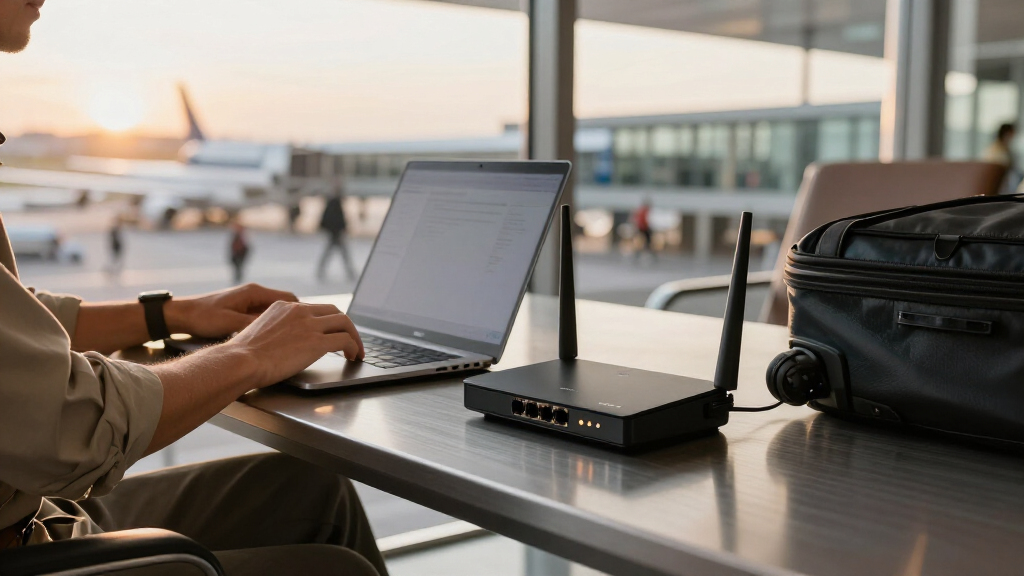
How We Picked
I ranked these routers around the parts of travel security that affect daily use: support for VPN-based connections, network flexibility, wireless generation, wired ports, portability, and the likely effort required to set up and maintain the device. A router can offer useful security features yet still be a poor travel choice if its performance or setup demands do not match the buyer’s devices and internet connection. I also separated genuinely different use cases, such as a compact basic router and hardware suited to a UniFi setup, rather than treating every model as a direct substitute.
The Beryl AX ranks first because its feature mix suits the widest range of travelers in this group. The Slate AX follows as a Wi-Fi 6 alternative; the Opal and compact GL.iNet models rank lower for buyers who need newer wireless capability or more headroom, but retain value for lighter needs. The two-pack listing ranks below the single Beryl AX because buying two units only helps when a traveler has a real second-location or multi-router use. The UniFi model earns a distinct place for ecosystem fit, not because Wi-Fi 5 makes it the strongest all-around option here.
| secure travel router hardware | Model |
|---|---|
| GL.iNet GL-MT300N-V2 Mango Por | GL-MT300N-V2 |
| GL.iNet GL-AXT1800 Slate AX Wi | GL-AXT1800 |
| GL.iNet GL-SFT1200 Opal AC1200 | GL-SFT1200 Opal |
| GL.iNet GL-MT3000 Beryl AX Wi- | — |
| GL.iNet GL-MT3000 Beryl AX Wi- | — |
| GL.iNet GL-MT300N-V2 Mango Por | GL-MT300N-V2 |
| GL.iNet GL-AR300M16 Mini Trave | GL-AR300M16 |
| Ubiquiti UniFi Travel Router | UniFi Travel Router (UTR) |
Factors to Consider When Choosing Best Secure Travel Router Hardware
Choosing travel-router hardware is not only a matter of picking the fastest Wi-Fi label. I recommend starting with the networks you will connect to, how you plan to use a VPN, and how much setup you are willing to manage. These broader checks can prevent a common mismatch: buying capable hardware that is too involved for a short trip, or choosing a tiny router that cannot keep up with your devices.
Match VPN Plans to the Router’s Real Job
Decide whether the router will run a VPN connection for every device or simply create a private local network behind hotel Wi-Fi. Those jobs place different demands on hardware and configuration, so a model with VPN support is not automatically the right fit for every VPN service or setup. Check the VPN protocols and configuration options you intend to use, and confirm that your provider supports them. Also think about whether you need a fallback connection without the VPN when a service or network blocks it. A common mistake is judging privacy by the product label alone; your VPN account, software settings, and network habits remain part of the security picture.
Plan for Hotel Sign-In Pages and Network Limits
Many lodging networks use a captive portal that asks one device to accept terms or sign in before granting access. A travel router can share an upstream connection, but the portal process may require a setup step, and some venues limit connected devices or block personal routers. Ask whether the router can present its own network name and whether you can complete the venue’s sign-in flow before relying on it for work. Keep a phone hotspot as a backup if a property’s network rules or login system prevent router use. Do not assume that a router bypasses access restrictions; it should be used within the network provider’s terms.
Choose Wireless Speed Around Your Devices
Wi-Fi 6 hardware such as the Beryl AX and Slate AX can be a better fit for newer devices and busier networks, but the router cannot make a slow hotel internet connection fast. Older or lightweight models may be entirely adequate for messaging, browsing, and basic remote access. Count how many devices will connect at once, and include video calls, file transfers, or streaming when estimating demand. A frequent buying mistake is paying for wireless capacity that the upstream connection cannot use, or ignoring household device limits on a longer trip. Give extra weight to newer Wi-Fi when local network transfers or several active devices matter to you.
Check the Wired Ports Before You Pack
Wired connectivity can matter more than headline wireless speed when a room has an Ethernet outlet, when you need a stable connection for a laptop, or when you want to connect another device directly. Compare port types and speeds against your actual equipment; a faster WAN port only helps when the source connection and your use case can take advantage of it. Consider whether you need separate WAN and LAN connections, since that affects how flexibly the router can be placed in a travel setup. Do not buy a port feature just for future-proofing if you never connect wired gear. For some travelers, carrying the right cable or adapter is as important as the router itself.
Balance Compactness Against Setup and Maintenance
A smaller router is easier to pack, but compact hardware may leave less room for ports, performance headroom, or convenient controls. Before a trip, update firmware, change default credentials, and learn how to restore the device if a setting breaks access. Open-source-based features can provide flexibility, but they may ask more of buyers who are unfamiliar with router configuration. Travelers who need a device to work with minimal adjustment should favor a straightforward setup over a long feature list. If you share the router with family or coworkers, simple recovery and clear network naming can matter more than advanced customization.
Buy a Multi-Unit Pack Only for a Real Second Use
A two-router pack can help when you need one unit at home and another in luggage, or when two locations require matching hardware. It does not automatically provide better coverage or security for a solo traveler using one hotel room. Think through how each unit will be configured, updated, and stored; duplicate devices also mean duplicate maintenance. If your main need is a single travel router, compare the bundle with the standalone model and avoid paying for hardware that will sit unused. For a second unit intended as a backup, check that you can restore the same settings without exposing credentials or leaving old access details active.
Frequently Asked Questions
Can a travel router protect me when I use hotel Wi-Fi?
A travel router can create a separate Wi-Fi network for your devices and may route their traffic through a VPN, depending on its features and your configuration. That can reduce the need to connect each device directly to a shared hotel network, but it does not make every connection automatically safe. Use a strong administrator password, update firmware, and confirm that the VPN is active when you expect it to be. Hotel network policies and captive portals can also affect whether a personal router works. Keep device-level security measures in place even when using the router.
Should I choose the Beryl AX or Slate AX for travel?
Both are Wi-Fi 6 options in this lineup, so the choice should come down to the particular ports, form factor, and setup needs that matter to you. The Beryl AX is the roundup’s best all-around recommendation, with a 2.5G WAN port among its distinguishing features. The Slate AX is a credible alternative if its configuration and physical design better suit your travel kit. Check the manufacturer’s current specifications before purchase, especially if a specific port or VPN configuration is a requirement. Neither model can make a slow or restrictive upstream hotel connection behave like a fast home network.
Is an older compact router enough for a solo traveler?
It may be enough if your routine is mostly browsing, messaging, and connecting a small number of devices. The Mango and AR300M16 are the compact choices in this group, but their older wireless capabilities offer less headroom than the Wi-Fi 6 models. Consider your VPN workload, the number of devices, and whether you need modern wireless performance before choosing the smallest option. A light travel routine can make simplicity and packability more valuable than additional capacity. If you expect frequent video calls or several active devices, the newer models are safer picks.
Does a two-pack Beryl AX make sense for one person?
Usually only if you have a specific use for the second router, such as keeping one at home, maintaining a backup, or setting up a second regular travel location. For a single traveler with one destination at a time, the standalone Beryl AX is the more direct match. A second unit also needs its own firmware updates and secure configuration, so it adds upkeep as well as hardware. If you plan to use it as a backup, store credentials safely and check that its firmware remains current. The bundle does not change the capabilities of each individual router.
Should I choose the UniFi Travel Router if I already own UniFi equipment?
It is worth looking at if you value keeping travel networking within the UniFi ecosystem and are comfortable with its management approach. Its Wi-Fi 5 standard makes it a less compelling general-purpose performance choice than the Wi-Fi 6 Beryl AX or Slate AX in this roundup. Compare the management features you will actually use with the flexibility offered by the GL.iNet models. Check compatibility with your existing setup and the current feature set before relying on ecosystem integration. If you do not use UniFi already, choosing a router for its standalone travel needs may be simpler.
Conclusion
For most travelers, I recommend the GL.iNet GL-MT3000 Beryl AX as the best overall because it combines Wi-Fi 6, VPN capability, and useful wired connectivity. The GL-SFT1200 Opal is my best value-style pick for buyers who want dual-band AC1200 hardware without needing the newest wireless generation. For a best premium-style choice, consider the Slate AX if its Wi-Fi 6 feature set and port layout fit your travel setup; I would choose between it and the Beryl AX by checking the exact connections you need. The Opal is also the easiest starting point for beginners who want a capable middle-ground device, while the Mango models suit travelers who put compactness and light use first. Choose the UniFi Travel Router for specific UniFi ecosystem needs, and select the two-pack Beryl AX only when you will actively use both units.
Halloween Picks
halloween
As an affiliate, we earn on qualifying purchases.