
TL;DR

Get privacy and security gear delivered free — and shop member deals
- Fast, free delivery on millions of items
- Access to Prime Big Deal Days deals on October 6–7
- Prime Video, Amazon Music and more included
A login can fail even when your password is correct because sign-in depends on more than credentials: the browser must complete redirects, store a session cookie, and reach a page your account can use. Check the error, try a supported browser or device, and avoid repeated attempts; service teams can find the failing step with privacy-safe diagnostics and complete-flow testing.
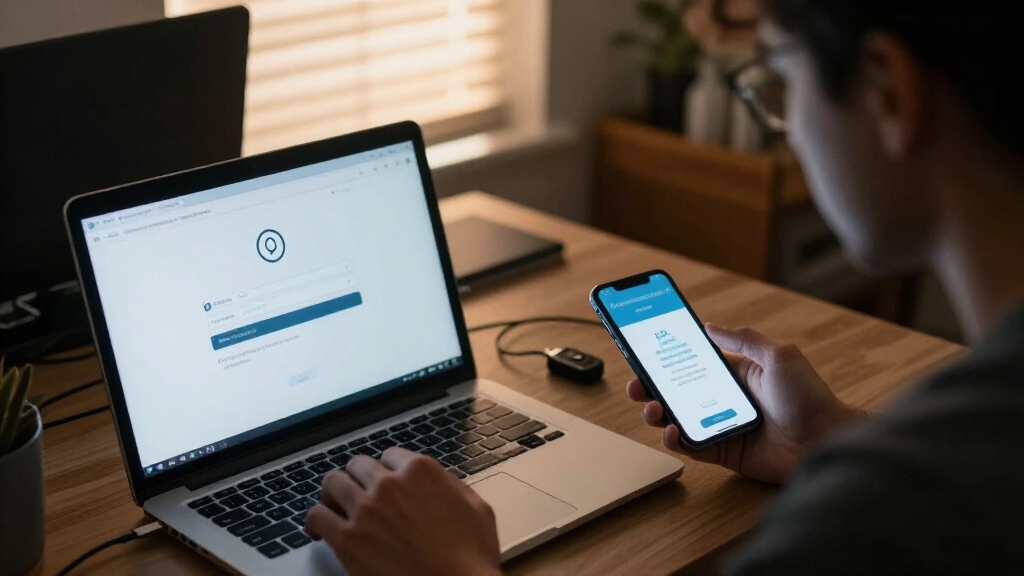
You enter the right password, tap Sign in, and land right back on the same page. The little red error might say “Try again,” while your inbox and memory both insist the password is correct. That frustrating loop can start after the password check, in a cookie, redirect, security check, or browser setting.
A login page is more like a relay race than a locked door. Your credentials start the handoff, but the browser, identity service, application, and requested page must all pass the baton. This guide explains why login pages fail in unexpected ways, what you can safely check as a user, and how teams can make failures easier to diagnose without exposing private account details.
A password check is only one stage; the browser still needs a session cookie and a valid return redirect.
Authentication confirms identity; authorization decides whether that identity can open a specific page.
Check saved credentials, duplicate tabs, browser differences, and service status before repeating login attempts.
Passkeys can resist phishing, but device changes and recovery still need a clear plan.
Services can use general error messages while offering reference numbers and useful next steps.
Identity • Browser • Application
Why Login Pages Fail in Unexpected Ways
The password can be right and the sign-in can still fail. A browser has to keep the session, complete the return trip, and reach a page your account is allowed to use.
Sign-in is a relay, not a locked door
Each step depends on the one before it. A break after password entry can send you back to the start.
Identify
Your account and sign-in method are recognized.
Verify
Password, passkey, or multi-factor check confirms identity.
Establish session
The browser stores and returns the session cookie.
Return & authorize
A redirect completes; access to the requested page is checked.
One symptom can have several causes
The page may look familiar even when part of the sign-in route is blocked or out of sync.
Cookies don’t stick
Domain, path, expiry, or privacy settings can stop a browser from storing or sending the session.
The return trip loses state
An expired one-time value, callback mismatch, or proxy rewrite can interrupt the handoff.
Tabs and autofill conflict
A stale form, switched account, extension, or mislabeled field can send unexpected details.
A check pauses the sign-in
Rate limits, unfamiliar networks, delayed codes, or risk checks may block a legitimate user.
Part of the route is unreachable
VPNs, DNS, clock skew, content blockers, and corporate proxies can affect only one step.
Identity succeeds; access fails
You can be signed in but lack permission for one document or destination page.
Authentication checks who you are. Authorization checks what that identity may open. “Access denied” on one page can mean sign-in worked.
Try one clean pass before repeating
Change one variable at a time. The result can help narrow the cause without weakening your device’s protections.
- Check the account name and password-manager entry, especially if you use multiple accounts.
- Close duplicate tabs, reopen the official service, and submit one fresh login form.
- Try a current, supported browser or a trusted device to compare the behavior.
- Confirm your device date and time are set automatically.
- Notice whether you see a code prompt, a reload, a redirect, or access denial on one page.
- Pause after a temporary block; repeated attempts can extend a rate limit.
- Use recovery methods reached through the service’s official address.
- Never send session cookies or authentication links to support or anyone else.
Plan ahead for device changes, synchronization, and account recovery so a lost device does not become a dead end.
Make the failure easier to find
Protect account privacy in user-facing messages while giving support and engineering a useful path to investigate.
Keep messages general, next steps specific
Use a neutral error that avoids exposing whether an account exists. Add a reference number, recovery route, and clear guidance for temporary delays.
Trace stages without collecting secrets
Record safe event outcomes for verification, session creation, redirect completion, and authorization. Never log passwords, session cookies, or reusable tokens.
Exercise the complete flow
Test sign-in and recovery across supported browsers, devices, privacy settings, and network conditions—not only the password form.
Check integrations and fallbacks
Verify identity-provider callbacks, cookie behavior, deployment compatibility, passkey recovery, and support escalation paths.
From symptom to useful signal
A simple sequence helps users describe the issue and teams locate the stage safely.
Illustrative flow stages, not measured failure rates. Use safe stage outcomes and a reference number to connect a report with service diagnostics.
What the symptom may point to
Look at where the journey stops before deciding what to change next.
| What you see | Possible stage | Useful next step |
|---|---|---|
| Login form returns immediately | Credentials, stale form, or security check | Check the account entry; reopen one fresh form. |
| Profile appears, then login screen returns | Session cookie or redirect | Compare a supported browser; note the return behavior. |
| One work page says “access denied” | Authorization | Ask the service owner to check page permissions. |
| Unexpected code prompt or delay | Multi-factor or risk control | Pause; follow official instructions or recovery steps. |
A correct password can still leave you outside
Login pages fail in unexpected ways because checking your password is only one part of signing in; the browser and application must also establish a session and confirm you can access the page you requested. A green check at the password stage does not guarantee that the next steps worked. Think of it as showing your ticket at the station: you may have a valid ticket, but still need the right train and platform.
After a password is accepted, a site usually creates a session, often represented by a cookie stored in your browser. The site may then send you to a dashboard or another address. If the cookie never sticks, or the return trip loses its place, you can appear to be signed out again. One familiar example: you sign in on a phone, briefly see your profile, then get bounced to the login screen when you open a saved link.
There is another distinction: authentication checks who you are, while authorization checks what you may do. You might sign in successfully and still see “access denied” on a work document because your account lacks permission. From the user’s side, both outcomes can feel like a broken login, but the remedy differs: one concerns identity or session; the other concerns access rights.
That is why repeatedly entering the same password can waste time. Notice what happens after submission: does the page reload, show a code prompt, return to the original address, or deny one particular page? Those details help separate a credential problem from a session or permission problem.
As an affiliate, we earn on qualifying purchases.
Cookies and redirects can break the handoff
Login pages fail in unexpected ways when a browser cannot keep the session cookie or a redirect loses the information needed to return you to the site. A cookie has rules about its domain, path, lifetime, and whether it can travel across site boundaries. If those rules do not match the login flow, the browser may quietly leave the session behind.
Imagine signing into a shopping site that sends you to a separate identity provider, then back again. The return address may carry short-lived state that connects the two halves of the journey. An expired state value, a callback address mismatch, or a proxy that rewrites the request can interrupt the handoff. You may see a blank page, a generic error, or the login page again, even though the password step succeeded.
Browser privacy settings also matter. Some sign-in flows depend on cookies in cross-site contexts, and browser restrictions on third-party cookies can change how those flows behave. The exact behavior varies by browser and version, so one phone may work while a private window or another browser does not. If you use an embedded work login, opening the service in its own tab may help reveal whether the embedded flow is the trouble spot.
For a quick, low-risk check, try the service in a current, supported browser and confirm your device date and time are set automatically. If you clear site data, remember that it can sign you out and remove local preferences. Do not copy session cookies or authentication links into messages; they can grant access to your account.
As an affiliate, we earn on qualifying purchases.
Tabs, autofill, and extensions can send mixed signals
Login pages fail in unexpected ways when the page you submit and the session the server expects no longer match. Several open tabs can create that mismatch. You might sign out in one tab, switch accounts in another, then submit a form that was loaded before the change. The stale page can send old state, and the resulting error may look like a bad password.
Password managers are helpful, but they rely on the page being labeled and structured clearly. If a site changes its form, uses confusing field labels, or inserts hidden fields, autofill may place an old username or password into the wrong box. For example, a family laptop could fill a parent’s saved account into a child’s profile page; the site rejects it, though the person typing never touched the keyboard.
Extensions and network filters add more variation. A content blocker may stop a script or identity-provider request that the login needs. A corporate proxy, VPN, or DNS issue can affect one part of the route while ordinary browsing still seems fine. This is why a page can load its familiar logo and colors yet fail when you press the button.
Try a simple sequence before changing many settings at once:
- Check the username and password manager entry, especially if you have more than one account.
- Close duplicate tabs, reopen the service, and submit one fresh login form.
- Try a supported browser or device you trust. If that works, an extension or local browser setting may be involved.
- Note the time and exact message so support can compare it with service records.
These checks help narrow the cause without disabling security tools across your whole device.
As an affiliate, we earn on qualifying purchases.
Security checks protect accounts, but can block you too
Login pages fail in unexpected ways when a security control cannot tell a legitimate user from suspicious activity. Services may slow or block repeated attempts, ask for multi-factor authentication, or apply a risk check when a sign-in comes from an unfamiliar device or network. These controls can stop automated abuse, but a traveler on hotel Wi-Fi might meet the same extra hurdle as an attacker.
If you see an unexpected code prompt or temporary delay, pause and read the instructions on the official site. Repeated attempts can extend a rate limit, and guessing at recovery options can make the situation harder. Check that you selected the correct sign-in provider; a work account, personal account, and “Sign in with…” option may lead to separate identities even when they share an email address.
Multi-factor codes can arrive late, go to an outdated number, or be blocked by notification settings. If the service offers a recovery method, use the one you previously set up and reach it through the site’s official address. A support agent should never need your password or a one-time code. Sharing either can hand over the account itself.
Passkeys can reduce password reuse and resist many phishing attempts, but they bring their own usability questions: which device holds the passkey, how it syncs, and how you recover access after replacing a phone. A well-designed service pairs stronger sign-in with a clear, secure recovery path. Security should feel like a sturdy handrail, not a door that locks you out with no visible handle.
As an affiliate, we earn on qualifying purchases.
Vague errors need clear next steps
Login pages fail in unexpected ways are harder to fix when the error message hides every clue. Services often use a general message such as “We couldn’t sign you in” because a highly specific response can reveal whether an account exists or is locked. That restraint can protect users, but it should not leave a real customer staring at a blank wall.
A helpful message can stay general while offering safe actions: check the selected account, wait before another attempt, use the official recovery page, or contact support with a reference number. For instance, “We couldn’t complete sign-in. Reference 8K2—try again in a few minutes or contact support” gives a next step without announcing that a particular email address has an account.
Behind the scenes, the service can record which stage failed: credential check, challenge, cookie creation, redirect, or authorization. A correlation ID lets support connect the user’s reference number to a diagnostic event. Teams should avoid recording passwords, raw session tokens, or one-time codes. Useful logs can describe the failure category and provider without capturing secrets.
Metrics also reveal patterns. If sign-in success suddenly drops for one browser after a deployment, that points toward a compatibility regression. If failures cluster around one identity provider or network region, the problem may sit outside the login form. Clear user guidance and careful internal diagnostics work together: the user gets a path forward, while the team gets enough evidence to investigate.
Teams can test the full journey before users get stuck
Login pages fail in unexpected ways less often when teams test the entire journey across real browser conditions, not just the password box. A complete check follows form submission through the identity provider, any multi-factor challenge, cookie creation, redirect, and access to the destination page. A test that stops at “password accepted” can miss the exact loop users report.
Consider a release that updates the login form but leaves the server configuration unchanged. The button works, the API receives a request, and the credentials pass; then a mismatch in the callback address sends the browser back to the start. Testing only the front end would miss it. Testing the full path in supported browsers, on a phone and desktop, can catch the break before it spreads.
Accessible forms matter too. Teams should use clear labels, support keyboards and assistive technology, and avoid layouts that confuse password managers. Recovery deserves the same care as first-time sign-in: provide understandable MFA fallback, account recovery, and support steps, then verify they work under ordinary conditions.
A practical team checklist includes:
- Exercise full sign-in and recovery on supported devices, browsers, and network conditions.
- Review cookie and redirect settings whenever authentication crosses domains or uses an identity provider.
- Track success and failure by stage, browser, and provider to spot regressions.
- Keep logs useful and private: record categories and correlation IDs, never passwords or raw tokens.
These habits turn “login is broken” from a vague complaint into a location in the flow that a team can investigate.
Try these safe checks when one device cannot sign in
Login pages fail in unexpected ways on one device when its saved credentials, cookies, privacy settings, extensions, or network differ from the devices that work. Start with small comparisons instead of changing every setting. If your laptop signs in but your phone does not, that contrast is useful evidence: the account itself may be fine, while the phone’s browser or network needs attention.
Check whether the username matches the account you intend to use, and review the password manager’s saved entry without sharing it. Then open the service’s official status page, if it has one. If the service reports an outage, waiting is safer than repeatedly trying. If there is no outage, try one other supported browser or trusted network. A VPN or content blocker can affect some flows, but follow your organization’s rules before changing managed settings.
Private browsing can help test whether existing site data or an extension is involved, but it is not a universal fix. Private modes may isolate storage or restrict cookies differently, which can make a fragile sign-in flow fail more often. If private mode fails while a regular window works, that points toward storage or privacy behavior; it does not prove the password is wrong.
Write down the time, device, browser, and exact message. If you contact support, use the service’s official channel and provide those details plus any reference number. Never send a password, one-time code, or session link. A calm record of what happened is often more useful than ten hurried retries.
Frequently Asked Questions
Why does my password work on one device but not another?
The devices may use different saved passwords, cookies, browser settings, extensions, or network routes. Check the username and password-manager entry, then try a current supported browser on the device that fails. If the same account works elsewhere, include the device and browser details when contacting support.
Why am I sent back to the login page after signing in?
The browser may not be saving or sending the session cookie, or the redirect back from an identity provider may have lost its state. Try reopening the site in a supported browser and check its status page. If it keeps looping, note the time and any reference code for support.
Can a VPN or ad blocker stop me from logging in?
Yes. A VPN can trigger a risk check, while an extension or network filter may block a script, request, or identity-provider redirect. If allowed by your organization, compare one trusted network or browser configuration at a time, then restore your usual protections.
Why does the site say my credentials are wrong when I know they are correct?
The form may have received an old autofilled password or the wrong username, or the account may need a security check or recovery step. A generic error can also hide a temporary service issue. Check the selected account and official status information before making repeated attempts.
Are passkeys more reliable than passwords?
Passkeys can reduce password reuse and resist many phishing attempts, but they still depend on device access, synchronization, and account recovery. Before relying on one, check how the service handles a lost or replaced device. Keep recovery details current and private.
Why do websites show vague login errors?
Specific responses can reveal whether an account exists or has a particular status, so services often keep the wording general. They can still give you useful next steps, a support route, and a reference number without exposing account details.
Conclusion
When a login fails, treat it as a broken handoff to locate, not automatic proof that you forgot your password. Check the account, notice which step appears to fail, try one trusted browser or device, and save the exact error and time for support.
For service teams, test the whole journey and give users a safe next step. A good login should feel like a well-lit doorway: strong enough to protect the room, clear enough to find when you need to get in.
Fall Picks
fall essentials
As an affiliate, we earn on qualifying purchases.