
For most home offices, I’d choose the GL.iNet GL-MT6000 Flint 2 as the best overall secure router: it combines Wi-Fi 6 performance with security and VPN features suited to users who want more control than a basic router offers. The Netgate 1100 is a stronger fit for buyers who prioritize a dedicated firewall and are comfortable with more hands-on setup, while the TP-Link Archer AX3000 offers a simpler path to modern Wi-Fi for routine work-from-home networks. The main tradeoff is between security control, setup effort, and wireless capability—a faster Wi-Fi standard alone does not make a router safer. Keep reading for the full comparison and a guide to choosing the right fit for your office.

Get privacy and security gear delivered free — and shop member deals
- Fast, free delivery on millions of items
- Access to Prime Big Deal Days deals on October 6–7
- Prime Video, Amazon Music and more included
Key Takeaways
- The Flint 2 leads for balanced security and usability: it offers more security-focused control than mainstream Wi-Fi picks without requiring a dedicated gateway setup.
- The Netgate 1100 fills a different role: it is a firewall-first option for buyers willing to spend time configuring and maintaining a separate security gateway.
- Wi-Fi 7 is not the same as stronger security: the Nighthawk RS90, Archer BE400, and Archer BE230 may suit newer device fleets, but security also depends on firmware support and configuration.
- Budget-friendly Wi-Fi 6 routers can be enough: the Archer AX3000 and Nighthawk R6700AX make more sense for basic office use than paying for wireless features a small network will not use.
- More bands and speed add value only when the workload needs them: tri-band options such as the Nighthawk Wi-Fi 7 router and Archer AXE75 suit busy networks, but they do not replace a sound security setup.
| GL.iNet GL-MT6000 Flint 2 Wi-Fi 6 Gaming Router |  | Best Overall for VPN-Centered Home Offices | Wi-Fi generation: Wi-Fi 6 | Wireless speed: Up to 6 Gbps | Frequency bands: Dual-band | VIEW LATEST PRICE | See Our Full Breakdown |
| NETGEAR Nighthawk Tri-Band WiFi 7 Router, 9.3 Gbps, Coverage up to 2,500 sq. ft. | 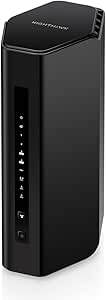 | Best Premium Wi-Fi 7 Upgrade | Wi-Fi standard: Wi-Fi 7 | Bands: Tri-band: 2.4 GHz, 5 GHz, and 6 GHz | Maximum speed: Up to 9.3 Gbps | VIEW LATEST PRICE | See Our Full Breakdown |
| Netgate 1100 pfSense+ Security Gateway Firewall, Router, and VPN |  | Best Dedicated Firewall Gateway | Model: Netgate SG-1100 | Processor: Dual-core ARM Cortex-A53, 1.2 GHz | Memory: 1 GB RAM | VIEW LATEST PRICE | See Our Full Breakdown |
| GL.iNet GL-AX1800 Flint Wi-Fi 6 Dual-Band Gigabit Router |  | Best Value for VPN Basics | Wi-Fi standard: Wi-Fi 6 (802.11ax) | Frequency bands: Dual-band: 2.4 GHz and 5 GHz | Maximum data rate: 1.8 Gbps | VIEW LATEST PRICE | See Our Full Breakdown |
| TP-Link Archer AX3000 Dual-Band Wi-Fi 6 Gigabit Router | 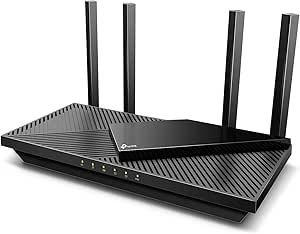 | Best for Straightforward Wi-Fi 6 | Wi-Fi generation: Wi-Fi 6 | Frequency bands: Dual-band: 2.4 GHz and 5 GHz | Maximum data transfer rate: 2976 Mbps | VIEW LATEST PRICE | See Our Full Breakdown |
| NETGEAR Nighthawk RS90 WiFi 7 Dual-Band Router |  | Best for a Wi-Fi 7 Home Office | Wi-Fi generation: Wi-Fi 7 | Bands: 2.4 GHz and 5 GHz | Maximum data rate: Up to 3.6 Gbps | VIEW LATEST PRICE | See Our Full Breakdown |
| TP-Link Archer BE400 BE6500 Dual-Band Wi-Fi 7 Router |  | Best for High-Device Offices | Wi-Fi standard: Wi-Fi 7 | Bands: 2.4 GHz and 5 GHz | Total bandwidth: Up to 6.5 Gbps | VIEW LATEST PRICE | See Our Full Breakdown |
| NETGEAR Nighthawk R6700AX WiFi 6 Router |  | Best for Straightforward Security on a Budget | Wi-Fi generation: Wi-Fi 6 (802.11ax) | Bands: 2.4 GHz and 5 GHz | Maximum speed: Up to 1.8 Gbps | VIEW LATEST PRICE | See Our Full Breakdown |
| TP-Link Archer BE230 Dual-Band Wi-Fi 7 Router |  | Best Value Wi-Fi 7 for Wired Workstations | Wi-Fi standard: Wi-Fi 7 (802.11be) | Bands: 2.4 GHz and 5 GHz; no 6 GHz support | Maximum data rate: Up to 3.6 Gbps | VIEW LATEST PRICE | See Our Full Breakdown |
| TP-Link Archer AXE75 AXE5400 Tri-Band WiFi 6E Router |  | Best for a Dedicated 6 GHz Work Band | Wi-Fi generation: Wi-Fi 6E | Bands: 6 GHz, 5 GHz, and 2.4 GHz | Maximum data rate: Up to 5,400 Mbps | VIEW LATEST PRICE | See Our Full Breakdown |
| secure router for home office | Security | Device capacity | Bands | Ports |
|---|---|---|---|---|
| GL.iNet GL-MT6000 Flint 2 Wi-F | WPA3; AdGuard Home; guest mode | Over 100 devices | — | — |
| NETGEAR Nighthawk Tri-Band WiF | — | Up to 100 devices | Tri-band: 2.4 GHz, 5 GHz, and 6 GHz | — |
| Netgate 1100 pfSense+ Security | — | — | — | 3 switched 1 GbE ports |
| GL.iNet GL-AX1800 Flint Wi-Fi | WPA2, WPA3, AdGuard Home | — | — | — |
| TP-Link Archer AX3000 Dual-Ban | — | — | — | 5; LAN bandwidth up to 10/100/1000 Mbps |
| NETGEAR Nighthawk RS90 WiFi 7 | WPA2 and WPA3 | Up to 50 devices | 2.4 GHz and 5 GHz | 1 × 2.5 Gigabit WAN; 4 × 1 Gigabit Ethernet LAN |
| TP-Link Archer BE400 BE6500 Du | — | Up to 90 devices | 2.4 GHz and 5 GHz | 1 × 2.5 Gbps WAN/LAN; 1 × 2.5 Gbps LAN; 3 × 1 Gbps LAN |
| NETGEAR Nighthawk R6700AX WiFi | WPA2, WPA3, automatic firmware updates, and guest network | Up to 20 devices | 2.4 GHz and 5 GHz | — |
| TP-Link Archer BE230 Dual-Band | WPA/WPA2, WPA3, and WPA2-Enterprise (802.1x) | Up to 60 devices | 2.4 GHz and 5 GHz; no 6 GHz support | 1 × 2.5 Gbps WAN/LAN; 1 × 2.5 Gbps LAN; 3 × 1 Gbps LAN |
| TP-Link Archer AXE75 AXE5400 T | WPA2, WPA2-Enterprise, and WPA3 | — | 6 GHz, 5 GHz, and 2.4 GHz | 5 ports; listed LAN bandwidth is 1,000 Mbps |
More Details on Our Top Picks
GL.iNet GL-MT6000 Flint 2 Wi-Fi 6 Gaming Router
The Flint 2 is my strongest fit for a home office where secure remote access and wired workstations matter as much as Wi-Fi. It combines WireGuard up to 900 Mbps and OpenVPN up to 880 Mbps with AdGuard Home, WPA3, guest mode, and QoS, giving security-conscious users more control than the TP-Link Archer AX3000. Two 2.5G Ethernet ports also give a NAS or fast internet connection room beyond gigabit, while four additional gigabit ports help connect desk equipment directly. Its Wi-Fi 6 capacity is rated for over 100 devices, which suits a busy household sharing the network. The tradeoff is a more hands-on setup: a firmware update is recommended at first, and its dual-band Wi-Fi 6 lacks the newer Wi-Fi 7 bands of the NETGEAR Nighthawk tri-band option.
Pros:- WireGuard and OpenVPN support with listed speeds up to 900 Mbps and 880 Mbps
- Two 2.5G and four 1G Ethernet ports support a flexible wired office setup
- AdGuard Home, WPA3, guest mode, and QoS provide useful network controls
- Designed to connect over 100 devices
Cons:- A firmware update is recommended during initial setup
- Dual-band Wi-Fi 6 does not offer the 6 GHz band or Wi-Fi 7 features
- Real-world speeds depend on network and service conditions
Best for: Remote professionals who want fast VPN options, network-level ad filtering, and multi-gig wired connections for a workstation or NAS.
Not ideal for: Buyers who want the newest Wi-Fi 7 standard or a simple, guided setup with minimal firmware decisions.
- Wi-Fi generation:Wi-Fi 6
- Wireless speed:Up to 6 Gbps
- Frequency bands:Dual-band
- Ethernet ports:2 x 2.5G, 4 x 1G
- VPN speeds:WireGuard up to 900 Mbps; OpenVPN up to 880 Mbps
- Security:WPA3; AdGuard Home; guest mode
- Device capacity:Over 100 devices
- Memory:1 GB RAM, 8 GB eMMC
Our verdict“Choose the Flint 2 if VPN performance and multi-gig wired connectivity matter more to your office than Wi-Fi 7.”
NETGEAR Nighthawk Tri-Band WiFi 7 Router, 9.3 Gbps, Coverage up to 2,500 sq. ft.
For an office that needs room for newer devices and heavy household traffic, this tri-band Wi-Fi 7 router brings a 6 GHz band alongside 2.4 GHz and 5 GHz, with a listed combined speed up to 9.3 Gbps. That gives it a newer wireless platform than the GL.iNet Flint 2, which may matter when several compatible devices compete for airtime. The router also has a 2.5G WAN port, two 2.5G LAN ports, app management, and automatic firmware updates—an appealing combination for buyers who prefer routine maintenance to be handled for them. Security protections are included, but NETGEAR Armor is only a 30-day trial; continued access requires a subscription. It also needs an existing modem or gateway, and Wi-Fi 7 capability alone does not guarantee better coverage through walls or floors.
Pros:- Tri-band Wi-Fi 7 includes 2.4 GHz, 5 GHz, and 6 GHz bands
- Three 2.5G Ethernet ports provide multi-gig WAN and LAN connections
- App-based setup and automatic firmware updates simplify routine management
- Listed coverage is up to 2,500 sq. ft. for as many as 100 devices
Cons:- Requires an existing modem or gateway
- NETGEAR Armor moves to a subscription after its 30-day trial
- Walls, floors, and interference can reduce the stated coverage
Best for: Home-office buyers with Wi-Fi 7 devices, a multi-gig internet plan, and a preference for app-managed updates and network controls.
Not ideal for: Anyone without a separate modem or gateway, or buyers who want ongoing Armor security features without a subscription.
- Wi-Fi standard:Wi-Fi 7
- Bands:Tri-band: 2.4 GHz, 5 GHz, and 6 GHz
- Maximum speed:Up to 9.3 Gbps
- Coverage:Up to 2,500 sq. ft.
- Device capacity:Up to 100 devices
- WAN port:1 x 2.5 Gig Ethernet
- LAN ports:2 x 2.5 Gig Ethernet, 2 x 1 Gig Ethernet
- Security and management:Advanced Router Protection, automatic firmware updates, Nighthawk app, 30-day NETGEAR Armor trial
Our verdict“Pick this router for a premium Wi-Fi 7 network with multi-gig ports, provided you already have a modem and accept Armor’s subscription model.”
Netgate 1100 pfSense+ Security Gateway Firewall, Router, and VPN
The Netgate 1100 is the security-first choice here, not a conventional all-in-one Wi-Fi router. Its fanless hardware runs pfSense+ for firewall, routing, and VPN tasks, giving technically confident owners detailed control that the app-led NETGEAR Nighthawk router does not aim to provide. Lifetime pfSense+ software updates and TAC Lite support add a useful maintenance path for a small office network. The limits are equally relevant: there is no Wi-Fi listed, so wireless access requires a separate access point, and firewall throughput is specified above 650 Mbps rather than at multi-gig levels. Its three 1 GbE ports are switched ports, not three independent dedicated interfaces. I’d choose it as a compact gateway for a wired network or a custom setup, not as the easiest single-box solution.
Pros:- Preloaded pfSense+ supports firewall, routing, and VPN functions
- Compact, fanless design operates silently
- Lifetime pfSense+ software updates and TAC Lite support are included
- Three switched 1 GbE ports support configurable wired connections
Cons:- No built-in Wi-Fi is listed, so wireless users need a separate access point
- Firewall throughput is specified at over 650 Mbps
- The three Ethernet ports are switched rather than separate dedicated interfaces
Best for: Technically capable home-office owners who want a dedicated pfSense+ firewall and are comfortable adding a separate Wi-Fi access point.
Not ideal for: Buyers seeking one device with built-in Wi-Fi, simple app setup, or firewall capacity beyond the stated throughput.
- Model:Netgate SG-1100
- Processor:Dual-core ARM Cortex-A53, 1.2 GHz
- Memory:1 GB RAM
- Ports:3 switched 1 GbE ports
- Routing throughput:Near 1 Gbps for common home iPerf3 traffic
- Firewall throughput:Over 650 Mbps
- Operating system:pfSense+ / FreeBSD
- Support and warranty:Lifetime pfSense+ software updates, TAC Lite support, 1-year hardware warranty
Our verdict“Choose the Netgate 1100 for a configurable pfSense+ security gateway if you are prepared to supply Wi-Fi separately.”
GL.iNet GL-AX1800 Flint Wi-Fi 6 Dual-Band Gigabit Router
The original GL.iNet Flint brings useful security tools to a less demanding office network: WireGuard and OpenVPN support, AdGuard Home, WPA3, and five gigabit Ethernet ports. That makes it a practical lower-capacity alternative to the Flint 2, which adds much faster listed Wi-Fi and VPN speeds plus 2.5G ports. The Flint’s Wi-Fi 6 rate reaches 1.8 Gbps, and its stated capacity of up to 120 devices can suit a connected household, though device count should not be mistaken for guaranteed performance under heavy simultaneous use. WireGuard is listed up to 500 Mbps, so users routing a fast broadband connection through a VPN may find less headroom than with the newer model. Its dual-band design also lacks a 6 GHz band. This is a sensible pick for core VPN features without multi-gig ambitions.
Pros:- Supports WireGuard and OpenVPN
- Five gigabit Ethernet ports accommodate wired office equipment
- AdGuard Home and WPA3 add network filtering and security options
- Listed device capacity is up to 120
Cons:- WireGuard speed is listed up to 500 Mbps, below the Flint 2’s stated ceiling
- Gigabit-only Ethernet ports lack multi-gig connectivity
- Dual-band Wi-Fi 6 does not include a 6 GHz band
Best for: Remote workers who want VPN support, ad filtering, and several wired connections for a modest-speed home-office network.
Not ideal for: Users who need multi-gig Ethernet, higher VPN throughput, or 6 GHz wireless for newer devices.
- Wi-Fi standard:Wi-Fi 6 (802.11ax)
- Frequency bands:Dual-band: 2.4 GHz and 5 GHz
- Maximum data rate:1.8 Gbps
- Ethernet ports:5 gigabit ports
- Maximum connected devices:Up to 120
- VPN support:OpenVPN and WireGuard; WireGuard up to 500 Mbps
- Security:WPA2, WPA3, AdGuard Home
- Memory:512 MB RAM
Our verdict“Choose the original Flint if you want VPN and filtering features for a gigabit-class setup and can forgo the Flint 2’s extra speed and ports.”
TP-Link Archer AX3000 Dual-Band Wi-Fi 6 Gigabit Router
The TP-Link Archer AX3000 suits a home office that needs mainstream Wi-Fi 6 features and practical network tools without prioritizing advanced VPN throughput. OFDMA and MU-MIMO help share wireless capacity among multiple devices, while Beamforming and four external antennas are intended to extend useful coverage. Its listed security options include WPA3 and WPA2-Enterprise, and it offers a VPN server and client, guest mode, QoS, and parental controls. Compared with the GL.iNet Flint, it has a higher combined wireless rate on paper, but the supplied details do not give a specific VPN speed or multi-gig Ethernet ports. A modem is required for most providers, and some HomeShield features require premium service. I’d shortlist it for a conventional desk-and-laptop setup, not for buyers seeking the Flint 2’s richer VPN speed figures or multi-gig wired links.
Pros:- Wi-Fi 6 supports a combined listed rate of up to 2976 Mbps
- OFDMA and MU-MIMO help manage multiple connected devices
- Includes WPA3, WPA2-Enterprise, VPN server and client, guest mode, and QoS
- Four external antennas and Beamforming support broader wireless coverage
Cons:- A modem is required for most internet providers
- Some HomeShield features require premium service
- No multi-gig Ethernet ports or specific VPN speed are listed
Best for: Home-office users seeking Wi-Fi 6, guest networking, and everyday VPN and traffic controls for a standard gigabit network.
Not ideal for: Buyers who need multi-gig Ethernet or a specified high VPN throughput, or who want all HomeShield features without premium service.
- Wi-Fi generation:Wi-Fi 6
- Frequency bands:Dual-band: 2.4 GHz and 5 GHz
- Maximum data transfer rate:2976 Mbps
- Band speeds:5 GHz up to 2402 Mbps; 2.4 GHz up to 574 Mbps
- Antennas:4 fixed external antennas
- Ports:5; LAN bandwidth up to 10/100/1000 Mbps
- Security protocols:WPA2-Enterprise, WPA2-PSK, WPA3
- Network features:OFDMA, MU-MIMO, Beamforming, VPN server and client, guest mode, QoS, parental controls
Our verdict“Choose the Archer AX3000 for a feature-rich, standard gigabit Wi-Fi 6 setup if multi-gig ports and published VPN speeds are not priorities.”
NETGEAR Nighthawk RS90 WiFi 7 Dual-Band Router
The Nighthawk RS90 pairs Wi-Fi 7 with a 2.5 Gigabit WAN port, giving a home office room to handle faster incoming service and newer wireless devices. Its stated coverage and device capacity are a step up from the Wi-Fi 6 Nighthawk R6700AX, making the RS90 a better fit for a busier workspace with several laptops, phones, and connected peripherals. Four Gigabit LAN ports also make it practical to wire a desktop, printer, or dock. For security, it supports WPA3 and automatic firmware updates, while management runs through the Nighthawk app. The tradeoff is that it has no 6 GHz band, unlike the tri-band TP-Link Archer AXE75, and the router needs a separate modem. NETGEAR Armor also becomes subscription-based after its trial.
Pros:- Wi-Fi 7 supports newer wireless devices and workloads.
- 2.5 Gigabit WAN port can accommodate faster internet service.
- Four Gigabit LAN ports allow stable wired connections for work equipment.
- WPA3, built-in security features, and automatic firmware updates support safer network upkeep.
Cons:- Requires a separate modem or gateway with Ethernet.
- NETGEAR Armor protection requires a subscription after the 30-day trial.
- Dual-band design lacks the 6 GHz option available on the TP-Link Archer AXE75.
Best for: Home-office users with a separate modem, newer Wi-Fi 7 devices, and several wired work devices who want app-managed security.
Not ideal for: Buyers seeking a router with a built-in modem, a 6 GHz band, or ongoing Armor protection without a subscription.
- Wi-Fi generation:Wi-Fi 7
- Bands:2.4 GHz and 5 GHz
- Maximum data rate:Up to 3.6 Gbps
- Coverage:Up to 2,000 sq. ft.
- Device capacity:Up to 50 devices
- Ports:1 × 2.5 Gigabit WAN; 4 × 1 Gigabit Ethernet LAN
- Security:WPA2 and WPA3
- Management:Nighthawk app
Our verdict“Choose the RS90 if you want a Wi-Fi 7 upgrade with practical wired ports and app-based security, and can supply your own modem.”
TP-Link Archer BE400 BE6500 Dual-Band Wi-Fi 7 Router
The Archer BE400 is the capacity-focused choice in this group: its listed support for up to 90 devices and coverage up to 2,400 sq. ft. suit a home office that shares a network with a busy household. Its Wi-Fi 7 bandwidth rating is higher than the 3.6 Gbps listed for the TP-Link Archer BE230, and it adds six streams, multi-gig wired connections, HomeShield security, and VPN client and server support. That combination gives remote workers more ways to connect securely and extend coverage through EasyMesh. It remains a dual-band router, though, so it does not offer the 6 GHz band found on the TP-Link Archer AXE75. The separate modem requirement adds equipment to the setup, and EasyMesh compatibility does not extend to TP-Link Deco systems.
Pros:- Listed capacity of up to 90 devices suits a busy home network.
- Multi-gig ports support faster wired connections than a Gigabit-only setup.
- HomeShield security and VPN client and server features provide useful network controls.
- EasyMesh compatibility offers a path to broader coverage.
Cons:- Requires a separate modem.
- Does not work with TP-Link Deco mesh systems.
- Dual-band design has no 6 GHz band.
Best for: Remote workers in device-heavy households who want Wi-Fi 7, VPN options, multi-gig wired connectivity, and room to expand with EasyMesh.
Not ideal for: Buyers invested in Deco mesh equipment, or those who want a 6 GHz band or an all-in-one modem-router.
- Wi-Fi standard:Wi-Fi 7
- Bands:2.4 GHz and 5 GHz
- Total bandwidth:Up to 6.5 Gbps
- Coverage:Up to 2,400 sq. ft.
- Device capacity:Up to 90 devices
- Streams and antennas:6 streams; 6 high-performance antennas
- Ports:1 × 2.5 Gbps WAN/LAN; 1 × 2.5 Gbps LAN; 3 × 1 Gbps LAN
- Security and VPN:HomeShield, WPA3, VPN client and server support
- Mesh compatibility:EasyMesh; not compatible with Deco systems
Our verdict“Pick the BE400 for a crowded home-office network that benefits from VPN support and EasyMesh, but skip it if you need 6 GHz or Deco compatibility.”
NETGEAR Nighthawk R6700AX WiFi 6 Router
The Nighthawk R6700AX keeps the essentials for a smaller home office: Wi-Fi 6, WPA3, automatic firmware updates, a guest network, and four Gigabit LAN ports. Those security and wired-network basics make it a more sensible fit for a solo worker or a couple of connected workstations than a router chosen just for headline speed. Compared with the newer Nighthawk RS90, it has lower stated speed, coverage, and device capacity, and it lacks Wi-Fi 7 and a 2.5 Gigabit port. In return, its simpler capacity profile can suit an office that does not need the RS90’s headroom. It still requires a separate modem, and the listed coverage and support for 20 devices make it a poor match for a large home or device-heavy household. Continued Armor protection requires a subscription after the trial.
Pros:- WPA3, automatic firmware updates, and a guest network support basic network security.
- Four Gigabit LAN ports provide wired connections for work equipment.
- App and browser management offer two setup and control options.
- Wi-Fi 6 is a practical fit for offices that do not need Wi-Fi 7.
Cons:- Requires a separate modem or gateway.
- Capacity is limited to a stated 20 devices and coverage up to 1,500 sq. ft.
- Armor protection requires a subscription after the 30-day trial.
Best for: Solo remote workers or small households who need WPA3, automatic updates, and wired Ethernet without Wi-Fi 7 capacity.
Not ideal for: Larger households, users with many connected devices, or anyone seeking multi-gig WAN connectivity and newer Wi-Fi 7 features.
- Wi-Fi generation:Wi-Fi 6 (802.11ax)
- Bands:2.4 GHz and 5 GHz
- Maximum speed:Up to 1.8 Gbps
- Coverage:Up to 1,500 sq. ft.
- Device capacity:Up to 20 devices
- Ethernet ports:4 × 1 Gigabit LAN; 1 × 1 Gigabit WAN
- Security:WPA2, WPA3, automatic firmware updates, and guest network
- Management:Nighthawk app or web browser
Our verdict“Choose the R6700AX for a modest home office that values WPA3 and wired ports over Wi-Fi 7 speed and larger-network capacity.”
TP-Link Archer BE230 Dual-Band Wi-Fi 7 Router
The Archer BE230 brings Wi-Fi 7 and two 2.5 Gbps ports to a home office without stepping up to the BE400’s higher bandwidth and device capacity. One multi-gig port can serve a fast internet connection while the other supports a compatible wired device, leaving three Gigabit LAN ports for a desktop, printer, or storage. Its stated coverage of 2,000 sq. ft. and support for up to 60 devices exceed the Nighthawk R6700AX figures, while EasyMesh offers a way to extend the network. Security options include WPA3 and WPA2-Enterprise, useful where enterprise authentication matters. This remains a dual-band router with no 6 GHz support; the tri-band Archer AXE75 supplies that band instead. A separate modem is also required.
Pros:- Two 2.5 Gbps ports accommodate a fast WAN connection and a compatible wired device.
- Wi-Fi 7 and support for up to 60 devices suit a growing home network.
- WPA3 and WPA2-Enterprise add security options for different network needs.
- EasyMesh compatibility can help extend coverage.
Cons:- No 6 GHz band, unlike the tri-band Archer AXE75.
- Requires a separate modem.
- Its listed device capacity and total bandwidth are lower than the Archer BE400.
Best for: Home-office users seeking Wi-Fi 7 and multiple multi-gig wired connections, especially those who may expand coverage with EasyMesh.
Not ideal for: Buyers who need the 6 GHz band, a built-in modem, or the higher device capacity and bandwidth listed for the Archer BE400.
- Wi-Fi standard:Wi-Fi 7 (802.11be)
- Bands:2.4 GHz and 5 GHz; no 6 GHz support
- Maximum data rate:Up to 3.6 Gbps
- Coverage:Up to 2,000 sq. ft.
- Device capacity:Up to 60 devices
- Ports:1 × 2.5 Gbps WAN/LAN; 1 × 2.5 Gbps LAN; 3 × 1 Gbps LAN
- Security:WPA/WPA2, WPA3, and WPA2-Enterprise (802.1x)
- Mesh and management:EasyMesh; TP-Link Tether app with remote access and voice control
Our verdict“Choose the BE230 for a Wi-Fi 7 home office that prioritizes multi-gig wired ports and WPA2-Enterprise support over 6 GHz or maximum capacity.”
TP-Link Archer AXE75 AXE5400 Tri-Band WiFi 6E Router
The Archer AXE75 is the lineup’s distinct choice for offices with compatible Wi-Fi 6E devices: its dedicated 6 GHz band adds another wireless lane alongside 5 GHz and 2.4 GHz. That can help separate newer work devices from the network’s other traffic, while WPA3, WPA2-Enterprise, VPN client and server features, and EasyMesh provide useful security and expansion options. Unlike the Wi-Fi 7 Archer BE230, this model is Wi-Fi 6E and does not offer the newer Wi-Fi 7 generation. Its listed LAN bandwidth is 1,000 Mbps, which limits the appeal for buyers whose office depends on multi-gig wired transfers; both the BE230 and BE400 list 2.5 Gbps ports. A separate modem is generally required, and the supplied data does not state a coverage or device-capacity figure.
Pros:- Tri-band Wi-Fi 6E includes a dedicated 6 GHz band.
- VPN server and client support offers added network access options.
- WPA3 and WPA2-Enterprise support multiple security approaches.
- EasyMesh allows compatible network expansion.
Cons:- Wi-Fi 6E is an older generation than the Wi-Fi 7 Archer BE230 and BE400.
- Listed LAN port bandwidth is 1,000 Mbps, below the multi-gig ports on those Wi-Fi 7 options.
- A separate modem is required for most internet service providers.
Best for: Home-office users with Wi-Fi 6E devices who want a 6 GHz band, VPN capabilities, and EasyMesh expansion.
Not ideal for: Buyers prioritizing Wi-Fi 7, multi-gig wired LAN connections, or a router with stated coverage and device-capacity figures.
- Wi-Fi generation:Wi-Fi 6E
- Bands:6 GHz, 5 GHz, and 2.4 GHz
- Maximum data rate:Up to 5,400 Mbps
- Band speeds:6 GHz: 2,402 Mbps; 5 GHz: 2,402 Mbps; 2.4 GHz: 574 Mbps
- Processor and memory:1.0 GHz dual-core CPU; 512 MB RAM
- Ports:5 ports; listed LAN bandwidth is 1,000 Mbps
- Security:WPA2, WPA2-Enterprise, and WPA3
- VPN:OpenVPN, PPTP, and L2TP
- Mesh compatibility:EasyMesh
Our verdict“Pick the AXE75 if your office devices can use 6 GHz and you value VPN features, but choose a Wi-Fi 7 alternative for multi-gig wired networking.”

How We Picked
I ranked these routers for home-office security first, then weighed how practical each is for a typical buyer. The comparison looks at security controls and VPN or firewall capabilities where offered, Wi-Fi generation and band options, expected fit for a home network, and the effort involved in setup and ongoing maintenance. I also considered whether the router’s extra capabilities address a real office need, such as many active devices or a preference for more network control.
The Flint 2 ranks first because it balances security-oriented features, wireless performance, and day-to-day usability. The Netgate 1100 ranks higher for firewall-focused buyers but lower for people who want plug-and-play Wi-Fi; mainstream TP-Link and NETGEAR models suit simpler setups, with their order shaped by capability and intended workload rather than Wi-Fi generation alone. These picks cannot replace safe passwords, timely firmware updates, and careful network configuration, and buyers should check current vendor support and security features before purchase.
| secure router for home office | Wi-Fi generation | Security | Device capacity | Coverage |
|---|---|---|---|---|
| GL.iNet GL-MT6000 Flint 2 Wi-F | Wi-Fi 6 | WPA3; AdGuard Home; guest mode | Over 100 devices | — |
| NETGEAR Nighthawk Tri-Band WiF | — | — | Up to 100 devices | Up to 2,500 sq. ft. |
| Netgate 1100 pfSense+ Security | — | — | — | — |
| GL.iNet GL-AX1800 Flint Wi-Fi | — | WPA2, WPA3, AdGuard Home | — | — |
| TP-Link Archer AX3000 Dual-Ban | Wi-Fi 6 | — | — | — |
| NETGEAR Nighthawk RS90 WiFi 7 | Wi-Fi 7 | WPA2 and WPA3 | Up to 50 devices | Up to 2,000 sq. ft. |
| TP-Link Archer BE400 BE6500 Du | — | — | Up to 90 devices | Up to 2,400 sq. ft. |
| NETGEAR Nighthawk R6700AX WiFi | Wi-Fi 6 (802.11ax) | WPA2, WPA3, automatic firmware updates, and guest network | Up to 20 devices | Up to 1,500 sq. ft. |
| TP-Link Archer BE230 Dual-Band | — | WPA/WPA2, WPA3, and WPA2-Enterprise (802.1x) | Up to 60 devices | Up to 2,000 sq. ft. |
| TP-Link Archer AXE75 AXE5400 T | Wi-Fi 6E | WPA2, WPA2-Enterprise, and WPA3 | — | — |
Factors to Consider When Choosing Best Secure Router For Home Office
I’d choose a home-office router by starting with the risks and workload I actually have, rather than buying the newest wireless standard by default. These factors help separate a simple Wi-Fi upgrade from a security-focused network project.
Decide Whether You Need a Router or a Separate Firewall
A standard wireless router combines internet routing and Wi-Fi in one device, which keeps a home office easier to set up. A dedicated security gateway, such as the Netgate 1100, places more emphasis on firewall control and can sit alongside separate wireless access points. That separation can help users who want detailed rules or network segmentation, but it adds configuration and maintenance work. A common mistake is buying a gateway and assuming it will also provide the same built-in Wi-Fi convenience as an all-in-one router. Before choosing, map out what equipment you already own and whether you are willing to manage two devices. If you only need secure everyday connectivity, a well-supported router may be a better fit.
Treat Firmware Support as a Security Feature
Wireless speed figures do not tell you how long a router will receive security fixes. Check the manufacturer’s published update policy, support resources, and process for installing firmware before deciding. Automatic updates can reduce the chance that a busy home-office user leaves known issues unaddressed, while manual update controls may appeal to someone who wants to schedule changes. Avoid choosing solely by Wi-Fi generation or advertised coverage; an older or less advanced model with active support may be a safer choice than a feature-rich device nearing end of support. Also check whether the device has reached end-of-life status and how the vendor communicates security advisories. Plan to replace a router when dependable updates are no longer available.
Separate Work Devices From Less-Trusted Devices
Home networks often mix work computers with personal phones, smart TVs, cameras, and guest devices. Keeping those devices on separate guest or network segments can limit how easily one device can reach another if it is compromised. Do not assume every router provides the same segmentation controls or makes them easy to configure; check the interface and feature documentation for the controls you need. A guest network is useful for visitors, but it may not offer the fine-grained separation that a more complex work setup requires. The tradeoff is convenience: more separation can improve control while adding setup steps and troubleshooting. Choose a router whose isolation features match the sensitivity of your work and your comfort with network settings.
Match Wi-Fi Capacity to Your Real Workload
Video calls, cloud documents, and ordinary browsing rarely require the highest advertised throughput, especially when the internet connection is the limiting factor. Wi-Fi 7 or tri-band hardware can make more sense when many devices are active, local transfers are frequent, or newer client devices can use those capabilities. Buying a newer standard for a laptop that cannot support it may bring little practical benefit. Also check the layout: walls, distance, and router placement can matter more than a headline speed figure. For a home office with one or two workers, a capable Wi-Fi 6 router may leave more room in the budget for a backup connection or other security measures. For a crowded home, added capacity may be worth the extra complexity.
Plan for VPN Needs Before Choosing
A router-level VPN can route traffic from multiple devices through a VPN connection, while a VPN app on each work computer may be simpler and better suited to company requirements. Do not assume a router with VPN support automatically provides the service, policy, or performance you need; check supported protocols, setup requirements, and your VPN provider’s guidance. Some employers require a managed VPN client or prohibit routing work traffic through a personal VPN, so confirm workplace rules first. VPN encryption can also reduce throughput, making the router’s processing capability relevant for calls and file transfers. Buyers should distinguish a VPN feature from a full security plan: it does not replace updates, access controls, or endpoint protection. Choose router-level VPN only if its broader device coverage solves a real need.
Count the Ongoing Work, Not Just the Setup
Security depends on what happens after installation: firmware updates, strong administrator credentials, reviewing connected devices, and changing default settings all matter. A highly configurable gateway can support detailed rules, but those controls help only if someone has time to maintain them. A simpler router may be a better real-world choice for a small office if its security settings are easier to understand and keep current. Before buying, ask who will handle updates and troubleshooting when work is interrupted. If the network supports sensitive business data, consider whether professional setup or a managed service is appropriate. The best fit is the one whose security features you can maintain consistently.
Frequently Asked Questions
Is the Netgate 1100 a better choice than an all-in-one Wi-Fi router for a home office?
It is a better fit when firewall control is the priority and you are comfortable configuring a gateway as part of a network. It is not a direct substitute for an all-in-one wireless router, so you may need separate Wi-Fi equipment. That can provide more flexibility, but it also means additional hardware and more upkeep. If you want a simpler installation with Wi-Fi in the same device, the Flint 2 or a mainstream TP-Link or NETGEAR router is easier to match to that need. Decide based on how much control you will actually use, not just the appeal of advanced firewall features.
Will a Wi-Fi 7 router make my home office more secure?
Not by itself. Wi-Fi 7 can offer newer wireless capabilities, but security still depends on supported protections, firmware updates, strong passwords, and how the network is configured. The RS90, Archer BE400, and Archer BE230 may be sensible for buyers with compatible devices or plans to upgrade, yet their wireless generation should not be treated as a security rating. Check the manufacturer’s update policy and the security settings you need before choosing. If your current devices and internet plan do not benefit from Wi-Fi 7, a supported Wi-Fi 6 model may be the more practical purchase.
Should I use a router VPN for company work?
Check your employer’s policy before routing work traffic through a personal router VPN. Some organizations require their own VPN app, device management, or network setup, and a router-level VPN may conflict with those rules. Router VPN support can be useful for personal devices or for covering several compatible devices through one connection, but it does not replace the company’s access controls. Performance may also drop when traffic is encrypted, depending on the router and VPN service. If your workplace has no restriction, compare supported protocols and setup instructions with the VPN provider’s recommendations.
Is a tri-band router worth choosing for a small home office?
Usually only if your network has a clear capacity need, such as many active devices, frequent local transfers, or compatible newer equipment. The Nighthawk tri-band Wi-Fi 7 router and Archer AXE75 offer more band options than basic dual-band picks, but additional bands do not automatically improve security or solve a weak internet connection. A small office with a few laptops and video calls may get more practical value from stable coverage and current firmware support. Router placement and building materials can also affect performance more than adding another band. Match the feature to the workload before paying for capacity you may not use.
What should I do if I need secure Wi-Fi across a larger home office setup?
First, check whether the problem is weak coverage, a busy network, or a security requirement; each calls for a different fix. A stronger router will not always reach through multiple floors or dense walls, and a separate access point or a carefully planned mesh setup may be more effective. Keep work devices separated from guest and smart-home devices where your equipment supports it. For a larger or more sensitive setup, a gateway with separate access points can offer more control, but it demands more planning. Avoid buying several routers and running them as independent networks without a clear design, since that can complicate management and device access.
Conclusion
For most buyers, I recommend the GL.iNet GL-MT6000 Flint 2 as the best overall because it balances home-office wireless needs with more security-oriented control. The TP-Link Archer AX3000 is my best value pick for a straightforward Wi-Fi 6 upgrade, while the NETGEAR Nighthawk Wi-Fi 7 tri-band router is the best premium choice for a busy network that can use its added wireless capacity. Beginners should start with a simpler mainstream model such as the Archer AX3000 or Nighthawk R6700AX rather than the more hands-on Netgate 1100. For buyers who want a dedicated firewall and accept separate Wi-Fi equipment, the Netgate 1100 is the specific-needs pick. Choose based on the security controls you will maintain, the devices you need to connect, and the amount of setup you are willing to manage.
Halloween Picks
halloween
As an affiliate, we earn on qualifying purchases.