
📊 Full opportunity report: Acoustic Dampening, Placement, and the “Rig in the Closet” Setup on ThorstenMeyerAI.com — validation score, market gap, and execution plan.

Get privacy and security gear delivered free with Prime
- Fast, free delivery on millions of items
- Prime Video, Amazon Music and more included
- Member-only deals all year
TL;DR
Moving your AI workstation out of your workspace or into a ventilated closet significantly reduces noise. Proper placement and ventilation are key to maintaining performance and quiet operation.
Placing a high-power AI workstation in a separate room or closet, with proper ventilation, is the most effective way to reduce noise and heat issues, according to technical experts.
The most effective method to minimize noise from powerful AI rigs is to move the machine away from the workspace, such as into another room or closet, and operate it headless over a network connection. This approach eliminates the need for acoustic treatment and prevents the noise from reaching the user directly.
A common concern with placing a machine in a closet or enclosed space is heat buildup. Experts emphasize the importance of proper ventilation, including passive vents or active exhaust fans, to prevent overheating. Purpose-built soundproof cabinets with temperature-controlled airflow are recommended for optimal balance of noise reduction and thermal management.
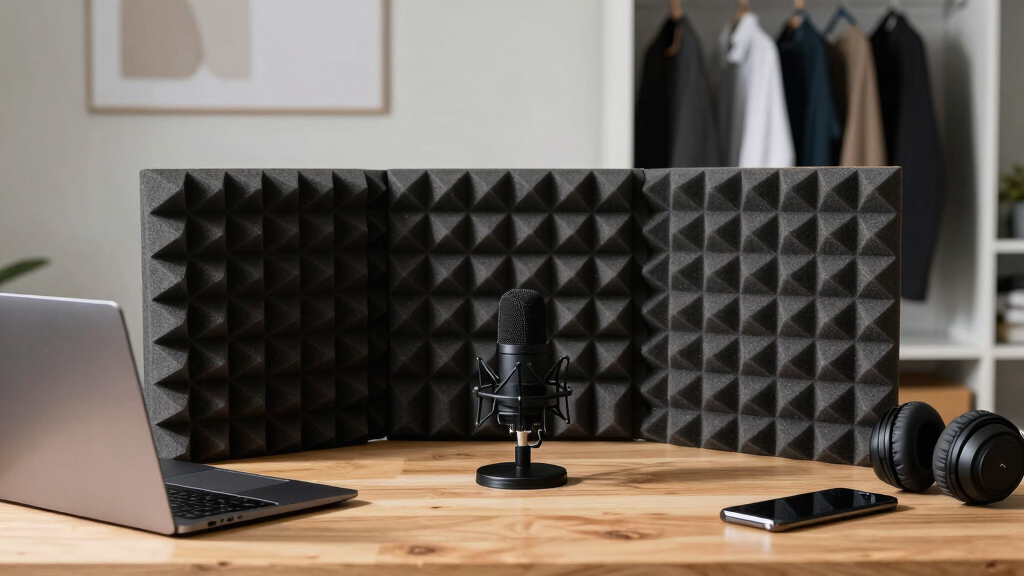
Acoustic foam and other sound-absorbing materials are less effective than physical separation and proper ventilation, especially for airborne and structure-borne noise. Mechanical decoupling, such as rubber feet or anti-vibration pads, can further reduce low-frequency hums transmitted through solid surfaces.
Acoustic dampening
& the rig in the closet.
The most powerful noise fix isn’t a material — it’s a floor plan. A rig you can’t hear because it’s in another room beats any amount of foam. Tap the approaches in Part 1 to see what actually works.
(another room)
(levers 1–4)
(door / barrier)
(acoustic foam)
Contain the noise, not the heat
Why Proper Placement and Ventilation Matter for AI Rigs
Effective noise and heat management improve user comfort and hardware longevity. Moving the rig out of the workspace aligns with the fact that most AI inference tasks are network-based, making local proximity unnecessary. Proper ventilation prevents overheating, ensuring consistent performance and reducing maintenance costs. This approach also enables quieter, more flexible work environments, especially in shared or office settings.
As an affiliate, we earn on qualifying purchases.
Current Best Practices for Noise and Heat Management in AI Workstations
Traditionally, users attempted to mitigate noise with acoustic foam or soundproofing inside the same room, but experts highlight that physical separation offers far better results. The hierarchy of noise reduction emphasizes distance and isolation as the most effective, followed by source reduction and transmission blocking. The 'rig in the closet' concept has gained popularity as a practical solution, provided heat dissipation is carefully managed.
Recent discussions from industry sources, including Thorsten Meyer, emphasize that noise mitigation is often overestimated by acoustic treatment alone, which is less effective than strategic placement and ventilation. The trend towards network-based AI workflows supports remote operation of high-power rigs, making placement decisions more flexible.
"The single most effective thing you can do about noise isn't to absorb it — it's to put distance between you and the source. A rig in another room is quieter than any foam."
— Thorsten Meyer
As an affiliate, we earn on qualifying purchases.
Remaining Challenges in Quiet, Cool AI Workstation Setup
While the benefits of moving the rig to another room or closet are clear, specifics about optimal ventilation configurations, cost-effective soundproof cabinet designs, and long-term thermal management strategies are still evolving. It is also unclear how different hardware configurations respond to various cooling solutions in enclosed spaces.
As an affiliate, we earn on qualifying purchases.
Next Steps for Implementing Quiet AI Workstation Environments
Further research and development are expected to refine cost-effective, scalable solutions for soundproofing and cooling in enclosed spaces. Industry experts recommend testing different ventilation setups and considering purpose-built soundproof cabinets for optimal results. As remote AI workflows become more prevalent, best practices for placement and thermal management will continue to evolve based on user feedback and technological advances.
networked headless server enclosure
As an affiliate, we earn on qualifying purchases.
As an affiliate, we earn on qualifying purchases.
Key Questions
Why is moving the AI rig into another room more effective than acoustic foam?
Distance and physical separation eliminate most airborne and structure-borne noise, making acoustic foam unnecessary in many cases. Foam only reduces reflections within a room but does not block sound transmission.
What are the key considerations for ventilating a closet or enclosed space housing a high-power AI rig?
Proper ventilation requires at least passive vents or, preferably, active exhaust fans that remove hot air and draw in cooler air. Thermostat-controlled airflow and possibly a purpose-built soundproof cabinet ensure the rig stays cool without excessive noise.
Can I operate my AI workstation in a sealed cabinet?
Yes, but only if the cabinet includes effective ventilation with exhaust fans and ducting to dissipate heat. Without airflow, heat will accumulate, causing throttling and potential hardware damage.
Is acoustic treatment necessary if I place my rig in another room?
No, if the rig is sufficiently distant and properly ventilated, acoustic treatment becomes largely unnecessary. The main goal is to prevent noise from reaching your workspace.
Source: ThorstenMeyerAI.com
Columbus Day / Indigenous Peoples' Day Picks
long weekend sales
As an affiliate, we earn on qualifying purchases.