![The Coolest Anti-surveillance Tools At Defcon [Video]](https://vultrade.com/wp-content/uploads/2026/08/the-coolest-anti-surveillance-tools-at-defcon-video-featured.jpg)
TL;DR

Get privacy and security gear delivered free with Prime
- Fast, free delivery on millions of items
- Prime Video, Amazon Music and more included
- Member-only deals all year
At Defcon 2023, security researchers demonstrated a range of advanced anti-surveillance tools, including devices that disrupt facial recognition and communication interception. These innovations aim to enhance privacy and challenge surveillance systems, drawing significant attention from cybersecurity experts.
At Defcon 2023, cybersecurity researchers showcased a variety of anti-surveillance tools designed to disrupt facial recognition, block communication interception, and evade detection by surveillance systems. These demonstrations highlight emerging efforts to protect individual privacy amid increasing digital monitoring.
One notable device presented is a portable mask that confuses facial recognition algorithms by distorting facial features in real-time, making it difficult for surveillance cameras to identify individuals accurately. Another innovation includes a compact transmitter that emits signals to jam or interfere with radio frequency-based tracking devices. Several researchers also demonstrated software tools capable of generating false positives or blocking data collection by automated surveillance systems.
Participants and presenters at Defcon confirmed that these tools are in experimental stages but show promising potential for privacy advocates and activists seeking to counteract pervasive monitoring. Experts emphasize that while some tools are ready for limited deployment, others remain in prototype phases and require further development before widespread use.
Implications for Privacy and Surveillance Evasion
The showcased tools at Defcon underscore a growing arms race between surveillance systems and privacy defenders. As governments and corporations expand monitoring capabilities, these anti-surveillance devices could provide individuals and groups with means to protect their privacy and evade tracking. However, experts warn that such tools could also be misused for malicious purposes, complicating law enforcement and security efforts.
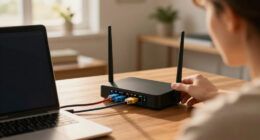
anti-surveillance facial recognition mask
As an affiliate, we earn on qualifying purchases.
As an affiliate, we earn on qualifying purchases.
Recent Advances in Digital Privacy Defense Techniques
Defcon has long been a platform for revealing security vulnerabilities and innovative hacking tools. In recent years, the focus has shifted toward privacy protection, with researchers developing gadgets and software to counteract facial recognition, license plate tracking, and communication interception. The 2023 conference continued this trend, with several presentations dedicated to anti-surveillance technology.
Previous efforts include simple masks and signal jammers, but this year’s demonstrations featured more sophisticated, portable, and user-friendly devices that could feasibly be used in real-world scenarios to protect privacy in public spaces.
As an affiliate, we earn on qualifying purchases.
Limitations and Regulatory Concerns Surrounding Anti-Surveillance Devices
It remains unclear how easily these tools can be deployed outside the conference setting and whether they will be legally permissible in various jurisdictions. Experts also question the robustness and reliability of some devices in real-world conditions, as most are still in prototype stages. There is ongoing debate about the potential misuse of such tools for illegal activities, which could lead to regulatory crackdowns.
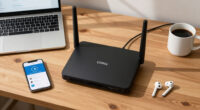
privacy protection communication blocker
As an affiliate, we earn on qualifying purchases.
As an affiliate, we earn on qualifying purchases.
Next Steps for Development and Regulation of Privacy Tools
Developers plan to refine these anti-surveillance devices, improving their usability and effectiveness. Meanwhile, legal and regulatory discussions are expected to intensify as authorities consider restrictions on such tools. Researchers and privacy advocates will likely continue testing and demonstrating new innovations at future conferences, with ongoing debates about balancing privacy rights and security concerns.
As an affiliate, we earn on qualifying purchases.
Key Questions
Are these anti-surveillance tools legal to use?
The legality varies by jurisdiction. Some devices may violate local laws related to radio interference or privacy, and users should consult legal guidance before deploying them.
Can these tools completely prevent surveillance?
While they can significantly disrupt certain types of surveillance, no tool guarantees full protection against all monitoring systems, especially highly advanced or integrated ones.
Are these tools available for public use?
Most are still in experimental or prototype stages and are primarily demonstrated at conferences like Defcon. Widespread commercial availability is not yet established.
Could these tools be misused for illegal activities?
Yes, there is a risk of misuse, which raises concerns about potential criminal applications. This is part of the ongoing regulatory debate surrounding anti-surveillance technology.
Source: hn
Evergreen bestsellers Picks
bestsellers
As an affiliate, we earn on qualifying purchases.